How to Tell if a Pan Is Non Stick Simply
Think of a nonstick pan as a slick ice rink for your food—nothing should catch or cling. You might assume you can tell just by looking, but appearances can be deceiving. How to tell if a pan is non stick simply involves a few easy checks before you start cooking.
There are simple ways to confirm if your pan truly offers that effortless release you want. Let’s explore a few straightforward tests that reveal the pan’s true nature. These quick tips help you identify a genuine nonstick surface in no time.
Surface Appearance and Texture
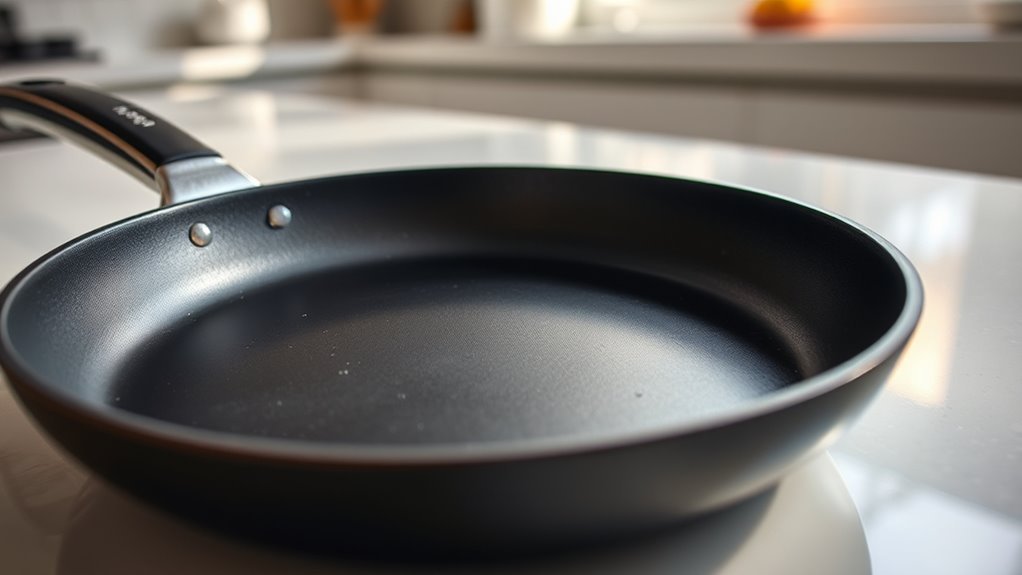
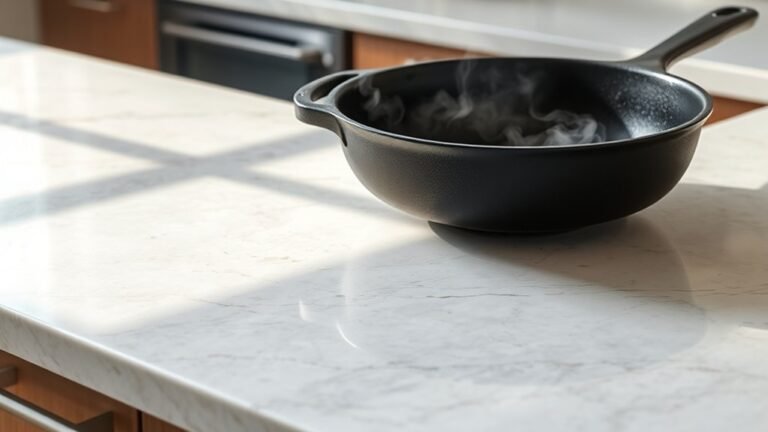
When you look closely at a pan’s surface, you’ll notice that nonstick pans usually have a smooth, uniform, and dark interior, often matte or glossy black or gray. This nonstick surface stands out because its appearance is consistent, with a coating that covers the entire cooking area without exposed metal grains or rough spots.
The texture feels slick and smooth, sometimes even slippery, unlike raw metal pans that can feel rough or porous. Visual cues like a shiny, glossy finish often indicate Teflon coatings, while ceramic types may appear matte or chalky.
If you spot dull patches, flaking, or scratches revealing metal underneath, that’s a sign the coating is worn and the nonstick qualities are deteriorating.
Performing the Water Droplet Test
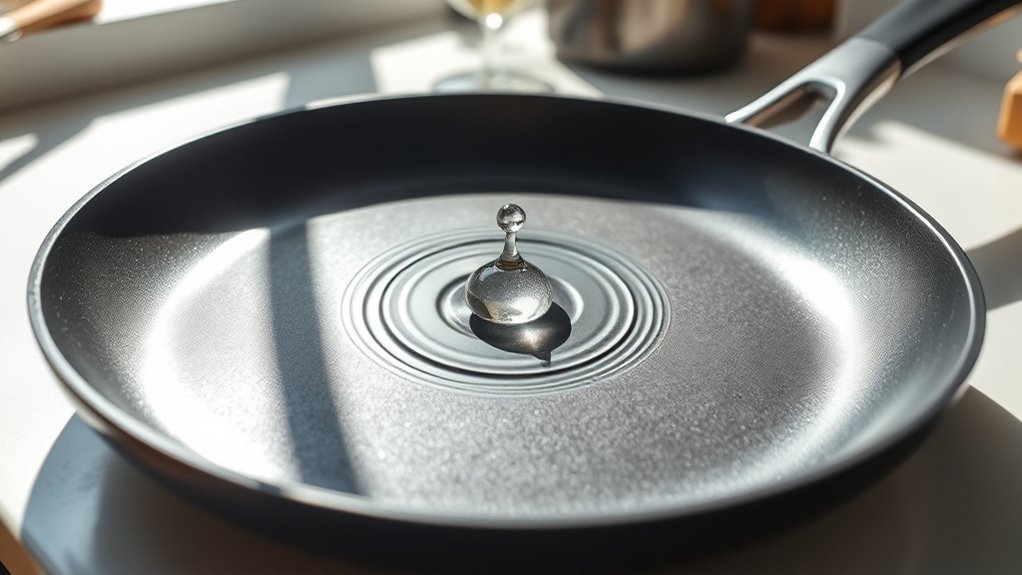
Although visual inspection offers clues, you can quickly confirm a pan’s nonstick quality by performing the water droplet test. Start by placing a small water droplet on a cooled pan’s surface.
A quick water droplet test on a cooled pan reveals its true nonstick quality.
If your pan has a nonstick coating, the water droplet will bead up into a near-spherical shape and slide smoothly across the pan surface when tilted. This behavior indicates a slick, nonstick surface that repels moisture.
On the other hand, if the water flattens out and spreads evenly, your pan likely lacks a nonstick coating. Performing this test on a cooled pan ensures heat doesn’t interfere with the water’s behavior, giving you an accurate assessment of the pan’s surface properties.
This simple test quickly reveals whether your pan truly has a nonstick finish.
Checking for Manufacturer Labels and Markings
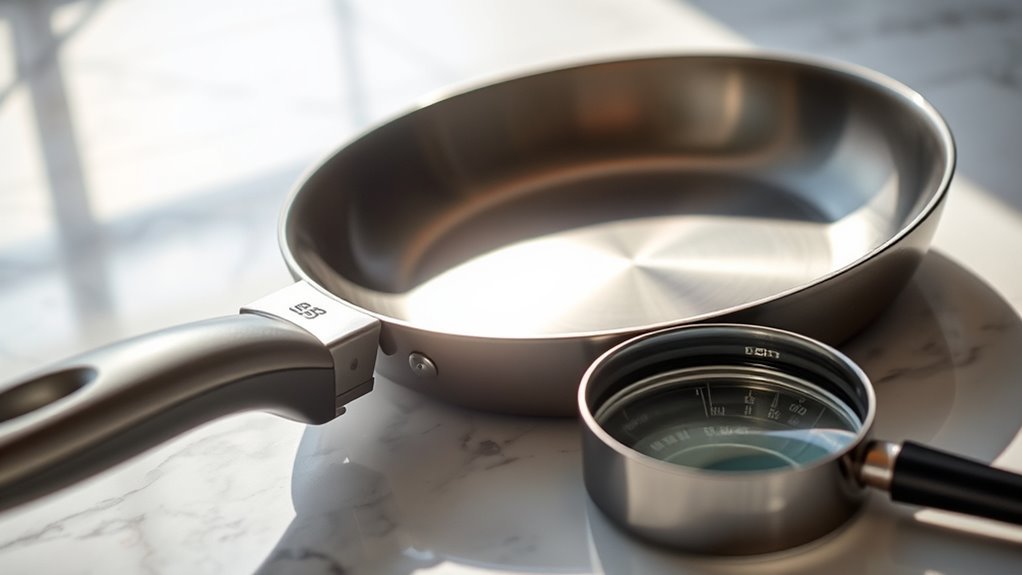
After trying the water droplet test, you can also identify a nonstick pan by examining any manufacturer labels or markings. Look closely on the bottom or handle for nonstick labels like “Teflon,” “PTFE,” or similar terms.
Check for manufacturer markings such as brand logos, which are often stamped or embossed, indicating a nonstick coating. Read any product description tags attached to the pan that specify its surface properties.
If the markings are faint or worn, use the serial number or model information to perform coating verification through the manufacturer’s website or online product lookup tools.
These steps help you confirm whether the pan has a nonstick surface, ensuring you know exactly what kind of cookware you’re using.
Inspecting Wear and Scratches on the Coating
Since the nonstick coating is your pan’s protective layer, you should inspect it regularly for wear and scratches. Damaged coating reduces its effectiveness and may pose safety risks.
To check for wear and damage, follow these steps:
- Look closely for peeling or flaking areas where the coating has worn away.
- Inspect for scratches that expose the shiny metal underneath, indicating compromised non-stick surfaces.
- Note any discoloration or dull patches, which often signal coating degradation over time.
If you notice frequent or deep scratches, peeling, or significant wear, it’s a clear sign your pan’s non-stick coating is damaged.
A smooth, uniform surface without these issues means the coating is still intact and reliable.
Regular inspection helps you maintain a safe, efficient pan.
Cooking Performance Indicators
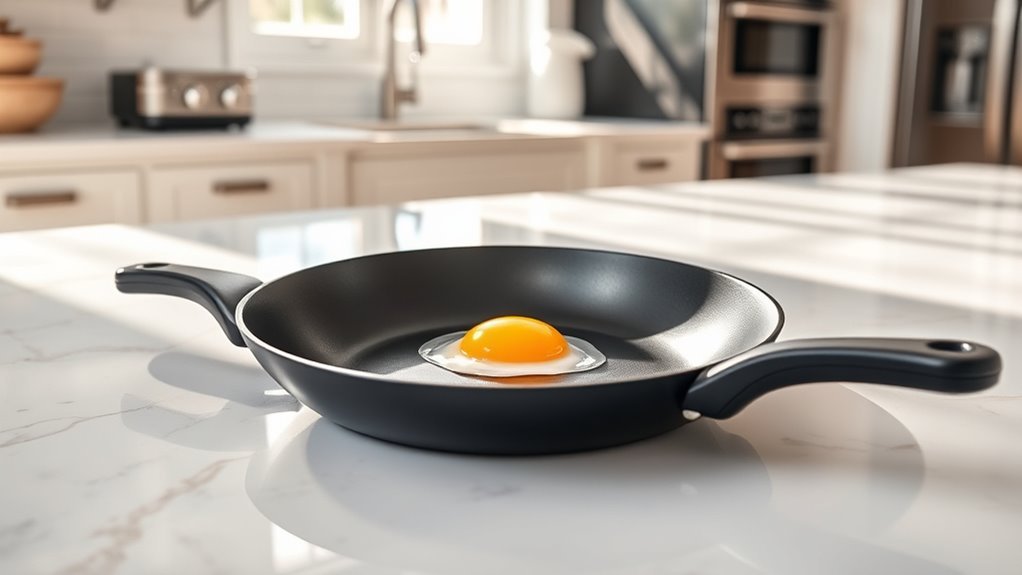
How can you tell if your pan truly has a nonstick surface when cooking? One key cooking performance indicator is how food release behaves. In a nonstick pan, food should slide around easily, sticking minimally even with little oil.
Observing how easily food slides off helps reveal if your pan’s nonstick surface is genuine.
If you notice food sticking or burning despite proper heat, coating wear might be the issue.
Another quick way to check is the water test: sprinkle a few drops on the pan’s smooth surface.
On a genuine nonstick, water beads and glides off effortlessly. A slick, smooth surface that resists food adhesion during typical cooking conditions confirms the pan’s effectiveness.
If your pan fails these indicators, it’s likely that the nonstick coating is compromised or absent.
Frequently Asked Questions
How to Tell if It’s a Non-Stick Pan?
You can tell if it’s non-stick by feeling for a smooth, slippery surface, checking if water beads up, looking for labels like “nonstick,” or cooking something sticky like eggs to see if they release easily without sticking.
How to Make Sure a Pan Doesn’t Stick?
You can make sure your pan doesn’t stick by preheating it on medium heat, adding a little oil once it’s hot, cooking at medium or low heat, and avoiding overcrowding.
Use gentle utensils and clean carefully.
How Do I Tell What Kind of Pan I Have?
You’ve got a culinary mystery on your hands! Feel the pan’s surface—slick means nonstick. Check for labels like “Teflon.”
Water droplets bead up on nonstick pans. Examine edges for any worn coating signs.
How to Tell if a Stainless Steel Pan Is Non-Stick?
You can tell if your stainless steel pan is non-stick by heating it with oil until it shimmers. If food slides off easily without sticking, your pan has developed a nonstick-like surface through proper seasoning and heating.
Conclusion
Now that you know the ropes, spotting a nonstick pan is a breeze. Check its smooth, dark surface, try the water droplet test, and look for labels like Teflon or ceramic. Don’t forget to inspect for scratches and see how your food behaves while cooking.
When everything slides off effortlessly, you’ve got yourself a true nonstick pan. With these simple tips, you’ll never be left holding the bag when choosing cookware again! Remember, recognizing a nonstick pan is key to making the best kitchen choices and enhancing your cooking experience.