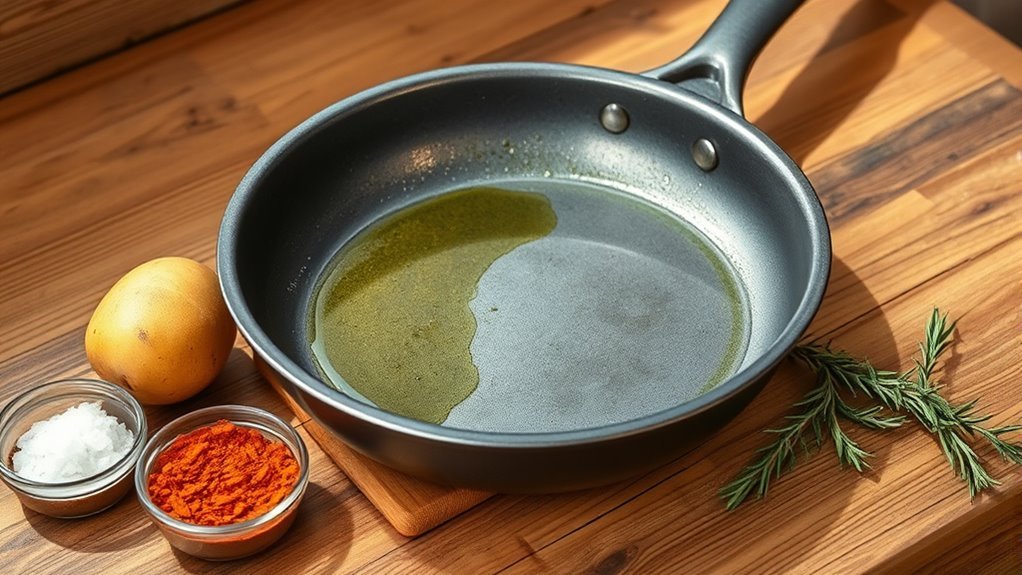
10 Easy Steps to Season a Carbon Steel Pan
Like a blacksmith forging a blade, seasoning your carbon steel pan transforms it from raw metal to a kitchen workhorse. Seasoning a carbon steel pan might seem complicated, but with the right approach, it’s straightforward and rewarding.
Getting this process right will give your pan a natural non-stick surface that improves with use. Before you start, it’s important to comprehend the key steps that guarantee lasting results and avoid common pitfalls.
Identify and Remove Protective Coating
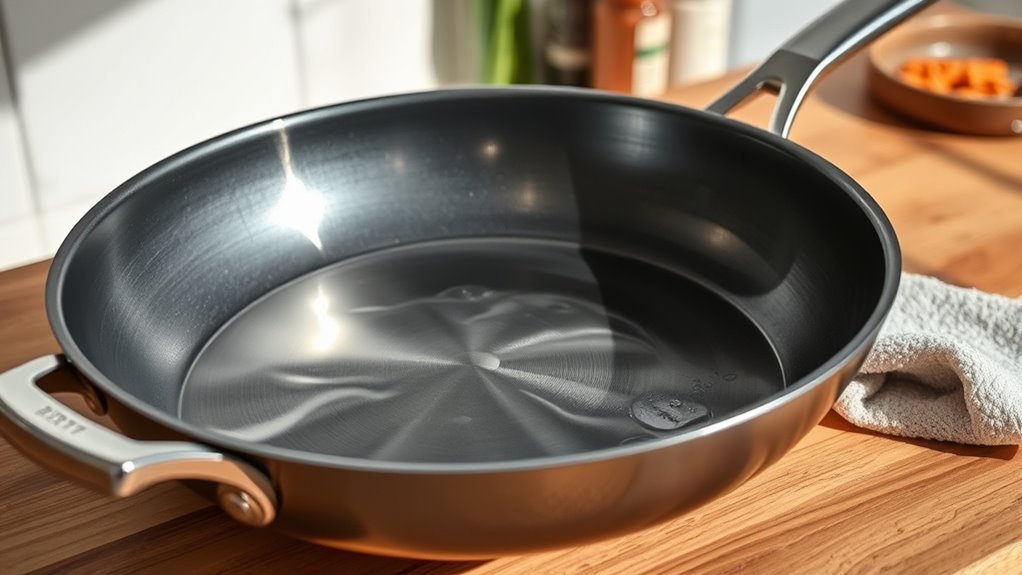
Before seasoning your carbon steel pan, you’ll need to identify and remove its protective coating. Most new pans have this thin, light grey or metallic layer to prevent rust during storage.
Identify and remove the protective coating before seasoning your new carbon steel pan.
To check if your pan is unseasoned, look for a smooth, shiny, or grey surface without any dark patina.
Removing the protective coating requires initial cleaning with hot water and a scrub brush or steel wool. Don’t hesitate to use soap during this step; it helps strip away the coating effectively.
After scrubbing, rinse thoroughly and dry the pan immediately with a towel or by heating it briefly on the stovetop to stop rust from forming.
Once this protective layer is gone, your pan will be ready for seasoning.
Thoroughly Wash the Pan
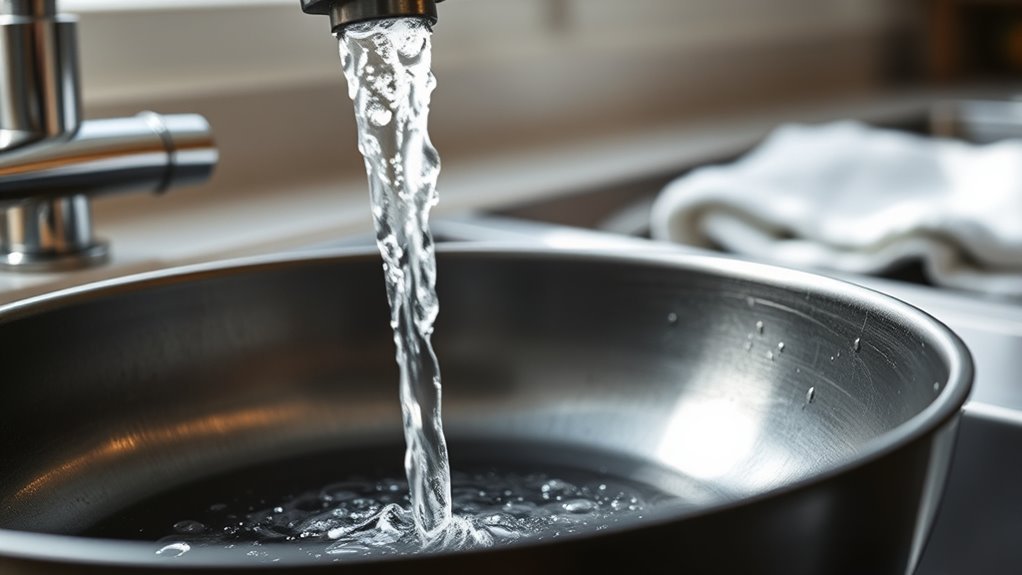
After stripping away the protective coating, you’ll want to give your carbon steel pan a thorough wash. Use warm water and mild soap with a scrub brush or steel wool pad to remove any residue left from manufacturing.
Make sure to wash every inch of the pan to eliminate oils or contaminants that could interfere with seasoning. Rinse the pan well with clean water to remove all soap and debris. This ensures your pan is perfectly clean and ready for the next step.
| Step | Purpose |
|---|---|
| Use warm water | Helps loosen residue |
| Apply mild soap | Breaks down oils |
| Scrub thoroughly | Removes manufacturing residue |
| Rinse with water | Eliminates soap remnants |
Dry the Pan Completely
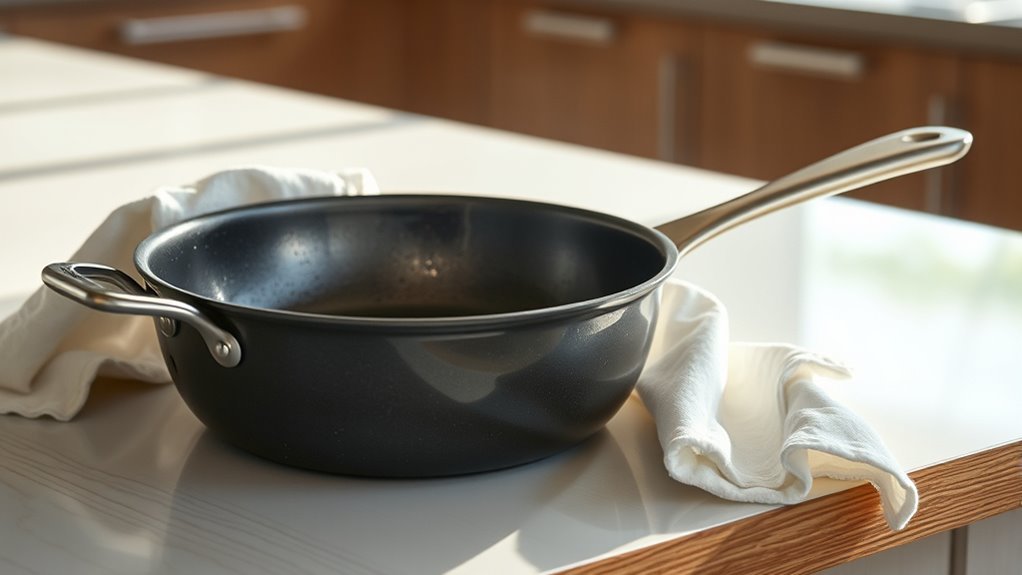
How do you prevent rust from forming on your carbon steel pan? The key is to dry the pan completely right after washing. Water left on the surface invites rust, which can ruin your seasoning.
Use a clean towel or paper towel to thoroughly wipe every inch of the pan, ensuring no water remains.
For extra assurance, you can heat the pan over low heat on your stovetop until all moisture evaporates.
Avoid air drying, as it allows oxidation to start.
Only when the pan is fully dry should you apply oil for seasoning. This step helps the oil bond evenly, creating a durable, non-stick layer that protects the pan.
Preheat Your Oven or Stovetop
Once your pan is completely dry, it’s time to heat your oven or stovetop to prepare for seasoning. Preheat your oven to 450°F (230°C) or warm your stovetop on low to medium heat. Make sure the temperature is uniform before adding the pan. This guarantees even seasoning.
Using an oven heats the pan evenly, including sides and handle if oven-safe. Preheating the stovetop creates a controlled environment where oil polymerizes properly. Always verify the temperature with a thermometer or test heat for best results.
| Heat Source | Target Temperature | Benefit |
|---|---|---|
| Oven | 450°F (230°C) | Even heating entire pan |
| Stovetop | Low to Medium Heat | Controlled, consistent heat |
| Oven | Preheating Needed | Prevents uneven seasoning |
| Stovetop | Verify Temperature | Ensures proper polymerizing |
| Oven/Stovetop | Consistent Heat | Reliable seasoning outcome |
Choose the Right Oil for Seasoning
Choosing the right oil plays a crucial role in seasoning your carbon steel pan effectively. You want to pick a seasoning oil with a high smoke point, ideally above 400°F (204°C), to ensure proper polymerization during heating.
Oils like grapeseed, avocado, or vegetable oil fit the bill perfectly. These neutral oils won’t impart unwanted flavors and create a durable, non-stick surface.
Avoid olive oil, butter, or flaxseed oil; they can leave sticky, uneven layers that ruin your seasoning. While you’ll apply a thin layer later, the oil’s quality directly impacts how well your pan develops its protective coating.
Opt for oils high in saturated fats, like canola or vegetable oil, to build a smooth, resilient seasoning on your carbon steel cookware.
Apply a Thin, Even Layer of Oil
Before heating your carbon steel pan, you need to apply a thin, even layer of oil across its entire surface. Use a clean, lint-free cloth or paper towel to apply oil, spreading it evenly to avoid thick pools or shiny spots. This guarantees uniform seasoning and prevents sticky areas.
Wipe off any excess oil until the surface of the pan looks matte with no visible drips. Don’t forget to cover all parts, including the inside, outside, and handle. Reapplying thin layers during seasoning a pan builds a strong, non-stick coating.
| Step | Action |
|---|---|
| Apply oil | Use a lint-free cloth |
| Spread evenly | Cover entire surface |
| Remove excess oil | Wipe until surface is matte |
Heat the Pan to Polymerize the Oil
After applying a thin, even layer of oil, you’ll need to heat the pan to start polymerizing the oil. Place the pan on medium-high or high heat and watch closely.
As the temperature rises, the oil will begin to smoke. This smoke signals that polymerization is underway.
Keep the heat consistent to guarantee the oil bonds properly without burning. You’ll notice faint brown or black patches forming on the surface; these indicate that the oil has successfully polymerized, creating a protective, non-stick layer.
Maintain steady heat to ensure proper oil bonding and the formation of a durable, non-stick polymerized layer.
This process usually takes 10 to 15 minutes on the stovetop. Heating the pan thoroughly is vital to build that durable seasoning layer, so be patient and attentive during this step to get the best results with your carbon steel pan.
Allow the Pan to Cool Properly
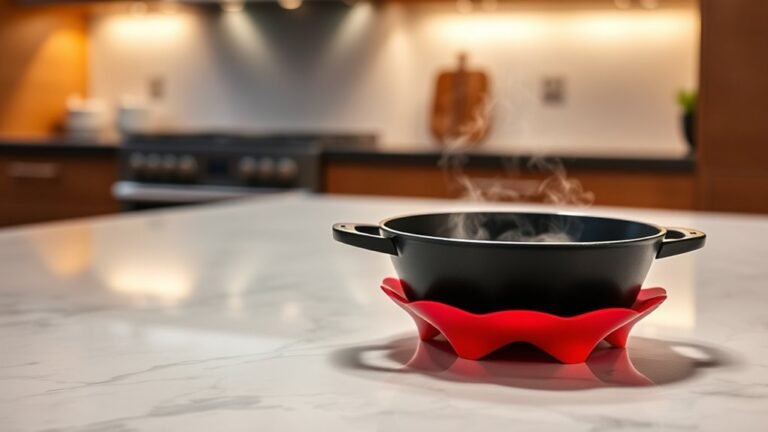
Once you’ve finished heating the pan, let it cool naturally at room temperature to prevent warping and damage. Avoid quenching it with water, as rapid cooling causes thermal shock, which can ruin the pan’s metal.
Gradual cooling helps the polymerized oil layer set properly, ensuring a durable, non-stick surface. You can even cool it in the oven with the door slightly open for an even temperature drop.
Always wait until it’s completely cool before handling or storing to avoid burns and preserve the seasoning.
| Step | Action | Reason |
|---|---|---|
| Cooling environment | Room temperature or oven | Prevent warping, thermal shock |
| Cooling method | Gradual, no water | Set seasoning properly |
| Handling | After complete cooling | Avoid burns, preserve seasoning |
Repeat the Oiling and Heating Process
Although the initial seasoning sets the foundation, you’ll want to repeat the oiling and heating process several times to build a strong, durable layer.
Building a resilient seasoning requires multiple cycles of oiling and heating beyond the initial coat.
Start by applying a very thin, even coat of high-smoke-point oil like grapeseed or vegetable oil over the entire pan surface.
Then, heat the pan on high or in a 450°F oven until the oil begins to smoke, signaling polymerization.
Once the smoke stops, let the pan cool slightly before repeating the seasoning process.
Each cycle strengthens the layer, gradually darkening the surface from grey to deep brown or black.
Maintain and Re-Season as Needed
To keep your carbon steel pan performing at its best, you’ll need to maintain and re-season it whenever the surface feels sticky, looks dull, or shows signs of rust.
To restore the seasoning, carefully remove any residue, then apply thin layers of oil with a high smoke point. Use the oven method, heating the pan until the oil smokes, to build a durable, non-stick surface.
Regular re-seasoning after cleaning helps maintain the pan’s performance and longevity.
- Feel the satisfaction of a perfectly smooth, non-stick surface
- Enjoy the confidence of cooking with a well-maintained pan
- Avoid frustration by preventing rust and sticky spots
- Celebrate the ease of restoring your pan’s natural beauty
Maintain your pan with care, and it will reward you for years to come.
Frequently Asked Questions
How to Properly Season a Carbon Steel Pan?
You clean your pan thoroughly, apply a thin layer of high smoke point oil, then heat it until smoking.
Repeat oiling and heating several times, letting it cool completely between rounds to build a strong, non-stick surface.
What Is the Best Oil to Season a Carbon Steel Pan With?
You might think butter’s the best for seasoning, but you’d be wrong. Instead, grab grapeseed, vegetable, or avocado oil—they handle high heat and create a durable, non-stick coating without the sticky mess you want to avoid.
Why Is My Carbon Steel Pan Sticking After Seasoning?
Your carbon steel pan sticks because the seasoning layer might be too thin, uneven, or improperly heated.
You might’ve used too much oil, cooked acidic foods too soon, or washed it with soap, stripping the seasoning.
How to Season a Carbon Steel Pan Without an Oven?
You don’t need an oven; just heat your clean pan on the stovetop with a thin layer of high-smoke-point oil. Rotate it until it smokes and darkens, then repeat oiling and heating for a smooth patina.
This process helps build a natural, non-stick coating. Make sure to apply a very thin layer of oil each time to avoid sticky residue.
With patience, your pan will develop a durable seasoning that improves with use.
Conclusion
Now that you’ve mastered seasoning your carbon steel pan, you’re basically wielding a kitchen superhero’s secret weapon! With just a few simple steps and some patience, you’ll create a non-stick surface so durable, it might just outlast the Great Wall of China.
Keep up regular maintenance, and your pan will reward you with flawless cooking every time. Trust me, once seasoned right, this pan will become your most trusted kitchen sidekick!
By following these 10 easy steps to season a carbon steel pan, you ensure a perfect non-stick seasoning that enhances flavor and durability. Embrace this process to maintain your pan’s quality and enjoy effortless cooking for years to come.