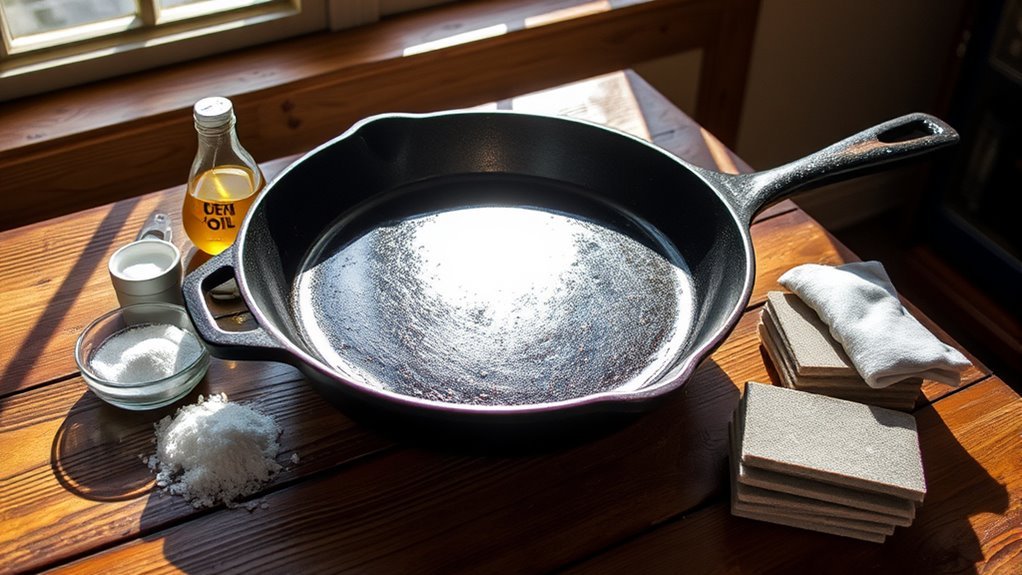
How to Restore a Cast Iron Pan in 7 Simple Steps
Imagine you’ve just inherited a cast iron pan that’s covered in rust and looks unusable. You might think it’s beyond saving, but with the right steps, you can bring it back to life. Restoring a cast iron pan isn’t as complicated as it seems, and once you know the process, you’ll be able to enjoy a reliable, non-stick pan for years.
Cast iron restoration is a rewarding project that anyone can do at home. Whether your pan has rust, grime, or old seasoning, these seven simple steps will guide you through cleaning, seasoning, and maintaining your cast iron cookware.
Let’s explore how you can restore your cast iron pan in seven straightforward steps.
Gather Your Materials
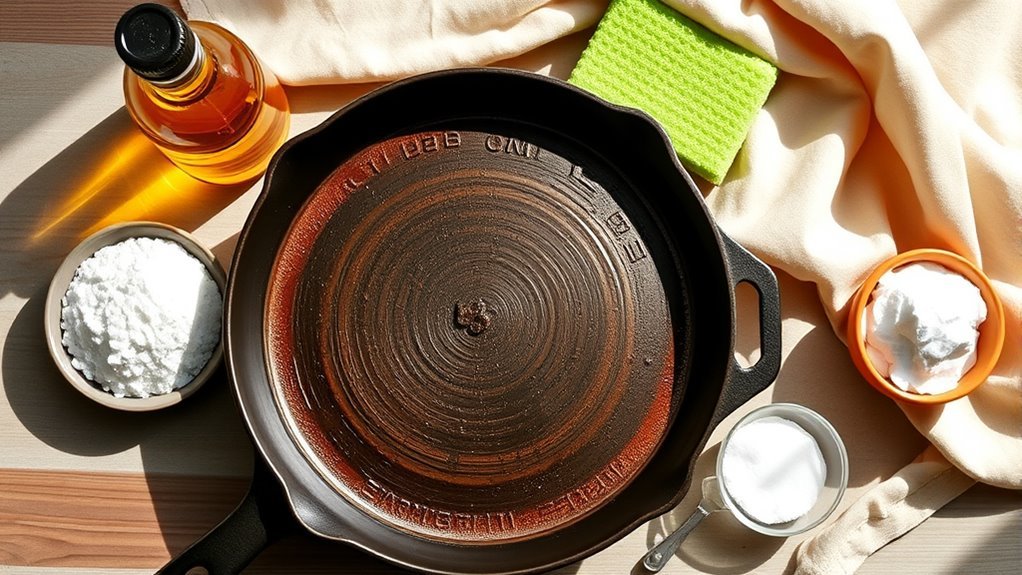
Before you begin restoring your cast iron pan, gather all the necessary materials to guarantee a smooth process. You’ll need steel wool and a scrub brush to handle rust and stuck-on debris during the cleaning cycle.
Dish soap helps clean the surface effectively, while a clean towel is essential for drying. For seasoning, prepare a high-smoke-point oil like vegetable or canola to coat your pan afterward.
Collect vinegar or lye if you plan to use chemical rust removal, and don’t forget gloves and safety goggles to protect yourself.
Finally, have a heat source ready, an oven or stove, to dry and re-season your cast iron pan.
A wire rack and baking sheet will support the pan during oven seasoning, ensuring an even coating and ideal restoration.
Remove Rust and Old Seasoning
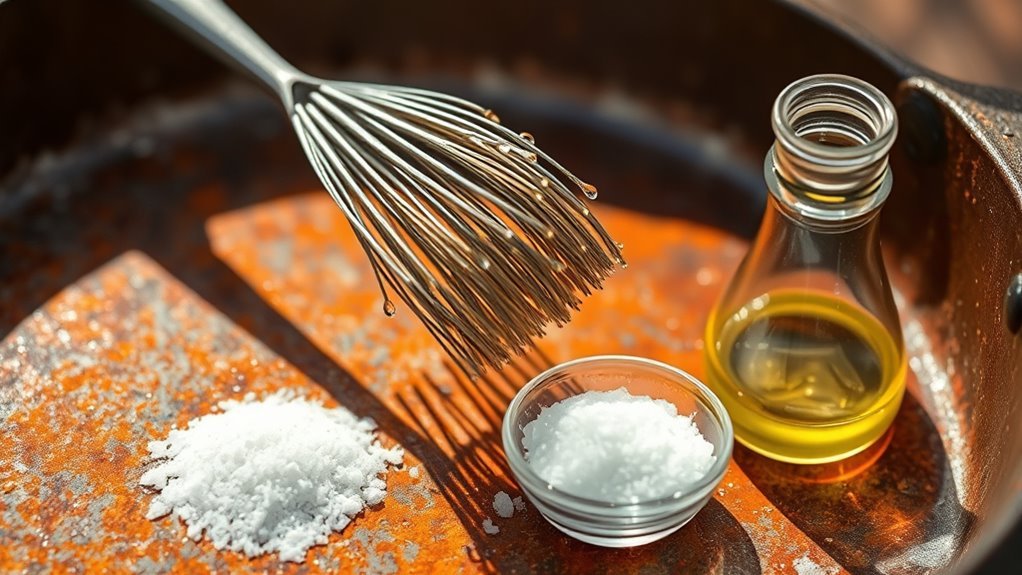
When rust and old seasoning have built up, you’ll need to remove them thoroughly to restore your pan’s smooth surface. Start by soaking the pan in a 50/50 vinegar and water solution for 1 to 6 hours to loosen rust and old seasoning.
After soaking, scrub the pan vigorously with coarse steel wool or a wire brush to expose bare cast iron.
Remember to rinse with warm water and scrub again to clear away loosened debris.
Here’s how to tackle rust and old seasoning effectively:
- Soak the pan briefly in vinegar solution to loosen buildup
- Scrub with steel wool to remove rust and old seasoning
- Rinse and dry immediately to prevent new rust
This cleaning step sets the stage for a proper restoration.
Clean the Pan Thoroughly
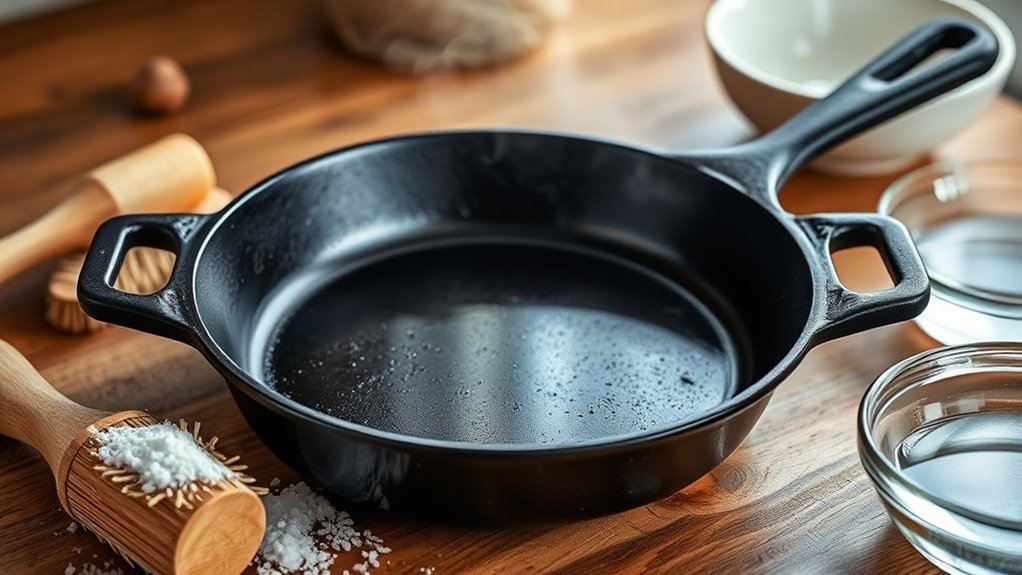
Although you’ve removed rust and old seasoning, you still need to clean the pan thoroughly to guarantee it’s free of loose debris and grease. Start by scrubbing your cast iron pan with hot water and a stiff brush to remove surface dirt. Add mild dish soap if grease lingers, scrubbing well.
For stubborn grime, sprinkle coarse salt and scrub with a cloth to abrasively clean the surface. Rinse with warm water to wash away residue, ensuring your pan is clean and ready to restore.
| Step | Purpose |
|---|---|
| Hot water + stiff brush | Remove loose debris |
| Mild dish soap | Break down grease and grime |
| Coarse salt + scrubbing | Remove stubborn residue |
| Rinse with warm water | Wash away dirt and soap |
| Dry promptly (next step) | Prevent new rust formation |
Dry the Pan Completely
A perfectly dry cast iron pan is essential to keep rust at bay. After washing, don’t let moisture linger, or rust will form quickly. You need to act fast with drying to protect your pan.
Here’s how to ensure your pan is completely dry:
- Wipe it thoroughly with a clean towel or paper towels to remove all water.
- Place the pan in a warm oven or on low heat for a few minutes to evaporate any hidden moisture.
- Avoid air drying, especially in humid environments, as this can leave damp spots that cause rust.
Before you apply oil or store your pan, double-check there’s no moisture remaining by feeling the surface.
Proper drying is key to preserving your cast iron’s longevity and performance.
Apply a Thin Layer of Oil
Since applying too much oil can create sticky spots, you’ll want to spread a thin, even layer over every part of your cast iron pan. Use a lint-free cloth or paper towel to apply a thin layer of oil, covering the cooking surface, handle, and bottom.
Apply a thin, even layer of oil over every part of your cast iron pan to avoid sticky spots.
Choose a high-smoke-point oil like vegetable, canola, or grapeseed to guarantee a durable seasoning.
After applying, wipe off any excess oil so only a thin film remains; this prevents pooling and uneven seasoning.
This careful application helps build a smooth, long-lasting non-stick coating.
Heat the Pan to Season
Once you’ve applied a thin layer of oil, it’s time to heat the pan to lock in the seasoning. Preheat your oven to 400°F (204°C) and place the pan inside to heat evenly. Heating the pan helps open its pores, allowing the oil to bond better during seasoning.
Before heating, make sure the pan is completely dry to avoid rust or uneven seasoning. You can also heat the pan on the stove over medium heat for a few minutes to achieve even warmth before oiling.
- Preheat the oven and place the pan inside for consistent heat
- Heat the pan on the stove briefly for even warmth before oiling
- Let the pan cool gradually to prevent warping or cracking
This process guarantees a durable, well-seasoned surface.
Repeat Seasoning for Durability
Though one seasoning cycle improves your pan, repeating the process multiple times, typically four or more, builds a stronger, more durable non-stick surface. Each layer of seasoning bonds tightly with the previous one, creating a smooth, resistant coating that stands up to regular use.
To do this effectively, apply thin, even layers of oil during each cycle to prevent buildup and ensure complete coverage. Then, bake the pan at high temperatures, around 350-400°F, to polymerize the oil properly.
This repeated seasoning not only enhances the pan’s non-stick properties but also protects it from rust.
Make sure to re-season regularly after cleaning or rust removal to maintain durability and prolong your cast iron pan’s lifespan.
Frequently Asked Questions
How to Quickly Restore Cast Iron?
You can quickly restore cast iron by soaking it in a vinegar-water mix for a few hours, scrubbing off rust, drying it thoroughly, then applying oil and baking it multiple times to build a smooth, non-stick seasoning layer.
Start by mixing equal parts vinegar and water, then soak the cast iron for a few hours to loosen rust. After soaking, scrub the rust off with a brush or steel wool.
Once clean, dry the cast iron completely to prevent new rust from forming. Next, apply a thin layer of oil all over the surface.
Bake the cast iron in the oven at a high temperature for about an hour. Repeat the oiling and baking process several times to build a durable, non-stick seasoning layer that protects your cast iron.
How Do I Restore a Neglected Skillet?
You start by scrubbing off loose rust with steel wool, then soak your skillet in a vinegar solution to loosen grime.
After rinsing and drying, season it with oil and bake to restore its non-stick surface.
What Are the Common Mistakes in Restoring Cast Iron?
Did you know 70% of cast iron damage comes from improper cleaning? You’ll want to avoid aggressive scrubbing, skipping drying, over-oiling, ignoring cracks, and using harsh chemicals to keep your pan safe and effective while restoring it properly.
How to Restore Cast Iron With Vinegar?
You soak your cast iron in equal parts vinegar and water for 1 to 6 hours, scrub off rust with steel wool, rinse, dry immediately, then reseason with oil to restore and protect your pan effectively.
Conclusion
Restoring your cast iron pan isn’t just about fixing its surface—it’s about inviting it back to life. By gently removing the past’s stubborn marks and nurturing it with care, you’re giving your pan a fresh start and a promise of many flavorful meals ahead.
With patience and a little love, you’ll turn what once seemed worn into a trusted kitchen companion that only gets better with time. Your pan’s second chance is just the beginning of a rewarding journey in cast iron restoration.
Embracing these simple steps ensures your cast iron cookware remains durable, seasoned, and ready for countless delicious dishes. Restoring a cast iron pan truly brings back its charm and functionality, making it a staple in your kitchen for years to come.