How to Pan Fry Top Sirloin Steak in 10 Easy Steps
You might think pan frying a top sirloin steak is tricky, but it’s actually straightforward when you know the right steps. By focusing on proper preparation, seasoning, and cooking techniques, you can achieve a flavorful, perfectly cooked steak every time. Pan frying steak is a simple method that brings out the best in this cut.
The key is in the details—from selecting the cut to resting it before serving. Keep following these easy steps, and you’ll master the process with confidence and ease. Enjoy a delicious top sirloin steak cooked to perfection right in your own kitchen.
Choosing the Right Top Sirloin Steak
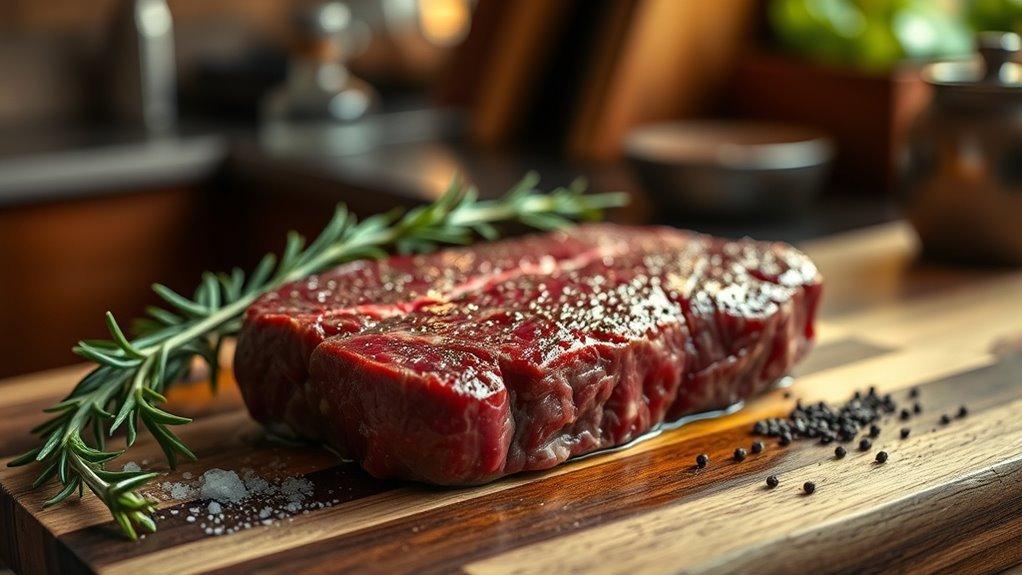
How do you pick the perfect top sirloin steak for pan frying? Start by focusing on cut quality and thickness. Choose a boneless top sirloin at least 1 inch thick to ensure even cooking and a good sear.
For the perfect pan-fried top sirloin, choose a boneless cut at least 1 inch thick for even cooking.
Examine the marbling closely. Those streaks of fat running through the meat add flavor and boost tenderness. Avoid overly lean cuts, as they can turn out dry and less juicy.
Your steak selection should also consider moisture; pick steaks free of excess surface moisture to achieve a proper sear.
For the best results, buy fresh top sirloin from a reputable butcher who prioritizes quality.
Preparing the Steak for Cooking
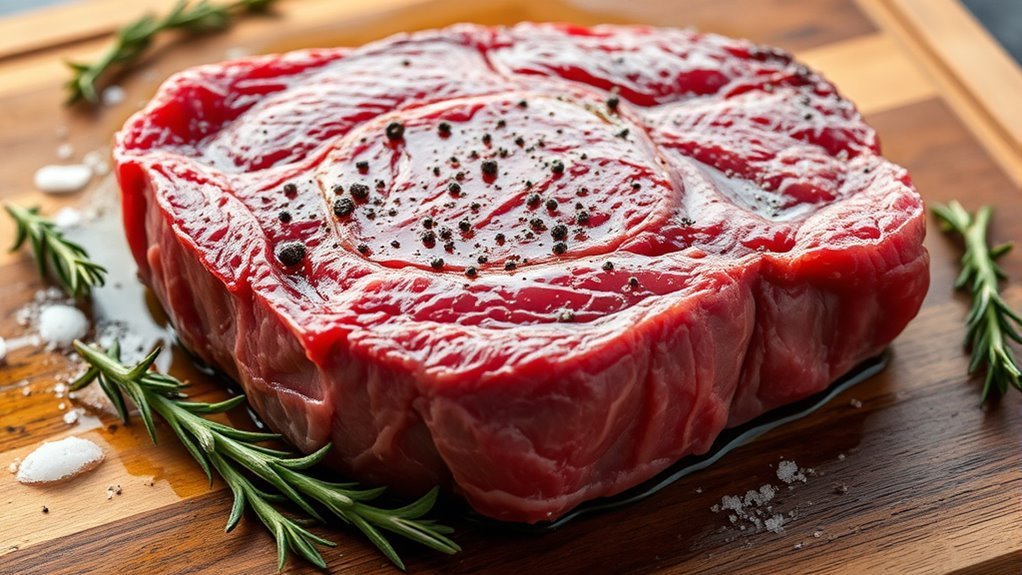
Before you start cooking, let your top sirloin steak rest at room temperature for about 30 minutes; this step guarantees it cooks evenly throughout.
Next, pat dry the steak with paper towels to remove any excess moisture. This is key to achieving a perfect sear.
For thick cuts, aim for at least 1 inch to ensure a good crust and proper doneness.
Once dry, lightly coat the steak with a high smoke point oil like avocado or olive oil; this prevents sticking and promotes browning.
Make sure your seasoned steak is ready by applying kosher salt and freshly cracked black pepper on all sides.
These simple steps will prepare your steak perfectly for pan frying, ensuring a delicious and evenly cooked result.
Selecting the Best Seasonings and Ingredients
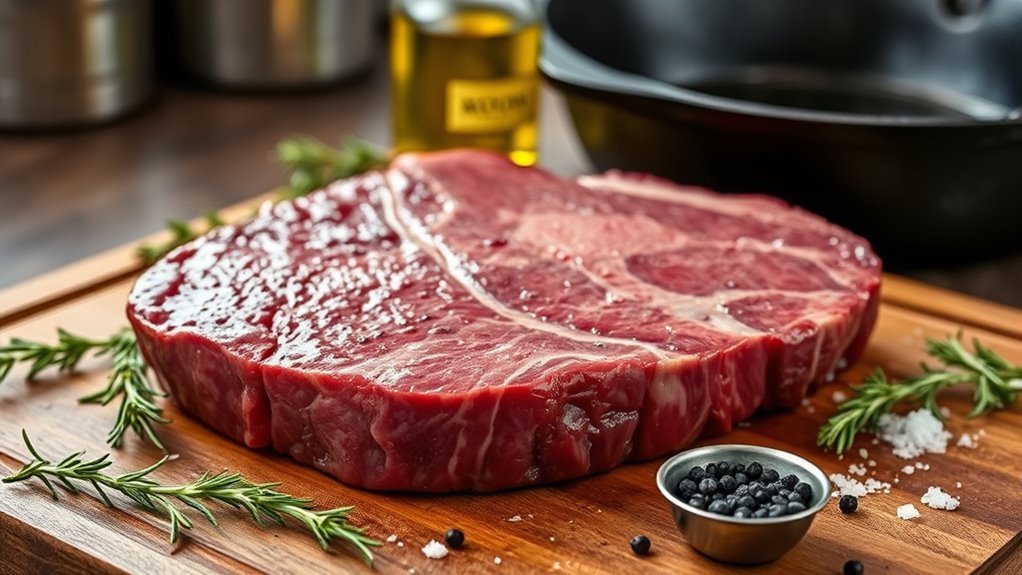
Although the steak’s quality is paramount, selecting the right seasonings can elevate its natural flavor without overpowering it. When you’re working with a high-quality steak, simplicity is key. Use sea salt and freshly cracked black pepper to season generously at least 30 minutes before cooking. This helps develop a perfect crust and deepens the flavor.
Avoid adding spices or pepper before searing to prevent bitterness. During cooking, enhance aromatics by adding:
- Fresh herbs like rosemary or thyme
- Optional garlic for subtle depth
- Minimal additional ingredients to keep the flavor clean
These seasonings highlight the steak’s natural taste while creating a delicious crust without overwhelming it. Keep it simple and let your seasonings complement your top sirloin perfectly.
Preheating the Pan Correctly
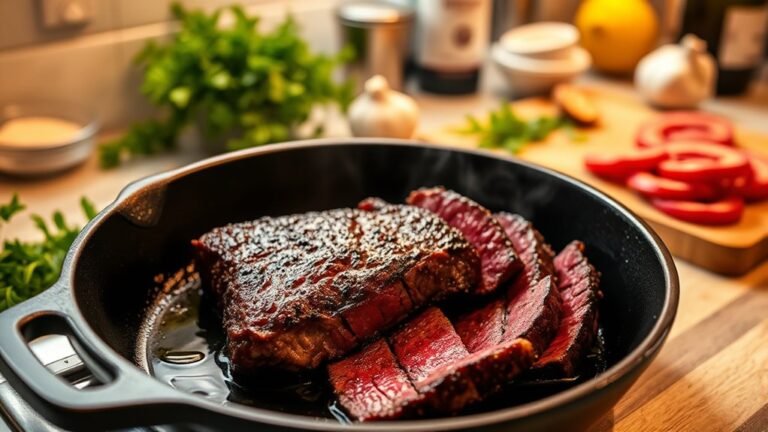
To achieve the perfect sear on your top sirloin steak, you need to preheat your pan properly. Start by placing your cast iron skillet over medium-high heat and preheat it for about 10 minutes until it’s hot and just begins to smoke.
Preheat your cast iron skillet on medium-high heat for about 10 minutes until it’s hot and smoking.
Aim for a temperature between 400-500°F, which you can test by flicking a drop of water into the pan—it should evaporate immediately. This ensures excellent searing.
Only add your high smoke point oil, like avocado or canola, after the pan reaches this temperature to avoid premature smoking.
Avoid overcrowding the pan during preheating, as it lowers the temperature and affects searing quality.
For accuracy, use an infrared or surface thermometer to confirm your pan is properly preheated before adding the steak.
Applying Oil and Seasoning to the Steak
Once your pan is properly heated, lightly coat your top sirloin steak with a high smoke point oil like avocado or olive oil to encourage even browning.
Before this, make sure you pat dry the steak with paper towels to remove excess moisture. This helps the oil stick better and forms a nice crust when cooking over high heat.
Then, generously season both sides with salt and freshly cracked black pepper. You can also enhance flavor by rubbing minced garlic or fresh herbs along with the oil and seasoning.
Remember to apply the oil just before placing the steak in the pan to avoid burning.
- Pat dry the steak to ensure better oil adhesion
- Use a high smoke point oil for even browning
- Season generously with salt and pepper for flavor
Searing the First Side of the Steak
When your skillet is hot enough to just start smoking, place the seasoned steak carefully into the pan without moving it. Using a cast iron pan preheated over high heat ensures the surface is ideal for a proper sear.
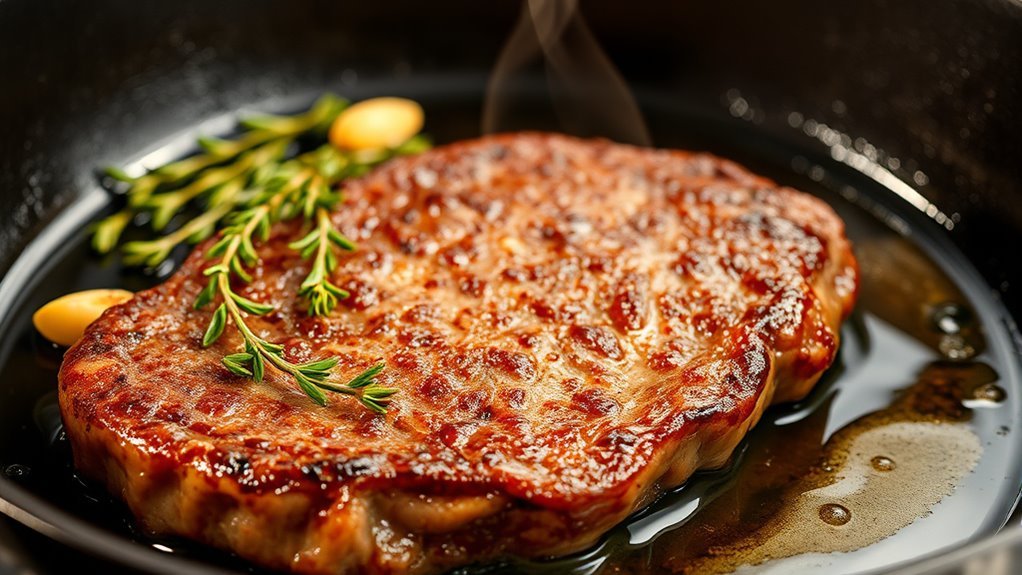
Let the steak cook undisturbed for 3 to 4 minutes, allowing it to develop a deep, golden-brown crust. This crust forms best with dry heat, so avoid adding butter or herbs now.
Maintain that high heat to promote Maillard browning, which enhances flavor and texture. Resist the urge to flip too soon; the steak should release easily from the pan when it’s ready.
This patient approach guarantees a beautifully seared first side that’s essential for a delicious top sirloin steak.
Flipping and Cooking the Second Side
Although the first side has developed a perfect crust, you’ll want to flip the steak carefully using tongs to maintain that sear.
Flip once you see a deep, golden-brown crust, typically after 3–4 minutes of searing.
Then, cook the second side for another 3–4 minutes, keeping an eye on the internal temperature to reach your preferred doneness.
Use tongs gently to avoid disrupting the crust.
Keep these tips in mind when cooking the second side:
- Flip carefully to preserve the searing crust
- Cook evenly for consistent doneness
- Monitor internal temperature closely
Following these steps ensures a beautifully cooked steak with a flavorful crust on both sides.
Basting With Butter and Herbs
After flipping the steak and allowing the second side to cook, you’ll want to add butter, garlic, and fresh herbs like thyme or rosemary to the pan.
As the butter melts, it combines with the steak’s pan seared juices, creating a rich herb butter.
Use a spoon to baste the steak repeatedly, coating all sides evenly. This technique locks in moisture, enhances flavor, and builds a glossy, flavorful crust.
Continuously spooning the melted butter over the steak infuses it with aromatic herbs and keeps it tender.
Once the steak is cooked to your liking, remove it from the heat and spoon the remaining herb butter over the top while it rests.
This final step maximizes flavor and guarantees every bite is delicious and juicy.
Checking for Perfect Doneness
To guarantee your top sirloin steak reaches the perfect doneness, you’ll want to check its internal temperature using a digital meat thermometer. Insert it into the thickest part of the steak around the 6-minute mark or when the steak feels slightly firm yet tender.
For a medium-rare finish, aim for an internal temperature of 130-135°F.
Keep these tips in mind during your temperature check:
Use a digital meat thermometer for accuracy.
Press lightly on the steak to gauge firmness: soft means rare; firmer indicates medium.
Remember, resting steak after cooking helps juice redistribution, stabilizing the temperature.
This process ensures your steak stays juicy and perfectly cooked every time.
Resting, Slicing, and Serving Your Steak
Once your steak reaches the desired doneness, let it rest for 5 to 10 minutes. This resting period allows the juices to redistribute throughout the meat, ensuring every bite is juicy and flavorful.
Rest your steak for 5 to 10 minutes to let the juices redistribute, ensuring each bite is juicy and flavorful.
When you’re ready, use a sharp knife to slice the steak against the grain. Cutting against the grain helps maximize tenderness and makes the steak easier to chew.
Slice the steak into thin pieces to preserve moisture and improve presentation.
Before you serve, pour any pan juices or melted butter over the slices to enhance flavor and keep the meat moist. Serve your steak immediately to enjoy its ideal taste.
If needed, you can reheat gently, but resting and proper slicing are key to a perfect steak experience.
Frequently Asked Questions
How to Cook a Top Sirloin Steak in a Frying Pan?
You heat a heavy skillet until it smokes, add oil, then sear the steak 3-4 minutes per side.
After flipping, add butter and herbs, baste, then rest the steak before slicing against the grain.
Should You Cook Sirloin Steak in Butter or Oil?
You shouldn’t cook sirloin steak solely in butter—it burns too fast. Instead, start with oil for a high-heat sear, then add butter later to baste and boost flavor.
This method avoids the risk of bitterness or smoke while enhancing the steak’s taste.
What Is the 3-3-3 Rule for Steaks?
The 3-3-3 rule means you’ll cook your steak for 3 minutes, flip it, cook another 3 minutes, then flip again for the final 3 minutes.
This helps you get an even crust and perfect doneness.
How Long Does It Take to Fry a Top Sirloin Steak?
Frying a top sirloin steak takes about 4 to 6 minutes, like a quick dance on a hot pan.
Thicker cuts might need longer, so keep an eye on the heat and use a thermometer for precision.
Conclusion
Congrats, steak master! You’ve just pan-fried a top sirloin like a pro—no fire alarms, no smoke signals, just pure deliciousness.
Remember, if your steak isn’t sizzling and your kitchen doesn’t smell like a five-star grill, did you even cook at all? Next time, trust the process: room temp, hot pan, butter bath, and patience.
Now go impress your friends—because nothing says “I’m fancy” like a perfectly seared steak and zero kitchen disasters. Bon appétit! This is how you pan fry top sirloin steak to perfection every time.