5 Easy Steps to Pack Pots and Pans for Moving
When it comes to moving, packing your pots and pans might not be at the top of your list, but it’s essential to protect them properly. Proper packing techniques can help you avoid scratches, dents, and lost lids while maximizing your packing space.
With the right approach, you can keep your cookware safe and organized throughout the move. Let’s explore how a few simple steps can make this task easier than you might expect.
Gather Your Packing Supplies
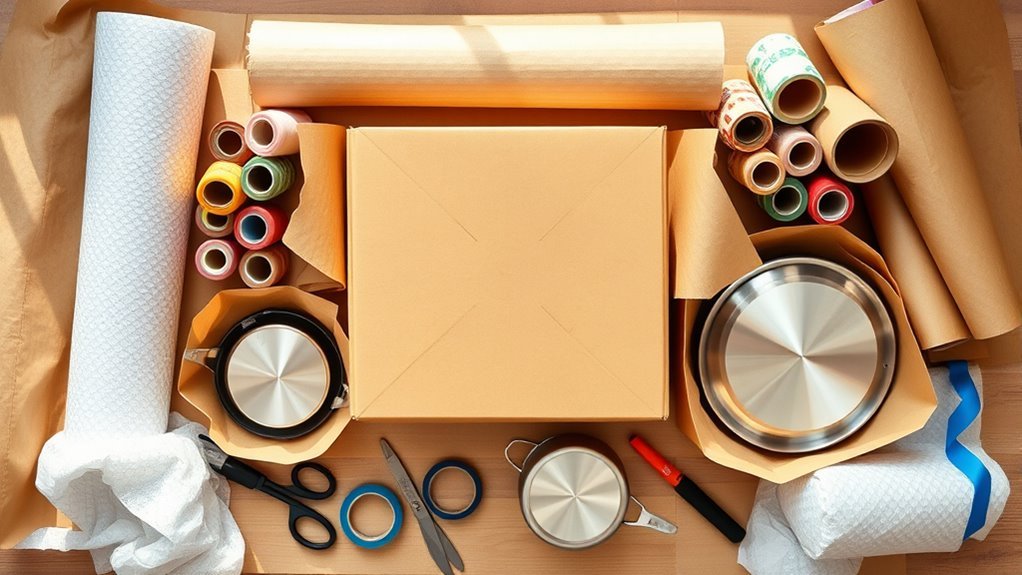
To pack your pots and pans securely, start by gathering sturdy medium or dish pack boxes that can support their weight.
Next, collect essential packing supplies like packing paper, bubble wrap, and packing tape to protect your cookware.
Use packing paper or bubble wrap to cushion each pot, pan, and their lids, ensuring shock absorption during transit.
Don’t forget extra packing materials such as dish towels or oven mitts to fill gaps and prevent shifting.
Securely seal your packing boxes with packing tape to avoid accidental openings.
Finally, have labeling supplies handy, such as permanent markers and tape, to clearly mark each box, making unpacking easier.
With the right packing supplies and materials, your pots and pans will stay safe and organized throughout your move.
Clean and Prepare Your Cookware
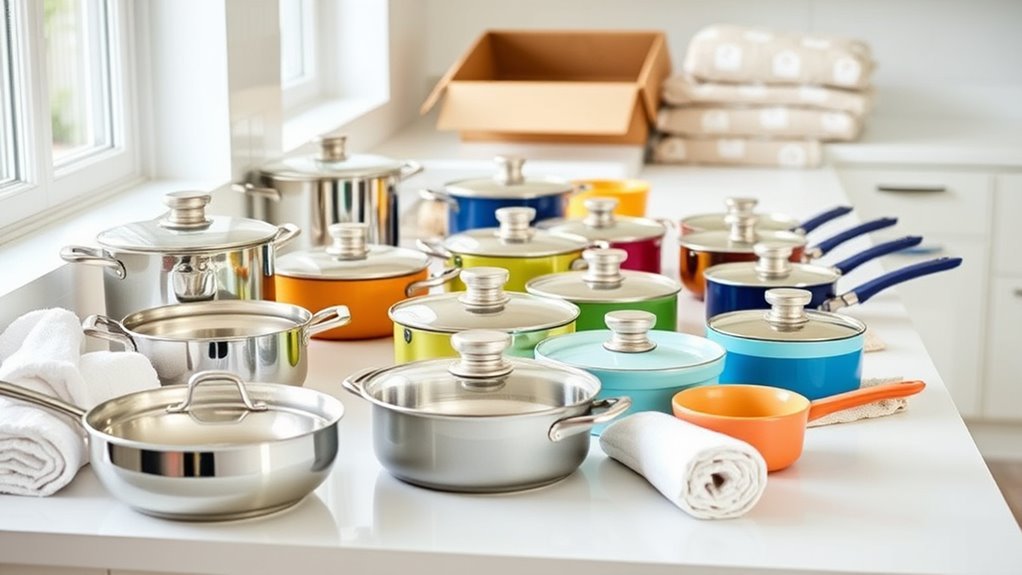
Before packing your pots and pans, make sure you wash them thoroughly with soap and water to remove any food residues and grease. Cleaning your cookware properly helps prevent odors and pests during the move.
After washing, dry each item completely to avoid mold, rust, and water damage. Take time to inspect your cookware for any damage or rust. If you find any, repair or replace those pieces before packing to ensure everything stays in good condition.
Remove leftover food or crumbs to keep your boxes fresh. Also, prepare lids by securing or wrapping them separately to prevent loss or breakage.
Wrap and Nest Pots and Pans
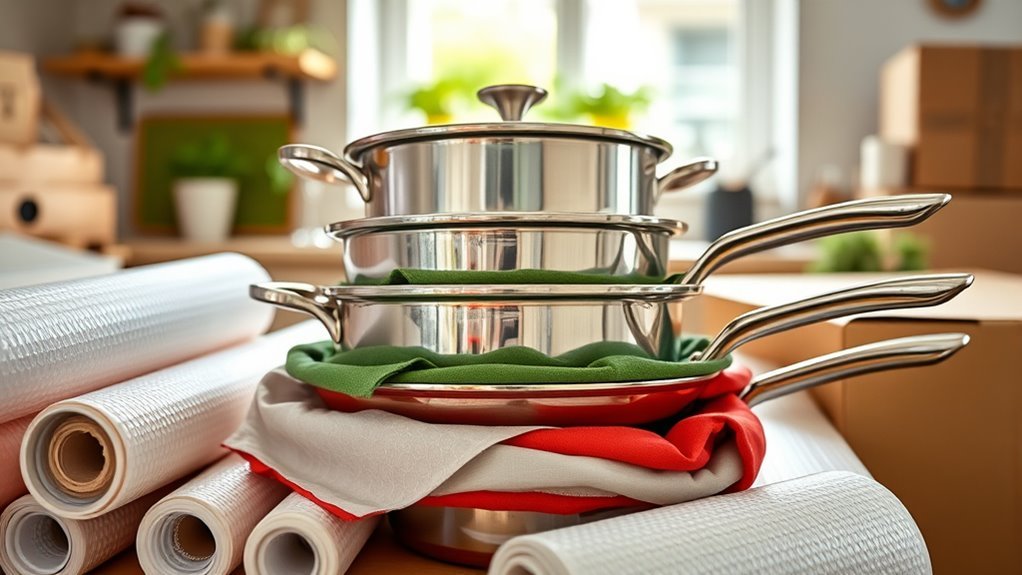
Once your pots and pans are clean and dry, it’s time to protect them for the move by wrapping each piece individually with packing paper or bubble wrap. This wrap provides essential protection against scratches and dents.
Next, nest smaller pots and pans inside larger ones to save space and reduce the number of boxes you’ll need. Be sure to place padding like dish towels or crumpled paper between nested items to prevent shifting and damage.
Pay special attention to handles and fragile parts. Cushion them with extra padding or wrap them separately for added protection. Secure each piece well to avoid movement during transit.
Pack Lids and Fill Empty Spaces
Five simple steps will help you pack lids safely and fill empty spaces efficiently. First, wrap each glass lid individually with bubble wrap or packing paper to prevent damage. Then, pack lids vertically in a fragile-labeled box or nest lids inside larger pots for a space-saving solution.
Secure lids with tape or rubber bands when stacking to keep sets together and avoid losing parts. Use padding to fill empty spaces around pots and lids, preventing shifting during transit. Don’t forget to label boxes clearly as fragile, indicating they contain lids.
Nest lids inside pots to save space and protect fragile edges.
Use padding to fill empty spaces, preventing movement and damage.
Secure lids with tape or rubber bands to keep them organized and safe.
This method helps you pack lids efficiently while preventing damage.
Seal, Label, and Handle With Care
Although packing your pots and pans carefully is essential, sealing and labeling your boxes properly guarantees they stay secure and easy to identify during your move. Start by sealing each box with sturdy tape to keep lids and padding in place.
Wrap glass lids separately with bubble wrap or packing paper to protect fragile items from breakage.
Next, label each box clearly with “Fragile” and “Kitchen” using waterproof markers on the top and sides for quick identification.
When stacking boxes, handle them with care, especially those containing heavy or fragile cookware. Marking “Handle with Care” alerts movers to be careful during transport.
Following these steps ensures your cookware stays safe and organized, making unpacking easier and preventing damage to your valuable pots and pans.
Frequently Asked Questions
How to Pack Pots and Pans When Moving?
You should wash and dry pots and pans, nest smaller ones inside larger, wrap each item carefully, pack heavy cookware at the bottom, fill gaps with padding, then seal and label boxes clearly to guarantee safe moving.
How to Move With Pots and Pans?
Did you know 60% of moving damages involve kitchenware? You’ll want to pack your pots and pans carefully, nest them, cushion gaps, and label boxes clearly to keep everything safe and organized during the move.
Do You Need to Bubble Wrap Pots and Pans When Moving?
You don’t have to bubble wrap every pot and pan, but it’s smart to wrap fragile items like glass lids and delicate cookware.
This extra protection helps prevent scratches and dents during your move.
How Far in Advance Should You Start Packing Before Moving?
You should start packing your pots and pans 2-4 weeks before moving. This gives you enough time to wrap them carefully, stay organized, and avoid last-minute stress.
Ensuring a smooth, well-prepared move is much easier when you begin early. Taking these steps ahead of time helps keep everything in good condition and ready for transport.
Conclusion
Now that you know how to pack your pots and pans efficiently, you’re ready to move with less stress and more confidence. Did you know that 60% of kitchen items get damaged during moves due to poor packing?
By following these simple steps—cleaning, wrapping, nesting, and labeling—you’ll protect your cookware and save time unpacking later.
Remember, careful packing means your favorite pots and pans will arrive safely, ready for your next meal! Proper pots and pans packing is essential to ensure your kitchen essentials stay intact throughout your move.