How to Install Double Pane Window Glass in 5 Easy Steps
If you’re ready to upgrade your windows with double pane glass installation, doing it yourself can save both time and money. Installing double pane window glass requires careful handling of the frame and precise measurements to ensure a perfect fit.
With the right tools and a steady approach, the process is straightforward. However, there are key details that make all the difference between a drafty window and a solid, energy-efficient seal.
Let’s walk through the essential steps you can’t afford to miss when installing double pane window glass in 5 easy steps.
Remove Existing Glazing and Trim
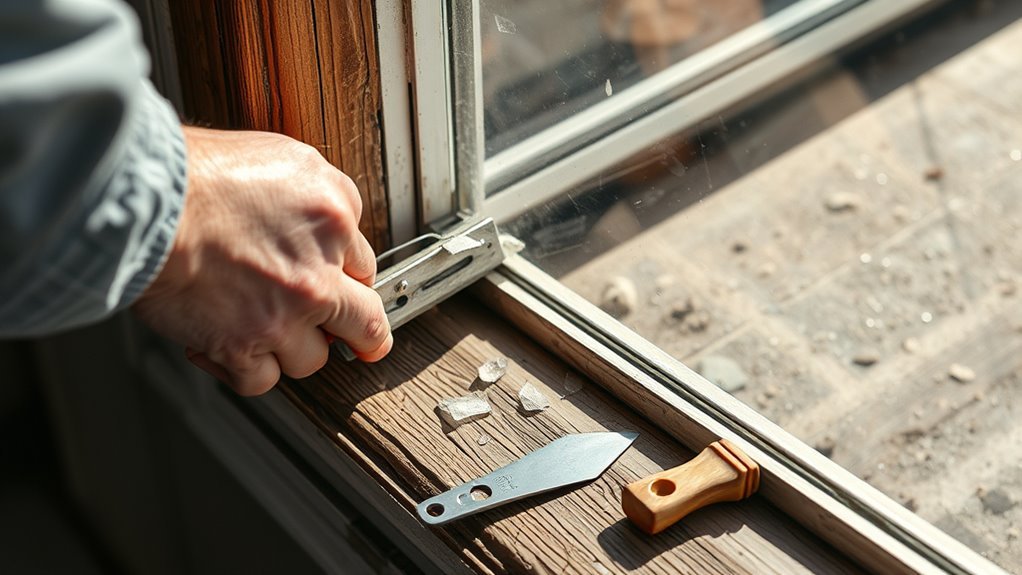
Before you begin, carefully pry off the vinyl or wooden window stops using a flat-head screwdriver or putty knife, making sure not to damage the frame.
Next, remove any glazing strips or sealant around the glass pane to free the window sash.
Carefully remove glazing strips or sealant around the glass pane to release the window sash without damage.
Use a utility knife or putty knife to cut through old putty or sealant along the edges of the glazing. This step is *essential* for clean glass removal.
If the glass is broken, tape an X over it to contain shards safely.
Once the glazing is loosened, gently lift out the old glass or insulated glass unit, supporting it from underneath to avoid breakage.
Removing glazing this way protects the window frame and prepares it for the new double pane installation.
Measure the Window Opening Accurately
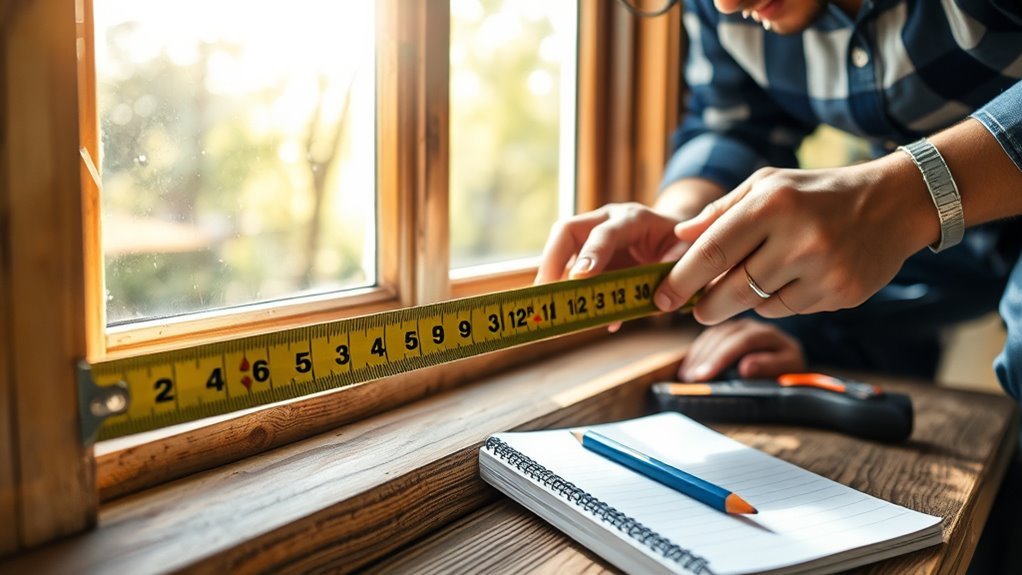
When measuring the window opening, take width and height readings at three different points to capture any irregularities. Measure the width at the top, middle, and bottom of the window frame, and the height at the left, center, and right sides.
This measurement process helps you identify any unevenness in the window frame. Always record the smallest dimensions to ensure a proper fit.
To allow for clearance and sealing, subtract about 1/8 inch (3 mm) from each measurement.
Don’t forget to measure the thickness of the existing glass or the space between panes to order the correct replacement.
Carefully Remove the Old Glass Pane
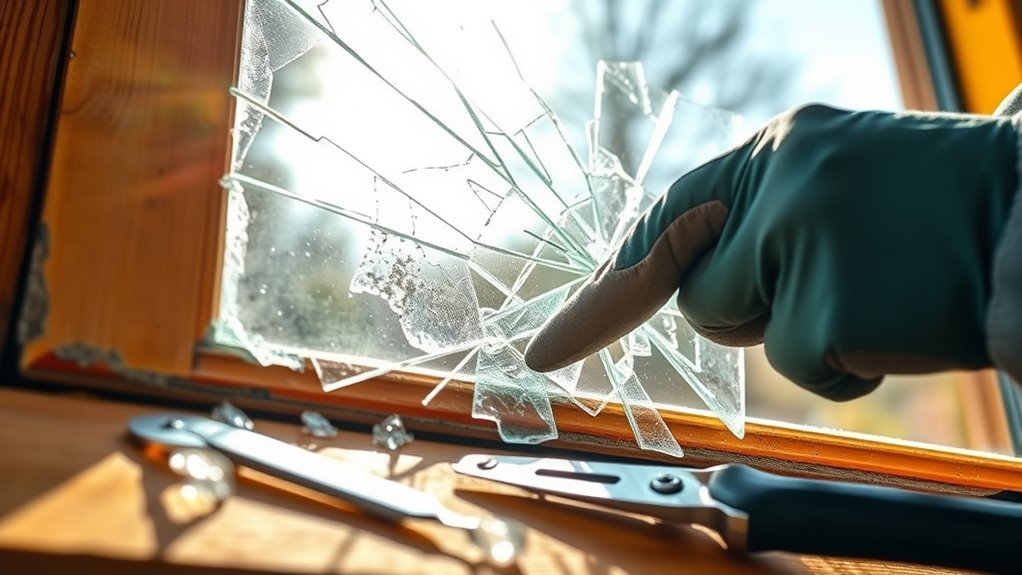
Though removing old glass can be tricky, taking proper precautions will keep you safe and make the process smoother. First, put on protective gloves and goggles to guard against glass shards during shard removal.
Carefully pry off the glazing strips or window stops with a flat-head screwdriver to access the pane. To contain shards, place painter’s tape in an X pattern over cracked glass before starting window glass extraction.
Gently score around the edges of the glass with a utility knife to loosen sealant. When you’re ready, support the glass from underneath as you remove old glass to prevent it from falling.
Handle glass removal slowly and steadily, ensuring window safety throughout this step to avoid injury and damage.
Insert the New Double Pane Glass
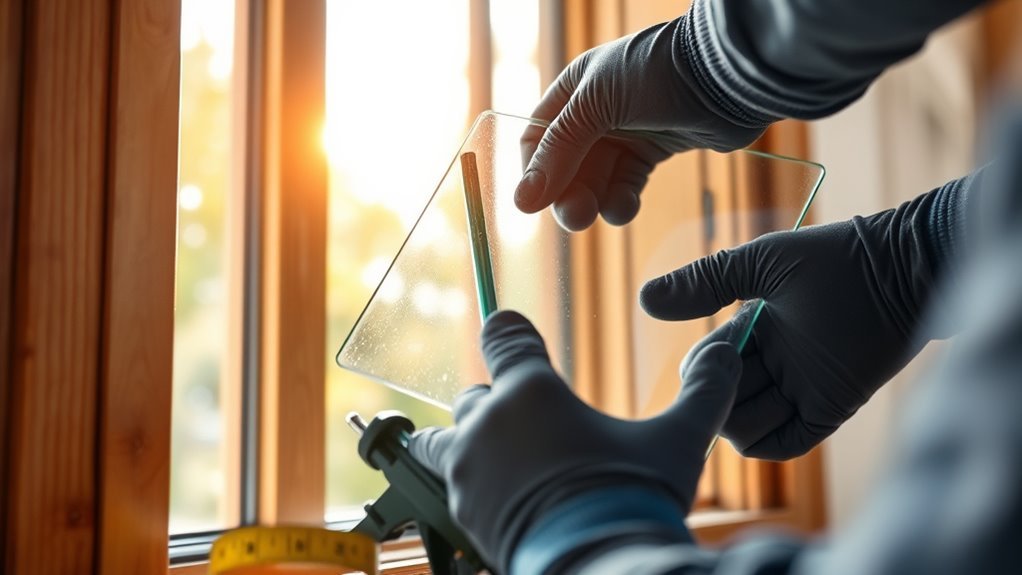
As you insert the new double pane glass, make sure it fits snugly into the frame’s existing grooves and seals. Carefully align the glass with the window frame to ensure proper seating. Apply even pressure as you gently press the glass into place to prevent damage or shifting.
Use a level to confirm the glass is flush and evenly seated within the frame edges.
To secure the glass properly:
- Insert glazing points about every 10 inches to hold the glass firmly.
- Check alignment and seating regularly during installation.
- Apply a thin bead of sealant or glazing compound around the perimeter for a weather-tight seal.
Following these steps ensures your double pane glass is securely installed and well-sealed.
Seal and Reapply Glazing Strips or Weatherstripping
Once you’ve positioned the double pane glass securely, press the original or new glazing strips firmly into the frame’s grooves to create a tight seal. Make sure the strips sit evenly to hold the glass firmly and maintain an insulating, weatherproofing barrier.
Next, apply adhesive-backed or foam weatherstripping around the sash or window frame edges, ensuring the surface is clean and dry for ideal adhesion.
Run a continuous bead of high-quality sealant or caulk along the glass perimeter and where weatherstripping contacts the frame to enhance the seal against air leaks.
Use painter’s tape to hold the glazing strips or weatherstripping in place while the sealant cures fully. This careful sealing ensures your window frame is energy-efficient, weatherproof, and durable for long-lasting performance.
Frequently Asked Questions
Can I Install Double Pane Windows Myself?
You can install double-pane windows yourself if you’re careful and patient, but it’s tricky. Without experience or special tools, you might risk poor sealing or damage.
For best results, consider hiring a professional.
Can You Replace the Glass in a Double Pane Window?
You can’t easily replace just the glass in a double pane window—over 70% of sealed units fail if tampered with.
It’s best to replace the entire sealed unit to keep insulation and airtightness intact.
How to Put a Pane of Glass in a Window?
You remove the old glazing strips, measure the glass, apply glazing compound, then carefully press the new pane into the frame.
Secure it with glazing points and reinstall the stops to hold everything firmly in place.
What Holds a Window Pane in Place?
Glazing stops, points, or clips hold your window pane in place. Sealants like caulk secure edges, while gaskets or rubber seals inside vinyl or aluminum frames lock the glass firmly, preventing movement or leaks.
Conclusion
Installing double pane window glass might seem intimidating at first, but with careful steps, it becomes straightforward. While removing old glazing requires patience to avoid damage, inserting the new glass brings a satisfying sense of renewal.
The contrast between fragile shards and sturdy new panes highlights the transformation you achieve. By measuring precisely and sealing properly, you’ll not only improve your window’s look but also boost energy efficiency, making your effort truly worthwhile.
Following these 5 easy steps to install double pane window glass ensures a smooth process. Proper installation enhances insulation, reduces energy costs, and increases the comfort of your home.