3 Essential Tips to Cook on Stainless Steel Pans
Did you know that nearly 70% of home cooks struggle with food sticking to stainless steel pans? If you’ve ever faced this frustrating issue, you’re not alone. Cooking on stainless steel pans can be tricky without the right approach.
The key to mastering these versatile cookware pieces lies in understanding a few simple but essential techniques. By tweaking how you preheat, test temperature, and add oil, you can transform your cooking experience—making it smoother and more rewarding.
Let’s explore what you need to know to cook on stainless steel pans effectively and elevate your culinary skills.
Preheat Your Pan Properly
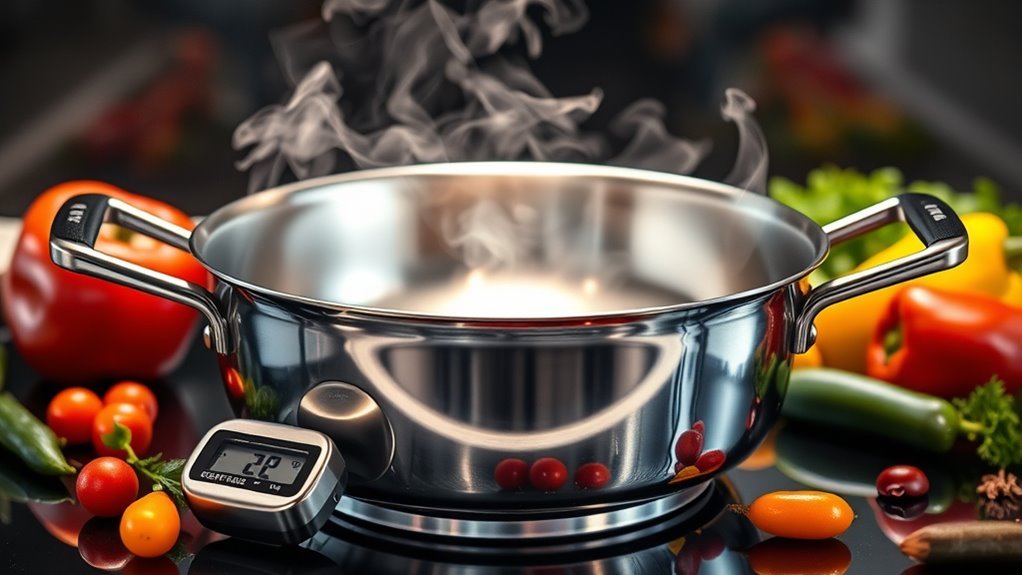
When you preheat your stainless steel pan over medium heat for 2 to 3 minutes, you create an even cooking surface that helps prevent food from sticking. This proper preheat ensures ideal heat distribution, which is key for excellent searing and browning.
Avoid adding oil or food before the pan reaches the right temperature, or you risk sticking. Once the pan is hot enough, water droplets will form bouncing beads that glide across the surface, signaling it’s ready. This natural barrier allows food to release easily, making cooking smoother.
Use the Water Droplet Test to Gauge Temperature
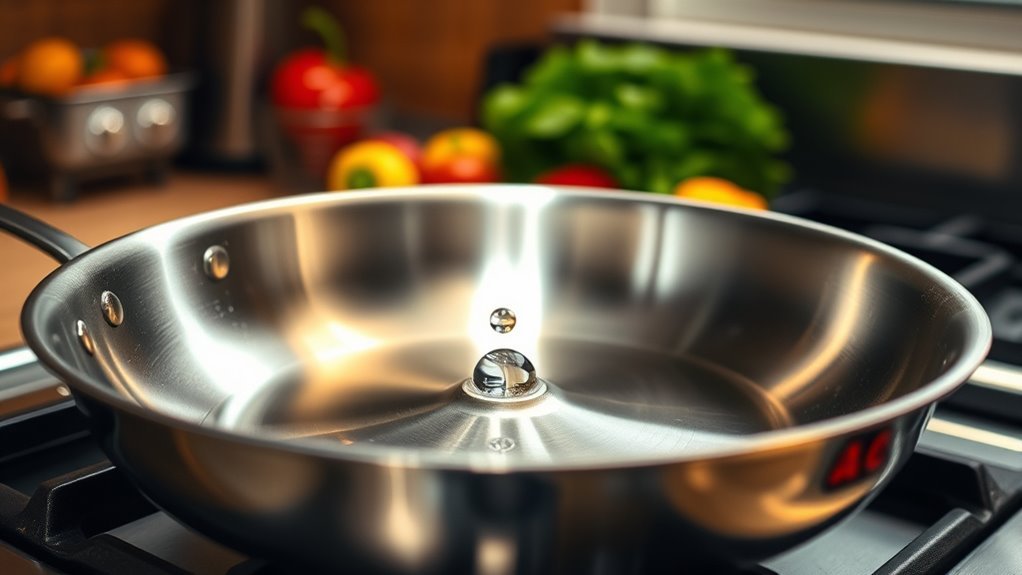
Although preheating your stainless steel pan is essential, you can confirm it’s ready by performing the water droplet test. Sprinkle a few water droplets onto the surface of your stainless steel cookware. If the droplets skitter or dance, it signals the pan temperature has reached the ideal cooking temperature, usually around 350-375°F.
This visual indicator helps you manage heat control effectively. If the water evaporates instantly with a sizzle, your pan is overheating and needs to cool before cooking.
Using this simple, chemical-free test prevents damage like warping or discoloration caused by excessive heat during preheating. Rely on the water droplet test to gauge temperature accurately and ensure your stainless steel pan is perfectly primed for cooking every time.
Add Oil or Fat Only When the Pan Is Hot
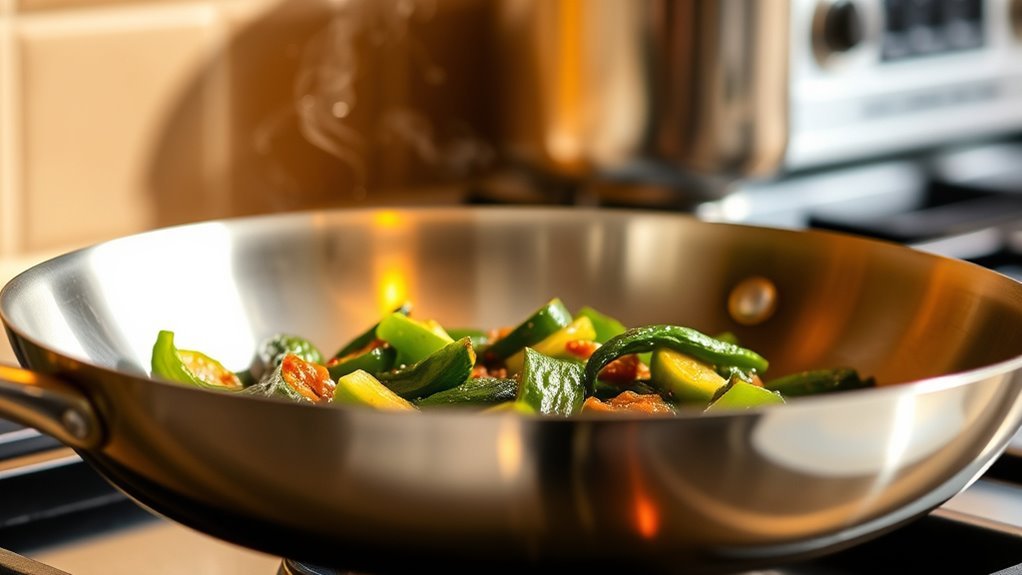
Once your stainless steel pan reaches the right temperature, as you can tell from the water droplet test, it’s time to add oil or fat.
When your stainless steel pan hits the right heat, as shown by the water droplet test, add your oil or fat.
You want to add oil only when the pan is properly preheated to create a non-stick surface. Pouring oil into a cold or lukewarm pan leads to sticking and uneven cooking.
When the hot pan is ready, the oil will shimmer or form ripples on the cooking surface. This indicates the correct oil temperature.
Wait for the oil to move easily before adding ingredients.
Using hot oil helps you achieve better searing by creating a barrier between the food and the pan, ensuring your dishes cook evenly and don’t stick.
This simple step improves your stainless steel cooking every time.
Frequently Asked Questions
What Is the Trick to Cooking With Stainless Steel?
The trick is to preheat your pan properly, then add oil once it’s hot. Wait for the oil to shimmer before cooking, and keep the heat consistent to prevent sticking and achieve even cooking every time.
How Do I Keep Food From Sticking to My Stainless Steel Pans?
You keep food from sticking by properly preheating your pan, adding oil once hot, and waiting for it to shimmer before cooking.
Also, pat ingredients dry and avoid overcrowding to maintain the right temperature and release.
What Is the Rule for Stainless Steel Pans?
The rule for stainless steel pans is to preheat the pan over medium heat before adding oil or food. This creates a natural non-stick surface and helps prevent sticking while ensuring even cooking every time you cook.
Preheating properly allows the pan to reach the right temperature, which is key to achieving great searing and browning. Avoid adding cold oil or food to a cold pan, as this can cause sticking and uneven cooking.
What to Avoid With Stainless Steel Pans?
Don’t throw freezing food into a blazing pan or scrub it like you’re erasing history. Avoid overheating past 500°F, washing with harsh cycles, or cleaning hot pans instantly—you’ll keep your stainless steel shining and warping-free!
Conclusion
Mastering stainless steel pans can transform your cooking, and the water droplet test is key—did you know that 70% of sticking issues come from improper pan temperature?
By preheating your pan for 2-3 minutes and adding oil only when it shimmers, you’ll prevent food from sticking and achieve that perfect sear every time.
Keep practicing these simple steps, and you’ll cook like a pro with beautifully browned, delicious meals.
Remember, these essential tips to cook on stainless steel pans will help you get the best results and make your cooking experience enjoyable and efficient.