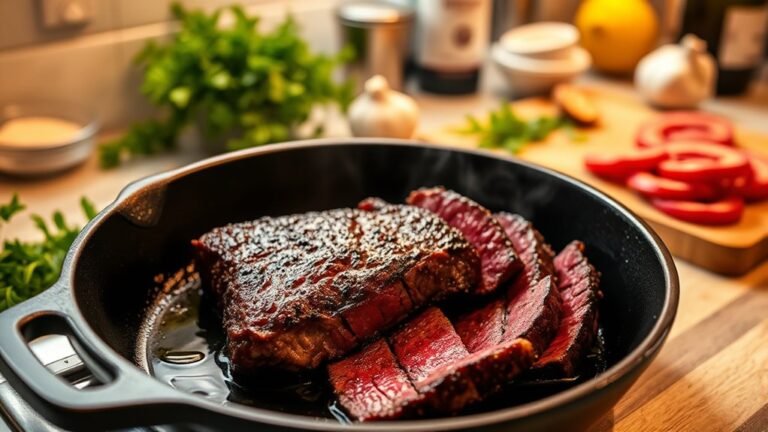
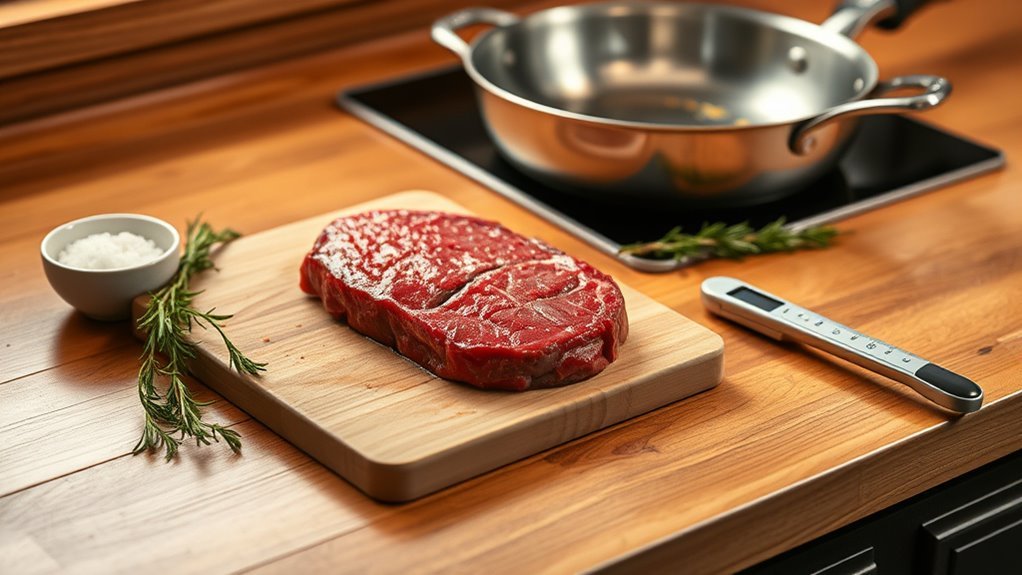
How to Cook Filet Mignon on a Pan in 7 Easy Steps
If you want to cook a tender, flavorful filet mignon right on your stovetop, you’ll need more than just heat and time. Choosing the right cut, seasoning it properly, and mastering the sear are all key steps that can make a big difference.
In this guide on how to cook filet mignon on a pan, follow these seven straightforward steps, and you’ll create a perfectly cooked steak that rivals any restaurant dish.
Let’s start with how to pick and prepare your filet for the best results.
Selecting the Right Cut and Preparing the Steak
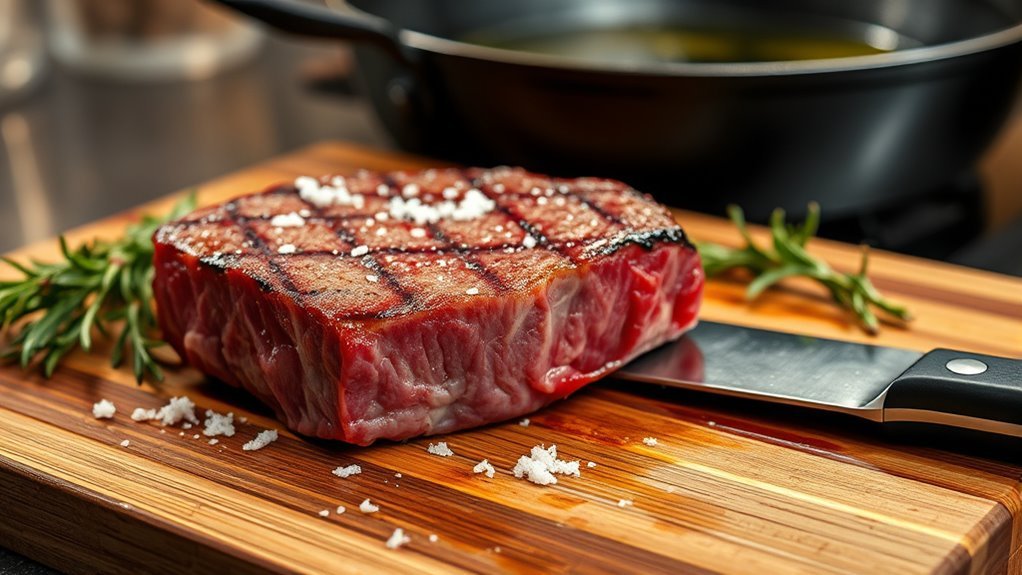
When selecting filet mignon, choose high-quality beef tenderloin that’s been aged at least 28 days to guarantee maximum tenderness and flavor.
Cut the steaks from the center portion of the beef tenderloin, ensuring an even steak thickness of 1.5 to 2 inches.
Slice filet mignon from the tenderloin center, maintaining a consistent 1.5 to 2-inch thickness for ideal cooking.
This thickness promotes even cooking, balancing a perfect sear with your desired interior doneness.
For best results, avoid thinner cuts that cook too quickly or thicker ones that risk uneven heat distribution.
Before cooking, season the filet mignon generously with coarse sea salt and freshly ground black pepper.
This simple seasoning enhances the natural flavors of this premium cut.
Proper preparation, including selecting the right cut and seasoning, sets the foundation for a perfectly cooked steak every time.
Bringing the Steak to Room Temperature
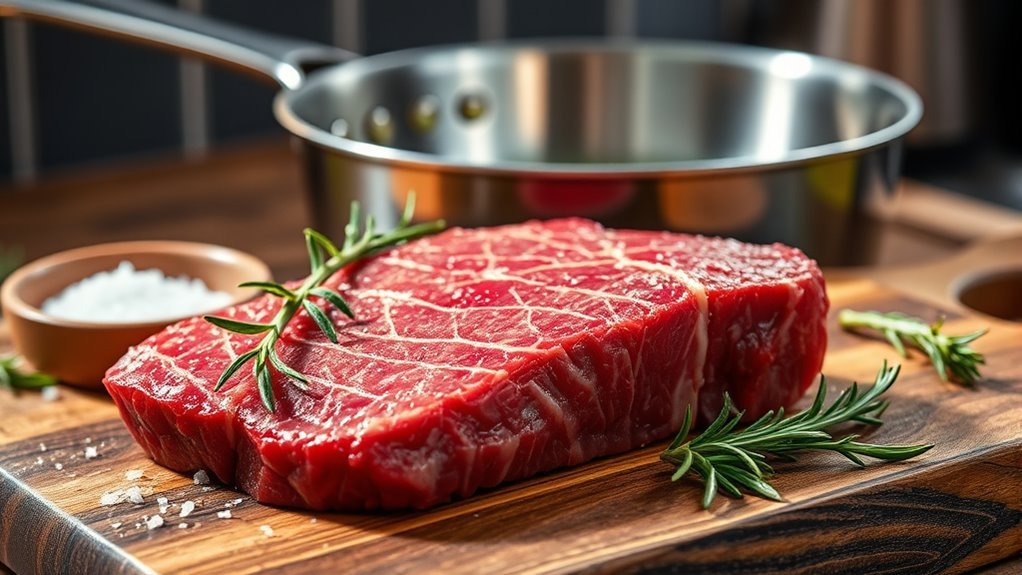
Although it’s tempting to cook the filet mignon straight from the fridge, letting it sit at room temperature for 30 to 60 minutes guarantees even heat distribution and prevents an overcooked exterior.
To bring your steak to room temperature, remove it from the fridge and place it uncovered on a plate or baking sheet.
This resting steak period allows the initial temperature to warm up gradually, reducing the risk of toughness during cooking.
Before you start steak searing, pat dry the filet with paper towels to remove excess moisture.
Doing this ensures a better sear and consistent results.
Bringing the steak to room temperature helps prevent overcooking the outside while allowing the inside to cook evenly, giving you a perfectly cooked filet mignon every time.
Seasoning and Dry Brining the Filet Mignon
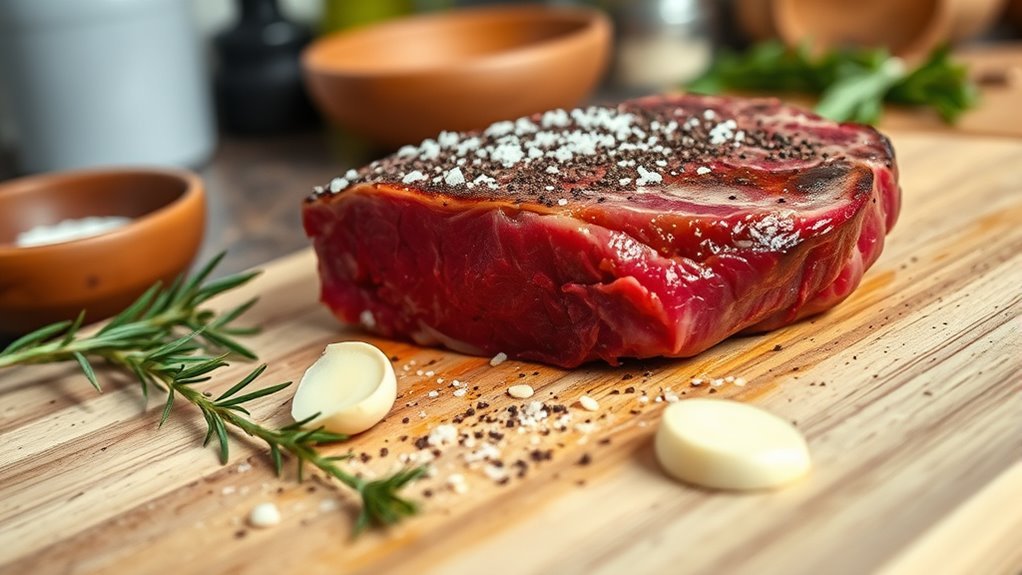
Since seasoning plays a crucial role in bringing out the filet mignon’s natural flavors, start by generously applying coarse sea salt or kosher salt. This salt acts as your primary seasoning and enhances the beef’s taste deeply.
Next, dry brining the steak is key: place the salted filet on a wire rack in the refrigerator for at least an hour or overnight. This process draws out surface moisture, which then reabsorbs, intensifying the flavor and helping develop a better crust when searing.
Before cooking, pat the steak dry with paper towels to remove any excess salt and moisture, ensuring a perfect sear. Remember, after dry brining, no additional seasoning is needed; the salt has already done its job to boost both flavor and texture.
Preheating the Pan and Choosing the Right Oil
After seasoning and dry brining your filet mignon, the next step is to get your pan properly heated and select the right oil. You need to preheat your pan over medium-high to high heat until it’s very hot. This usually takes 5 to 10 minutes.
Then, choose a high smoke point oil like grapeseed, canola, or vegetable oil to handle the searing temperature without burning. Add just enough oil to coat the bottom of the pan lightly.
- Wait for the oil to shimmer or start to smoke.
- Flick a drop of water onto the pan; it should sizzle and evaporate instantly.
- Avoid low smoke point oils like olive oil or butter alone—they burn and ruin flavor.
A hot pan and proper oil set the stage for perfect searing.
Searing the Steak for a Perfect Crust
When your pan is properly heated and the oil is shimmering, pat your filet mignon dry to remove any moisture that could prevent a good sear.
Place the steak gently into the hot skillet, ensuring the pan temperature stays high to promote effective pan searing.
Avoid crowding the pan to allow proper crust formation.
Let it sear undisturbed for 2-3 minutes, developing a deep golden-brown crust through caramelization.
Resist the urge to move the steak, as this disrupts crust formation.
Use tongs to flip the filet mignon only once, searing the other side similarly to achieve an even crust.
Maintaining high heat throughout ensures a perfect crust, locking in juices and flavor.
This careful process guarantees a beautifully seared steak with a rich, flavorful crust.
Finishing the Steak to Desired Doneness
Once you’ve achieved a perfect sear on your filet mignon, focus on finishing it to your preferred doneness. Use a digital thermometer to check the internal temperature in the thickest part of the steak, avoiding fat or bone.
Here’s how to nail your desired doneness:
Master your steak’s doneness with precise temperature checks and perfect resting for juicy, tender results every time.
- Monitor steak temperature closely, aiming for 120°F for rare or 130°F for medium rare.
- Remove the steak from heat when it’s about 5°F below your target temperature to let residual heat complete the cooking.
- Allow a resting time of 5-10 minutes so the internal temperature rises and juices redistribute.
Adjust your cooking time according to thickness to ensure you hit the perfect target temperature every time.
Resting and Serving Your Filet Mignon
Although the searing and cooking are essential, letting your filet mignon rest for 5 to 10 minutes is just as important to keep it juicy and tender.
After cooking, rest the steak by placing it on a rack and tent it loosely with foil to retain heat without steaming the crust.
For a 1.5-inch thick filet, rest for 5 minutes; thicker cuts need a resting period of 8-10 minutes. This rest time allows juices to redistribute, preventing them from running out when sliced.
If your cut is between thicknesses, aim to rest for 5-7 minutes.
Always rest loosely and slice against the grain after resting to maximize tenderness and presentation.
Proper resting ensures a flavorful, perfectly tender filet mignon every time.
Frequently Asked Questions
How Do You Cook Filet Mignon in a Skillet?
You heat a heavy skillet until very hot, season your filet mignon, sear each side for 2-3 minutes, basting with butter and herbs.
Then, finish cooking to your preferred doneness. Let it rest before serving to allow the juices to redistribute.
How to Cook Filet Steak in a Pan?
You heat a heavy skillet until it’s very hot, season the steak, then sear each side for a few minutes.
Add butter and herbs, baste, check the temperature, then rest before serving for juicy, tender results.
How Does Gordon Ramsay Cook Filet Mignon in a Pan?
You season the filet mignon generously, sear it in a smoking-hot cast-iron pan, then baste with butter, garlic, and herbs.
Cook 2-3 minutes per side, finish in the oven if needed, and rest before serving.
How to Cook Filet Mignon in a Pan Without an Oven?
You’ll heat a heavy skillet until very hot, season your filet, sear each side for 2-3 minutes, add butter and herbs, baste the steak, check its temperature, then let it rest before serving.
Conclusion
Now that you know how to pan-sear the perfect filet mignon, are you ready to impress with that mouthwatering crust and tender, juicy center? With the right cut, seasoning, and a hot pan, you’ll achieve steakhouse quality right at home.
Just remember to let it rest before slicing—this is where all the magic happens. So go ahead, fire up your skillet, and treat yourself to a steak that’s worth savoring every bite of!
Mastering how to cook filet mignon on a pan in 7 easy steps ensures you get that perfect sear and juicy interior every time. With this simple guide, your filet mignon will be the star of any meal!