7 Steps to Cook Perfect Filet Mignon in a Pan
If you want to master cooking filet mignon in a pan, you need to focus on more than just heat and time. Perfect pan-seared filet mignon requires choosing the right cut, preparing it properly, and seasoning it well. These steps are vital to achieving the best flavor and texture.
Knowing how to sear and finish the steak can make a huge difference in flavor and tenderness. Before you start, consider these key steps that guarantee your filet mignon is tender and perfectly cooked every time. Following these tips will help you cook a delicious and juicy steak that impresses every time.
Selecting the Right Cut of Filet Mignon
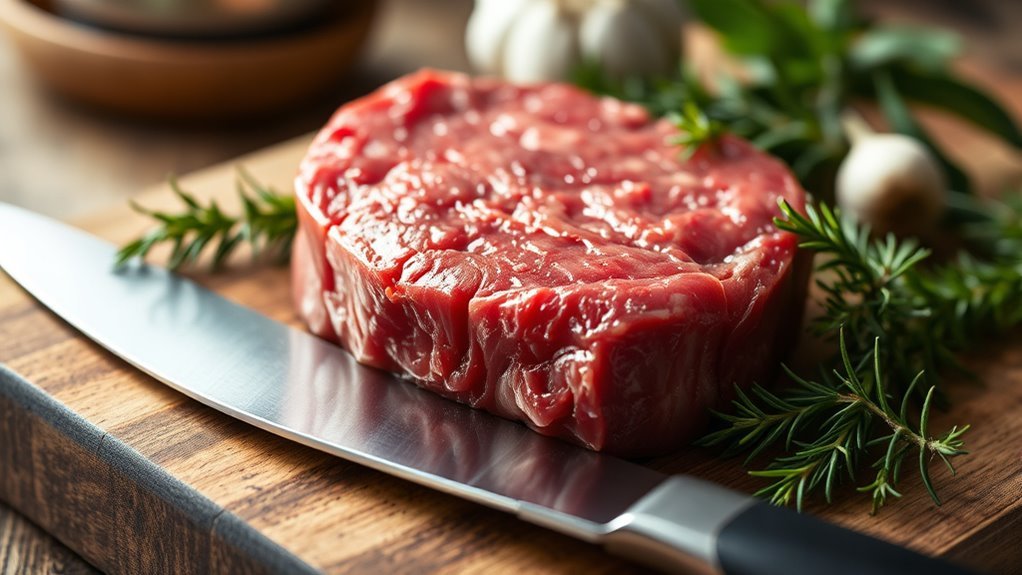
When selecting the right cut of filet mignon, focus on a center-cut tenderloin section with a deep red color and minimal connective tissue to guarantee top quality. Choose a piece from the beef tenderloin’s small, central part labeled as “filet mignon” or “tenderloin” for the best steak quality.
Look for steaks about 1.5 to 2 inches thick to ensure even cooking and consistent tenderness. You want the cut to feel soft to the touch, signaling high tenderness and freshness. Avoid any browning or sliminess, which means the meat isn’t fresh.
Filet mignon is prized for its lean cuts, so steer clear of excessive marbling or fat. By considering these factors, you’ll pick a tenderloin that promises a delicious, melt-in-your-mouth steak experience.
Preparing Your Steak for Cooking
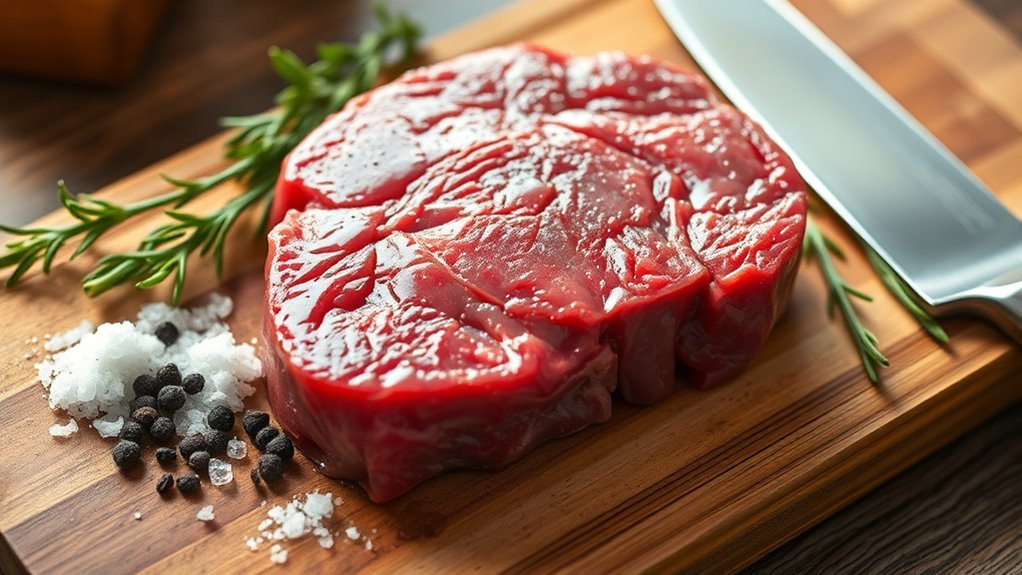
Before cooking, let your filet mignon rest at room temperature for 30 to 45 minutes to guarantee it cooks evenly. To prepare steak properly, pat dry with paper towels to remove moisture, essential for crust formation.
Trim any silver skin and connective tissue with a sharp knife for tenderness. If your filet mignon has a fat cap, score fat lightly to prevent curling during cooking.
| Step | Action | Purpose |
|---|---|---|
| Rest | Let steak sit at room temperature | Ensures even cooking |
| Pat Dry | Remove moisture | Promotes better sear |
| Trim | Cut silver skin/connective tissue | Tender bite |
| Score Fat | Lightly score fat edges | Prevents curling |
These steps ensure your filet mignon cooks beautifully with a perfect crust.
Seasoning and Dry Brining Tips
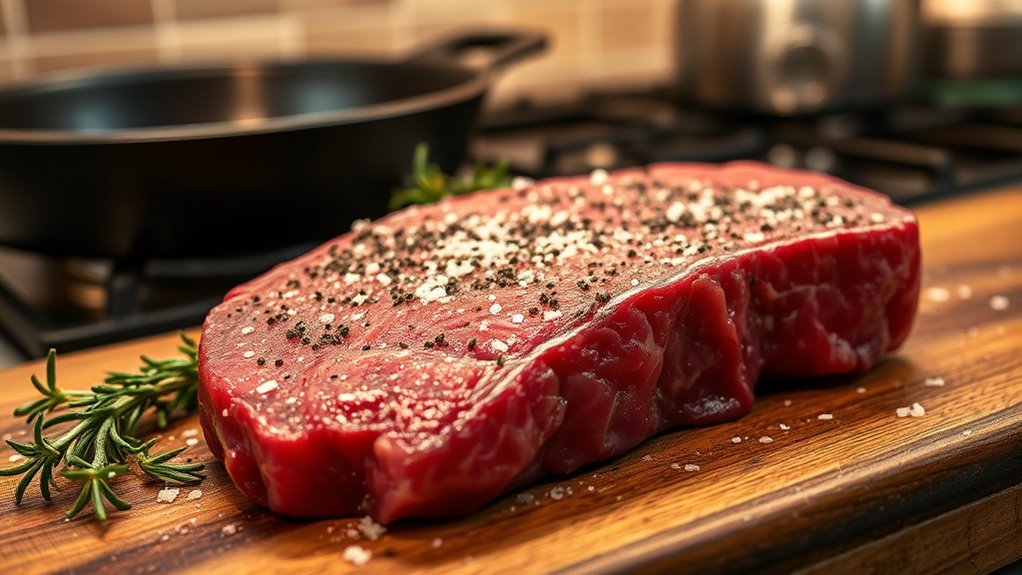
Since seasoning plays a crucial role in flavor, you’ll want to generously coat your filet mignon with coarse salt and freshly ground black pepper at least 30 minutes before cooking. This initial seasoning starts the flavor enhancement process.
For ideal dry brining and crust formation, follow these seasoning tips:
- Place the seasoned steaks on a wire rack over a baking sheet and refrigerate uncovered for 1-4 hours or overnight to dry brine.
- Pat the steaks dry with paper towels before cooking to ensure moisture removal, which promotes a better sear.
- Avoid adding extra salt after dry brining, since the coarse salt has already penetrated the meat during preparation.
These steps in seasoning and dry brining will elevate your filet mignon’s taste and texture remarkably.
Choosing the Best Pan and Cooking Oils
How do you guarantee a perfect sear on your filet mignon? Start by choosing the right pan and oil. A heavy cast iron skillet or oven-safe stainless steel pan offers excellent heat retention, essential for maintaining the searing temperature.
Use high smoke point oils like vegetable, canola, or grapeseed oil to prevent burning and smoke during cooking. Add just enough oil to coat the pan evenly before placing the steak, ensuring browning evenly.
| Pan Type | Oil Type | Key Benefit |
|---|---|---|
| Cast iron skillet | Vegetable oil | Heat retention |
| Oven-safe pan | Canola oil | Prevent burning |
| Cast iron skillet | Grapeseed oil | High smoke point |
| Oven-safe pan | Minimal oil coating | Browning evenly |
This combo sets the stage to sear the steak perfectly.
Searing the Filet Mignon Perfectly
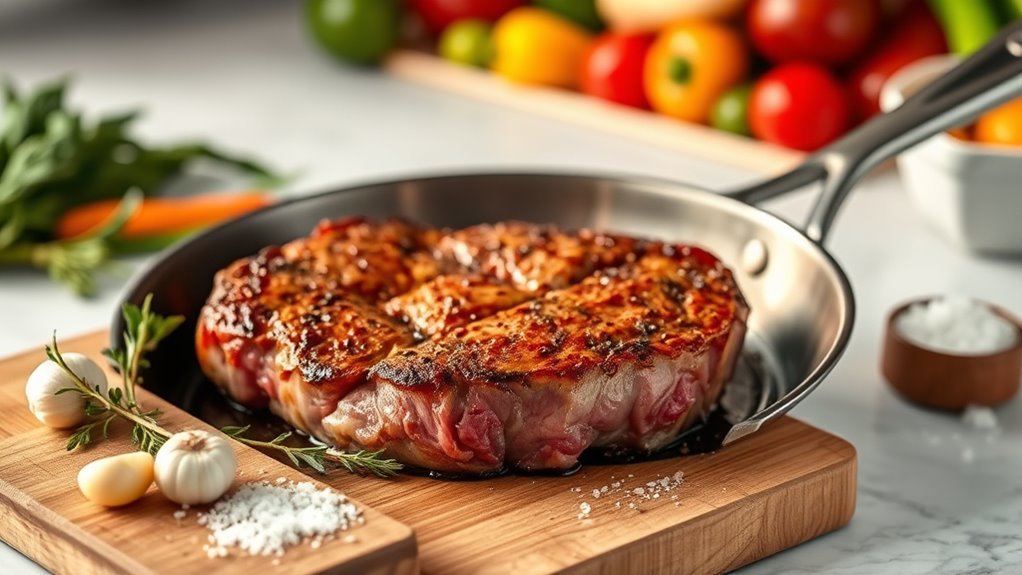
Now that you’ve selected the right pan and oil, it’s time to get the skillet smoking hot, around 500°F, to lock in flavor with a perfect sear. Use a cast iron skillet for even heat retention and excellent browning.
Here’s how to sear your filet mignon perfectly:
- Pat the steak dry to remove moisture, then lightly coat it or the pan with oil to prevent sticking and promote caramelization.
- Place the steak in the hot pan without moving it for about 2 minutes per side to form a deep, flavorful crust.
- Sear the edges by holding the steak with tongs against the pan for 30 seconds, ensuring even browning all around.
This high heat pan-searing technique guarantees a rich crust and juicy interior.
Finishing the Steak in the Oven
After searing your filet mignon to a perfect crust, transfer the skillet to a 400°F oven to finish cooking. Make certain the oven is preheated before you transfer the hot skillet using oven mitts to avoid burns.
Roast the steak for 4 to 10 minutes, depending on your preferred doneness. Use a meat thermometer to monitor the internal temperature closely, 130-135°F for medium-rare and 140-145°F for medium.
Keep an eye on the steak to avoid overcooking. Once it reaches the target temperature, carefully remove the skillet from the oven.
Monitor the steak closely and remove it promptly once it hits the perfect temperature to prevent overcooking.
This method ensures even cooking inside while maintaining that delicious crust outside. Next, you’ll want to let the steak rest to lock in those flavorful juices.
Resting and Serving Your Filet Mignon
Although your filet mignon looks ready to eat, you’ll want to let it rest for at least five minutes to lock in the juices and enhance tenderness. Resting under a loose foil tent helps with juice retention and allows the internal temperature to even out, ensuring maximum flavor and moisture.
Follow these steps:
- Place the steak on a warm plate or cutting board, avoiding cold surfaces that cool it too fast.
- Tent loosely with foil to maintain warmth without steaming, preserving the steak’s texture.
- After resting, slice your filet mignon carefully; cutting too soon causes juices to escape, making it dry.
Once rested, serve immediately to enjoy the full tenderness and rich flavor you’ve achieved.
Frequently Asked Questions
How Do You Cook Filet Mignon in a Skillet?
You sear the filet mignon in a hot skillet with oil, seasoning it well. Cook each side until browned, then finish in the oven.
Let it rest before serving to keep it juicy and tender.
How to Cook Filet Steak in a Pan?
They say, “You reap what you sow.” You heat your pan, season your filet, sear each side, then finish with butter and herbs.
Don’t forget to rest it; that’s where flavor truly blooms.
How Does Gordon Ramsay Cook Filet Mignon in a Pan?
You’ll season the filet generously, sear it in a hot skillet for a few minutes per side, then finish it in the oven.
Don’t forget to baste with butter, garlic, and thyme before resting it.
Should I Use Butter or Oil to Cook Filet Mignon?
You should use oil with a high smoke point to sear the filet mignon, then add butter toward the end for flavor and basting.
This combo prevents burning and gives your steak a rich, delicious taste.
Conclusion
Now that you know how to select, season, sear, and finish your filet mignon, are you ready to impress with a perfectly cooked steak that’s juicy and tender every time?
Remember, patience and attention to detail make all the difference—from bringing the steak to room temperature to letting it rest before serving.
With these steps, your pan-cooked filet mignon will be restaurant-quality right in your own kitchen.
Why settle for less when you can master the art of cooking the perfect filet mignon in a pan?