10 Steps to Cook Filet Mignon Perfectly in a Frying Pan
Cooking filet mignon perfectly in a frying pan might seem straightforward, but it’s a skill that requires attention to detail. From selecting the right cut of filet mignon to mastering the pan-searing technique, every step matters. You’ll also need to learn how to let the steak rest just enough to lock in those juices for maximum flavor.
If you get any step wrong, the results can be disappointing. However, with practice, you’ll soon have a foolproof method to impress with a tender, flavorful steak every time. Follow these 10 steps to cook filet mignon perfectly in a frying pan and elevate your cooking skills.
Select the Right Cut of Filet Mignon
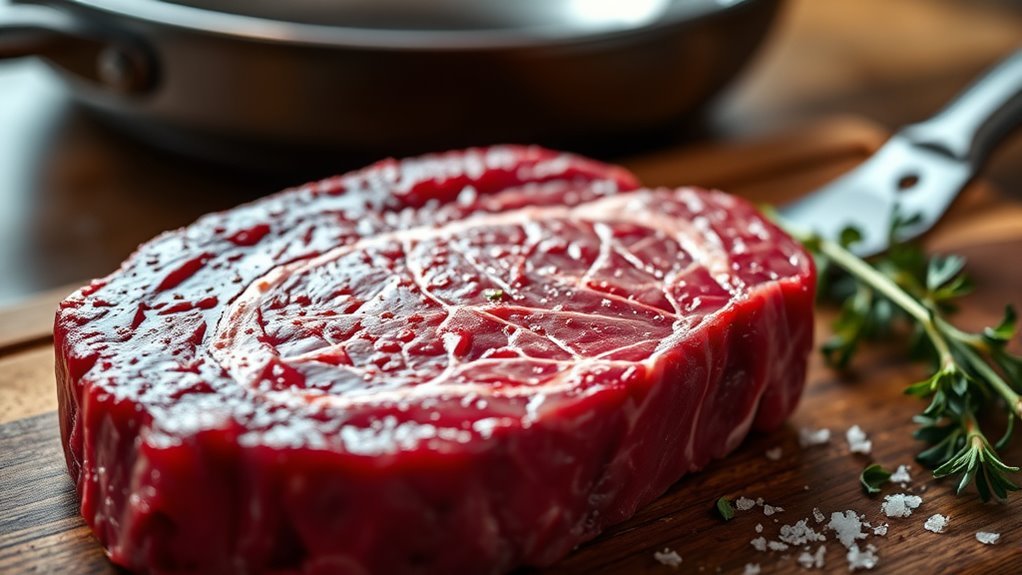
Start by choosing filet mignon cuts from the center portion of the beef tenderloin, as these offer the most tender and uniform steaks. You’ll want to pick thick steaks, ideally 1.5 to 2 inches, to guarantee even cooking and a juicy result.
Look for a deep red color with minimal marbling. This cut of beef is prized for tenderness rather than fat content. Opt for prime grade or choice grade steaks for the best flavor and texture. These grades assure superior quality over select cuts.
Make sure the steaks are well-trimmed, free from excess fat and silverskin. This helps with even searing and presentation. If you buy a whole tenderloin, cut your own filet mignon from the center portion using a sharp knife for freshness and control over thickness.
Prepare the Steaks for Cooking
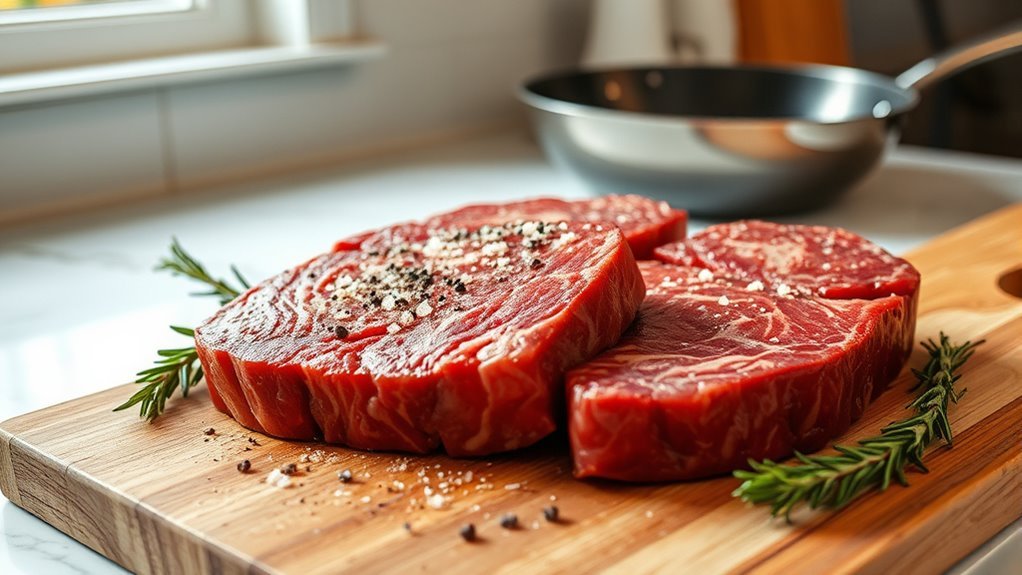
Before cooking, let your filet mignon rest at room temperature for about 30 minutes to guarantee even heat distribution. Next, pat dry the steaks thoroughly with paper towels to remove excess moisture, which is key for excellent crust formation. Proper seasoning with coarse salt and black pepper enhances flavor and helps create that perfect crust.
| Step | Action |
|---|---|
| 1 | Remove filet mignon from fridge |
| 2 | Rest at room temperature for 30 minutes |
| 3 | Pat dry steaks with paper towels |
| 4 | Season with coarse salt and black pepper |
| 5 | Ensure steaks are dry before cooking |
Resting and drying your filet mignon properly ensures even cooking and a flavorful crust.
Season Your Filet Mignon Generously
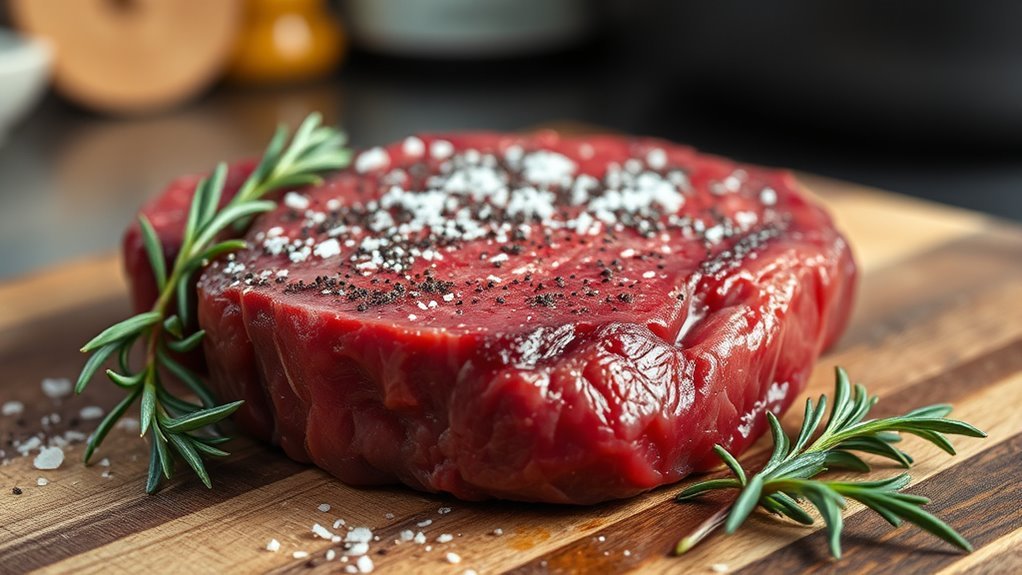
When you season your filet mignon generously with coarse sea salt or kosher salt, you enhance its natural flavor and help develop a rich, savory crust. Proper seasoning is key. Apply kosher salt evenly on all sides without oversalting to avoid a too-salty crust.
Then, add freshly ground black pepper liberally; it deepens the flavor without overpowering the meat. For flavor enhancement, let the steak rest at room temperature for about 30 minutes after seasoning. This allows the salt to penetrate and promotes even crust formation during cooking.
If you want an even deeper flavor, try dry brining by salting the filet and refrigerating it uncovered for several hours or overnight. This technique intensifies seasoning and improves texture, ensuring a perfectly seasoned filet mignon.
Choose the Best Pan and Cooking Fats
Although choosing the right pan might seem straightforward, it plays an essential role in cooking your filet mignon perfectly. Opt for a heavy-duty, oven-safe pan like a cast iron skillet or a hard anodized frying pan to guarantee even heat distribution. This helps you achieve that coveted caramelized crust during high-temperature cooking.
For searing fat, use a high-smoke-point oil such as vegetable oil, canola oil, or ghee. These oils withstand the intense heat of your preheated skillet without burning or smoking.
While butter adds flavor, add it later since it has a lower smoke point and can burn if used alone during searing.
Avoid soft fats like olive oil or margarine for this step; they won’t hold up to the heat needed for a perfect sear.
Preheat the Pan to High Heat
Since a properly preheated pan is essential for a perfect sear, you’ll want to heat your heavy-bottomed skillet over high heat for 2 to 3 minutes until it hits around 400-450°F.
Heat your skillet over high heat for 2-3 minutes until it reaches 400-450°F for the perfect sear.
A cast iron skillet works best because it retains temperature evenly, ensuring consistent cooking.
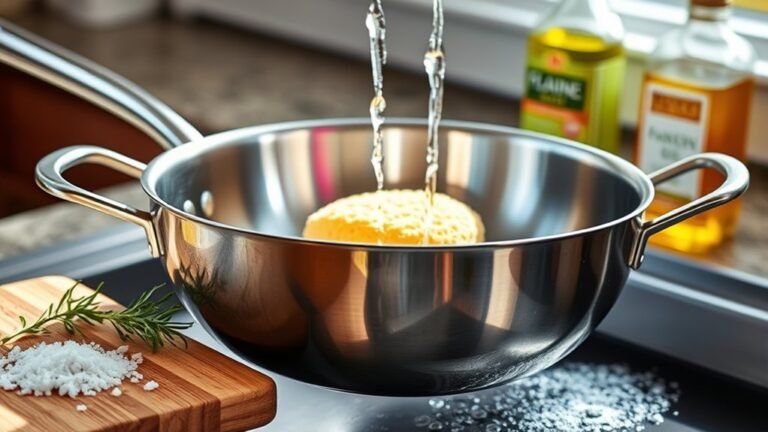
To test if the pan is ready, flick a few drops of water onto the surface; they should sizzle loudly and evaporate immediately.
Just before adding your filet mignon, drizzle a small amount of neutral oil with a high smoke point, like canola or grapeseed oil, to prevent sticking.
Avoid overcrowding the pan, as maintaining high heat is key to achieving that ideal crust.
Preheating the pan properly sets the stage for a flawless sear and juicy steak.
Sear the Filet Mignon Properly
To get that perfect crust on your filet mignon, make sure your skillet is scorching hot with a slight shimmer or smoke before the steak hits the pan. Pat your filet mignon dry to remove moisture, then add a small amount of high-smoke-point oil.
Place the steak in the skillet and sear without moving it for 2-3 minutes to develop browning. Flip and sear the other side for equal time. Avoid overcrowding the pan to maintain high heat and ensure even crust formation.
| Step | Action | Result |
|---|---|---|
| Preheat skillet | High heat, shimmering | Ready for searing |
| Sear first side | 2-3 minutes, no moving | Deep brown crust forms |
| Flip and sear | Equal time on opposite side | Even browning and cook |
Add Aromatics and Butter for Basting
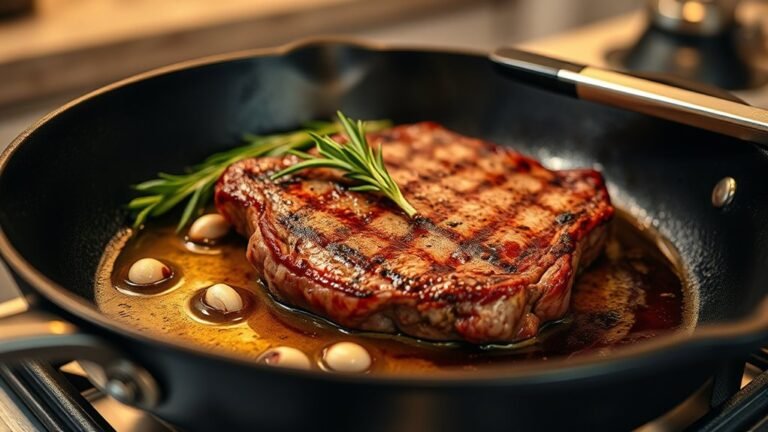
When your filet mignon has developed a perfect crust, add 1-2 tablespoons of unsalted butter along with garlic cloves and fresh herbs like rosemary or thyme to the pan.
Let the butter melt and bubble gently, allowing the aromatics to infuse the butter with rich flavor.
Using a spoon, continuously baste the pan-seared steak with this aromatic herb butter. This basting technique not only deepens the flavor but also helps maintain the juiciness of the meat by promoting even cooking.
As you baste, the garlic and herbs release their fragrance, creating a deliciously complex crust on the filet mignon.
Once infused, remove the pan from heat and pour the herb butter over the steak as a finishing touch before resting and serving.
Finish Cooking in the Oven
After searing your filet mignon on both sides for 2-3 minutes, transfer the skillet to a preheated oven set at 360°F to finish cooking the steak evenly.
Use an oven-safe skillet to roast the filet without moving it, ensuring consistent heat distribution.
Monitor the internal temperature closely with an instant-read or probe thermometer.
Aim for 125°F for rare or 130°F for medium-rare.
Roast the steak for 2 to 8 minutes depending on thickness and desired doneness.
This method lets you finish cooking perfectly while preserving juiciness and flavor.
Once the steak reaches your target internal temperature, remove the skillet from the oven.
This step guarantees a perfectly cooked filet mignon that’s tender and ready for the next stage: rest before serving.
Rest the Steaks Before Serving
Although your filet mignon looks ready, you’ll want to rest it for at least 5 minutes before serving. After cooking, place the steak on the counter and tent loosely with foil.
This steak rest allows the internal temperature to stabilize, usually rising by 2-5°F, gently finishing the cooking process.
More importantly, the resting time lets the juices redistribute evenly throughout the meat.
Resting allows the juices to redistribute evenly, keeping your steak tender and flavorful throughout.
If you cut into the steak immediately, you risk losing those flavorful juices, resulting in a drier texture.
By letting the steak rest, you prevent juices from escaping, ensuring each bite stays tender and juicy.
Slice and Serve With Your Favorite Accompaniments
Since you’ve let the filet mignon rest, it’s time to slice it against the grain to keep each piece tender and easy to chew. Now, serve your perfectly pan-seared steak with classic accompaniments or your favorite side dishes to complement its rich flavor.
Enhance your cooking presentation with garnishes like garlic butter or a red wine reduction sauce for that perfect finish.
| Classic Accompaniments | Flavor Boosters |
|---|---|
| Roasted Vegetables | Horseradish Cream |
| Mashed Potatoes | Blue Cheese Sauce |
| Fresh Green Salad | Chopped Herbs |
This recipe invites you to customize your meal. Combine these side dishes and sauces to create the perfect plate every time you cook filet mignon.
Frequently Asked Questions
What’s the Best Way to Cook Filet Mignon in a Frying Pan?
You should sear the filet mignon in a hot cast iron skillet with oil, seasoning it well. Sear each side until crusted, then finish with butter and aromatics.
Rest before serving for juicy, tender results.
How Does Gordon Ramsay Cook Filet Mignon in a Pan?
You might think cooking filet mignon is tricky, but Ramsay sears it hot, seasons generously, adds butter and herbs,
uses a thermometer for perfect doneness, and rests it, ensuring tender, flavorful steak every time you cook.
Should I Use Butter or Oil to Cook Filet Mignon?
You should use oil with a high smoke point for searing, then add butter towards the end. This combo prevents burning and infuses rich flavor, giving your filet mignon a perfect golden crust and delicious taste.
How to Pan Fry the Perfect Fillet Steak?
Think of pan-frying a fillet steak like a dance: you’re the lead, setting the rhythm. Sear it hot, flip gently, then slow down the heat to perfect the tender finish.
Let it rest—your masterpiece awaits.
Conclusion
So, after all that—picking the perfect cut, seasoning like a pro, and juggling skillet and oven—you’ll end up with a filet mignon that’s tender enough to make you wonder why you ever settled for anything less.
Who knew a simple steak could demand such drama? But hey, once you taste that buttery, perfectly cooked bite, you’ll gladly embrace the fuss.
Because sometimes, the easiest way to impress is by making it look like you didn’t try at all. Cooking filet mignon perfectly in a frying pan is a skill that turns an ordinary meal into an extraordinary experience.