How to Clean Burnt Stainless Steel Pans Step by Step
When you notice stubborn burnt marks on your stainless steel pan, it’s tempting to scrub hard and risk scratching the surface. However, knowing how to clean burnt stainless steel pans properly can save your cookware from damage. Instead, you can tackle those tough stains methodically, preserving your pan’s finish while restoring its shine.
By understanding the right steps and using common household ingredients, you’ll find the process more straightforward than you might expect. Let’s explore how to clean your pan effectively without causing damage.
Assessing the Severity of Burnt Residue
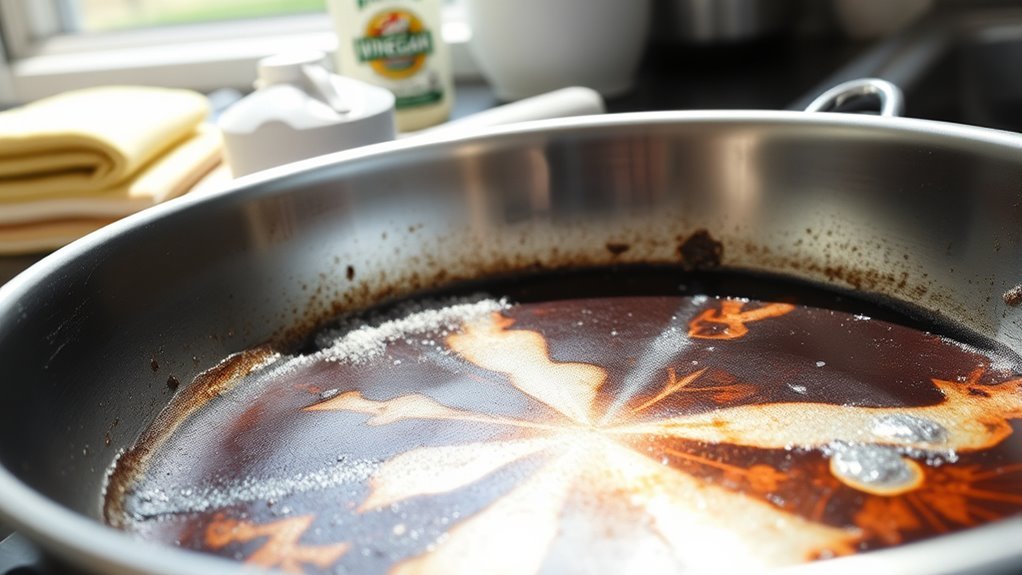
Before diving into cleaning, you should carefully examine the burnt stainless steel pan to determine whether the residue is just surface-level or deeply ingrained. This initial evaluation is crucial because it guides your cleaning approach.
If you notice light discoloration or minor stains, the burnt residue is likely superficial and easier to remove with gentle methods. On the other hand, heavily blackened or charred areas indicate severe burns that need more intensive cleaning like boiling or scrubbing.
Also, watch for white spots or discoloration, which might be mineral deposits rather than burnt food.
Preparing Your Stainless Steel Pan for Cleaning
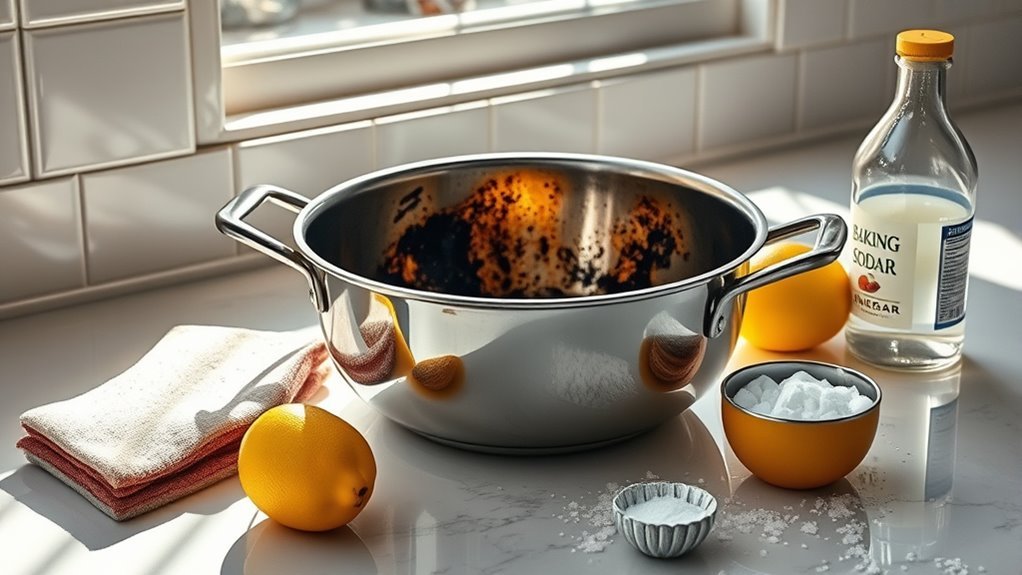
Once you’ve assessed the burnt residue on your stainless steel pan, the next step is to prepare it properly for cleaning. First, let the pan cool completely to avoid warping or injury.
Remove any loose debris gently with a soft cloth or paper towel to prevent scratches. Then, fill the pan with hot water and add a few drops of dish soap to start loosening the burnt bits.
For tougher stains, soaking the pan in a water-vinegar or water-baking soda mix for 15-30 minutes works wonders.
| Step | Action |
|---|---|
| Cooling | Let the pan cool completely |
| Debris Removal | Wipe off loose food with a soft cloth |
| Soaking Preparation | Fill with hot water & dish soap; soak if needed |
Using Baking Soda Paste for Effective Cleaning
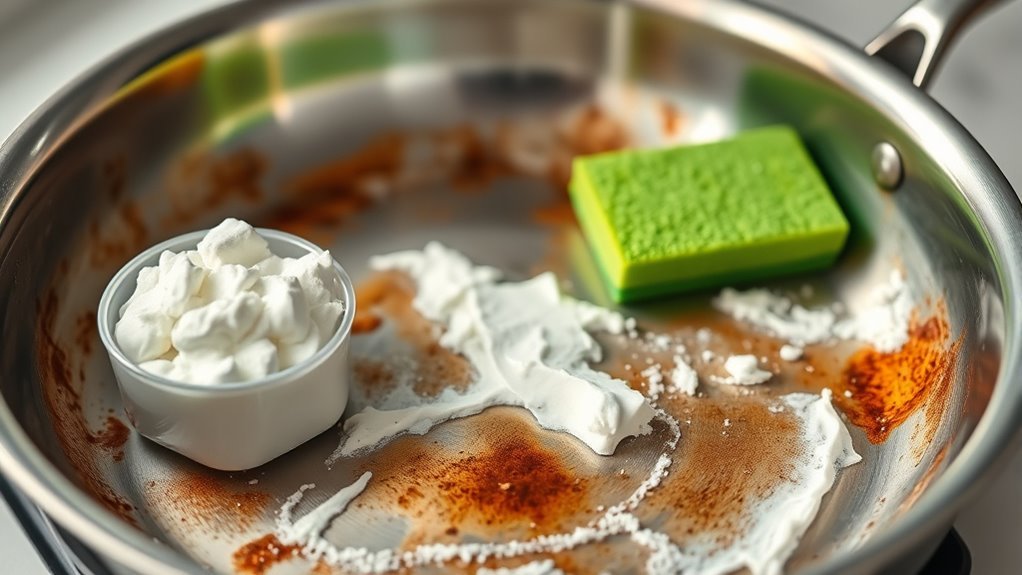
If you want to tackle stubborn burnt stains effectively, mixing baking soda with a bit of water to form a thick paste is a great approach. Spread the baking soda paste evenly over the burnt areas of your stainless steel pan.
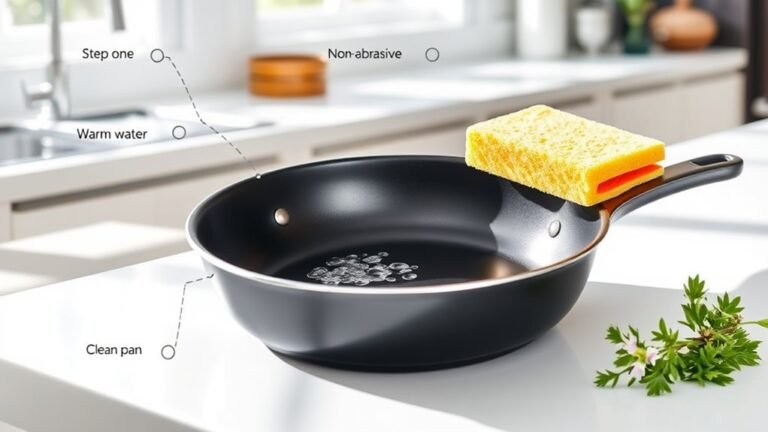
Let it sit for 15 to 20 minutes to loosen carbonized residues. Then, use a soft, non-abrasive sponge or cloth to scrub gently in circular motions. If some spots are still tough, apply more paste and allow it to sit longer before scrubbing again.
Once the burnt stains are lifted, rinse your pan thoroughly with warm water. Finally, dry it with a clean cloth to reveal a shiny, clean stainless steel surface. This baking soda cleaning method is simple yet highly effective.
The Vinegar Boil Technique to Loosen Burnt Food
Although burnt food can be tough to remove, you can loosen it effectively by boiling a mixture of water and white vinegar in your stainless steel pan.
Start by filling the pan with equal parts water and vinegar, ensuring the burnt area is fully covered.
Fill the pan with equal parts water and vinegar, covering the burnt areas completely.
Heat the mixture over medium heat until it reaches a gentle simmer, marked by small bubbles and steam.
Keep it simmering for 10 to 15 minutes, allowing the vinegar to break down the burnt food residues.
After turning off the heat, let the solution cool slightly before carefully pouring it out.
Finally, use a non-abrasive sponge or brush to gently scrub away the loosened burnt food, which should now come off with ease.
Cleaning With Lemon and Salt for Natural Results
After loosening burnt food with the vinegar boil technique, you can brighten and further clean your stainless steel pan using a natural lemon and salt mixture. Mix equal parts lemon juice and salt to create a gentle abrasive paste.
Apply this mixture directly onto the burnt areas and let it sit for 10-15 minutes to loosen tough stains. Then, use a soft cloth or non-abrasive scrub pad to gently scrub in circular motions, helping the lemon juice and salt break down residues without scratching your pan.
Rinse thoroughly with warm water to remove all traces of the mixture, revealing a cleaner, brighter surface. If needed, repeat the process for stubborn spots or combine with baking soda for enhanced cleaning and whitening results.
Employing Dishwasher Tablets for Quick Burnt Food Removal
When you need a fast and effective way to tackle burnt food on your stainless steel pan, dishwasher tablets offer a convenient solution. Start by adding a small amount of water to cover the pan’s bottom, then place it on low heat.
Drop in a dishwasher tablet and let it foam as it loosens the burnt stainless steel residues. The tablet acts as both a detergent and a mild abrasive, ensuring quick cleaning without heavy scrubbing.
After about 3-5 minutes, scrub gently if needed, then rinse thoroughly with warm soapy water to remove any leftover residue and restore the pan’s shine.
This method is one of the quickest and easiest ways to remove stubborn burnt food from your cookware.
Scrubbing With Aluminum Foil and Baking Soda Paste
If you want a simple yet effective way to remove stubborn burnt spots, try scrubbing your stainless steel pan with a baking soda paste and a ball of crumpled aluminum foil. Start by applying a generous layer of baking soda paste directly onto the burnt areas.
For stubborn burnt spots, scrub stainless steel pans with baking soda paste and crumpled aluminum foil.
Then, crumple a sheet of aluminum foil into a ball about the size of a tennis ball. Use this foil ball to scrub the baking soda paste in circular or back-and-forth motions, applying gentle pressure.
Focus on spots with tough burns to help the baking soda loosen the charred residue.
Once you’ve scrubbed thoroughly, rinse the pan well with warm, soapy water to clear away any remaining baking soda and debris.
This method is both affordable and eco-friendly for your stainless steel cleaning needs.
Soaking With Dryer Sheets: When and How to Use
Alongside scrubbing with baking soda and aluminum foil, soaking your stainless steel pan with a dryer sheet offers another gentle way to tackle burnt-on food. You’ll immerse the pan in hot water, dish soap, and a dryer sheet for about an hour.
The dryer sheet softens residues and reduces surface tension, making scrubbing easier. This method works best for light to moderate burnt stainless steel stains. After soaking, gently scrub with a non-abrasive sponge to remove loosened debris.
You can repeat soaking if needed, but heavy burns may require other methods.
| Step | Details |
|---|---|
| Soaking Time | About 1 hour |
| Water Temperature | Hot |
| Additives | Dish soap + 1 dryer sheet |
| Effectiveness | Light to moderate burns only |
| Scrubbing Tool | Non-abrasive sponge or cloth |
Polishing and Restoring Shine After Cleaning
Once you’ve removed burnt residues, take a microfiber cloth soaked in warm water and dish soap to thoroughly clean the pan’s surface.
After drying, apply a small amount of mineral or baby oil to a soft cloth and gently buff the stainless steel in the direction of the grain. This technique helps polish the surface and restore its natural shine.
For stubborn discoloration, use a stainless steel cleaner or a baking soda paste, then buff again to smooth the finish.
Finally, wipe the pan with a clean, dry microfiber or paper towel to remove excess oil and enhance the polish. Regularly polishing your pan after cleaning not only brings back its shine but also protects it from future tarnish, keeping your stainless steel cookware looking brand new.
Tips for Preventing Burnt Stains in Stainless Steel Pans
Keeping your stainless steel pans looking shiny is important, but preventing burnt stains from forming in the first place saves you time and effort. To preserve cookware, always preheat your stainless steel pan over medium heat before adding ingredients; this reduces sticking and burning.
Use enough cooking oil or butter to create a protective barrier that prevents food from sticking and burning onto the surface. Avoid cooking at excessively high temperatures, as moderate heat minimizes burnt stains and discoloration.
Never leave food unattended, especially when heating oils or sugary sauces prone to quick burns.
Finally, clean your pan promptly after use to prevent residue buildup that causes stubborn burnt stains. These cleaning hacks help you maintain your pans and extend their lifespan efficiently.
Frequently Asked Questions
How to Clean a Badly Burnt Stainless Steel Pan?
You should boil water with baking soda in the pan, then scrub gently once cooled. Repeat if needed. Use vinegar to deglaze, and avoid abrasive tools to protect your stainless steel’s finish.
How Do You Clean Scorched Stainless Steel?
Cleaning scorched stainless steel is like peeling old paint—you’ve got to let the baking soda paste sit, then gently scrub with aluminum foil.
Boil vinegar and water to loosen stains, rinse, and your pan shines like new.
How to Clean Stainless Steel That Has Turned Black?
You can clean blackened stainless steel by boiling equal parts vinegar and water. Scrub the surface with a baking soda paste to help lift the discoloration.
Next, use a crumpled aluminum foil ball to gently rub the affected areas. Finish by wiping with soapy warm water to restore shine.
What Happens if You Burn Your Stainless Steel Pan?
If you burn your stainless steel pan, it can discolor, develop stains, and form tough residue. Over time, this damages the surface, reducing its lifespan and appearance, so you’ll want to clean it promptly and carefully.
Conclusion
Now that you’ve tackled those stubborn burnt spots, your stainless steel pan should gleam like a freshly polished mirror.
With these simple steps, cleaning won’t feel like wrestling a smoky dragon but more like taming a gentle breeze.
Keep these tricks up your sleeve, and your cookware will thank you with years of sparkling service.
Remember, a little care today keeps the burnt nightmares at bay tomorrow!
By following this step-by-step guide on how to clean burnt stainless steel pans, you ensure your cookware remains in top condition.
Regular maintenance and proper cleaning techniques will extend the life of your pans and keep them looking brand new.
So, embrace these cleaning tips and enjoy the benefits of shiny, spotless stainless steel cookware every time you cook.