How to Clean Aluminum Pots and Pans in 10 Easy Steps
Did you know that nearly 70% of households use aluminum cookware because of its excellent heat conductivity? Aluminum pots and pans are popular for their ability to distribute heat evenly, making cooking more efficient and enjoyable.
If you’re like many, keeping those aluminum cookware items spotless can feel tricky without damaging the surface. Grease, stains, and discoloration can build up over time, making your favorite pots and pans look dull.
Fortunately, there’s a straightforward way to restore their shine and maintain their performance. Let’s explore how you can clean your aluminum cookware effectively with just a few simple steps.
Understanding the Need for Special Care With Aluminum Cookware
Because aluminum cookware reacts easily with certain foods and chemicals, you need to handle it with care to keep it in good shape. Acidic ingredients like tomatoes, vinegar, or lemon juice can cause stains and damage the surface of your aluminum pots and pans.
When cleaning, avoid abrasive tools like steel wool, as they can scratch and deteriorate the aluminum over time. Hard water can leave chalky deposits on your cookware, affecting both appearance and performance.
Proper cleaning techniques help prevent corrosion and preserve your cookware’s lifespan. By understanding these sensitivities, you’ll know why gentle cleaning matters and how to avoid common mistakes that lead to stains or surface damage.
Treat your aluminum cookware thoughtfully, and it’ll serve you well for years.
Gathering Essential Cleaning Supplies
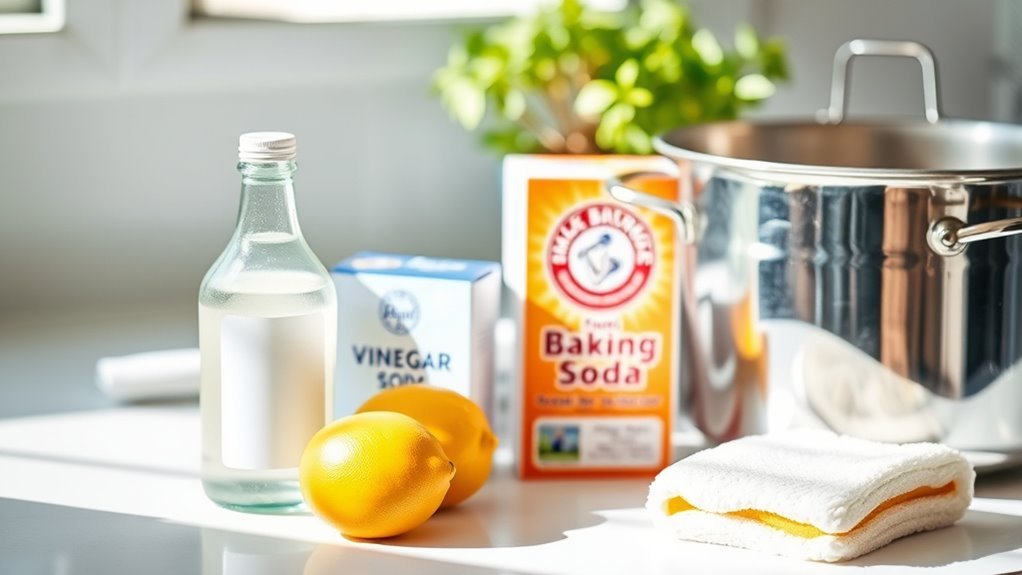
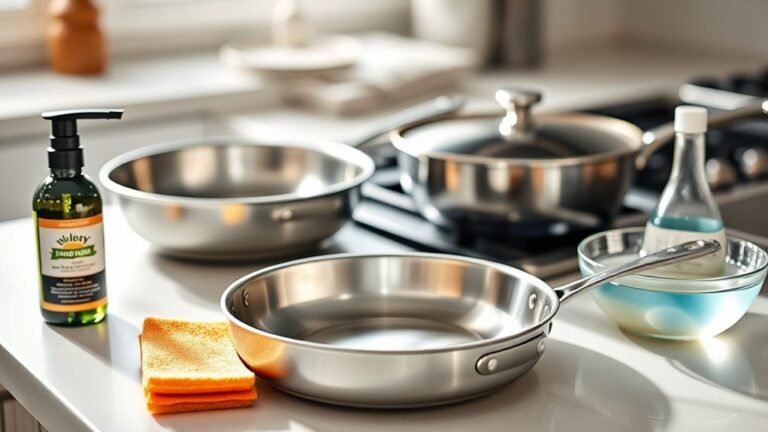
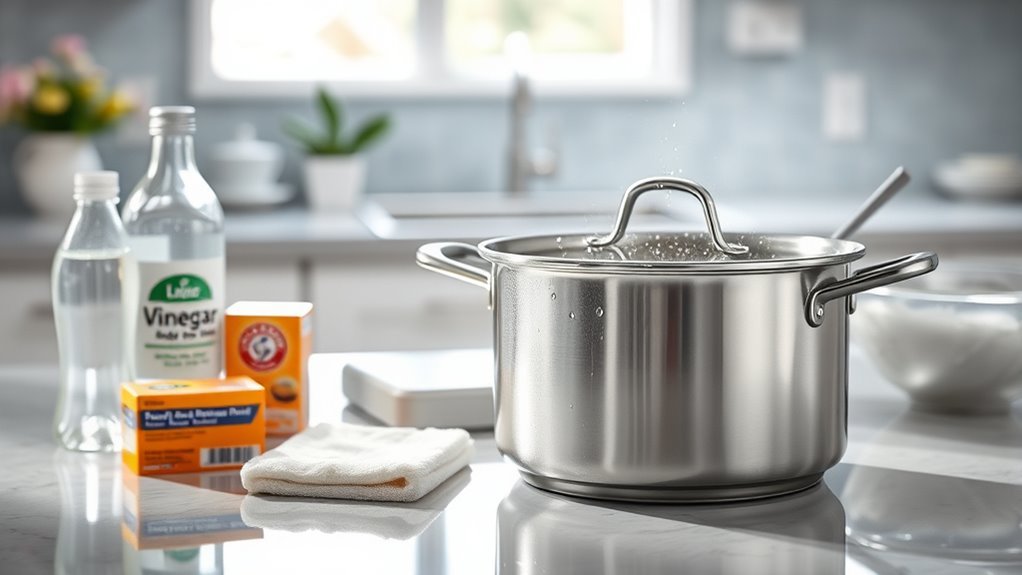
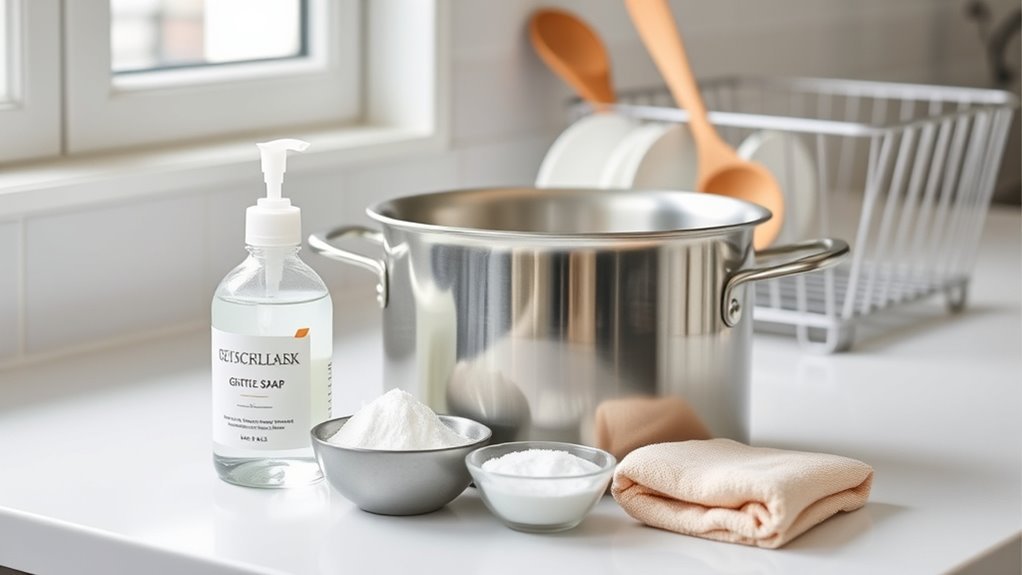
Before you start cleaning your aluminum pots and pans, gather all the essential supplies to make the process smooth and effective. You’ll need mild dish soap and baking soda for gentle yet thorough cleaning.
Have white vinegar ready to tackle stains and restore shine. Choose a soft sponge or a non-abrasive scrubber to avoid scratching the aluminum surface. Additionally, keep nylon sponges, soft brushes, and microfiber cloths handy as part of your cleaning supplies.
For boiling cleaning solutions, prepare a kettle or bowl nearby. Don’t forget a clean towel or dishcloth to dry your cookware thoroughly after cleaning.
Initial Cleaning: Removing Surface Grease and Food Residue
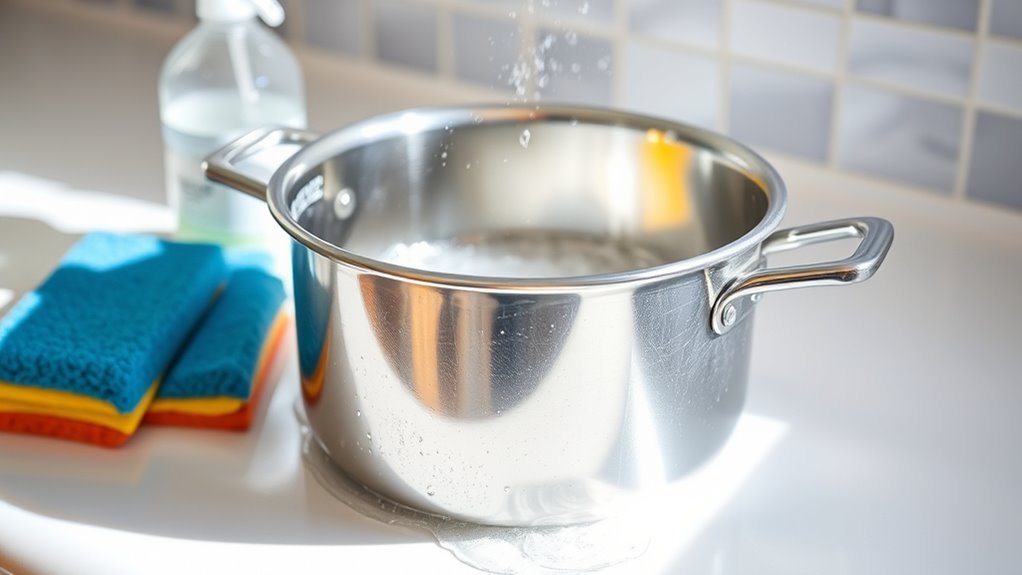
Once your aluminum pots and pans have cooled completely, you can start removing surface grease and food residue by gently washing them with warm water, a bit of dish soap, and a soft sponge or cloth.
Begin your initial cleaning by scraping off any excess grease or stuck-on food with a wooden spoon or spatula.
Start by gently scraping off excess grease or food with a wooden spoon or spatula.
Then, use the soft sponge soaked in warm water and soap to wipe away remaining surface grease and food residue carefully. Avoid abrasive scrubbers to protect the aluminum’s finish.
After washing, rinse thoroughly with warm water to remove all soap and loosened debris.
Dry your pots and pans promptly with a soft towel to prevent water spots.
This simple initial cleaning step guarantees your aluminum cookware stays in great condition for more thorough cleaning later.
Preparing a Homemade Cleaning Solution for Aluminum
When you want to tackle stubborn stains or tarnish on your aluminum pots and pans, preparing a homemade cleaning solution is an effective step.
Start by filling your aluminum cookware with enough water to cover the stained or dirty areas.
For each quart of water, add 2 tablespoons of cream of tartar, vinegar, or lemon juice.
Stir the mixture thoroughly to evenly distribute the acidic ingredient.
This cleaning solution helps break down oxidation, discoloration, and tough residues on the aluminum surface.
You can then use this mixture as a soak to loosen grime and assist in stain removal.
This simple homemade solution restores brightness and makes cleaning your aluminum pots and pans much easier without harsh chemicals.
Boiling the Cleaning Solution to Remove Oxidation and Discoloration
Although it might seem simple, boiling your homemade cleaning solution in the aluminum pot or pan is a crucial step to effectively remove oxidation and discoloration.
Start by mixing water with 2 tablespoons of cream of tartar, vinegar, or lemon juice. Bring this cleaning solution to a boil inside the cookware and keep it boiling for 10 to 15 minutes.
The hot water helps loosen oxidation and discoloration, restoring the pot’s bright, shiny surface. Once finished, carefully pour out the hot solution and allow the cookware to cool before drying.
| Step | Purpose |
|---|---|
| Mix ingredients | Create cleaning solution |
| Boil solution | Loosen oxidation, discoloration |
| Maintain boil 10-15 min | Enhance cleaning effect |
| Pour out hot solution | Remove loosened residues |
| Dry cookware | Preserve restored luster |
Scrubbing Burnt-On Food Without Damaging the Surface
If burnt-on food sticks stubbornly to your aluminum pots and pans, soaking them in hot, soapy water for at least 30 minutes will help loosen the residue before you start scrubbing.
After the soak, use a non-abrasive sponge or soft nylon scrubber to gently scrub the burnt-on food, avoiding harsh materials that can scratch the surface.
For tougher spots, make a paste of baking soda and water, apply it directly to the burnt areas, and let it sit for 10-15 minutes before scrubbing again.
You can also boil a mixture of water and baking soda in the pan for 10 minutes to further loosen stubborn stains.
Always rinse thoroughly with warm water and dry with a soft cloth to preserve your aluminum pots’ finish.
Removing Hard Water Stains and Mineral Deposits
How do you get rid of stubborn hard water stains and mineral deposits on your aluminum pots? Start by soaking your pot in equal parts white vinegar and water for several hours to dissolve mineral deposits.
Soak aluminum pots in equal parts white vinegar and water for hours to dissolve stubborn hard water stains.
For tougher buildup, boil a solution of water and vinegar in the pot for 10-15 minutes. After soaking or boiling, use a soft cloth or non-abrasive sponge for gentle scrubbing to remove remaining deposits.
If stubborn stains persist, make a paste with baking soda and water, apply it to the affected areas, let it sit, then scrub gently.
Finally, rinse your aluminum pots thoroughly with warm water and dry completely to prevent new mineral deposits from forming.
This method keeps your pots clean without damaging their surface.
Polishing the Exterior for a Shiny Finish
Once you’ve removed stains and mineral deposits, polishing the exterior of your aluminum pots can restore their shine and make them look like new. Start by applying a small amount of aluminum polish to a soft cloth. Gently rub in circular motions to remove tarnish and oxidation, focusing on the clean exterior.
Let the polish sit as instructed, then buff with a dry cloth to reveal a brilliant shine. This process helps prevent water spots, keeping your pots gleaming.
| Step | Tool Used | Purpose |
|---|---|---|
| Apply polish | Soft cloth | Remove tarnish |
| Rub in circles | Aluminum polish | Clean exterior |
| Buff to shine | Dry cloth | Achieve mirror-like shine |
Proper Rinsing and Drying Techniques
Although cleaning removes grime and polish restores shine, proper rinsing and drying are essential to keep your aluminum pots and pans in top condition.
After washing, rinse your cookware thoroughly with warm water to make certain all soap and residue are gone. This step prevents buildup that can dull the surface.
Once rinsed, don’t just leave them to air dry in humid areas, as this can cause discoloration. Instead, dry each piece completely using a soft cloth or microfiber towel. This helps avoid water spots and oxidation.
If you prefer air drying, choose a well-ventilated, dry space.
Taking these steps will maintain your aluminum cookware’s appearance and extend its lifespan by preventing moisture-related damage.
Tips for Maintaining Aluminum Cookware Between Cleanings
To keep your aluminum cookware looking great between washes, you should clean it regularly using warm water, mild dish soap, and a soft sponge. This prevents buildup and helps you clean aluminum without causing surface damage.
Avoid abrasive scrubbers like steel wool, which can scratch your pots and pans. To maintain shine and reduce oxidation, polish your cookware occasionally with a vinegar and water mixture.
Also, dry your cookware thoroughly after washing and store it in a dry, well-ventilated spot to prevent corrosion.
Try to minimize cooking highly acidic foods frequently, as they can cause discoloration and pitting.
Frequently Asked Questions
What Is the Best Thing to Clean Aluminum Pots With?
You’ll find white vinegar or lemon juice work best to clean aluminum pots. They remove oxidation and restore shine gently.
For daily cleaning, mild dish soap with a soft sponge keeps your pots looking great without damage.
How Do You Get the Black Stuff off the Bottom of an Aluminum Pan?
Don’t just scrub blindly—first, boil water with baking soda in your pan for 10-15 minutes.
Then gently scrub the black residue away. For stubborn spots, try a vinegar soak to bring back that shine effortlessly.
How to Make Aluminum Pans Look New Again?
You can make aluminum pans look new again by boiling water with cream of tartar, scrubbing gently with baking soda, and polishing with a vinegar-salt-flour paste.
Avoid harsh scrubbers to keep them shiny and scratch-free.
How Do You Remove Baked-On Grease From Aluminum Pans?
You might think scrubbing harshly removes baked-on grease, but it can scratch your aluminum pans.
Instead, soak them in hot soapy water, apply baking soda paste, then gently scrub to lift grease without damage.
Conclusion
Caring for your aluminum pots and pans is like tending a delicate garden—gentle hands and thoughtful steps bring out their lasting beauty. By treating them with patience and the right techniques, you’ll keep their shine bright, free from stubborn stains and dullness.
Remember, each cleaning is a small ritual that preserves their gleam and performance, turning everyday cookware into timeless kitchen treasures you’ll cherish for years to come.
Proper cleaning and maintenance of aluminum cookware not only enhances their appearance but also extends their lifespan. Following these steps ensures your aluminum pots and pans stay durable, shiny, and stain-free, making your cooking experience more enjoyable and efficient.