
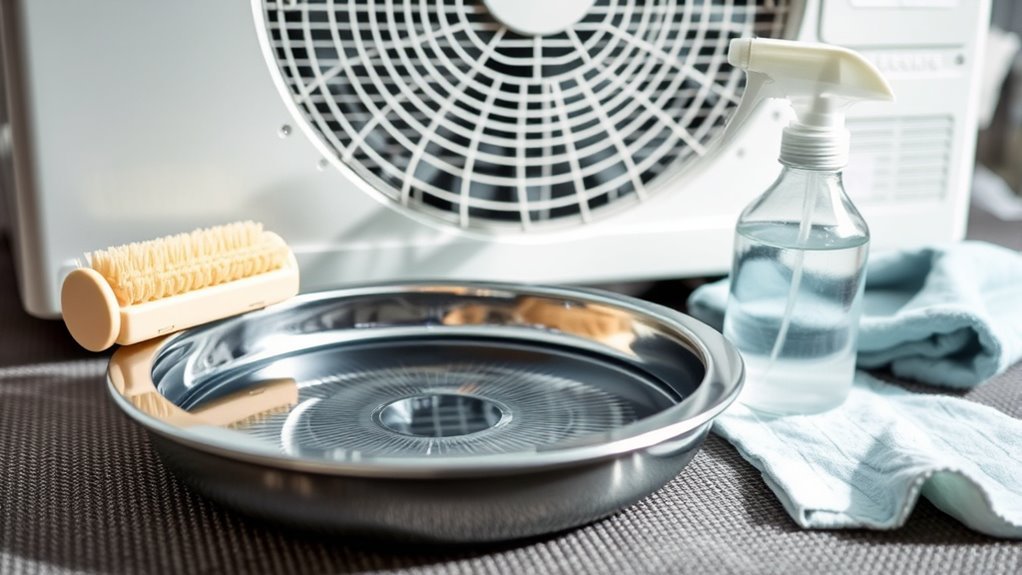
5 Easy Steps to Clean Air Conditioner Drain Pan
Just like a car needs regular oil changes, your air conditioner’s drain pan requires routine cleaning to keep it running smoothly. Regular air conditioner maintenance, including cleaning the drain pan, is essential to prevent clogs, leaks, and mold growth. These issues can compromise your indoor air quality and the overall performance of your cooling system.
Neglecting this simple task can lead to costly repairs and decreased efficiency. Fortunately, you don’t need to be an expert or spend hours tackling it. By following a few straightforward steps, you can maintain your system’s efficiency and avoid expensive problems down the line.
Turn Off Power and Prepare the Area
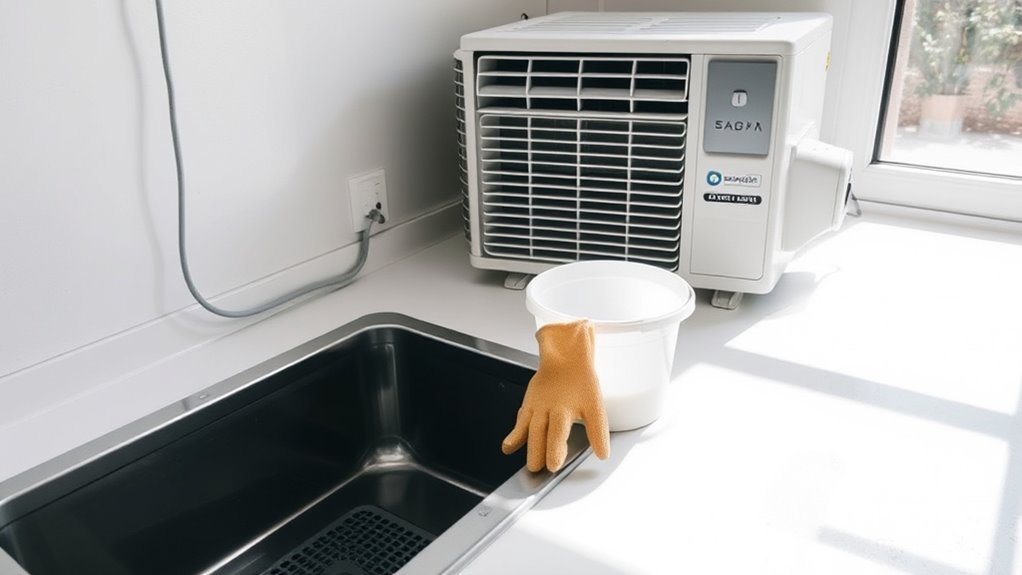
Before you begin cleaning the air conditioner drain pan, make sure you turn off the power at both the thermostat and the circuit breaker. This step is vital to avoid electrical hazards while working on the indoor unit or air handler.
Once you’ve turned off power, clear the area around the drain pan and air handler to create a safe, accessible workspace.
Put on protective gloves and safety glasses to shield yourself from mold, debris, or cleaning agents.
Before you touch anything, use a voltage tester to confirm the power is completely off.
Taking these precautions ensures you can clean the drain pan safely and effectively without risking injury or damaging your AC system.
Preparing correctly sets the stage for a smooth cleaning process.
Remove Standing Water and Debris From the Pan
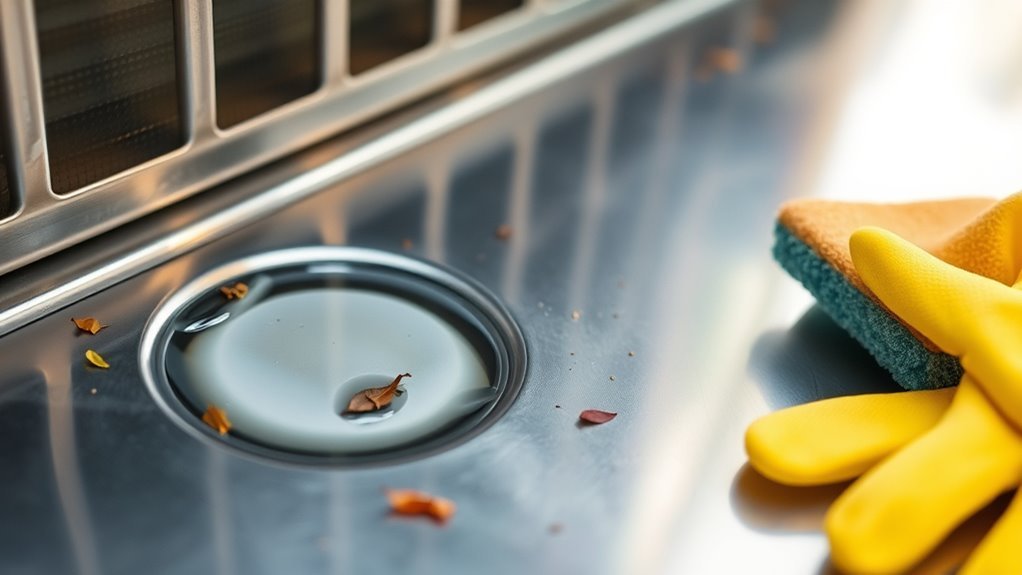
Once the power is off and your workspace is ready, start by removing any standing water from the drain pan using a wet/dry vacuum. This prevents mold and water damage while making it easier to clean the drain.
Next, carefully wipe the inside of the pan with a damp cloth or sponge to clear away debris like leaves, dirt, and pet hair that may have collected.
Gently wipe the drain pan’s interior with a damp cloth to remove leaves, dirt, and pet hair buildup.
Check the water in the drain. If it looks stagnant or discolored, discard it promptly.
Removing all debris and standing water ensures the drain pan is dry and ready for disinfecting. Taking these steps helps maintain proper drainage and prevents clogs, keeping your air conditioner running efficiently and reducing the risk of unpleasant odors or damage.
Clean the Pan With Vinegar Solution
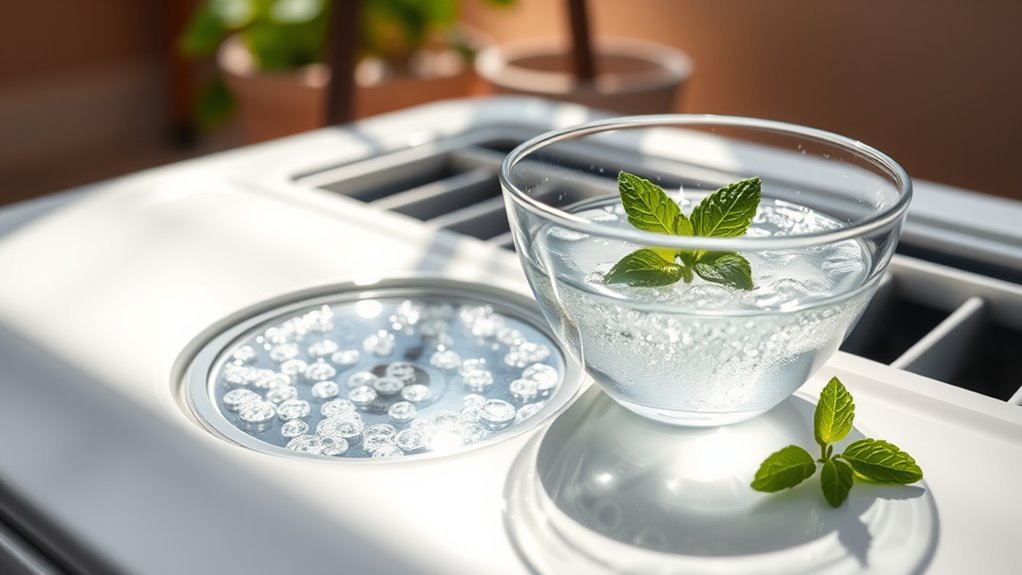
After clearing out all the standing water and debris, you’ll want to tackle the buildup that can accumulate in the pan over time. Start by mixing equal parts white distilled vinegar and water in a spray bottle or funnel.
Carefully pour this vinegar solution directly into the condensate drain pan through the access point near the evaporator coil. Let it sit for 10-15 minutes to break down mineral deposits and bacteria.
Then, use a stiff brush or pipe cleaner to scrub the pan’s surfaces, removing any remaining grime or mold. Once clean, rinse the pan with water or wipe it down with a damp cloth.
This process helps maintain a clear drain pipe and prevents clogs in the drain line. Taking these steps ensures your condensate drain functions smoothly.
Clear the Drain Line Using Vacuum or Brush
Although the vinegar solution cleans the pan itself, you’ll need to clear the drain line to prevent clogs and guarantee proper drainage.
Start by using a wet/dry vacuum at the drain line’s access point to suck out debris and buildup.
Next, insert a stiff brush or pipe cleaner into the drain line to dislodge stuck dirt or algae.
If accessible, disconnect the drain line and flush it with water to clear stubborn blockages.
For tougher clogs, gently snake the drain line with a plumbing snake.
Finally, ensure the drain line is securely reattached without kinks that could restrict flow.
- Use vacuum at drain line access for suction
- Insert brush to scrape away debris
- Disconnect and flush drain line with water
- Snake drain line to break up blockage
- Reattach line securely, avoiding bends
Rinse, Dry, and Restore Power to the AC Unit
Before you restore power to your AC unit, make sure the drain pan is thoroughly rinsed and dried with a clean cloth to prevent mold growth.
After rinsing, inspect the condensate drain line to ensure it’s free of debris and securely connected.
Reconnect the drain line properly to avoid any leaks or blockages that could disrupt water flow.
Once everything is in place, restore power by turning the AC unit back on at the thermostat.
Watch the system operation closely for a few minutes to confirm the water flows freely through the drain pan and no leaks appear.
This careful check helps maintain efficient performance and prevents potential water damage from unnoticed leaks or clogs in the drain system.
Frequently Asked Questions
How Do I Clean My AC Drain Pan?
You’ll first turn off your AC power, remove standing water, then scrub the drain pan with vinegar and water.
Next, clear debris with a brush, rinse it thoroughly, dry it, and finally restore power.
Where to Pour Vinegar in AC Drain Line?
To give your AC drain line a gentle refresh, pour vinegar right into the access point or clean-out cap.
Use a funnel or baster to avoid spills, then flush it with water for a sparkling finish.
How Often Do You Need to Clean Your AC Drain Pan?
You should clean your AC drain pan at least once a year.
However, during humid months or if you notice leaks and odors, clean it every 6 months or immediately to keep your system running smoothly.
How to ACcess AC Drain Pan?
You access your AC drain pan by first turning off power at the breaker. Then, remove the air handler’s access panel to reveal the pan beneath the evaporator coil.
Use a flashlight to inspect it before cleaning.
Conclusion
Cleaning your AC drain pan might seem like a hassle, but it’s actually quick and straightforward. Taking these five simple steps not only prevents costly water damage but also keeps your system running efficiently.
Even if you’re worried about messing something up, just remember to turn off the power first and follow each step carefully—you’ll be surprised how easy and rewarding it is to maintain your AC yourself.
By regularly cleaning the air conditioner drain pan, you ensure better airflow, reduce the risk of mold buildup, and extend the lifespan of your unit. Proper maintenance like this is key to keeping your AC in top shape.