10 Easy Steps to Clean a Carbon Steel Pan Properly
If you own a carbon steel pan, you know it’s a versatile kitchen tool that improves with use. Proper cleaning and maintenance are key to preserving its seasoning and ensuring longevity. You can’t just toss it in the dishwasher or scrub it like a regular pan without risking damage.
Following a few straightforward steps will help you keep your carbon steel pan in top shape. These easy cleaning tips prevent rust and maintain the pan’s natural non-stick surface. Here’s how to clean your pan properly so it lasts for years.
Rinse the Pan With Hot Water
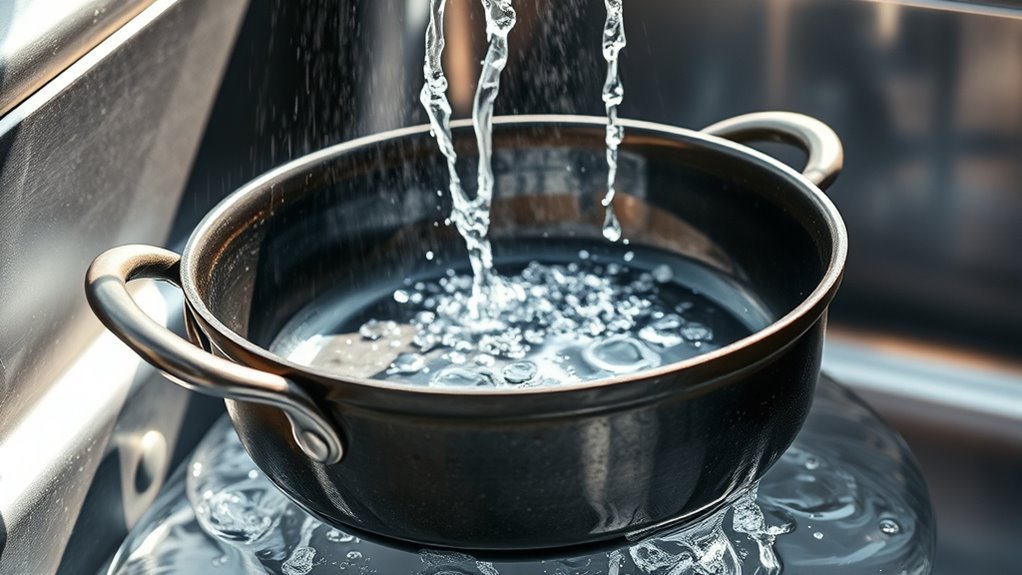
How should you rinse your carbon steel pan to keep it in top shape? Always use hot water when rinsing because it loosens food residue effectively and helps prevent rust.
Rinse your carbon steel pan with hot water to easily remove residue and prevent rust.
Avoid cold water since it won’t dissolve grease or stuck-on bits as well.
If some stubborn food residue remains, let the pan soak briefly in hot water before rinsing. This step makes cleaning easier without scrubbing harshly.
Remember, never use soap or harsh detergents during rinsing because they can damage your pan’s seasoned surface. Keeping that protective layer intact is vital for rust prevention and maintaining non-stick qualities.
Let the Pan Cool Before Cleaning
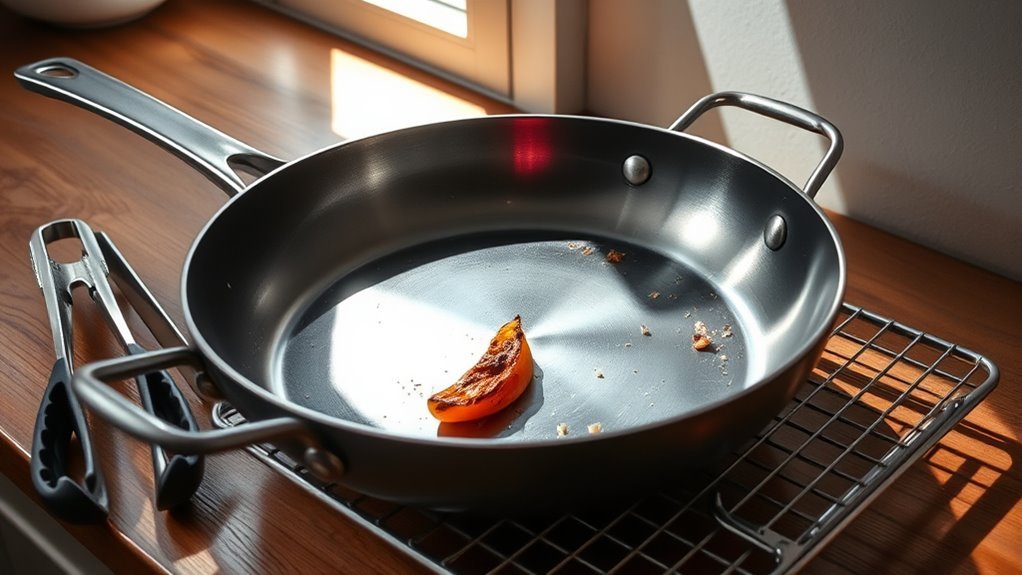
Although it might be tempting to clean your carbon steel pan right after cooking, you should always let it cool completely first. Allowing your pan to undergo proper cooling helps dissipate residual heat, making cleaning safer and more comfortable.
Handling a hot pan increases the risk of burns and can damage the seasoning layer. Waiting 20-30 minutes for the pan temperature to reach room temperature helps prevent warping or cracking caused by sudden temperature changes.
This pause not only improves cleaning safety but also preserves your pan’s seasoning and extends its lifespan. Taking this simple cooling step ensures your carbon steel pan stays in great shape, ready for many more cooking adventures while maintaining its excellent performance.
Use a Soft Brush or Sponge for Gentle Cleaning
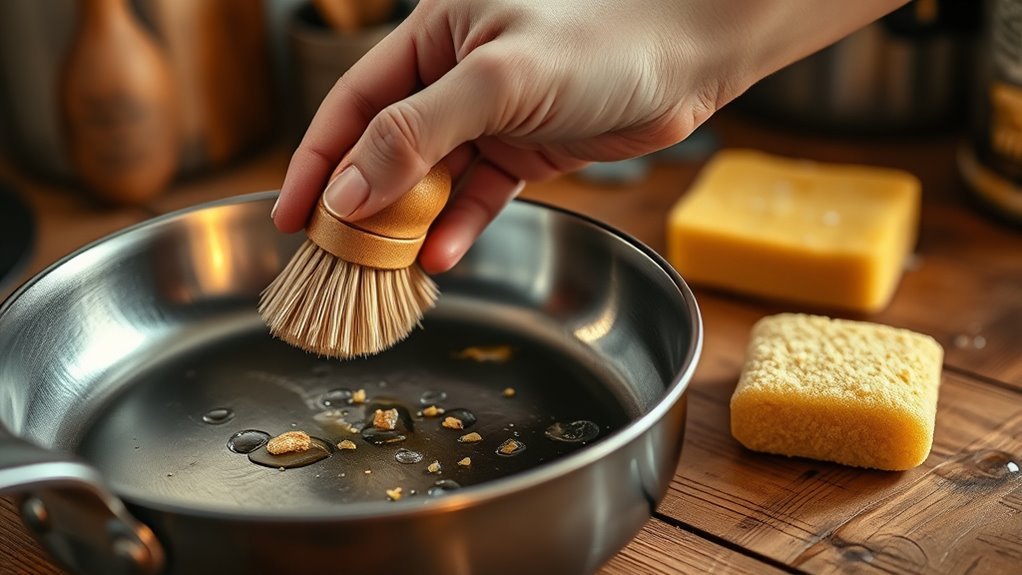
When cleaning your carbon steel pan, choose a soft brush, nylon scrubber, or sponge to safeguard its seasoning. These tools guarantee gentle cleaning that preserves the seasoned surface and removes light food residues effectively. Avoid harsh scrubbing to maintain the pan’s natural non-stick coating and prevent damage.
Here’s how to clean gently:
Use a soft brush or sponge for everyday cleaning.
Remove light food residues with a damp sponge or soft cloth.
Gently scrub stubborn spots with a non-abrasive brush.
Avoid steel wool or metal scouring pads that scratch the surface.
Rinse with warm water and dry thoroughly to prevent rust.
Following these steps helps keep your carbon steel pan in excellent condition, ready for your next meal.
Avoid Soap and Abrasive Scrubbers
Since soap and abrasive scrubbers can damage your carbon steel pan’s seasoning, you should avoid using them during cleaning.
Dish soap strips away the seasoned surface, reducing its natural non-stick qualities. Abrasive scrubbers like steel wool are too harsh. They can scratch and wear down the patina you’ve worked to build.
Instead, focus on proper cleaning techniques that preserve the pan’s integrity. Rinse with hot water and wipe with a soft cloth or sponge to remove residue gently.
Avoid harsh detergents and rough scrubbing to prevent rust and maintain your pan’s performance.
Scrub Stubborn Residue With Coarse Salt
If stubborn residue won’t budge with just water and a soft cloth, coarse salt offers a gentle yet effective way to scrub your carbon steel pan without harming its seasoning. Coarse salt acts as a mild abrasive that lifts burnt-on food and polymerized oil from your seasoned carbon steel.
For better cleaning, mix equal parts coarse salt and neutral oil to form an abrasive paste. Use a paper towel or kitchen cloth to scrub the paste onto the cooled pan’s surface with firm, circular motions.
After scrubbing, wipe off the salt and residue with a clean cloth.
- Use coarse salt as a gentle abrasive
- Combine salt and oil to create abrasive paste
- Scrub with circular motions on cooled pan
- Avoid harsh scrubbing tools to protect seasoning
- Wipe residue before rinsing thoroughly
Rinse Thoroughly to Remove Salt and Debris
Although scrubbing removes most of the residue, you’ll need to rinse your carbon steel pan thoroughly to wash away any remaining salt, oil, and food particles. Use warm water during the rinse to help loosen stubborn debris without harming the seasoning layer.
Make sure to pay special attention to corners and crevices where salt and debris often hide. Rinse until you see no visible residue or soap left, since leftover salt or soap can cause corrosion or transfer unwanted flavors to your next meal.
A careful rinse guarantees your pan stays clean and ready for the next cooking session, preserving its performance and seasoning. Taking this step seriously prevents buildup that could affect your pan’s longevity and taste quality.
Dry the Pan Completely With a Towel
After rinsing your carbon steel pan, you’ll want to dry it thoroughly with a clean towel to prevent any moisture from causing rust. Make sure to dry all surfaces, including the handle and sides, to remove any residual moisture.
Using a lint-free towel helps absorb water effectively and keeps your pan in top shape. Here’s how to dry your pan properly:
- Use a clean, lint-free towel for drying
- Thoroughly dry the pan immediately after washing
- Wipe all parts, including handle and sides
- Remove any residual moisture to avoid rust
- Buff the surface to maintain seasoning and shine
Heat the Pan Briefly on the Stove to Evaporate Moisture
To make certain no moisture lingers on your carbon steel pan, heat it briefly on the stove over medium or low heat for about 1 to 2 minutes. As the pan begins to warm, you’ll notice steam or a slight haze, which shows the moisture is starting to evaporate.
This step is vital because any remaining moisture can cause rust if left untreated. Be careful not to overheat the pan to the point of smoking or burning, as this can damage its seasoning.
Once the pan feels warm and free of visible moisture, turn off the heat and immediately wipe it down with a clean cloth or paper towel. This guarantees all residual moisture is removed, keeping your pan rust-free and ready for its next use.
Apply a Thin Layer of Oil to Maintain Seasoning
When you finish cleaning your carbon steel pan, applying a thin layer of oil helps protect its seasoning and keeps rust at bay. This essential step preserves the pan’s natural non-stick surface and maintains its durability.
Use a paper towel to spread a micro-thin layer of high smoke-point oil evenly over all surfaces. Then, heat the pan briefly to polymerize the oil, forming a tough, protective coating.
Remember, too much oil creates a sticky surface that can ruin your seasoning.
Use oils like flaxseed or canola for carbon steel cleaning. Apply a very thin, even layer of oil on the entire surface.
Heat the pan briefly after oiling to set the layer of oil.
Regularly reapply to enhance seasoning and non-stick qualities. Avoid excess oil to prevent sticky build-up.
Store the Pan in a Dry Place to Prevent Rust
Because moisture is the main enemy of carbon steel, you should always store your pan in a dry, well-ventilated spot to prevent rust from forming. Always dry your pan thoroughly with a cloth or paper towel after washing or cooking.
Avoid stacking pans directly; use a separator to keep moisture and scratches away. Applying a thin oil layer before storage adds extra protection against humidity.
| Storage Tip | Reason | Result |
|---|---|---|
| Dry thoroughly | Removes moisture | Prevents rust |
| Use separators | Avoids direct contact | Protects surface |
| Store in ventilated area | Reduces humidity build-up | Keeps pan rust-free |
Proper dry storage keeps your pan rust-free and ready for your next cooking session.
Frequently Asked Questions
How to Properly Clean a Carbon Steel Pan?
You should let your carbon steel pan cool, then gently scrub with warm water and a soft sponge. Avoid soap, dry it thoroughly, boil water for tough spots, and apply a thin oil layer to protect seasoning.
How to Properly Season a Carbon Steel Pan?
You’ll transform your pan into a superhero by applying a whisper-thin layer of flaxseed oil, then baking it at 500°F upside down for an hour—repeat to build an unstoppable, non-stick seasoning armor.
Why Does Everything Stick to My Carbon Steel Pan?
Everything sticks because your pan’s seasoning isn’t well-developed or damaged.
You’ve likely used high heat, metal utensils, or harsh cleaning, which breaks down the non-stick layer.
Regularly re-season and clean it gently to fix this.
Do You Need to Oil a Carbon Steel Pan After Washing?
Yes, you should oil your carbon steel pan after washing. Applying a thin layer of high smoke-point oil prevents rust, maintains seasoning, and keeps the pan’s non-stick surface in great condition for your next cooking session.
This simple step helps extend the life of your pan and ensures it performs well each time you use it.
Conclusion
By following these simple steps, you not only keep your carbon steel pan clean but also preserve its seasoning and longevity. Proper maintenance prevents rust and damage, ensuring your pan stays in top condition.
This care mirrors how small, consistent efforts in life protect what matters most. So next time you clean your pan, remember—nurturing something, even in small moments, can create lasting strength and resilience.
By regularly cleaning and seasoning your carbon steel pan, you enhance its durability and cooking performance. These easy steps help maintain the pan’s non-stick surface, making every meal better.