How to Care for Your Carbon Steel Pan Step by Step
If you’ve just gotten a carbon steel pan or want to keep yours in top shape, knowing the right care steps is essential. Proper carbon steel pan care helps prevent rust and preserves the seasoning that makes cooking easier and more flavorful. You’ll want to avoid common mistakes that can damage the seasoning or lead to rust.
Taking a few simple actions after each use can extend your pan’s life and improve your cooking. But before you start, it helps to understand the unique nature of carbon steel and how it responds to heat and cleaning. This knowledge will guide you in maintaining your pan’s performance over time.
Understanding Your Carbon Steel Pan
Although carbon steel pans might look simple, they’re crafted from a heavy-duty alloy of about 99% iron and 1% carbon, making them both lightweight and incredibly durable. You’ll notice how quickly they respond to heat while maintaining even heat retention across the pan surface.
Crafted from 99% iron and 1% carbon, carbon steel pans are lightweight, durable, and heat evenly.
To keep your pan performing well, you’ll need to focus on proper maintenance. Seasoning creates a protective layer by polymerizing oil onto the surface, forming that prized non-stick coating. This layer not only improves cooking but also shields the pan from rust and wear.
Since carbon steel can handle high temperatures, it’s perfect for searing and frying.
Regular cleaning and careful seasoning ensure you preserve the pan’s durability and performance, making your cooking experience better every time.
Preparing Your Pan for First Use
Before you start cooking with your carbon steel pan, you need to remove the protective beeswax coating it comes with. Wash the pan using hot water and a non-metallic brush, then dry it thoroughly to prevent rust.
Next, apply a thin layer of high smoke-point oil to coat the entire surface. Heat the pan on medium-high until it smokes, then lower the heat to develop the initial seasoning layer. Repeat the oil and heat cycle 3-4 times to build a smooth, dark seasoning layer.
| Step | Action | Purpose |
|---|---|---|
| Cleaning | Remove protective coating | Prepare surface for seasoning |
| Drying | Thoroughly dry | Prevent rust |
| Oil Application | Thin layer of high smoke-point oil | Create seasoning foundation |
| Heating | Heat until smoking, then lower heat | Develop initial seasoning layer |
Step-by-Step Seasoning Process
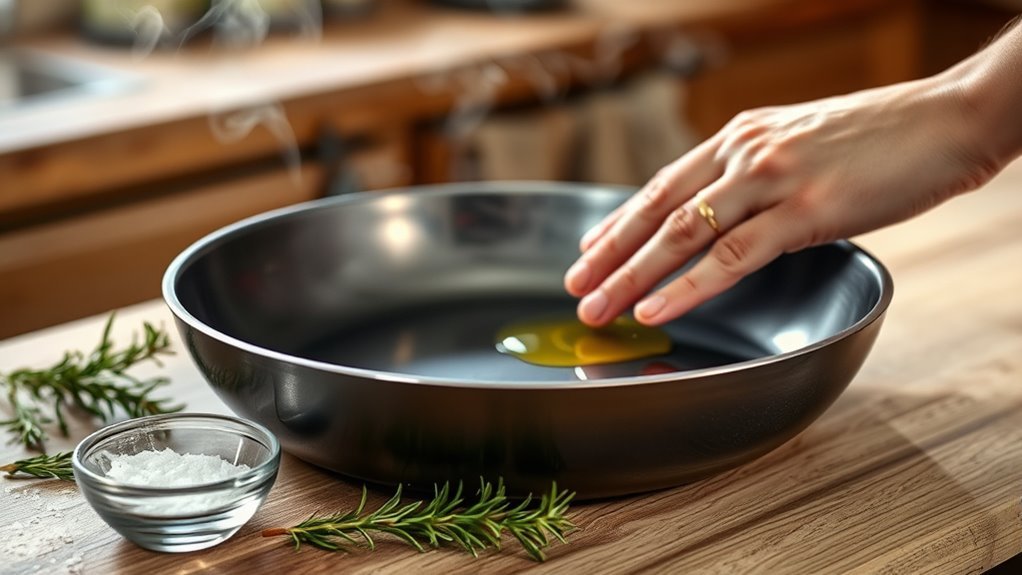
Once you’ve removed the beeswax coating and dried your pan thoroughly, you can begin the seasoning process. Start by applying a thin layer of high smoke-point oil, like grapeseed or soybean oil, to every surface of the pan.
Rub the oil in until the pan looks dry and free of excess grease. Next, heat the pan on medium-high until the oil starts to smoke.
Lower the heat and keep heating until the smoking stops, allowing the oil to polymerize and form a durable seasoning layer.
Let the pan cool, then repeat this process 3-4 times. Each round builds a stronger, more even coating, creating a dark, smooth patina that protects your pan and improves its non-stick performance over time.
Best Practices for Cooking With Carbon Steel
When you cook with carbon steel, preheating your pan over medium-low heat for a few minutes guarantees even cooking and better results. Always preheat the pan before adding cooking oil with a high smoke point, like grapeseed or sunflower, to help build and maintain seasoning.
Use proper seasoning to create a natural non-stick surface and prevent sticking. Start by cooking proteins and high-fat foods first, as this reinforces the seasoned layer.
Avoid overcrowding the pan to ensure proper searing instead of steaming, which enhances flavor and texture.
To maintain seasoning, avoid acidic foods that can strip the surface. Mastering this cooking technique preserves your pan’s performance and complements your cleaning method by reducing residue buildup.
With practice, your carbon steel pan will deliver excellent results every time.
Cleaning Methods to Preserve Seasoning
Maintaining the seasoning you’ve built while cooking depends largely on how you clean your carbon steel pan. Use warm water and a soft brush or non-metallic scrubber to gently clean your seasoned pan. Avoid soap to protect the seasoning layer.
For stubborn residues, scrub with coarse salt and a bit of oil to lift buildup without damage. Never soak your pan or use a dishwasher, as water exposure risks rust.
After cleaning, immediately dry your pan thoroughly, either with a towel or on the stove. Then, apply a thin oil layer and heat the pan to reinforce seasoning and ensure rust prevention. Proper care during cleaning is essential for your pan’s longevity.
| Step | Action | Purpose |
|---|---|---|
| 1 | Warm water + soft brush | Gentle cleaning |
| 2 | Salt + oil scrubbing | Remove stubborn residues |
| 3 | Avoid soaking + dishwashers | Prevent rust |
| 4 | Dry immediately | Remove moisture |
| 5 | Oil + heat | Seasoning maintenance |
How to Remove Rust and Restore Your Pan
If rust starts to form on your carbon steel pan, you’ll need to act quickly to restore its surface and prevent further damage. Begin rust removal by scrubbing the area with coarse salt and a bit of oil to lift rust without harming the seasoning.
For stubborn rust, use a vinegar soak—equal parts vinegar and water for 1-5 hours—then scrub with steel wool or a scouring pad to remove corrosion.
Afterward, neutralize vinegar residue with a baking soda paste, rinse well, and dry thoroughly to prevent rust.
Finally, restore the surface by applying a thin layer of oil and heating it until a dark, nonstick patina forms.
Regular cleaning and maintenance like proper drying will help prevent rust and keep your pan in top shape.
Proper Storage Techniques
Although carbon steel pans are durable, storing them properly is essential to prevent rust and preserve their seasoning. Always keep your pan in a dry, low-humidity area to avoid moisture buildup. Before storage, make sure it’s completely dry and lightly oiled to maintain the seasoning layer.
Avoid airtight containers since they trap moisture, increasing rust risk. For stacked pans, place a pan protector, dish towel, or silicone trivet between them to prevent scratches. Hanging your pan promotes air circulation, reducing rust formation and keeping it ready for your next use.
| Storage Tip | Why It Matters | Emotion Evoked |
|---|---|---|
| Dry & Lightly Oiled | Rust prevention | Confidence |
| Use Pan Protectors | Avoid scratches | Care & Respect |
| Hang for Air Circulation | Reduce moisture buildup | Satisfaction |
Troubleshooting Common Pan Care Issues
When you notice rust spots or uneven seasoning on your carbon steel pan, it’s a sign that some care steps need adjustment. Rust often appears if the pan isn’t dried thoroughly after cleaning, so prioritize rust prevention by drying immediately.
Rust spots and uneven seasoning signal the need to improve drying and care routines for your carbon steel pan.
Uneven seasoning usually means you need reseasoning, often caused by excessive oil application or insufficient heating.
Sticking issues can result from a damaged surface due to harsh scrubbers or detergents; avoid these during cleaning.
For stubborn stuck-on food, simmer water in the pan to loosen debris, then gently scrape and re-oil.
Flaking seasoning is normal early on but fixable with proper maintenance.
Consistent pan care, including gentle cleaning, careful oil application, and timely reseasoning, keeps your carbon steel pan performing at its best.
Frequently Asked Questions
How to Maintain a Carbon Steel Pan?
You maintain your carbon steel pan by drying it thoroughly after use, applying a thin layer of oil, storing it in a dry place, addressing rust spots promptly, and re-seasoning regularly to keep its non-stick surface intact.
After washing, make sure the pan is completely dry to prevent rust. Apply a thin layer of oil to the surface before storing it.
Store the pan in a dry location to avoid moisture buildup. If you notice any rust spots, treat them immediately. Regularly re-season the pan to maintain its protective and non-stick coating.
Should You Oil a Carbon Steel Pan?
Yes, you should oil your carbon steel pan after each use. Applying a thin, even layer of high smoke-point oil prevents rust, maintains seasoning, and improves non-stick properties.
This process helps avoid sticky or greasy spots, keeping your pan in optimal condition for cooking.
How to Use a Carbon Steel Pan for the First Time?
Did you know 90% of chefs swear by carbon steel? To use yours first, scrub off any coating, dry it well, apply oil, then heat it until smoking.
Repeat this 3-4 times to build seasoning.
How to Season a Carbon Steel Pan Made In?
You season your carbon steel pan by cleaning off any coating, drying it, then applying a thin layer of high smoke point oil.
Heat until smoking, lower heat for 10-15 minutes, and repeat 3-4 times for a strong patina.
Conclusion
Caring for your carbon steel pan isn’t just about maintenance—it’s about building a lasting relationship with your cookware. While some think seasoning is a one-time task, the truth is it’s an ongoing process that deepens your pan’s performance over time.
By regularly cleaning, seasoning, and storing it properly, you’ll reveal better flavors and durability. Embrace this care routine, and you’ll discover that patience and attention truly transform your pan into a kitchen essential.
Proper care and regular seasoning are key to maintaining your carbon steel pan’s non-stick surface and longevity. Following these steps will ensure your pan remains a reliable and versatile tool in your kitchen for years to come.