How Do You Take Care of a Cast Iron Pan Step by Step
You might think taking care of a cast iron pan is complicated, but it’s really about following a few clear steps. Properly caring for a cast iron skillet ensures it lasts a lifetime and even improves with every use. When you get it right, your pan will last for generations and improve with every use.
Starting with choosing the right pan and properly seasoning it sets the foundation. From there, simple daily habits keep it in top shape, but there are some subtle details that make all the difference.
Choosing the Right Cast Iron Pan
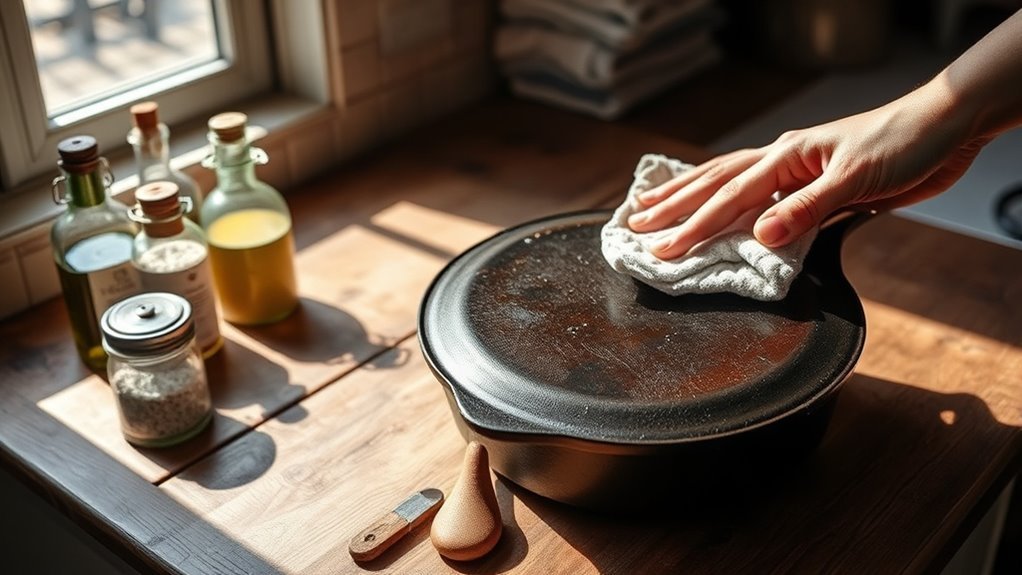
When choosing the right cast iron pan, you’ll want to pick one with a smooth, pre-seasoned surface or be ready to season it yourself if it’s new.
A good pan should have even thickness and a sturdy handle, making it easier to handle compared to heavy stainless steel alternatives.
Check for any rust or dull spots on the seasoning layer. These can affect cooking and mean you’ll need to reseason.
Consider the size and weight so it fits your needs without being cumbersome.
Using oil during seasoning helps build a natural, non-stick surface that improves over time.
Sticking with reputable brands like Lodge or Staub ensures you get durable cookware that lasts.
Avoid pans with uneven surfaces or poor seasoning to save yourself from future maintenance hassles.
Initial Cleaning and Preparing Your Pan
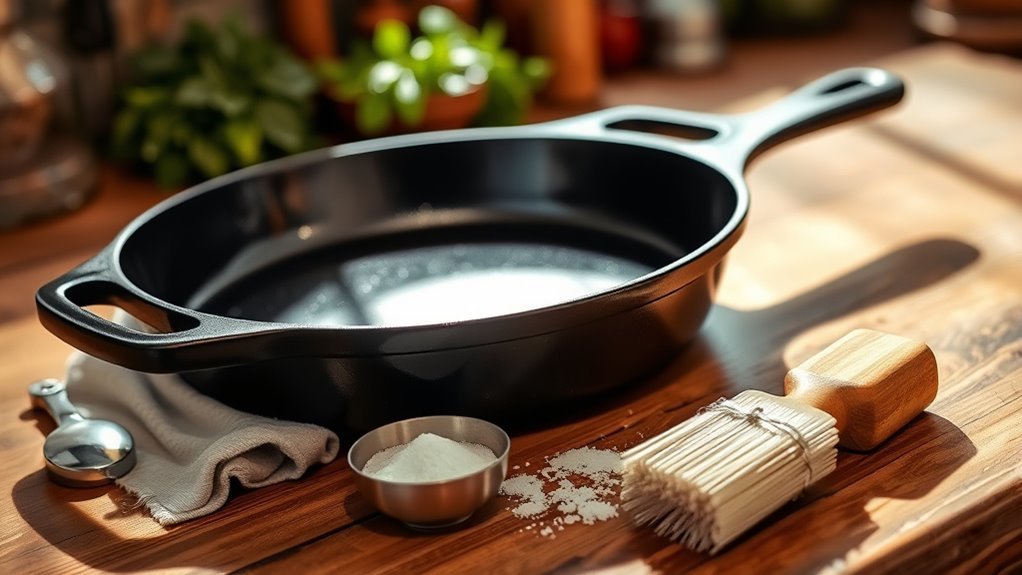
After selecting the right cast iron pan, you’ll need to clean and prepare it properly before cooking. Start by washing your new pan thoroughly with warm, soapy water to remove any manufacturing residues. Don’t skip this initial cleaning step—it guarantees your pan is ready for seasoning.
Next, dry the pan completely using a towel or by heating it on the stovetop; this prevents rust from forming.
Once dry, apply a thin layer of oil all over the pan’s surface, including the outside and handle. This oil layer is essential for building the seasoning that protects your pan and creates a non-stick surface.
Proper cleaning and preparation set the foundation for a long-lasting, rust-free cast iron pan.
Applying the First Layer of Seasoning
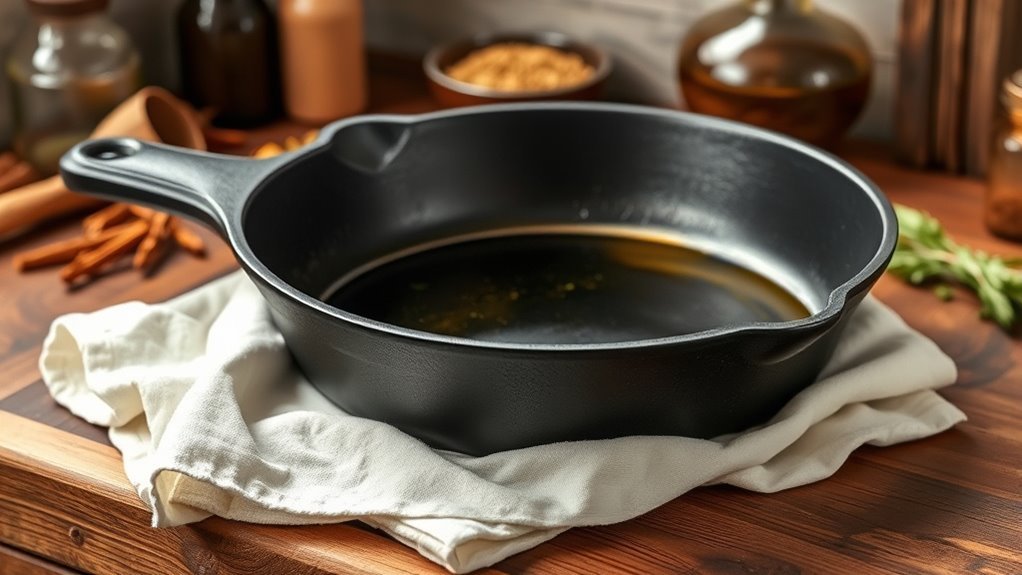
Because seasoning forms the protective layer that prevents rust and creates a non-stick surface, you’ll want to start by applying a thin, even coat of high-smoke-point oil over your clean, dry cast iron pan.
This essential step in the seasoning process guarantees your new cast iron develops a durable, smooth finish.
To apply the first layer effectively:
Use a small amount of oil, spreading it evenly across the entire pan, including the handle.
Buff the surface with a clean cloth or paper towel to remove excess oil.
Ensure the layer is thin to avoid sticky residue.
Cover both the inside and outside surfaces for full protection.
Baking the Pan to Build Seasoning
Once you’ve applied a thin layer of oil, place your cast iron pan in a preheated oven at 450°F (232°C) to bake it. Baking for about 30 minutes allows the oil to polymerize, creating a durable seasoning coating.
Repeat baking 3-4 times to enhance the non-stick surface and build up the seasoning effectively. Always let the pan cool completely in the oven to avoid warping. Using the oven ensures even heat distribution, promoting a strong, long-lasting coating.
| Step | Purpose |
|---|---|
| Apply oil | Thin, even coating for seasoning |
| Preheat oven | Ensure proper baking temperature |
| Bake 30 mins | Polymerize oil, build durable coating |
| Cool in oven | Prevent warping, finalize seasoning |
Proper Daily Cooking Techniques
When you preheat your cast iron pan on medium-low heat for a few minutes, you guarantee even cooking and reduce the chance of food sticking. Proper daily cooking techniques help maintain your pan’s seasoned surface and extend its life.
Always add a small amount of oil or butter after preheating to enhance non-stick properties. Avoid cooking acidic foods like tomatoes or vinegar-based sauces for long periods until your seasoning is well established, as they can damage the coating.
Preheat on medium-low before adding oil or food.
Use minimal oil to protect seasoning.
Limit cooking acidic foods early on.
Cool slightly before cleaning to prevent warping.
After cooking, dry thoroughly and apply a light oil layer before storage to maintain seasoning and prevent rust.
Cleaning Your Cast Iron After Use
Although your cast iron pan needs some cooling time after cooking, you should wash it promptly using warm water and a non-abrasive sponge or brush. Avoid soap if your cast iron is well-seasoned to preserve its protective layer.
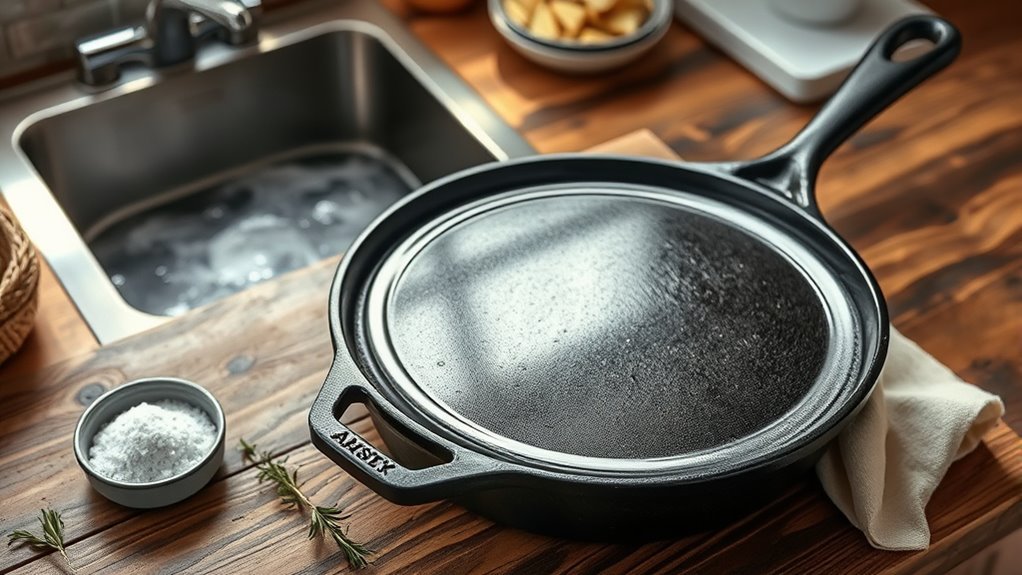
If you notice any residue, gently scrub with coarse salt and warm water, then rinse thoroughly.
Always dry your pan immediately with a towel or by heating it on the stove to prevent rust from forming.
Never soak your cast iron in water, as prolonged moisture causes rust and damages seasoning.
After drying, wipe a thin layer of oil onto the surface to maintain and build your pan’s seasoning.
Proper cleaning and drying keep your cast iron in excellent condition for years.
Removing Stubborn Food Residue
If stubborn food residue won’t budge with a simple rinse, soak your pan in warm water mixed with a bit of kosher salt to help loosen the buildup. Then, scrub gently using a non-abrasive sponge or brush to protect the pan’s seasoning.
For tougher spots, simmer water in the pan for 3-5 minutes to soften stubborn food residue before scrubbing again. Use a stainless steel scrubber or cast iron scraper cautiously to avoid damaging the seasoning.
After cleaning, rinse thoroughly with hot water to remove salt and food particles, then dry completely to prevent rust. Finally, apply a light layer of oil before storing your pan.
- Soak with warm water and kosher salt
- Scrub gently to protect seasoning
- Simmer water to soften residue
- Dry thoroughly and oil to prevent rust
How to Prevent and Remove Rust
Because cast iron pans are prone to rust, you need to take proactive steps to prevent it and know how to remove it if it appears. To prevent rust, always dry your pan thoroughly after washing and apply a thin layer of oil to protect the surface.
If rust does form, soak the pan in a vinegar and water solution for up to 24 hours, then scrub with steel wool or a rust eraser to remove the rust.
For severe rust, gently scrub using a Bar Keepers Friend slurry with steel wool.
After rust removal, rinse and dry the pan immediately, then apply oil and bake at 450°F for an hour to help restore the seasoning and protect against future rust.
Regular maintenance keeps your cast iron rust-free and ready to use.
Re-Seasoning Your Cast Iron Pan
When your cast iron pan starts to lose its non-stick quality or shows signs of wear, you’ll want to re-season it to restore its protective coating. Re-seasoning helps build up a durable seasoning layer that enhances the pan’s non-stick surface and prevents rust.
Re-season your cast iron pan to restore its non-stick surface and protect against rust.
Follow these steps for effective re-seasoning:
Clean the pan thoroughly with hot, soapy water to remove old seasoning and debris.
Apply a thin, even layer of high-unsaturation oil like canola or vegetable oil over the entire pan.
Bake the pan upside down at 450°F oven temperature for 30 minutes, placing foil underneath to catch drips.
Repeat oil application and baking 3-4 times to build up the seasoning layer.
Let the pan cool completely before use or storage to maintain its non-stick surface.
Tips for Long-Term Cast Iron Maintenance
Although cast iron pans are incredibly durable, maintaining their seasoning and preventing rust requires consistent care. Always clean your pan with warm water and a non-abrasive sponge, then dry it thoroughly to avoid rust.
After cleaning, apply a thin layer of oil, vegetable or flaxseed works well, and heat the pan to preserve its seasoning. Avoid soaking your pan or using a dishwasher, as this can cause damage.
For stubborn residue or rust, rehab your cast iron by scrubbing with steel wool or a vinegar solution, then re-season it.
When storing, keep the pan in a dry place to prevent moisture buildup.
Use your cast iron regularly; cooking with fats naturally boosts seasoning, ensuring your pan stays in top condition for years.
Frequently Asked Questions
How to Properly Maintain a Cast Iron Skillet?
You should wash your cast iron with warm water, dry it completely, then apply a thin oil layer.
Cook regularly with fats to build seasoning, and re-season by baking with oil to keep it non-stick and rust-free.
How to Treat a Cast Iron Pan for the First Time?
You’ll wash your cast iron with warm, soapy water, dry it thoroughly, then coat it lightly with oil.
Bake it at 450°F for 30 minutes, repeating oiling and baking 3-4 times to build seasoning.
Do I Need to Wash Cast Iron After Every Use?
Yes, you should wash your cast iron pan after every use to remove food residue and prevent rust. Use warm water and a gentle brush, dry it thoroughly, and apply a light oil layer to maintain seasoning.
Avoid using soap or harsh detergents as they can strip the seasoning. If food is stuck, scrub with coarse salt and a little water, then rinse. Proper care will keep your cast iron pan in great condition for years.
How Often Should I Oil a Cast Iron Pan?
You should oil your cast iron pan after every use, especially after washing it thoroughly.
Also, re-oil it every 1-2 months if needed, or whenever you notice food sticking or a dull surface developing.
Conclusion
Taking care of your cast iron pan guarantees it lasts for generations—some pans have been used for over 100 years! By seasoning properly, cooking on medium-low heat, and promptly addressing rust, you’ll keep your pan non-stick and durable.
Remember, even small efforts like drying thoroughly and applying oil after each use make a big difference. With consistent care, your cast iron will improve over time, becoming a reliable kitchen companion that only gets better with age.
Proper maintenance of your cast iron pan involves regular cleaning, seasoning, and careful storage. These steps ensure your pan remains rust-free and enhances its natural non-stick surface. Taking these simple actions will help you enjoy cooking with your cast iron pan for many years.