How Do You Season a Stainless Steel Pan in 7 Easy Steps
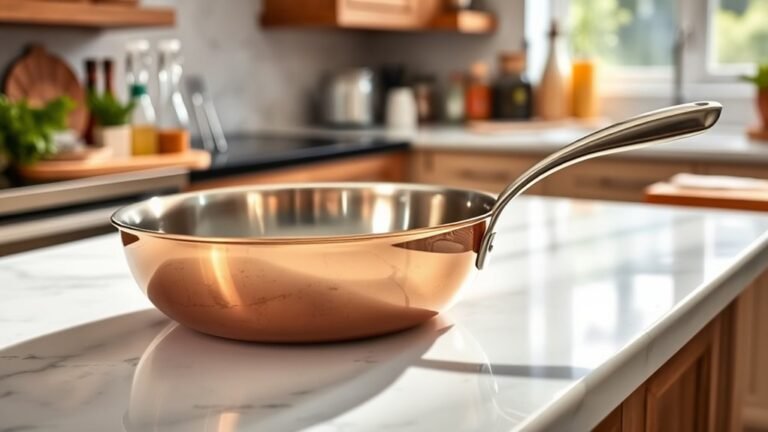
Imagine you’ve just bought a shiny stainless steel pan, but your eggs keep sticking no matter what you try. You might think seasoning is only for cast iron, but seasoning a stainless steel pan can make it perform better too. This simple process creates a slick surface that improves cooking and cleanup.
With a few easy steps, you can transform your stainless steel cookware into a non-stick marvel. Keep going to find out how to season your stainless steel pan correctly and avoid common mistakes that many cooks make.
Gather Your Supplies and Prepare Your Pan
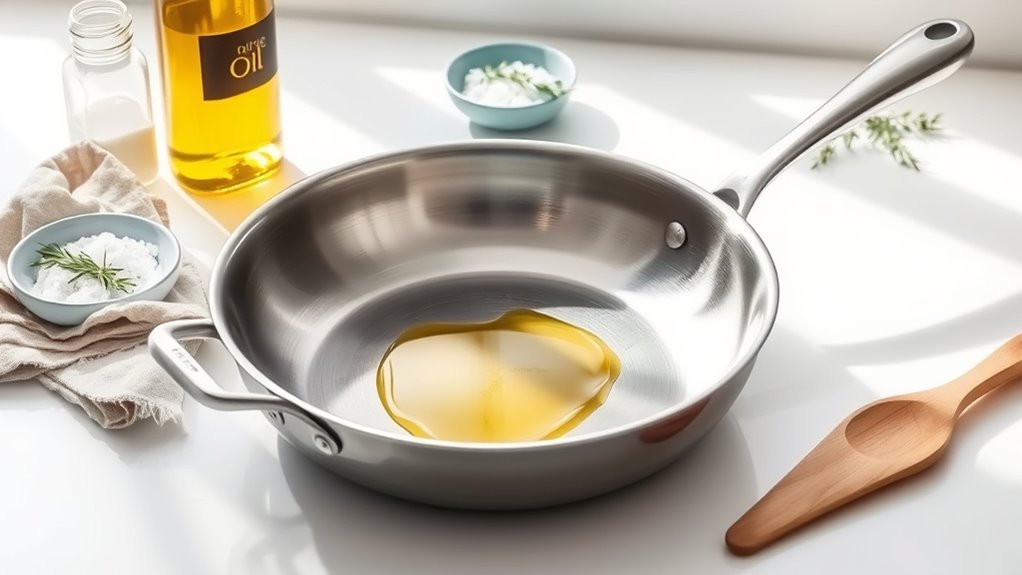
Before seasoning your stainless steel pan, gather high smoke point oils like grapeseed, vegetable, or peanut oil, and make certain your pan is clean and dry. Proper care starts with removing any stickers or labels to avoid residue during heating.
Wash your stainless steel pan thoroughly with warm water and mild dish soap to eliminate manufacturing residues or dirt that could interfere with seasoning. Dry it completely using a clean towel or paper towels to prevent water spots and ensure even heat distribution.
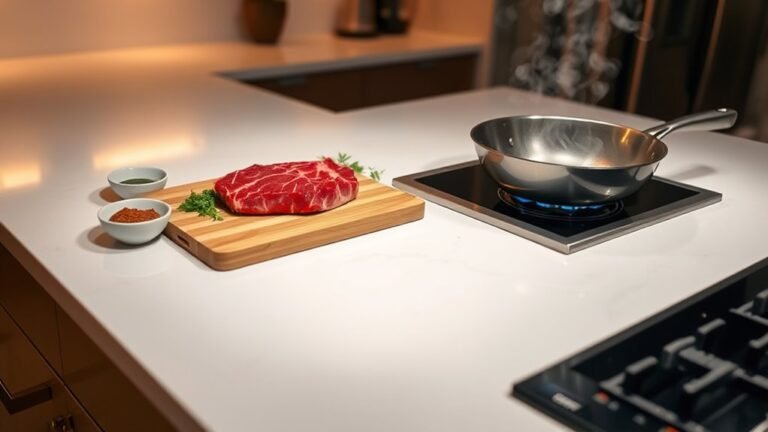
Once prepped, place the pan on your stovetop and preheat it over medium heat. Applying oil to a properly heated cooking surface helps create a non-stick layer, making your seasoning effective and lasting.
Following these steps ensures your pan’s durability and cooking performance.
Clean and Dry Your Stainless Steel Pan Thoroughly
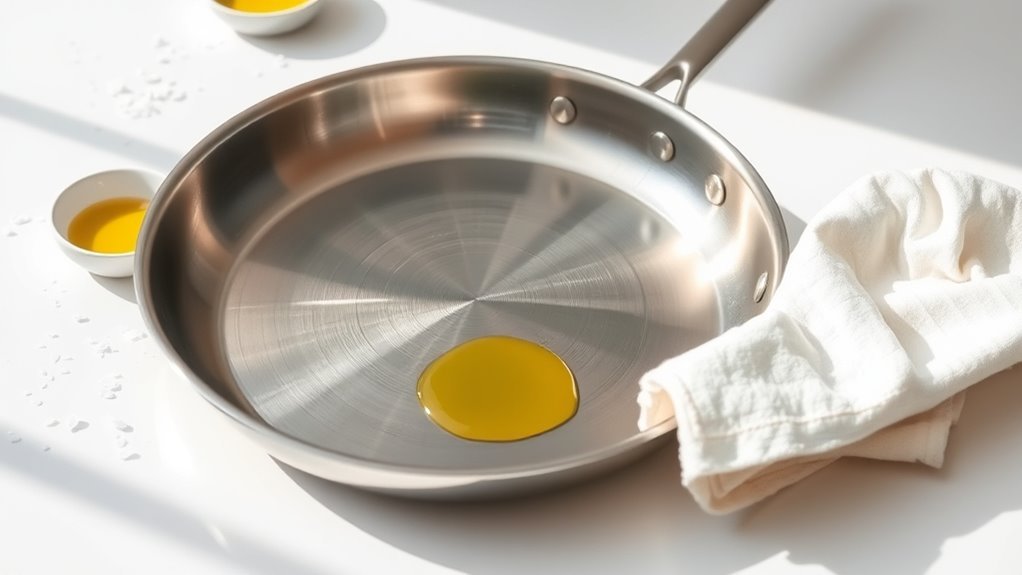
Although it might seem simple, cleaning and drying your stainless steel pan thoroughly is essential for successful seasoning. Start by washing your pan with warm water and mild dish soap to remove dirt, grease, and any manufacturing residues.
Use a scrub brush or a non-abrasive sponge to clean the surface well, ensuring all stuck-on food and oils are gone. Rinse the pan completely with warm water to eliminate soap residue, which can interfere with seasoning.
After rinsing, dry your stainless steel pan immediately and completely using a soft towel or paper towels. Don’t forget to wipe the entire surface, including the sides and handle, to prevent water spots and oxidation.
A clean and dry pan is the perfect foundation for the next seasoning steps.
Preheat the Pan Over Medium Heat
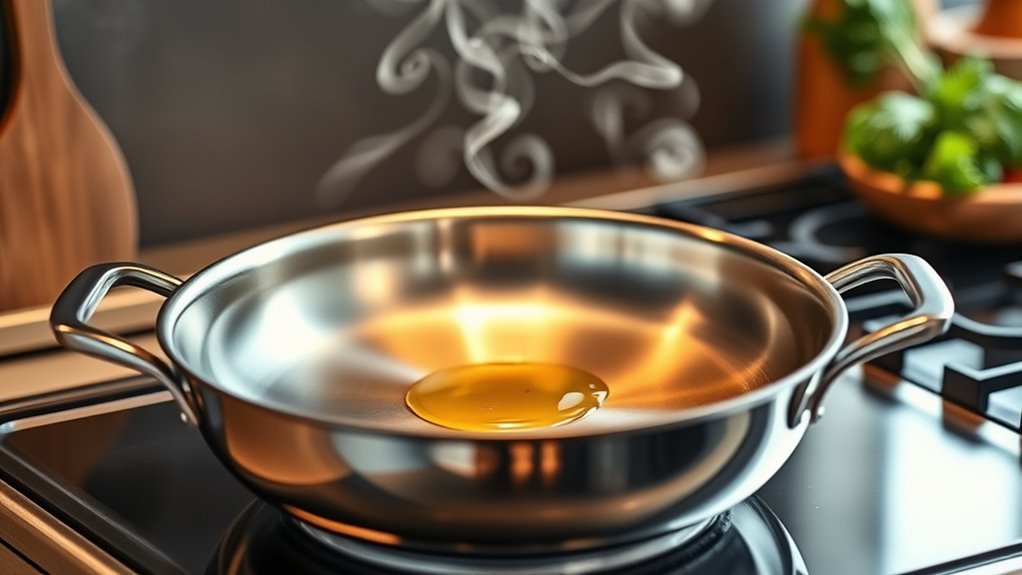
Once your stainless steel pan is clean and dry, it’s time to warm it up over medium heat. Preheating the pan gradually for 2-3 minutes ensures it reaches an ideal temperature, around 350-400°F (177-204°C), creating a uniformly hot surface. This uniform heat is essential for effective seasoning since it helps oil bond properly to the pan. Avoid high heat to prevent warping or damaging your pan’s finish.
| Step | Action | Purpose |
|---|---|---|
| 1 | Turn burner to medium | Control temperature |
| 2 | Heat for 2-3 minutes | Achieve uniform heat |
| 3 | Observe pan surface | Ensure it’s uniformly hot |
| 4 | Avoid high heat | Prevent damage |
| 5 | Prepare for seasoning | Ideal oil bonding surface |
Test the Pan’s Temperature With Water Drops
To check if your stainless steel pan has reached the right temperature, sprinkle a few drops of water onto its surface. These water drops help you gauge the pan’s temperature through testing.
If the droplets bead up and glide smoothly across the hot surface without evaporating immediately, you’ve hit the ideal temperature for seasoning. This behavior is due to the Leidenfrost effect, where water droplets dance on a sufficiently hot surface, signaling it’s ready.
If instead the water sizzles loudly and disappears right away, the pan is too hot and needs to cool slightly before proceeding.
Regularly using water drops for temperature testing guarantees your pan is perfectly heated, setting the stage for effective seasoning and better cooking results.
Add a Small Amount of High Smoke Point Oil
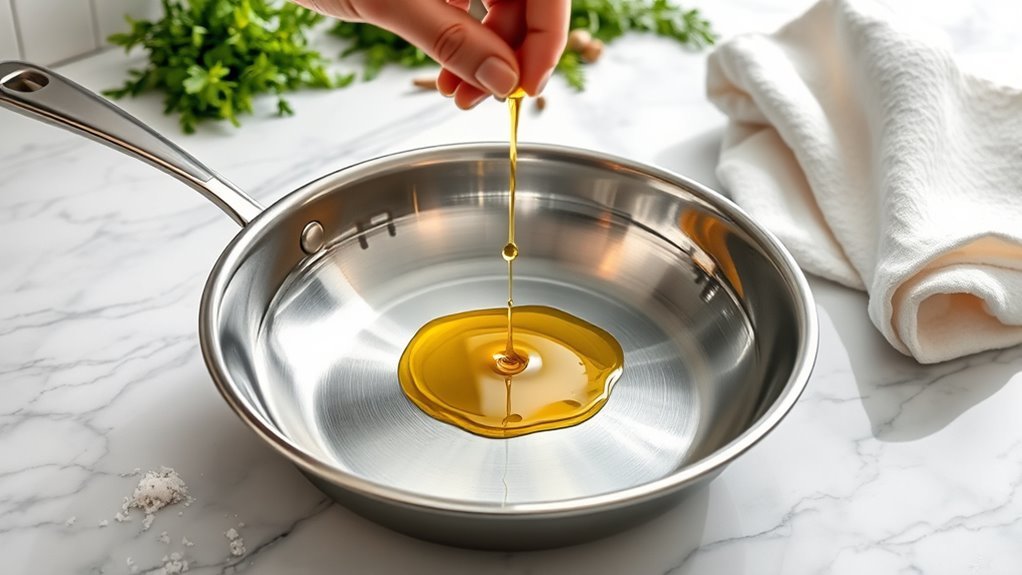
After confirming your pan has reached the right temperature with the water test, it’s time to add a small amount of oil. To properly season your stainless steel pans, use a high smoke point oil like grapeseed, avocado, or vegetable oil.
This guarantees the oil won’t burn during seasoning, creating a durable coating.
Follow these steps to apply the oil layer correctly:
- Pour just a few drops onto the hot cooking surface.
- Spread the oil evenly with a folded paper towel, avoiding puddles.
- Make sure the entire surface has a thin coating.
Spread the Oil Evenly and Heat Until It Smokes
Although you’ve just spread a thin layer of oil on your pan, you’ll want to turn the heat to medium or medium-high and watch closely as the oil begins to shimmer. Use a folded paper towel to spread the oil evenly across your stainless steel pan’s surface, ensuring full coverage.
Keep the pan steady. Avoid moving it. As the oil heats, it will start to smoke lightly, signaling the perfect temperature for seasoning. This smoke indicates the oil is bonding with the pan, creating a protective layer.
Here’s a quick guide:
| Step | What to Do |
|---|---|
| Spread Evenly | Use a folded towel to coat pan |
| Heat | Medium to medium-high on stovetop |
| Smoke | Wait until oil just starts smoking |
This process ensures your pan’s seasoning develops evenly and effectively.
Let the Pan Cool and Wipe Away Excess Oil
Once the oil starts smoking, turn off the heat and let your pan cool down naturally. This cooling step is essential for proper seasoning, as it allows the oil to bond with the stainless steel surface, forming a temporary nonstick layer.
When the pan is cool, it’s time to wipe away any excess oil to avoid sticky, uneven buildup.
Follow these steps to finish the seasoning process:
- Let the pan cool completely to preserve the seasoning layer.
- Use a paper towel or soft cloth to wipe away residual excess oil.
- Confirm no pooled oil remains for a smooth cooking surface.
Frequently Asked Questions
How to Properly Season a Stainless Steel Pan?
You clean and dry your pan thoroughly, then heat it until very hot. Add a thin layer of high smoke point oil, heat until it smokes, cool, and wipe off excess oil to properly season your stainless steel pan.
What Does Vinegar Do to Stainless Steel?
Vinegar helps you remove mineral deposits and grease from stainless steel, restoring its shine.
Just don’t leave it on too long, or it might dull or corrode the surface.
Always rinse thoroughly after cleaning.
How Do You Keep Eggs From Sticking to Stainless Steel Pans?
Think of your pan as a blank canvas; heat it until water dances, then add oil like a protective glaze.
Cook eggs gently on medium heat, and they’ll slide like brushstrokes across your stainless steel masterpiece.
What Oil Should I Use to Season My Stainless Steel Pan?
You should use oils with high smoke points like grapeseed, peanut, vegetable, or sunflower oil to season your stainless steel pan. These oils create a durable, smooth nonstick layer without burning or leaving sticky residues.
Using the right oil helps ensure your pan develops a proper seasoning that enhances its cooking performance and longevity. Avoid oils with low smoke points as they can burn and cause sticky buildup.
Conclusion
Now that you’ve seasoned your stainless steel pan, you’ll notice cooking becomes smoother with less sticking. Imagine Sarah, who struggled with eggs sticking every morning; after seasoning her pan, she flips perfect omelets effortlessly.
With just a bit of care and the right technique, your pan will develop a natural, non-stick surface, making cooking and cleanup easier. Keep seasoning regularly, and your pan will serve you beautifully for years to come.
Seasoning your stainless steel pan not only enhances its performance but also extends its lifespan. By following these steps, you ensure a durable and effective non-stick surface that improves your cooking experience every time.