How to Measure a Fry Pan in 5 Easy Steps
Measuring a fry pan is like tailoring a suit—you need the right fit for the best performance. Knowing how to measure a fry pan correctly ensures you pick the perfect size for your cooking needs and storage space. You might think it’s as simple as a quick glance, but precise measurements can make all the difference in cooking results and kitchen storage.
Before you grab your measuring tape, consider the key dimensions that truly matter. Let’s walk through five straightforward steps that guarantee you get it right every time.
Measure the Top Diameter of the Fry Pan
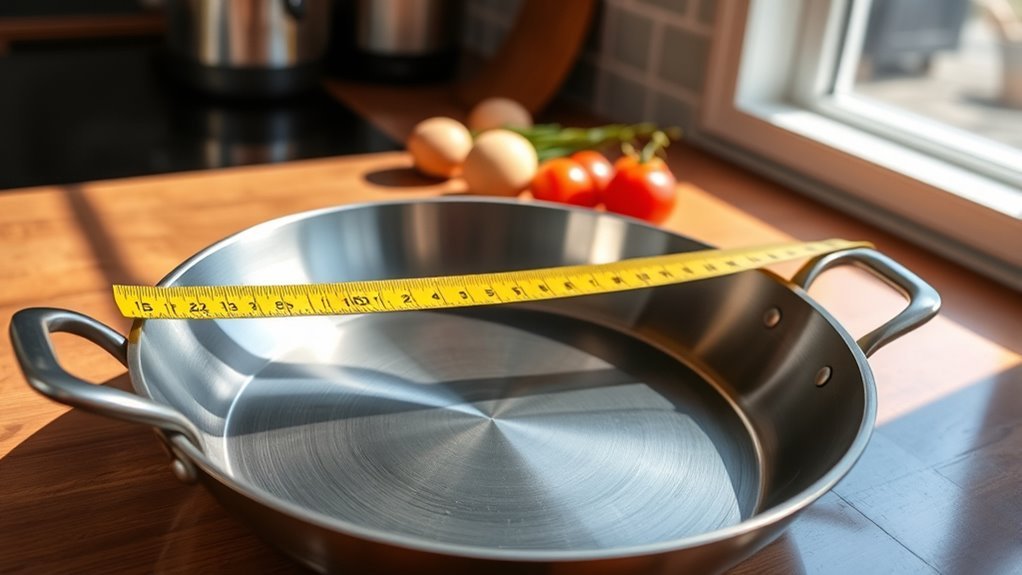
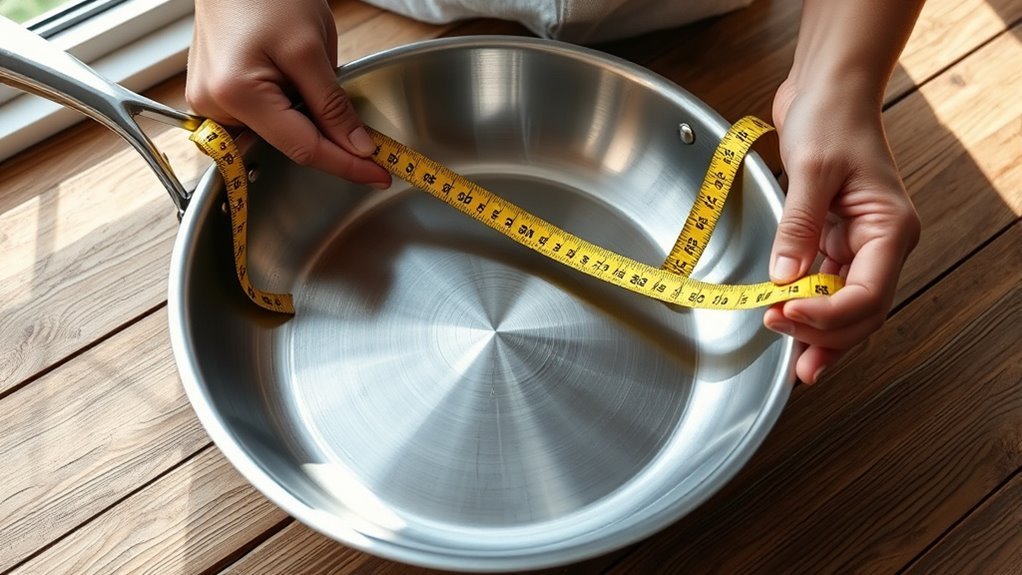
How do you accurately measure the top diameter of your fry pan? First, place a ruler or measuring tape straight across the pan’s inner rim, from one top edge to the opposite top edge. Make sure the ruler lies flat on the surface and isn’t angled, so your measurements stay precise.
Focus on the inner rim, the true cooking surface, and avoid including the handle or outermost parts of the pan. If your pan has flared edges or lips, include them in your measurement since they affect the pan’s overall size and lid fit.
Determine the Depth of the Fry Pan
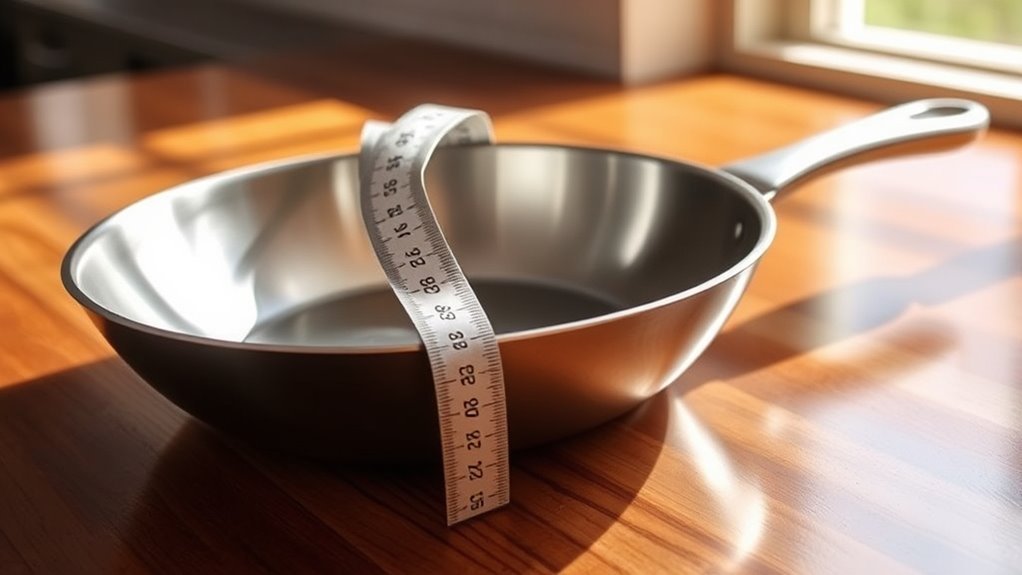
When you want to measure the depth of your fry pan, place a ruler straight down from the inside bottom to the top rim, making sure it stays perpendicular.
For an accurate measurement, take this vertical measurement at the pan’s center, avoiding the pan walls where sloped sides might affect the reading.
Note the fry pan depth in inches or centimeters, which usually ranges between 1 to 3 inches depending on design.
If your pan has flared or sloped sides, measure up to the highest point of the rim to get a precise depth assessment.
This ruler measurement of the pan interior helps you understand the pan capacity and whether it suits your cooking needs, especially when handling liquids or larger quantities.
Measure the Base Diameter for Cooktop Compatibility
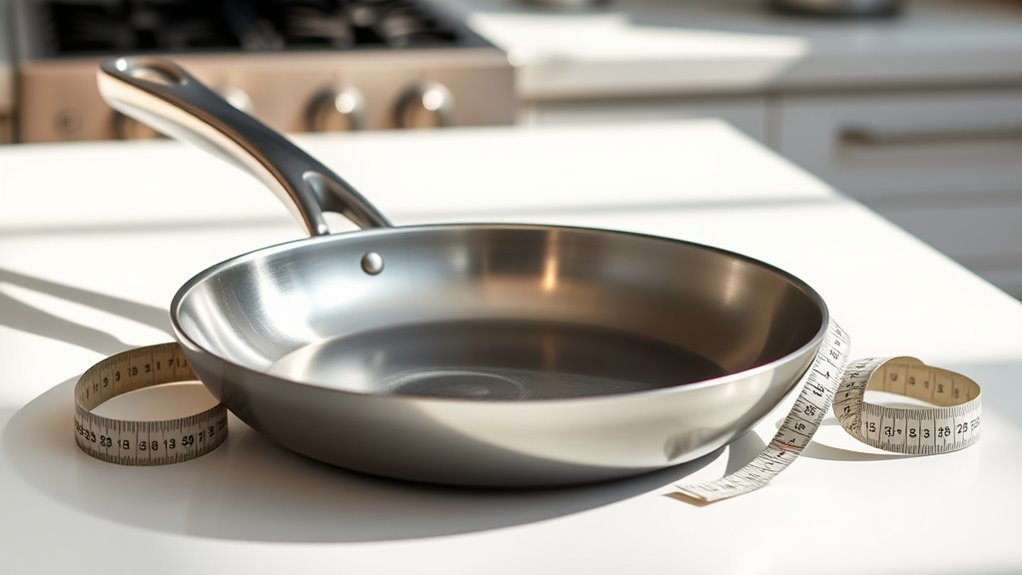
To measure the base diameter of your fry pan, place a ruler or measuring tape straight across the flat bottom surface at its center, making sure it stays level. This measurement is vital for cooktop compatibility, ensuring your pan fits securely on the heating element.
Focus only on the flat surface that contacts the stove, not the overall top diameter.
Keep these tips in mind for an accurate measurement:
- Use a straight ruler or measuring tape for precision
- Measure across the flat bottom, avoiding curves
- Remove handles or attachments that extend beyond the base
- Confirm the base diameter matches your cooktop’s burner size
- Remember the base diameter is smaller than the pan size’s top diameter
This method guarantees your fry pan’s stove fit and ideal cooking performance.
Measure the Handle Length for Handling and Storage
Since the handle affects both comfort and storage, you’ll want to measure its length carefully from where it joins the pan to the tip, keeping the tape or ruler aligned straight along its center. Use flexible handle measurement tools for curved designs to ensure accuracy.
Recording the handle length helps you evaluate storage space and grip comfort, impacting kitchen ergonomics and cooking safety. Remember, a longer handle extension improves pan handling but demands more clearance.
| Handle Length (in) | Storage Space Needed | Grip Comfort Level |
|---|---|---|
| Under 6 | Compact | Moderate |
| 6 to 8 | Moderate | Good |
| 8 to 10 | Spacious | Excellent |
| Over 10 | Large | Variable |
Assess the Base Thickness for Heat Retention
Although you might focus on size and handle comfort, evaluating the base thickness plays a vital role in how your fry pan performs. Measuring pan base thickness with a caliper or thickness gauge ensures you understand its heat retention capabilities.
Don’t overlook base thickness—it’s key to your fry pan’s heat retention and cooking performance.
A thicker base, usually 4-6 mm, promotes even heat distribution and works well on induction-compatible cooktops.
The pan material and manufacturing process, like forging or layering, also affect durability and cooking surface quality.
Consider these points when assessing base thickness for durable cookware:
- Thicker bases provide consistent heat retention
- Thin bases heat unevenly, causing hot spots
- Use precise tools for accurate measurement
- Forged or layered bases enhance cooking performance
- Regular checks maintain pan reliability over time
This helps you choose cookware that cooks evenly and lasts longer.
Frequently Asked Questions
How Do You Measure a Fry Pan?
You measure a fry pan by placing a ruler straight across the inner rim, ignoring the handle.
For round pans, measure diameter; for square ones, measure length and width inside.
Record the size without rounding up.
What Are the Key Measurements of Pans?
You’ll want to focus on the inner diameter, base diameter, depth, and handle length.
Did you know most frying pans average about 10-12 inches in diameter? These measurements help you pick the right pan for your cooking needs.
How Big Is a 7 Inch Frying Pan?
A 7-inch frying pan has about a 4.5 to 5-inch cooking surface inside, perfect for small meals.
Including the rim, it’s roughly 7.5 inches wide, with the handle adding extra length.
How Do I Tell the Size of My Pan?
You tell your pan’s size by measuring the inner diameter straight across the cooking surface, ignoring the handle. Use a ruler or tape, making sure it passes through the center for accuracy.
That’s your pan’s size!
Conclusion
Now that you know how to measure your fry pan in five easy steps, you can select the perfect one for your cooking needs. Did you know that a pan with a thicker base—around 5mm—can retain heat up to 30% longer, giving you better temperature control?
By accurately measuring your pan’s dimensions, you’ll guarantee it fits your cooktop, handles comfortably, and cooks evenly. This ensures every meal is cooked just right, enhancing your overall cooking experience.
Remember, knowing how to measure a fry pan correctly is essential for choosing the best cookware. Proper measurement helps you pick a pan that suits your kitchen and cooking style perfectly.