Do You Need to Spray Silicone Muffin Pans When Using Them?
When you reach for your silicone muffin pan, you might wonder if a quick spray is really necessary. Silicone muffin pans are popular for their non-stick qualities, but does that mean you can skip the grease every time?
It’s not always straightforward, and your baking outcome may depend on a few subtle factors. Understanding when to spray—and when to rely on silicone’s natural release—can make a big difference.
Understanding Silicone Muffin Pans and Their Non-Stick Properties
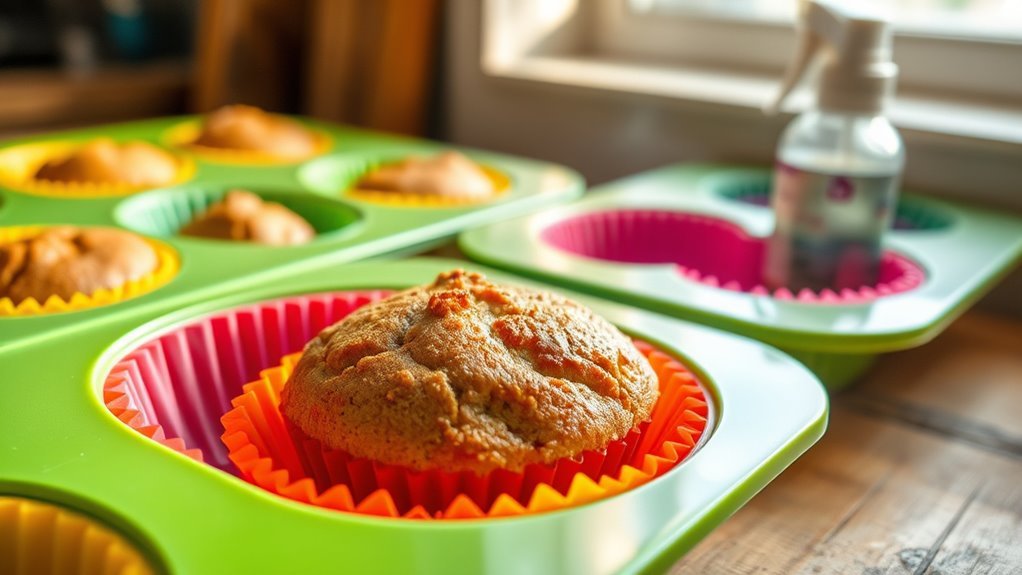
Although silicone muffin pans are naturally non-stick, you might want to apply a light coating of spray or oil during the first few uses to prevent sticking. This greasing helps condition the pan, allowing the silicone to develop its full non-stick properties over time.
As you continue baking with silicone, the pan becomes seasoned silicone, enhancing its ability to release baked goods effortlessly. Proper use and maintenance ensure this non-stick coating improves, making problem-free unmolding easier without extra sprays.
Baking tips recommend avoiding excessive greasing after your silicone muffin pans are well-seasoned, as it can interfere with their natural release qualities. Understanding this process helps you maximize your pans’ performance and enjoy hassle-free baking with silicone every time.
When and Why to Spray Silicone Muffin Pans
If you’re using a silicone muffin pan for the first few times, spraying it lightly with non-stick spray or oil helps prevent sticking and guarantees your baked goods release easily. This initial coating supports the pan’s non-stick properties until it becomes seasoned through regular baking.
After that, spraying isn’t usually necessary unless you notice sticking. Alternatively, you can use parchment paper liners for easier removal and cleaner cleanup. Keep these tips in mind:
- Spray lightly during the first few uses to build a natural non-stick surface.
- Skip spraying once the pan is seasoned unless sticking occurs.
- Use parchment paper liners as a non-spray option for baking.
- Clean thoroughly to maintain the silicone’s non-stick coating and avoid sticky buildup.
This approach ensures your silicone muffin pans last and perform well.
Manufacturer Recommendations for Using Silicone Bakeware
When you start using silicone bakeware, manufacturers usually recommend spraying or greasing the pans during the first few uses to prevent sticking. Following these manufacturer instructions guarantees an easy release of your baked goods as the silicone develops its natural non-stick surface.
Begin by greasing silicone bakeware for easy release as the natural non-stick surface forms.
Over time, with proper cleaning and seasoning, you’ll likely find that additional spraying becomes unnecessary.
Seasoning your silicone pans during baking helps enhance their non-stick properties, making your baking experience smoother.
These baking tips not only improve release but also extend the lifespan of your silicone bakeware.
Alternatives to Spraying Silicone Liners
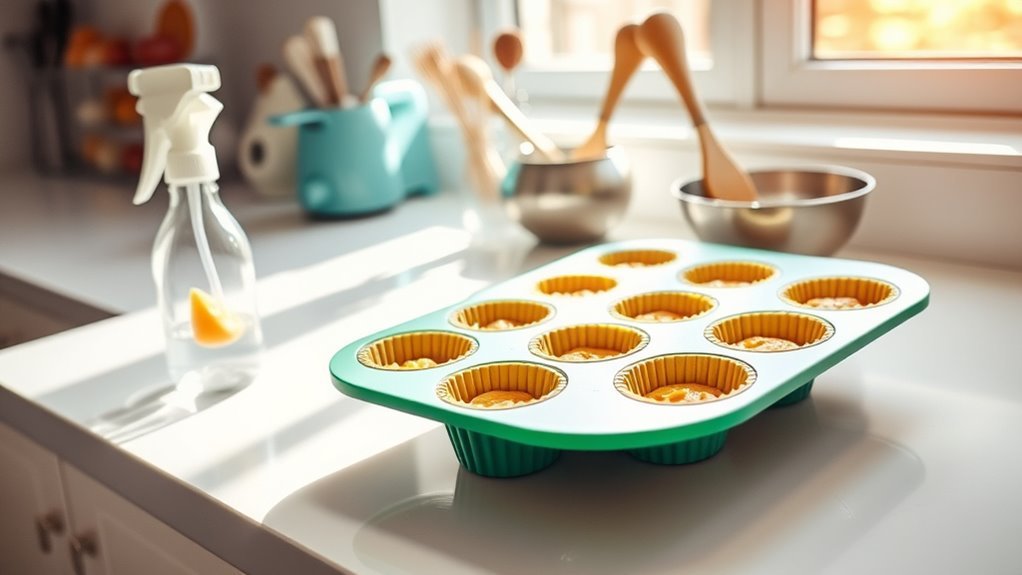
As you get comfortable with seasoning your silicone muffin pans, you might want to explore alternatives that completely skip spraying. One of the best baking alternatives is using parchment liners, which act as oven safe liners that protect the muffin pan coating and preserve the non-stick surface.
Here are some easy-release tips:
- Use properly fitting parchment liners made of heat-resistant parchment to prevent sticking.
- Opt for parchment or paper cupcake liners to reduce baking cleanup.
- Employ silicone muffin pans with parchment liners for air fryer baking as well as oven use.
- Skip muffin pan coating sprays to maintain the pan’s longevity and enjoy hassle-free release.
Parchment liners offer a straightforward, effective way to bake without additional sprays, keeping your silicone bakeware in top shape.
Tips for Maintaining Silicone Muffin Pans Over Time
Though silicone muffin pans are durable, you’ll want to handle and care for them properly to keep their non-stick surface intact and extend their lifespan. Avoid abrasive cleaners and harsh chemicals during cleaning to prevent damage to the coating.
Use gentle tools when removing baked goods to protect the silicone’s flexibility and durability. Storing pans flat or stacked keeps their shape, reducing warping.
| Maintenance Tip | Reason |
|---|---|
| Use mild soap & warm water | Preserves non-stick coating |
| Avoid abrasive tools | Prevents scratches and tears |
| Inspect regularly | Detects damage early |
| Store flat or stacked | Maintains shape and flexibility |
Following these tips ensures your silicone muffin pans stay in top condition without needing spray or extra coatings.
Common User Experiences and Best Practices
Even if your silicone muffin pan promises a non-stick surface, you might find yourself reaching for a spray during the first few uses to prevent sticking. Many bakers notice that after a few bakes, the pan becomes naturally seasoned, reducing the need for additional coating.
Your personal baking experience plays a big role in deciding whether spraying is necessary.
Here are some best practices to optimize release and reduce stickiness:
- Spray lightly during the first three uses to build a non-stick surface
- Avoid spraying once the pan is well-seasoned unless you prefer extra assurance
- Cool baked goods promptly for easier release without coating
- Adjust spraying based on your pan’s brand and your baking habits
Following these baking tips helps you get the most from your silicone muffin pans.
Frequently Asked Questions
Should You Spray Silicone Muffin Pans?
You don’t usually need to spray silicone muffin pans, but it’s a good idea the first few times to prevent sticking.
After that, you can skip spraying or use liners for easy cleanup and consistent results.
How Do You Keep Muffins From Sticking to Silicone?
To keep muffins from sticking to silicone, you can lightly grease the pan initially, use parchment liners, guarantee muffins cool fully before removing, and replace worn pans to maintain their non-stick surface for easy release every time.
Does a Silicone Muffin Pan Need to Be Oiled?
You don’t usually need to oil silicone muffin pans since 90% of users report no sticking after a few uses.
Just lightly spray or oil it initially, and you’ll keep muffins releasing perfectly every time.
Do You Need to Spray Silicone Muffin Pans for Egg Bites?
You don’t usually need to spray silicone muffin pans for egg bites, thanks to their non-stick surface.
But if it’s your first time or the pan’s new, a light spray helps guarantee easy removal without affecting texture.
Conclusion
You don’t need to spray silicone muffin pans since their smooth, seasoned surface naturally prevents sticking. Still, a light layer of grease during initial uses can gently get your pan going.
For fuss-free baking, consider clever cupcake liners or parchment paper instead. With simple, steady care and smart storage, your silicone pans will stay slick and sturdy.
This way, your silicone muffin pans will serve you sweet treats season after season without the stress of sticking or scrubbing. Proper maintenance ensures your silicone baking pans remain non-stick and durable.