How You Can Use Steel Wool on Stainless Steel Pans Safely
If you want to restore the shine of your stainless steel pans safely, using steel wool can be an effective method. Stainless steel cookware requires careful handling to avoid damage, so selecting the appropriate grade of steel wool is crucial. Using the right technique will help prevent scratches or rust on your pans.
Before you pick up that steel wool pad, there are important steps and precautions to follow. These guidelines will make all the difference in preserving your cookware’s surface. With the proper approach, steel wool can help maintain the beauty and functionality of your stainless steel pans.
Choosing the Right Steel Wool Grade for Stainless Steel
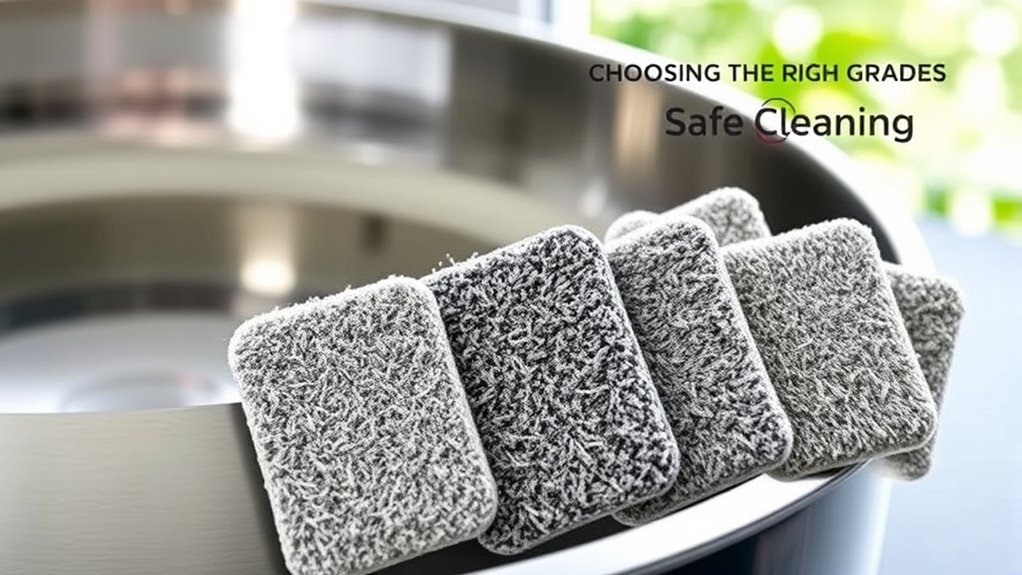
When you clean stainless steel pans, choosing the right steel wool grade is essential to avoid scratches. You should opt for fine or extra-fine steel wool, like #0000 grade, which is gentle enough to clean and polish without damaging the stainless surface.
Avoid coarser grades such as #0 or #1, since their abrasive nature can cause deep scratches and ruin the pan’s finish. Always check the recommended steel wool grade from your pan’s manufacturer to protect the surface.
For more delicate cleaning tasks, consider using non-metallic or synthetic abrasive pads instead of steel wool to prevent any potential harm. Picking the right grade guarantees your stainless steel pans stay smooth and scratch-free while you clean effectively.
Preparing Your Pan Before Using Steel Wool
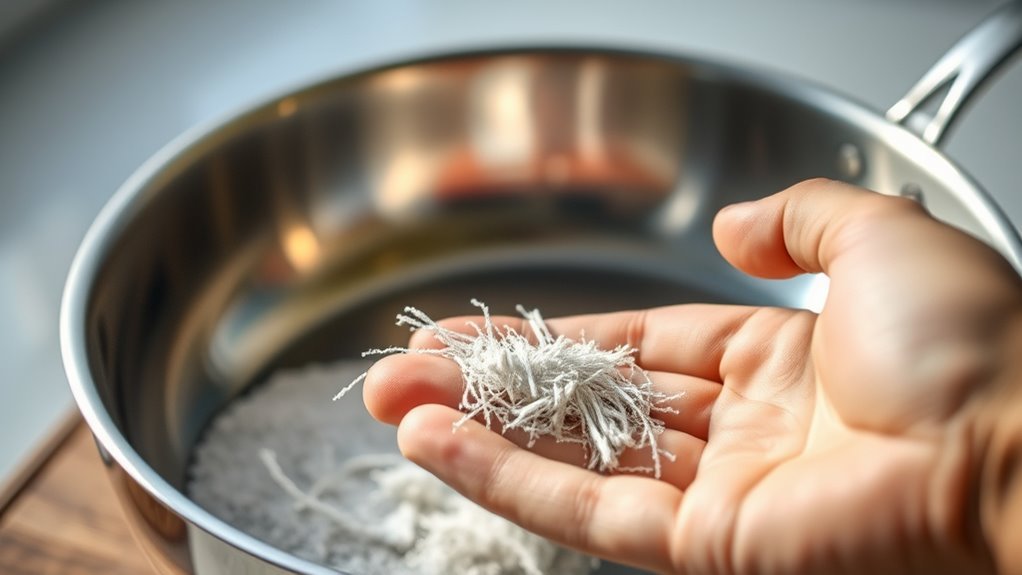
Selecting the right steel wool grade sets the stage for effective cleaning, but preparing your pan properly makes all the difference in protecting its surface.
Before you begin, make certain your stainless steel pan is completely cool to avoid warping or burns.
Always ensure your stainless steel pan is fully cooled before cleaning to prevent warping or burns.
Start by removing debris from the pan surface using a soft cloth or paper towel; this step helps prevent scratching during cleaning.
Take care to dry the pan thoroughly after each use to avoid moisture-related damage.
When you’re ready to clean with steel wool, choosing a fine-grade variety will minimize surface scratches.
Step-By-Step Guide to Cleaning With Steel Wool
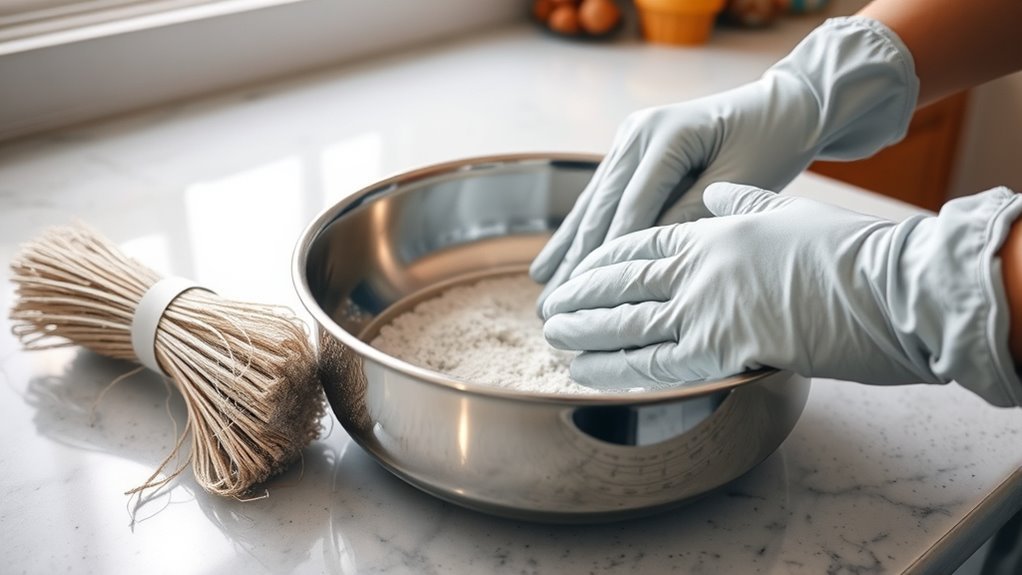
Although steel wool is a powerful tool for tackling tough stains on stainless steel pans, you need to use it carefully to protect your pan’s surface. Start by dampening the steel wool to soften its texture, reducing the risk of damaging surface scratches.
Next, gently scrub the stained areas using circular motions. Avoid pressing too hard to prevent harming the finish. Focus your cleaning efforts only on stubborn stains and limit scrubbing time to preserve your pan’s integrity.
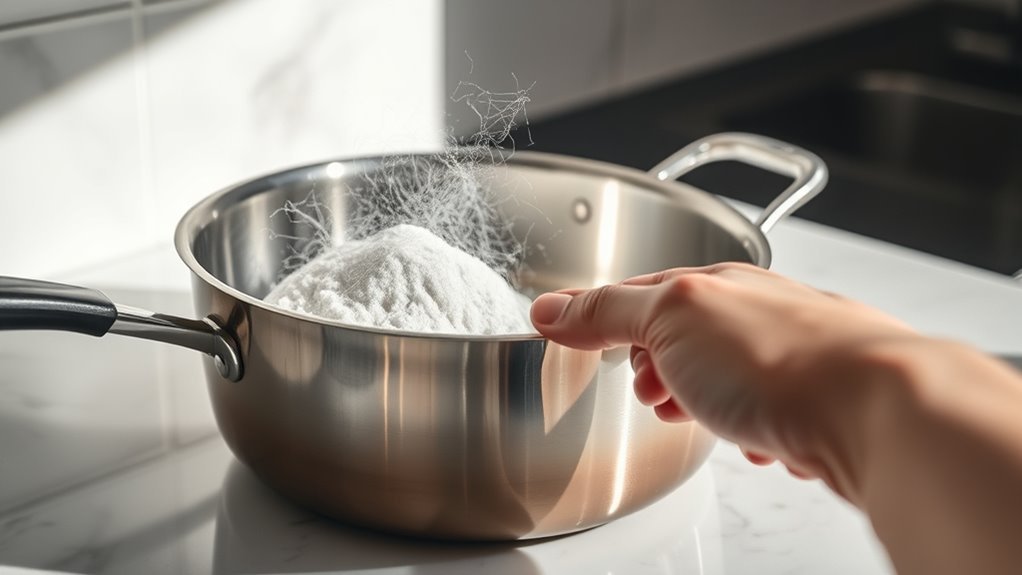
Once you’ve lifted the grime, give your pan a thorough rinse to wash away any steel wool particles, which can cause rust if left behind. Following these steps guarantees effective cleaning while maintaining your stainless steel pans’ appearance and durability.
Techniques to Avoid Scratches and Damage
Using steel wool effectively means knowing how to protect your stainless steel pans from scratches and damage. Avoid abrasive scrubbing and always apply light pressure. Use the finest grades like #0000 and keep steel wool wet to minimize micro-scratches. Test on a small spot first.
For routine cleaning, consider alternative cleaners to preserve your pan’s surface.
| Tip | Action | Reason |
|---|---|---|
| Use finest grades | Choose #0000 steel wool | Minimizes scratches |
| Apply light pressure | Gentle, controlled motions | Prevents damage |
| Keep steel wool wet | Always soak before use | Reduces abrasive action |
Following these techniques guarantees your pans stay pristine without sacrificing cleaning power.
How to Remove Steel Wool Particles From Your Pan
After scrubbing your stainless steel pan with steel wool, you’ll want to remove any leftover particles carefully to avoid scratching the surface. Start by using a soft cloth or a damp microfiber towel to gently wipe away steel wool particles from the pan.
Gently wipe away steel wool particles with a soft cloth or damp microfiber towel to protect your stainless steel pan.
For stubborn fragments, try sticky tape or duct tape to lift particles without damaging the stainless steel.
Once most particles are gone, rinse the pan thoroughly with warm water to wash away any remaining debris.
Inspect the pan closely, especially around crevices and rivets, to ensure all steel wool particles are removed. Avoid abrasive tools or harsh chemicals during cleaning, as they can push particles deeper or cause scratches.
Proper removal guarantees your pan stays clean and scratch-free after steel wool use.
Alternatives to Steel Wool for Stainless Steel Cleaning
Once you’ve thoroughly removed steel wool particles from your stainless steel pan, consider safer cleaning alternatives to prevent potential damage. Steel wool can leave rust-prone debris that harms your pan’s surface.
Here are four effective options:
- Use a scotchbrite pad; it’s an abrasive cleaner that’s gentler than steel wool and won’t scratch stainless steel.
- Choose synthetic scrubbers like nylon or microfiber pads; they clean pans efficiently without damaging the finish.
- Try nylon or plastic brushes, which remove grime without scratching or rust risks.
- Opt for specialized non-abrasive scrubbers designed specifically for stainless steel to maintain your pan’s integrity.
Switching to these alternatives helps you keep your stainless steel pans spotless without the hazards associated with steel wool.
Maintenance Tips to Extend the Life of Your Stainless Steel Pans
To keep your stainless steel pans in great shape, you should avoid abrasive cleaners like steel wool that can damage their surface and cause rust. Instead, choose cleaning tools such as Scotchbrite abrasive pads designed specifically for stainless steel to prevent scratches and damage.
Regular maintenance includes inspecting your pans for any signs of rust or wear and promptly addressing stains with gentle cleaning methods. Always remove any residual particles after cleaning to support rust prevention.
Avoid harsh scrubbing that breaks down the protective chromium oxide layer, as this reduces corrosion resistance. By using the right tools and maintaining a consistent cleaning routine, you’ll extend the life of your stainless steel cookware and keep it looking great for years.
Proper care is essential to prevent damage and ensure long-lasting performance.
Frequently Asked Questions
Can I Clean My Stainless Steel Pan With Steel Wool?
You can clean your stainless steel pan with steel wool, but only use fine-grade (#000 or #0000) and apply gentle pressure.
Otherwise, it might scratch or damage the surface, so non-abrasive scrubbers are safer options.
What Grit Steel Wool Is Safe for Stainless Steel?
Did you know 90% of scratches on stainless steel pans come from using coarse steel wool?
You should stick to 0000 grit—that ultra-fine wool cleans effectively without damaging your pan’s surface or shine.
What Is the Best Way to Clean a Stainless Steel Pan?
You clean stainless steel pans best by washing them with hot water, dish soap, and a soft sponge once cooled.
For stubborn stains, use baking soda paste or Bar Keepers Friend, then rinse and dry thoroughly.
How to Clean a Stainless Steel Pan Without a Bar Keepers Friend?
You can clean your stainless steel pan using baking soda and lemon or vinegar. Scrub gently with a soft sponge, rinse well, and dry thoroughly to avoid water spots.
Avoid steel wool to prevent scratches.
Conclusion
By choosing the right fine-grade steel wool and keeping it damp, you can safely tackle tough stains on your stainless steel pans without causing damage. Remember to scrub gently, test first, and rinse thoroughly to remove any particles.
If you’re worried about scratches, non-abrasive alternatives like Scotchbrite offer a gentler option. With careful technique and proper maintenance, you’ll keep your pans looking great and lasting longer.
Using steel wool on stainless steel pans safely requires a little caution, but it’s an effective way to restore your cookware’s shine and durability.