How You Can Safely Put Pans in the Oven
Putting pans in the oven safely isn’t always as straightforward as it seems. You might think any pan can handle the heat, but that’s not always the case. Knowing how you can safely put pans in the oven is essential to avoid ruined cookware or even safety hazards.
You need to understand which materials and handles can actually withstand the oven’s temperature. This knowledge can make all the difference when you’re preparing your next meal. Being aware of these details ensures your cooking process is both safe and effective.
Understanding Oven-Safe Labels and Symbols
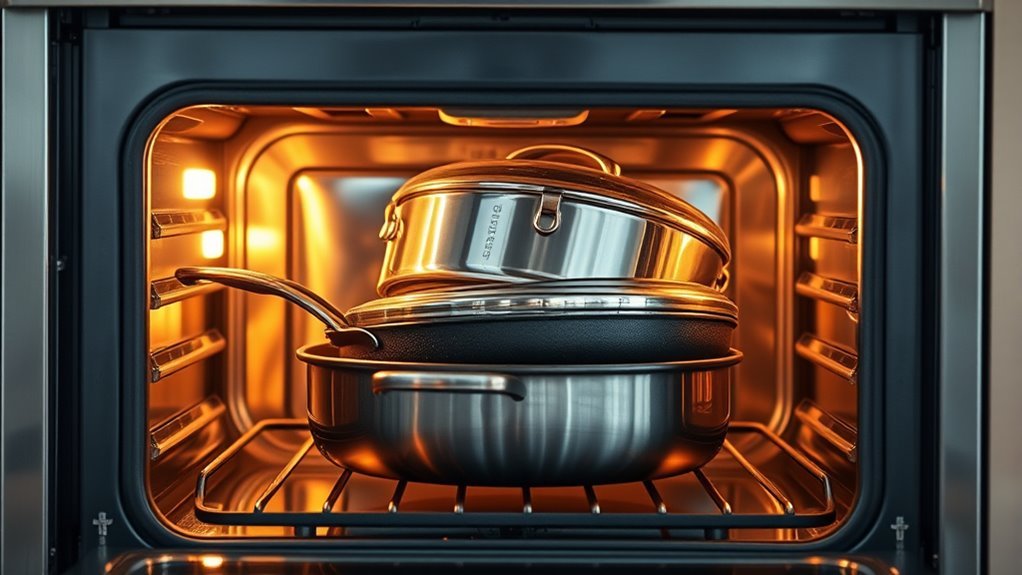
Before you place any pan in the oven, you should always check for oven-safe labels or symbols on the bottom, such as an oven icon or temperature mark. These oven-safe symbols help you quickly identify if the cookware materials can withstand the heat.
Don’t rely solely on these icons; consult the manufacturer instructions or product manual to confirm oven safety ratings and temperature limits. Pay special attention to the maximum temperature specified to avoid damaging your pan.
Also, ensure that heat-resistant handles are mentioned, as not all handles are oven safe.
Identifying Oven-Safe Handle and Lid Materials
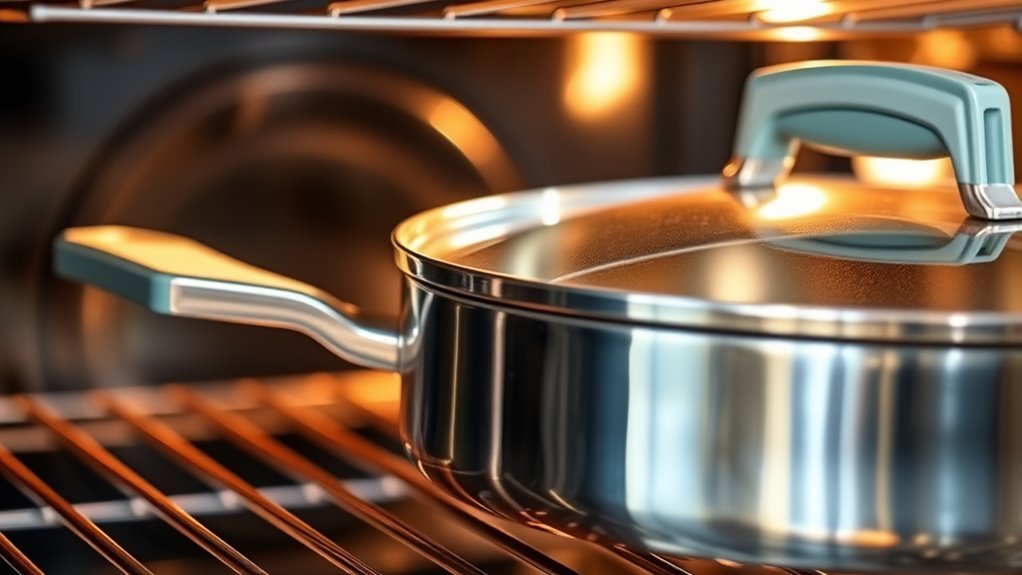
When you’re selecting cookware for oven use, it’s important to identify which handle and lid materials can withstand the heat without damage. Oven-safe handles are usually made of metal or silicone, both known for their heat-resistant qualities. Avoid plastic handles, as they often melt or warp under high temperatures.
Tempered glass lids with metal rims are typically safe up to certain temperature limits, but always confirm. To ensure safety, consider these points:
Tempered glass lids with metal rims are usually oven-safe but always check the temperature limits before use.
- Metal handles endure high oven temperatures without damage.
- Silicone handles resist heat but check manufacturer temperature limits (usually up to 400°F).
- Tempered glass lids can be oven-safe but verify specific temperature ratings.
- Always look for oven-safe symbols or instructions on cookware materials.
Following these tips keeps your pans safe and durable during baking or roasting.
Types of Pans Suitable for Oven Use
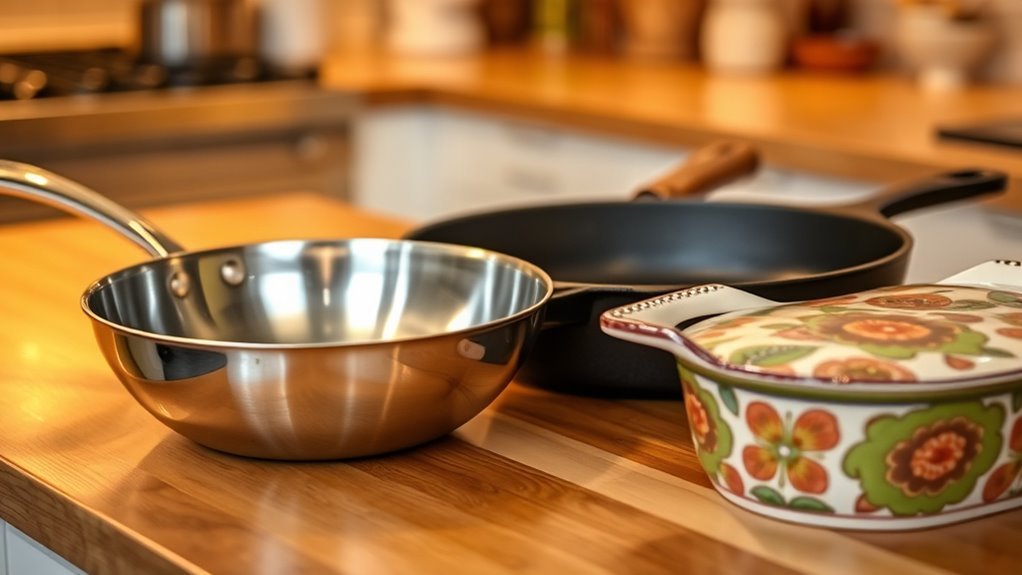
Although many pans can handle oven heat, you should always choose ones made from materials like cast iron, stainless steel, aluminum, glass, or certain ceramics to guarantee safety and durability. These materials offer excellent heat resistance and are labeled oven-safe with clear maximum temperature limits.
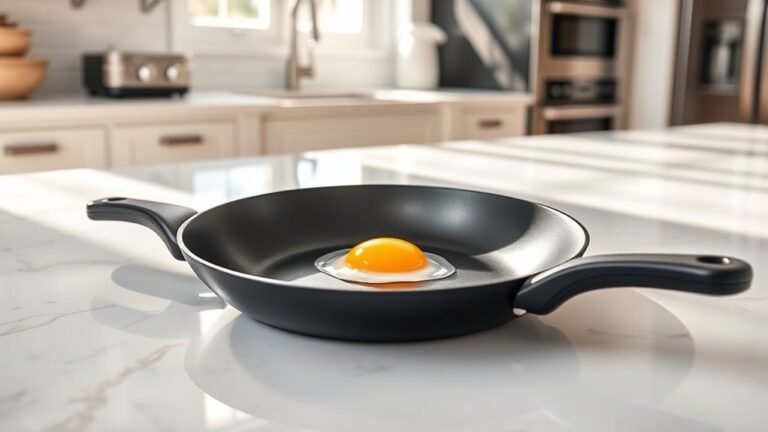
Be cautious with nonstick coatings and handle materials, as plastic or rubber handles may not withstand high heat. Glass pans, especially tempered types, resist heat well but are vulnerable to thermal shock from sudden temperature changes. Ceramic cookware also provides good durability but varies in oven suitability.
| Pan Type | Key Feature |
|---|---|
| Cast Iron | Superior heat resistance |
| Stainless Steel | High durability |
| Aluminum | Lightweight & oven-safe |
| Glass Pans | Risk of thermal shock |
| Ceramic | Varies by manufacturer |
Temperature Limits for Common Oven-Safe Pans
Since different pans have varying heat tolerances, you’ll need to know their temperature limits to use them safely in the oven. Oven-safe pans differ in maximum heat based on material and handle materials. Here’s a quick guide:
- Cast iron handles heat up to 900°F, ideal for high-heat cooking.
- Stainless steel pans usually tolerate up to 600°F, but check handle materials to be sure.
- Nonstick pans generally withstand 400°F to 500°F, depending on coating and handle type.
- Glass pans (tempered or borosilicate) are safe around 450°F but avoid sudden temperature shifts.
Always refer to manufacturer guidelines for specific temperature limits.
Check manufacturer guidelines to ensure your pans are used within safe oven temperature limits.
Knowing these limits helps you prevent damage to your pans and maintain safe cooking in the oven.
Pans to Avoid Putting in the Oven
Knowing the temperature limits of your pans helps you avoid damage, but it’s equally important to recognize which pans you should never put in the oven. Avoid pans with plastic handles, as they risk melting or warping under heat.
Stay away from ceramic pans with low-temperature limits or unverified labels to prevent cracking or thermal shock. Cookware featuring non-oven-safe coatings or rubberized handles can degrade or emit harmful fumes when heated.
Also, don’t use pans with wooden handles, as they can burn or become damaged. Using unmarked or low-quality cookware without confirmed oven safety poses serious safety hazards.
Checking Your Cookware’s Oven Safety
Before you place any pan in the oven, you should always check its oven safety to prevent damage or accidents. Start by reviewing the manufacturer’s instructions and cookware labels to verify oven compatibility and maximum temperature limits.
Next, look for oven-safe symbols on the bottom or handles of the pan.
Then, inspect the handles, lids, and rivets to ensure they’re made from heat-resistant materials like metal or silicone.
Finally, confirm the pan’s material is oven-safe. Cast iron, stainless steel, and borosilicate glass are reliable choices, unlike plastic or low-quality coatings.
If you lack manufacturer info, consult online resources or product manuals to verify.
Follow these steps to keep your cookware safe and avoid costly mistakes:
- Check manufacturer’s instructions and cookware labels
- Look for oven-safe symbols
- Inspect handles and lids for heat-resistant material
- Verify pan material and oven compatibility
Tips for Using Pans Safely in the Oven
Although it’s tempting to place any pan straight into the oven, you should always confirm that both the pan and its handles can withstand the heat to avoid damage or injury. Always check that your cookware is oven-safe and adhere to the manufacturer instructions, including maximum temperature guidelines.
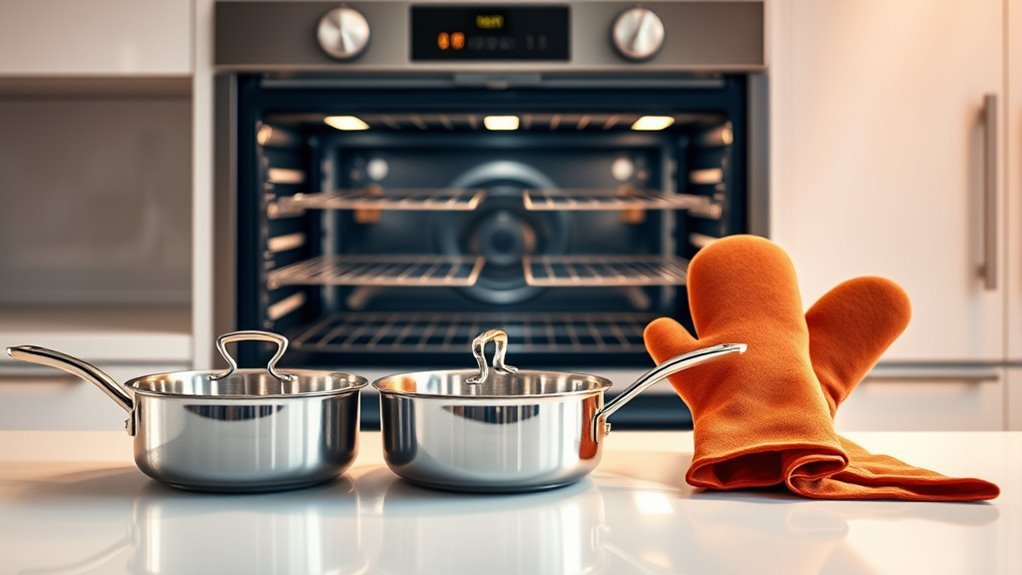
Protect handles by avoiding pans with plastic or wooden parts that can melt or warp. Use oven mitts or heat-resistant gloves when handling hot pans to ensure oven safety.
To prevent thermal shock, practice proper preheating and gradual cooling of your pans.
Remove lids or covers not rated for oven use. By following these tips, you’ll safely enjoy oven cooking while preserving your pans’ condition and avoiding accidents in the kitchen.
Managing Stove-to-Oven Cooking Transitions
When you move a pan from the stove to the oven, you need to make sure it can handle the temperature change without cracking or warping. Always confirm your pan is oven-safe and check its heat tolerance to handle high heat.
To manage this shift safely:
- Use oven mitts for protection when transferring hot pans.
- Remove lids unless they’re labeled oven-safe for lid safety.
- Gradually preheat the oven to avoid thermal shock, especially with glass or ceramic cookware.
- Avoid exposing hot pans to cold water immediately after use to prevent damage.
Frequently Asked Questions
How Do I Know if a Pan Is Oven Safe?
You check the manufacturer’s label or manual for an oven-safe symbol or temperature limit. Avoid pans with plastic or wooden handles unless marked safe.
If unsure, gradually heat the pan and watch for damage or warping.
Is It Safe to Put Pans in the Oven?
Yes, it’s safe to put pans in the oven if they’re oven-safe. Always check the manufacturer’s guidelines, avoid plastic or wooden handles, and preheat the oven gradually to prevent damage from sudden heat changes.
Can You Put a Skillet in the Oven at 400 Degrees?
You can definitely put a skillet in the oven at 400 degrees, as long as its material and handle can take the heat.
Just check the manufacturer’s guidelines—don’t let your pan face a fiery surprise!
Can You Put a Fully Metal Pan in the Oven?
Yes, you can put a fully metal pan in the oven. Just make sure it has no plastic or wooden parts.
Also, check the manufacturer’s guidelines for maximum temperature to avoid damage or safety hazards.
Conclusion
To safely put pans in the oven, always check for oven-safe labels and ensure handles and lids can handle the heat. For example, imagine using a cast iron skillet with metal handles—it withstands high temperatures without warping or melting.
But if you toss in a pan with plastic handles without verifying, you risk damage and safety hazards. Following these steps helps you cook confidently and avoid costly mistakes in your kitchen.
By understanding how you can safely put pans in the oven, you protect your cookware and ensure safe cooking practices. Always prioritize oven-safe materials to keep your kitchen safe and efficient.