Can You Put Nonstick Pans in the Oven?
You might not realize it, but not all nonstick pans can safely handle the heat of an oven. When considering if you can put nonstick pans in the oven, it’s important to understand the specific limits of your cookware. Oven-safe or not, the answer depends on factors like material, handle design, and temperature tolerance.
If you’re thinking about sliding your skillet inside to finish a dish, knowing these details can save your pan—and your meal—from a costly mistake. Always check the manufacturer’s guidelines before exposing your nonstick pans to oven heat. This way, you ensure safe cooking and prolong the life of your cookware.
Are All Nonstick Pans Oven-Safe?
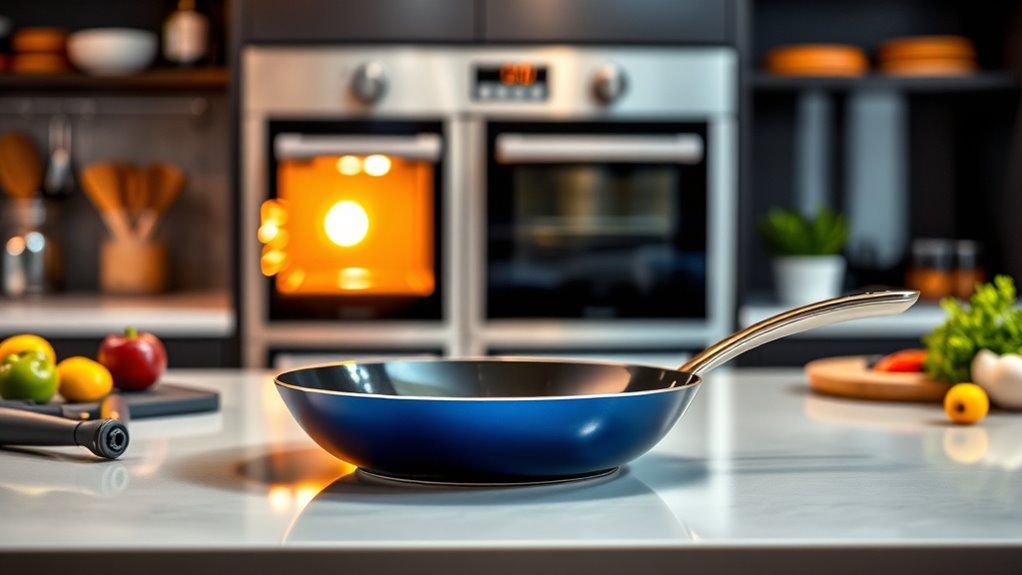
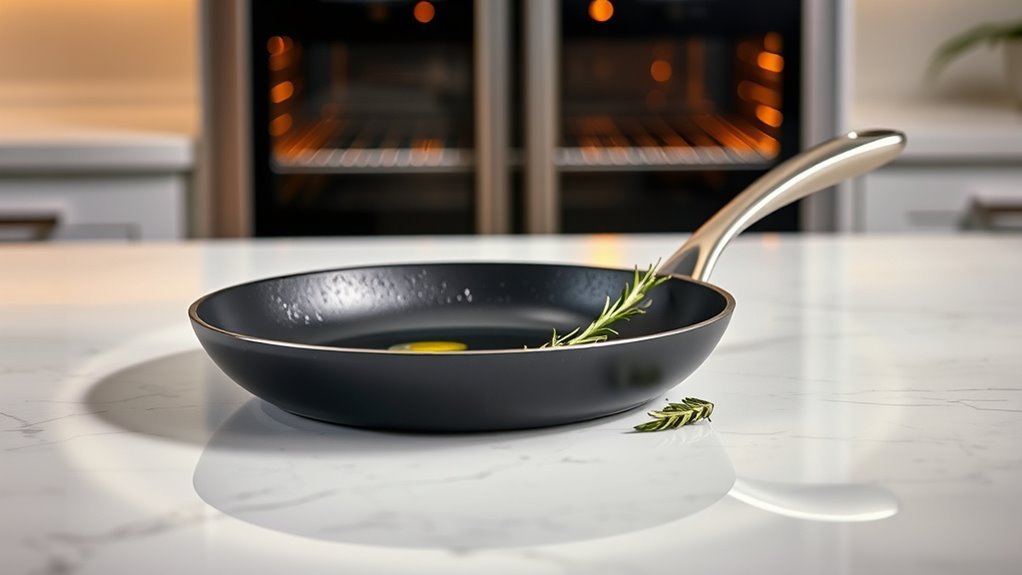
Not all nonstick pans are oven-safe, so you should always check before placing one in the oven. Only pans explicitly labeled or designed for oven use can handle the heat without damage.
Always verify that your nonstick pan is oven-safe before using it to prevent damage.
Pay close attention to the handle materials. Metal or silicone handles usually tolerate oven temperatures, while plastic or rubber ones can melt or warp, compromising oven safety.
Nonstick coatings like Teflon generally withstand coating temperatures between 350°F and 500°F, but exceeding these limits risks damaging the pan or releasing harmful fumes.
To guarantee safe oven use, always consult manufacturer labels or website guidelines, and look for oven-safe markings on the pan’s bottom.
How High Can You Heat a Nonstick Pan in the Oven?
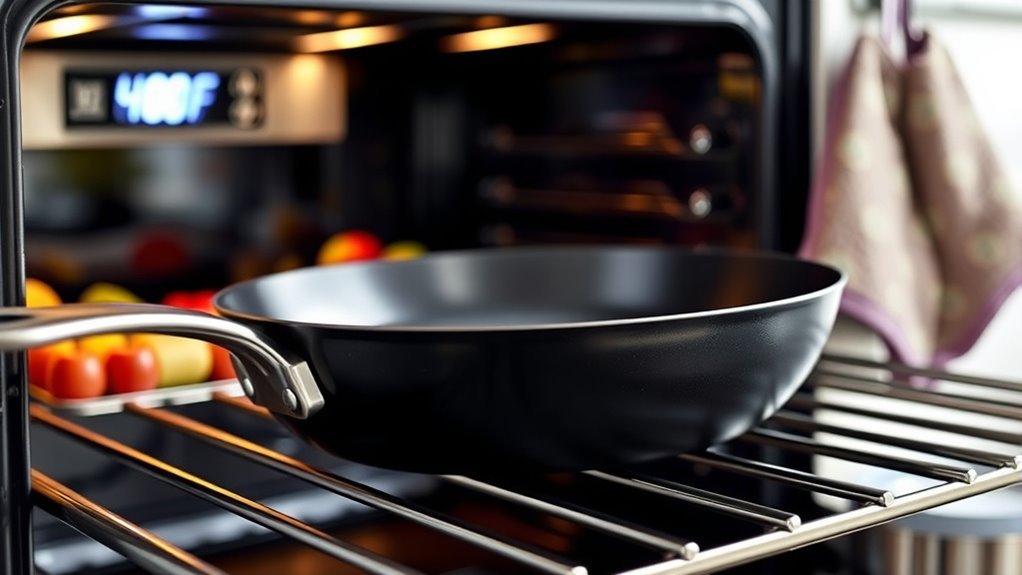
While many nonstick pans can handle oven temperatures between 350°F and 500°F, you should always check your pan’s specific guidelines before heating. The maximum temperatures vary based on coating and handle material.
For example, Teflon pans lose their heat tolerance above 500°F, risking damage and harmful fumes.
Ceramic pans usually endure higher oven temperatures, sometimes up to 600°F, but verify your brand’s limits. Also, the handle material often sets the true cap for oven use. Plastic or rubber handles might restrict safe heating well below the pan’s coating tolerance.
Consider these factors before heating:
- Oven safe rating on the pan’s label
- Maximum temperatures recommended by the manufacturer
- Type of coating: Teflon pans vs. ceramic pans
- Handle material heat tolerance and durability
Why Use Nonstick Pans in the Oven?
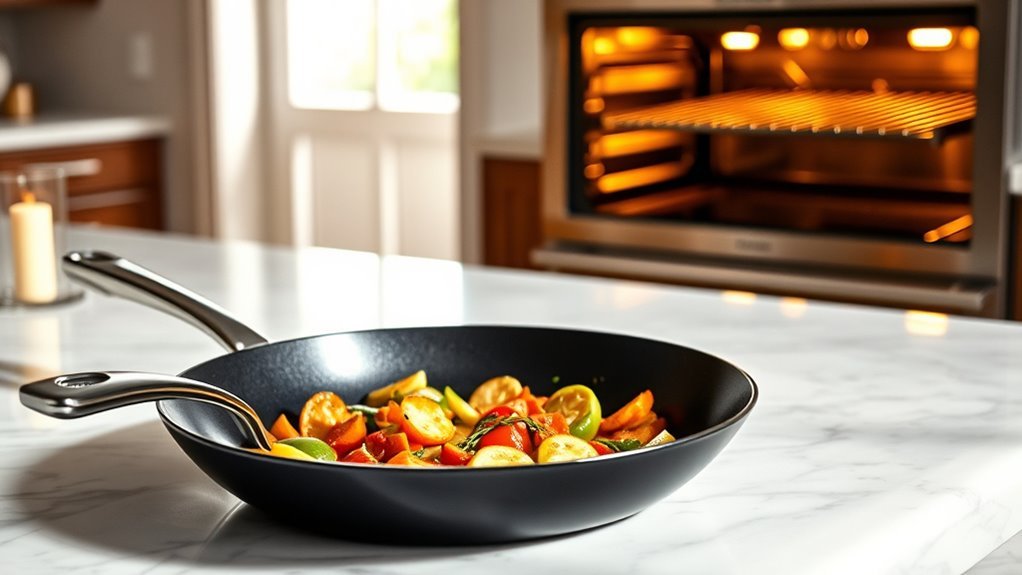
Why choose nonstick pans for oven cooking? Nonstick pans designed to be oven safe let you seamlessly move from stovetop to oven, supporting versatile cooking techniques.
Unlike traditional nonstick cookware, many modern pans withstand high temperatures within an oven temperature range of up to 400°F or 500°F. This means you can finish dishes like baked eggs, casseroles, or roasted vegetables without switching pans, saving time and reducing cleanup.
Using nonstick pans in the oven also helps achieve crispy textures and even cooking, enhancing your meals. Just remember to handle them carefully with oven mitts to avoid burns.
What to Consider About Handles and Lids
Along with the pan’s material and coating, you need to pay attention to the handles and lids when using nonstick pans in the oven. Oven-safe handles are usually made of metal or high-heat silicone, while plastic or rubber ones can melt or warp.
Lids, often glass or vented, must also be rated for oven temperatures, typically up to 350°F or more, to avoid cracking. Always check the manufacturer’s guidelines to confirm the temperature limits for both handles and lids.
Remember, even oven-safe materials get hot, so use oven mitts.
Oven-safe doesn’t mean cool to the touch—always protect your hands with oven mitts.
- Metal handles with reinforced cores resist high oven temperatures
- Silicone handles tolerate heat but vary by material quality
- Plastic or rubber handles aren’t oven-safe and may release fumes
- Glass lids rated for oven use prevent melting or shattering
Types of Oven-Safe Nonstick Pans
If you want to use nonstick pans in the oven, you need to choose ones specifically designed to handle high temperatures. Oven-safe nonstick pans often come with handle materials like stainless steel or silicone, as these tolerate oven heat better than plastic or rubber.
Ceramic nonstick pans are popular for oven use, generally safe up to 600°F, but always check manufacturer guidelines for exact temperature limits.
Teflon-coated pans made after 2013 are usually PFOA-free and safe up to 500°F, while older versions mightn’t be suitable.
The coating type and handle material notably affect oven safety. Always follow manufacturer instructions and look for oven-safe markings to ensure your nonstick pan can handle the heat without damage or health risks.
Tips for Safe Oven Use of Nonstick Cookware
When using nonstick cookware in the oven, you should always check if the pan is labeled oven-safe and confirm the maximum temperature recommended by the manufacturer. Following the manufacturer’s guidelines guarantees oven safety and preserves the nonstick coating.
Pay close attention to the handle material. Metal or silicone handles tolerate high heat better than plastic or rubber ones.
Avoid preheating empty pans to prevent damage. Use vented lids made of oven-proof materials if needed.
- Verify the pan’s maximum oven temperature before use
- Choose cookware with metal or silicone handles for durability
- Never preheat empty pans to protect the nonstick coating
- Use vented lids to avoid pressure buildup and damage
These tips help you safely enjoy your nonstick cookware in the oven without risking damage or harmful fumes.
Frequently Asked Questions
How Do I Know if My Non-Stick Pan Is Oven Safe?
You check your pan’s bottom for oven-safe symbols, read the manufacturer’s label or website, and confirm handle materials aren’t plastic or rubber.
Also, verify the maximum oven temperature to guarantee it won’t get damaged or unsafe.
Can We Put a Non-Stick Pan in the Oven?
You can put a non-stick pan in the oven only if it’s labeled oven-safe. Check the handle material and max temperature—usually up to 350°F or 500°F.
Avoid exceeding limits to protect the coating and handles.
What Happens if You Put a Non-Oven Safe Pan in the Oven?
If you put a non-oven safe pan in the oven, it’s like throwing a plastic toy in a fire—it’ll melt, warp, or peel.
You’ll damage your pan and risk toxic fumes or handle failure.
What Pans Can Not Go in the Oven?
You can’t put pans with plastic or rubber handles, low-quality silicone parts, non-oven-safe coatings, or ceramic pans not labeled oven-safe in the oven.
They risk melting, warping, cracking, or releasing harmful fumes. Avoid them.
Conclusion
Think of your nonstick pan as a trusted ship—built to brave certain oven temperatures but not every storm. When you check its handle and materials, you’re reading its map, guiding it safely through the heat. Stick to the manufacturer’s instructions, and your pan will sail smoothly, delivering perfect meals without melting or warping.
Treat it right, and your oven-safe nonstick pan will be your kitchen’s steadfast companion, shining bright through every culinary adventure. Remember, knowing whether you can put nonstick pans in the oven is key to preserving their quality and performance. Following these guidelines ensures your nonstick cookware remains durable and effective for years to come.