How You Can Safely Put a Hot Pan on Quartz Countertops
When you cook, it’s tempting to set a hot pan right on your quartz countertop for convenience. Quartz countertops are popular for their durability and beauty, but they aren’t as heat-resistant as you might think. Placing hot cookware directly on quartz can lead to damage that’s costly to fix.
To protect your investment, you’ll want to understand the risks of heat exposure to quartz. Learning simple ways to shield your surfaces from heat can save you from unexpected problems down the line. Using heat-resistant pads, trivets, or other protective methods is essential for keeping your quartz countertop safe.
Understanding Quartz Countertop Heat Sensitivity
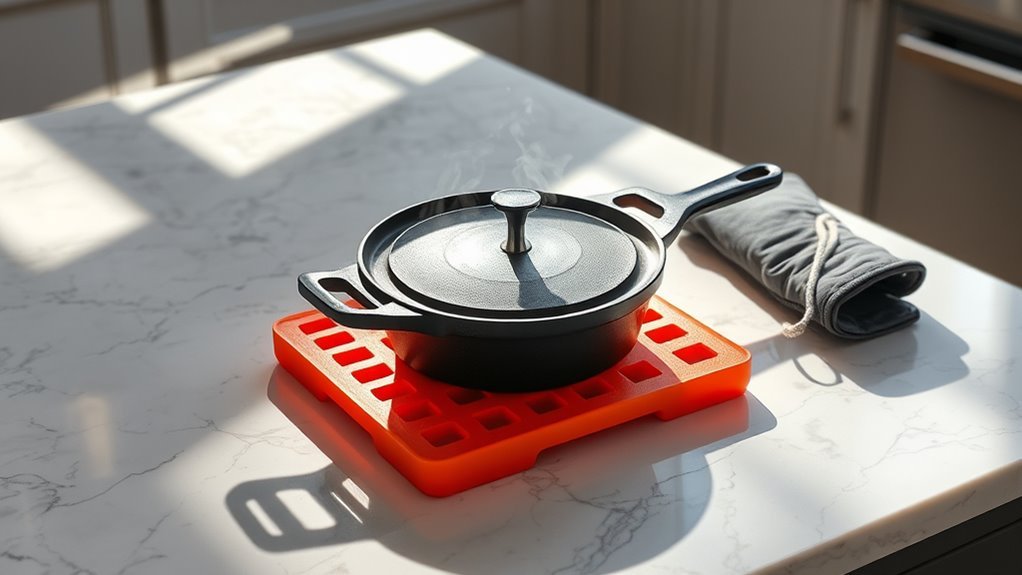
Although quartz countertops offer durability and beauty, you need to be careful with heat because they typically withstand temperatures only up to about 150°F (65°C) before the resin softens or discolors. Quartz’s heat resistance isn’t as strong as natural stone due to its resin content, which makes it vulnerable to thermal damage.
If you place anything hotter on the surface, you risk causing scorch marks, discoloration, or even cracks. These damages are often permanent and can ruin your countertop’s appearance. Even high-quality quartz can only handle brief exposure to heat without harm.
To protect your investment, always use heat barriers like trivets or hot pads. Understanding this sensitivity helps you avoid costly repairs and keeps your quartz looking flawless.
Risks of Placing Hot Pans Directly on Quartz Surfaces
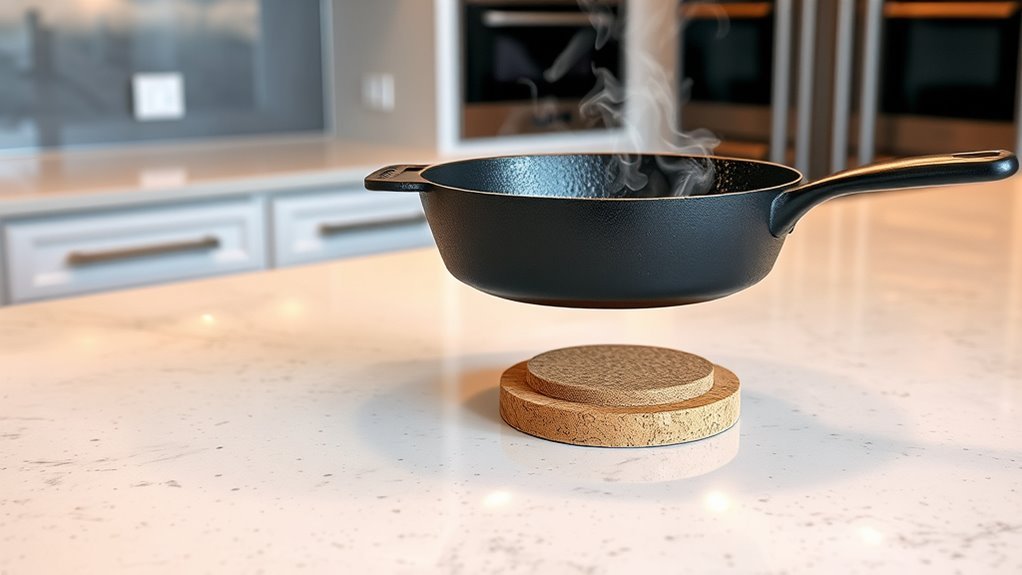
When you place a hot pan directly on your quartz countertop, you risk causing permanent damage like discoloration, scorch marks, and cracks because the resin in quartz can’t handle high heat.
Quartz typically tolerates temperatures up to about 150°F (65°C); exceeding this can cause heat damage that’s often invisible at first but worsens over time.
Quartz countertops can withstand up to 150°F, but higher heat may cause hidden, lasting damage.
Sudden temperature changes from hot pans can trigger thermal shock, leading to cracks or warping in the surface. This not only ruins your countertop’s appearance but may also void the manufacturer’s warranty.
To protect countertops and maintain their durability, it’s essential to avoid direct contact with hot cookware.
Ignoring these risks can compromise your investment and the countertop’s long-term integrity.
Recommended Protective Measures for Hot Cookware
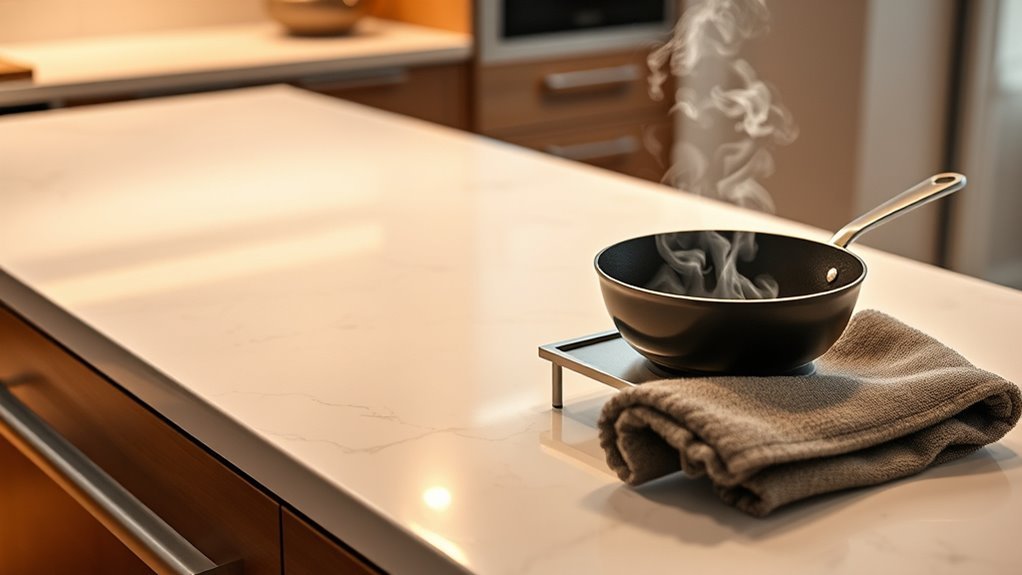
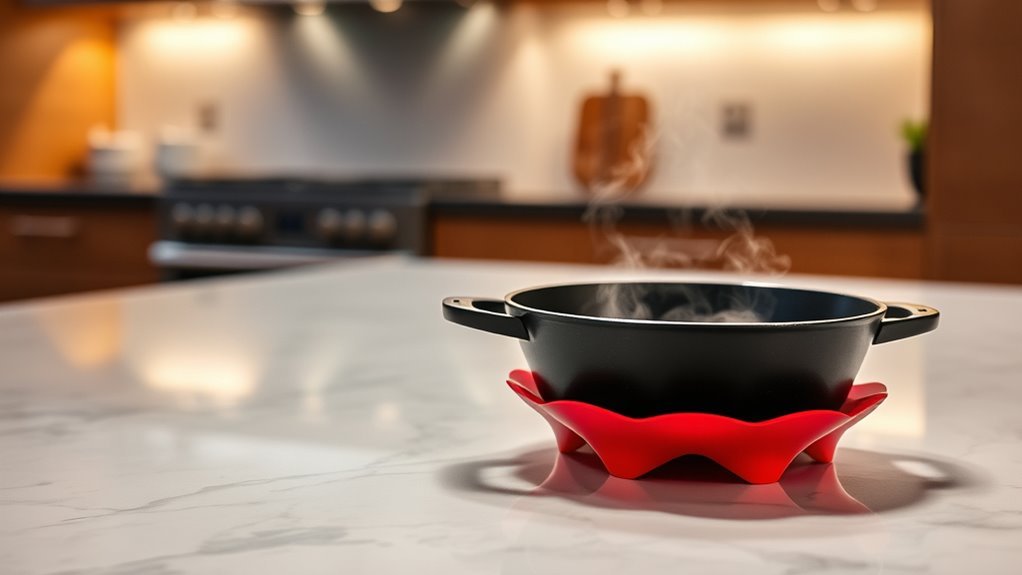
To keep your quartz countertops safe from heat damage, always use protective barriers like trivets, silicone mats, or heat-resistant pads under hot cookware. Silicone trivets are especially effective since they can withstand temperatures up to 500°F (260°C), providing reliable protection for your surfaces.
Make sure to handle hot cookware with thick pot holders or oven mitts to avoid accidental burns or contact with the countertop. Keep a supply of heat-resistant pads within easy reach in your kitchen so you can quickly shield your quartz from heat.
Regularly check your trivets and mats for wear or damage, replacing them as needed to maintain their protective qualities.
Following these simple steps ensures your quartz countertops stay pristine despite frequent use of hot cookware.
Best Practices for Daily Use and Maintenance
Since quartz countertops can be sensitive to heat, you should always place hot pans on trivets or heat-resistant pads to protect the surface from resin damage. Using silicone mats or thick towels as protective barriers adds an extra layer of defense when handling hot cookware.
Avoid dragging hot items across your countertop to prevent scratches and heat marks. After setting down a hot pan, wipe the area with a soft cloth to remove any residual heat or moisture, which helps maintain the surface’s integrity.
Regularly inspect your quartz countertop for signs of heat damage and replace your trivets, heat-resistant pads, or other protective barriers as needed.
Following these best practices guarantees your countertop stays beautiful and durable with daily use and proper maintenance.
Handling Heat Damage and Repair Options
Protecting your quartz countertop from heat is the best way to avoid damage, but accidents can still happen. Heat damage may show as discoloration, scorch marks, or cracks, especially if exposed to temperatures above 150°F.
If you notice minor damage, professional repair through resurfacing or polishing can restore the surface. However, deep cracks often require replacing the affected section or the entire countertop.
To prevent future issues, always use preventative measures like trivets, hot pads, or silicone mats under hot pans.
If visible damage occurs, avoid using that area until a professional evaluates whether repair or replacement is necessary.
Regularly inspect your countertop and follow manufacturer guidelines to help prolong its lifespan and keep your kitchen looking great.
Frequently Asked Questions
Can You Sit a Hot Pan on Quartz?
You can’t sit a hot pan directly on quartz without risking damage. Always use a trivet or heat-resistant pad to protect the surface from heat, preventing discoloration, cracks, and preserving your countertop’s appearance and warranty.
What to Use on Quartz Countertops for Hot Pans?
Did you know quartz can withstand temperatures only up to about 150°F? Use silicone trivets, cork mats, or thick towels to protect your countertops from hot pans.
Avoid metal to prevent scratches and heat damage.
Can I Put a Hot Cup of Coffee on Quartz?
You shouldn’t put a hot cup of coffee directly on quartz. Always use a coaster or heat-resistant pad to protect the surface, preventing discoloration or damage from heat.
Heat can weaken the resin and ruin your countertop. Taking these precautions will help maintain the beauty and durability of your quartz surface.
Will Heat Ruin Quartz Countertops?
Quartz countertops can handle up to 150°F, but heat beyond that risks damage.
You shouldn’t place hot pans directly on quartz; always use trivets or pads to keep your surface safe and looking great for years.
Conclusion
You wouldn’t set a blazing fire right on your favorite rug, so why risk your quartz countertop? By always using a silicone trivet, hot pad, or thick towel, you protect your surface from heat damage and keep it looking pristine.
Remember, a little extra care goes a long way in preserving your beautiful countertops. So next time you grab that hot pan, will you choose protection or regret? Safely putting a hot pan on quartz countertops means using the right heat protection every time.