What Happens If You Put an Aluminum Pan in the Oven?
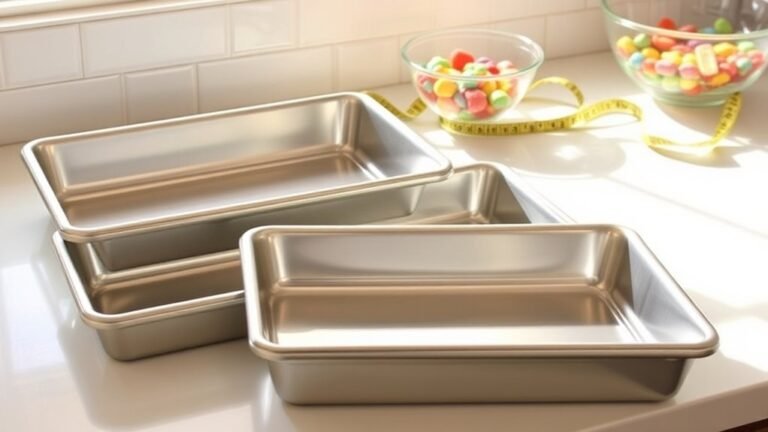
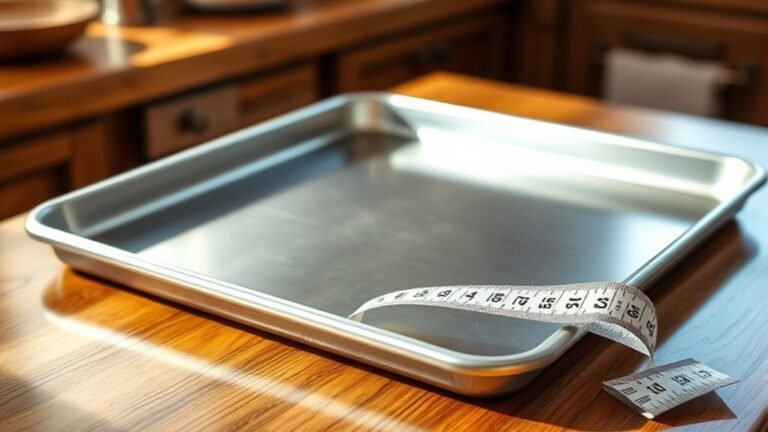
Just like a trusted workhorse in your kitchen, an aluminum pan can handle the heat of the oven with ease—but there’s more to it than meets the eye. Using an aluminum pan in the oven is common, but you might wonder how it affects your food’s texture or if it could warp under high temperatures.
When you slide one in, it’s worth understanding the nuances that come with using aluminum cookware in the oven. Before you rely on it for your next meal, consider how heat conduction and potential warping might impact your cooking results.
Heat Resistance and Safety of Aluminum Pans in the Oven
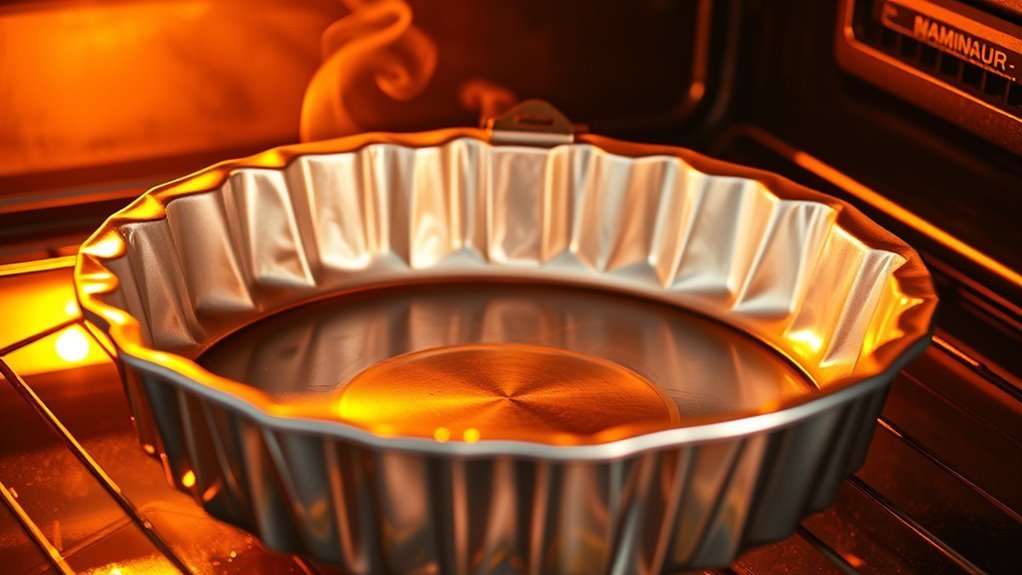
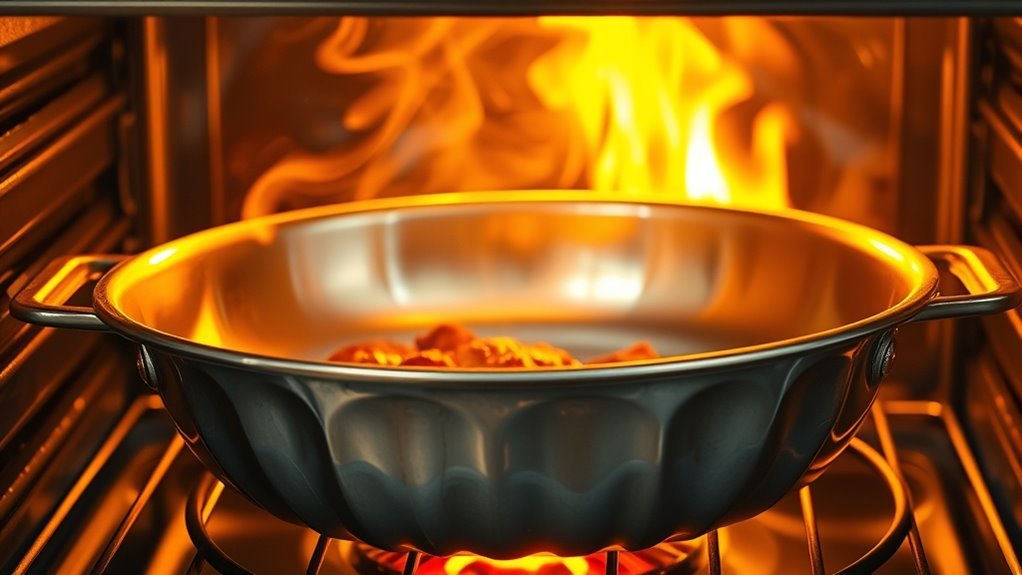
While aluminum pans can safely handle oven temperatures up to 500°F, you should avoid exposing them to direct flames or broilers to prevent warping or damage. Aluminum pans offer excellent heat resistance and thermal conductivity, allowing for even heat distribution during cooking.
Their melting point is well above typical baking temperatures, so they won’t melt under normal oven use. However, thin disposable pans may lack sufficient warp resistance and deform if overheated.
For safer oven use, opt for heavy-duty aluminum or anodized pans, which withstand higher temperatures and maintain structural integrity better. Staying within the recommended temperature limits ensures oven safety and preserves your pan’s performance.
How Aluminum Pans Affect Cooking and Baking Results
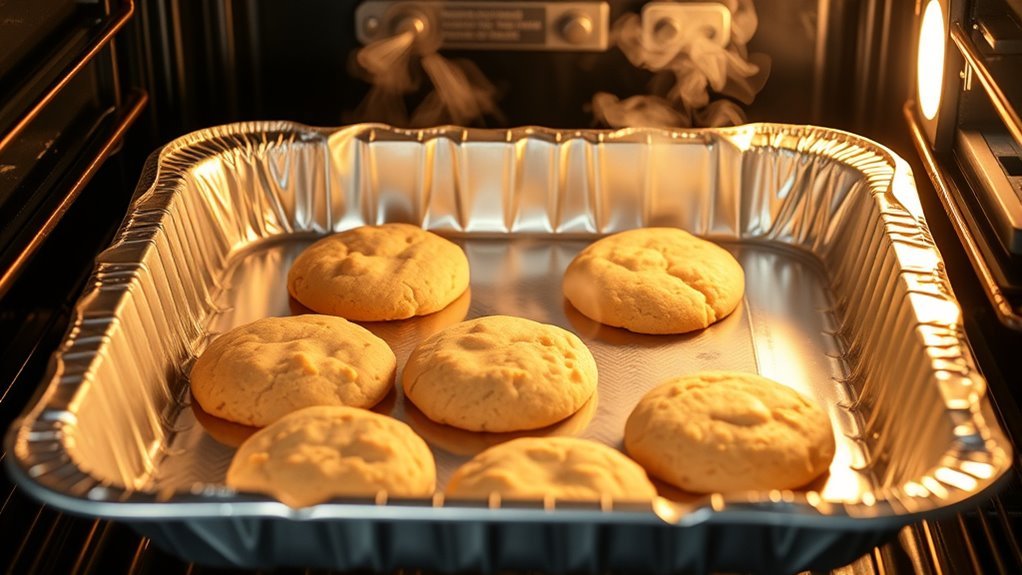
Because aluminum pans conduct heat quickly and evenly, you’ll notice faster cooking times and more consistent browning when you use them. Their high thermal conductivity ensures even heat distribution, helping baked goods develop uniform crusts.
However, you might need to adjust oven temperatures and cooking times to avoid darker edges or bottoms. Keep in mind, thinner pans risk warping under high heat or heavy contents, affecting baking results and oven safety.
| Aspect | Effect of Aluminum Pans | Consideration |
|---|---|---|
| Heat Conduction | Fast, even cooking | Adjusting cooking times |
| Browning | Consistent, uniform crust | Monitor oven temperatures |
| Warping | Possible with thin pans | Avoid high heat, heavy loads |
Tips for Using Aluminum Pans to Prevent Warping and Damage
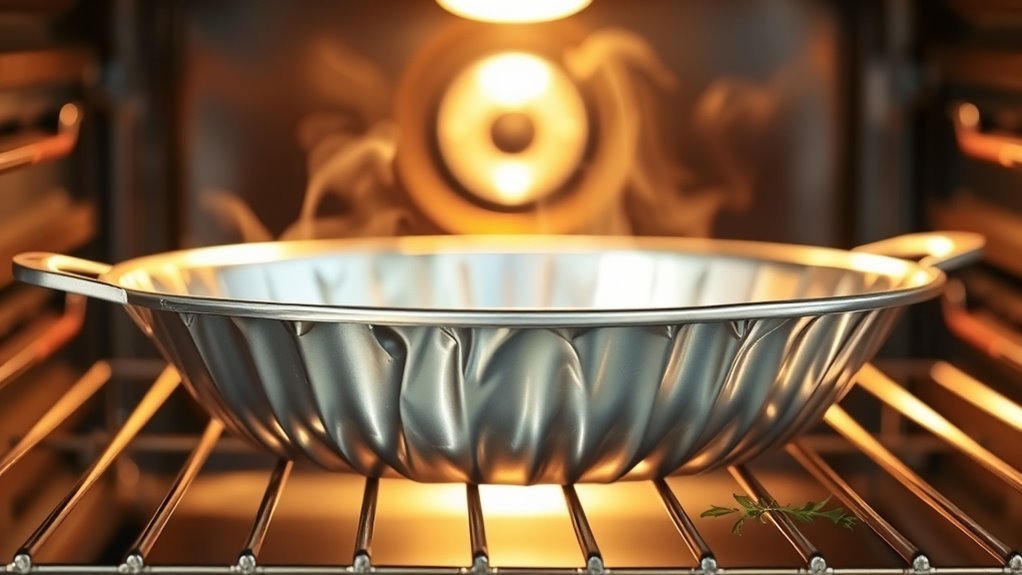
Aluminum pans deliver fast, even heat, but their lightweight nature makes them prone to warping and damage if not handled properly. To prevent warping during oven use, always place your aluminum pans on a sturdy support baking sheet rather than directly on the oven rack.
This pan support helps distribute weight evenly and reduces bending risks. When using disposable aluminum pans, keep your oven temperature below 450°F to maintain their shape and prevent damage. Avoid exposing thin or disposable aluminum pans to direct flames or broiler heat, which can cause warping.
For even heat distribution and oven safety, rotate pans halfway through baking. By following these tips, you’ll extend your aluminum pans’ lifespan and ensure consistent cooking results without compromising oven safety.
Common Mistakes When Baking With Aluminum Pans
If you don’t support lightweight disposable pans properly, they can warp or bend during baking, making your cooking uneven and messy. Overfilling often causes spills and uneven cooking, while placing pans directly on oven racks risks warping and deformation.
Baking at high temperature above 500°F can lead to melting or damage if your pan isn’t designed for it. Always provide proper support and adjust baking times to avoid these common pitfalls.
| Mistake | Effect | Prevention |
|---|---|---|
| Lack of support | Warping, deformation | Use sturdy baking sheets |
| Overfilling | Spills, uneven cooking | Fill pans moderately |
| Direct rack placement | Warping, difficulty removing | Place on baking sheet |
| High temperature | Melting, damage | Avoid temps >500°F |
| Ignoring adjustments | Over/undercooking | Adjust time/temperature |
Cleaning and Reusing Aluminum Pans After Oven Use
After using your pan in the oven, taking proper care during cleaning helps maintain its performance and longevity.
Start by handwashing aluminum pans with mild detergent to remove food residue and prevent corrosion. Avoid abrasive scrubbers since they can scratch the surface, leading to damage over time.
Once cleaned, dry the pan thoroughly to prevent oxidation and preserve its appearance.
Before reusing, inspect the pan for any warping or damage to ensure safety during oven use.
Following these cleaning methods and practicing proper care not only keeps your aluminum pans in good condition but also extends their life, making them suitable for multiple uses.
Suitable Alternatives to Aluminum Pans for Oven Cooking
When you want to try something different or need a pan that withstands higher temperatures, several excellent alternatives to aluminum pans are available for oven cooking.
Ceramic baking dishes and glass baking pans offer great heat resistance and oven compatibility, withstanding up to 500°F and 450°F respectively.
Cast iron cookware stands out for its durability and can handle temperatures up to 600°F, making it perfect for roasting and searing.
Stainless steel pans resist scratching and warping, providing reliable oven-safe bakeware.
If you prefer non-stick baking molds, silicone options are flexible and heat-resistant up to about 450°F, ideal for cakes and muffins.
While disposable aluminum pans are convenient, these alternative bakeware options provide better durability, safety, and performance for various oven tasks.
Frequently Asked Questions
Is It Safe to Put Aluminum Pans in the Oven?
Yes, you can safely put aluminum pans in the oven if you keep the temperature below 500°F. Just avoid broilers or open flames, and use a baking sheet to prevent warping or bending, especially with lightweight pans.
What Temperature Can Aluminum Pans Withstand?
Think of aluminum pans as steadfast shields; they usually withstand up to 500°F, but thinner or non-stick ones handle less.
You’ll want to respect their limits to keep your cooking—and your pan—intact and reliable.
Does Aluminum Foil Release Toxins When Heated?
Aluminum foil releases minimal toxins when heated, so you don’t need to worry much.
Just avoid cooking highly acidic foods in foil for long periods or at very high temperatures to keep it safe and healthy for you.
Can You Put 100% Aluminum in the Oven?
Yes, you can put 100% aluminum in the oven. It handles typical baking temperatures well without melting or warping.
Just avoid extremely high heat or thin pans, and you’ll be safe using aluminum cookware.
Conclusion
When you pop an aluminum pan into the oven, you’re choosing a reliable kitchen buddy that handles the heat like a pro, ensuring your dishes cook evenly and beautifully. Just remember to be gentle with thinner pans to keep them in tip-top shape.
With a little care, aluminum pans will keep serving you well, making your baking adventures smooth and enjoyable—no worries, just delicious results every time.
In conclusion, using an aluminum pan in the oven is a smart choice for even cooking and durability. Proper care will help your aluminum bakeware last longer and continue delivering excellent baking results.