How to Safely Put a Pan in the Oven
When you want to move your pan from the stove to the oven, it’s important to know which pans can handle the heat safely. Not every pan is built for the oven, and using the wrong one can ruin your cookware or even cause safety issues.
Before you slide that pan inside, consider what materials it’s made from and whether its handles or lids can withstand the temperature. There’s more to safe oven use than just tossing your pan in—so what should you know first?
Understanding Oven-Safe Cookware Materials
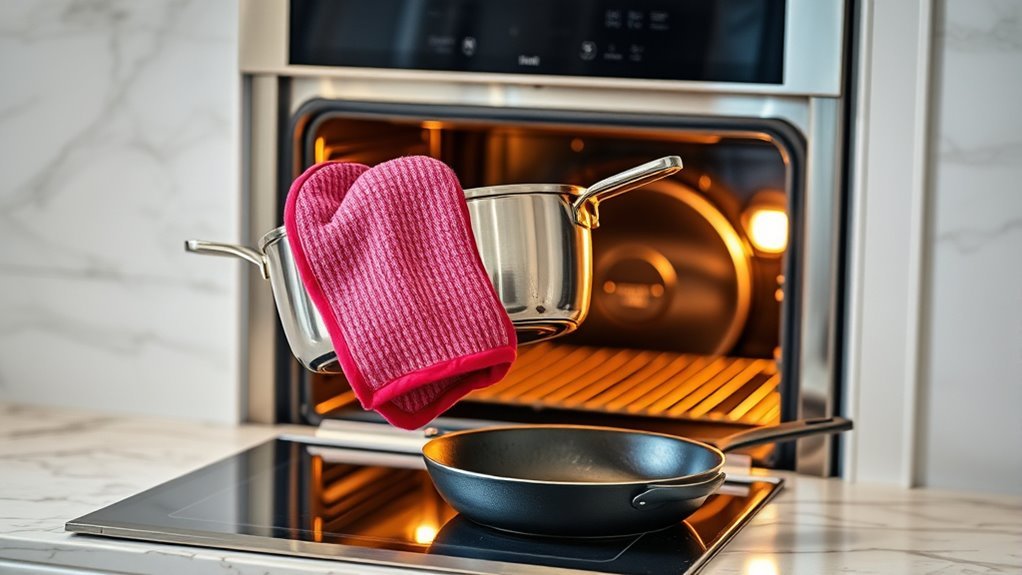
When you choose cookware for the oven, it’s important to pick materials that can handle high heat without damage. Oven-safe cookware often includes stainless steel, cast iron, or anodized aluminum, all capable of withstanding intense temperatures without warping.
Handles and lids should also be made from oven-friendly materials like metal, silicone, or tempered glass lids to guarantee oven safety. Nonstick coatings can handle the heat up to certain limits, usually around 450°F, beyond which they might degrade and release harmful fumes.
Be cautious with glass cookware, as thermal shock can occur if temperature changes are abrupt. Tempered glass lids have specific temperature caps to consider.
Always check the materials used and manufacturer guidelines to avoid damage and ensure your cookware is truly oven-safe.
How to Identify Oven-Safe Pans
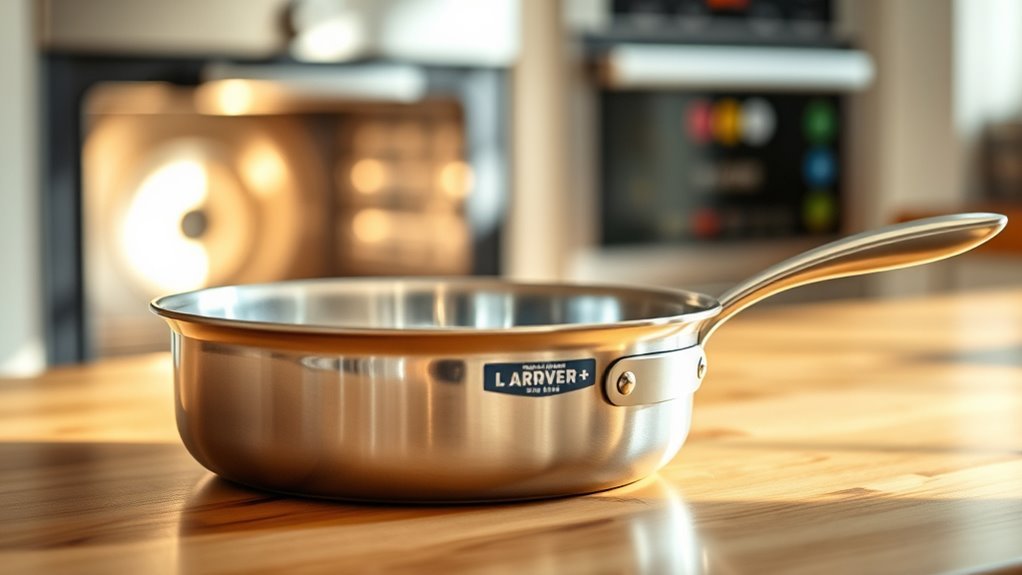
Although not all pans are designed for oven use, you can easily identify oven-safe options by checking for manufacturer labels or symbols on the bottom of the pan. These markings provide quick confirmation of oven safety.
Next, perform material verification by reviewing the product instructions or packaging, which often specify temperature limits for oven use. Pay special attention to nonstick coatings, ensuring they’re rated for high heat, typically up to 450°F or more depending on the brand.
Avoid pans with plastic or rubber parts unless explicitly labeled oven-safe, as these can melt or warp. While you should check handles for oven-safe materials, we’ll cover that in detail later.
The Role of Handles and Lids in Oven Safety
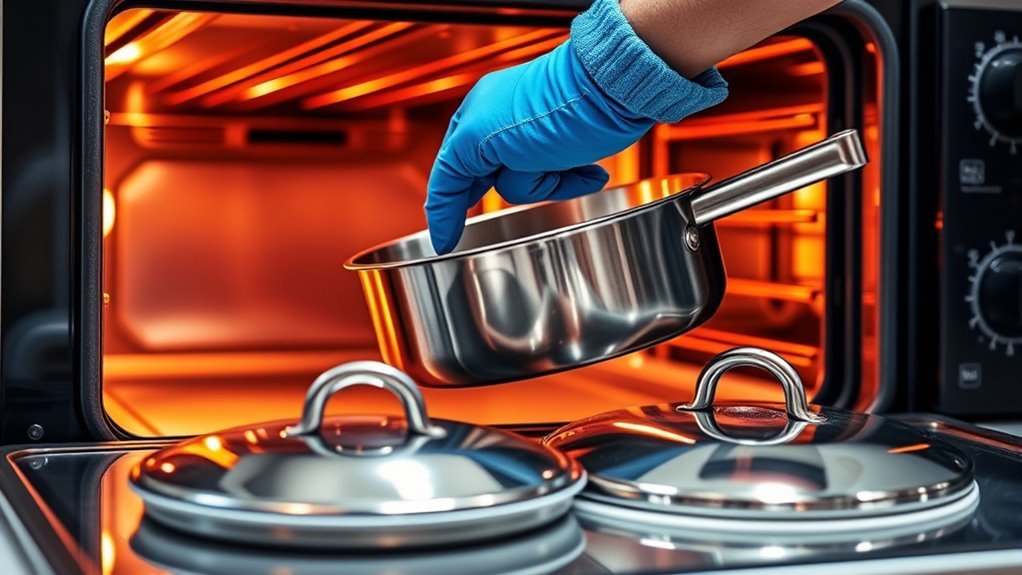
Since handles and lids come into direct contact with heat, you need to make certain they’re made from oven-safe materials like silicone or metal. Avoid rubber or plastic handle materials, as they often can’t withstand high temperatures and may melt or warp.
Choose oven-safe handles and lids made of silicone or metal to prevent melting or warping.
When it comes to lids, glass lids with vents are usually oven-safe up to around 350°F, while unvented glass lids might tolerate up to 500°F, but always check the manufacturer’s specifications.
Following oven use guidelines ensures cookware safety and prevents damage.
Removing lids at higher oven temperatures can also prevent cracking and avoid steam pressure buildup. Always verify oven-safe handles and oven-safe lids before use to maintain proper oven safety and respect oven temperature limits for your cookware.
Oven Temperature Limits for Different Pan Types
Because different pans are made from various materials, their oven temperature limits can vary considerably. Stainless steel and cast iron pans are generally oven-safe up to 500°F to 900°F, but this depends on their construction and handles.
Nonstick coatings, especially PTFE types, shouldn’t be exposed to oven temperatures above 450°F to avoid degradation and harmful fumes.
Ceramic and hard-anodized aluminum pans usually handle 400°F to 500°F, though you should always check manufacturer guidelines.
Handles often set the maximum oven temperature. Silicone or rubber handles can limit safety to around 350°F or 400°F.
To prevent damage, verify your pan’s oven-safe status and temperature limits based on its material and handles before using it in the oven.
Common Pans to Avoid Using in the Oven
Not all pans are built to handle the heat of an oven, so you should avoid using those with plastic or rubber handles that can melt or warp. Low-quality silicone handles also pose risks since they might degrade or emit fumes under high heat.
Be cautious with ceramic pans that have unverified temperature limits because they can crack or break when exposed to intense oven heat. Avoid glass cookware unless it’s clearly labeled oven-safe, as some types can shatter.
Pans featuring non-oven-safe nonstick coatings may release harmful fumes or deteriorate, which is unsafe. In general, steer clear of any cookware with non-metallic parts or unverified temperature limits to prevent damage or health hazards.
Using the right pans ensures safe, effective oven cooking every time.
Tips for Safe Stove-to-Oven Cooking Transitions
When you move a pan from the stove to the oven, double-check that it’s oven-safe and within the recommended temperature range to prevent damage or accidents. Always follow the manufacturer’s temperature guidelines to avoid overheating.
Before placing pans in the oven, remove plastic handles or any non-heat-resistant parts that could melt or warp.
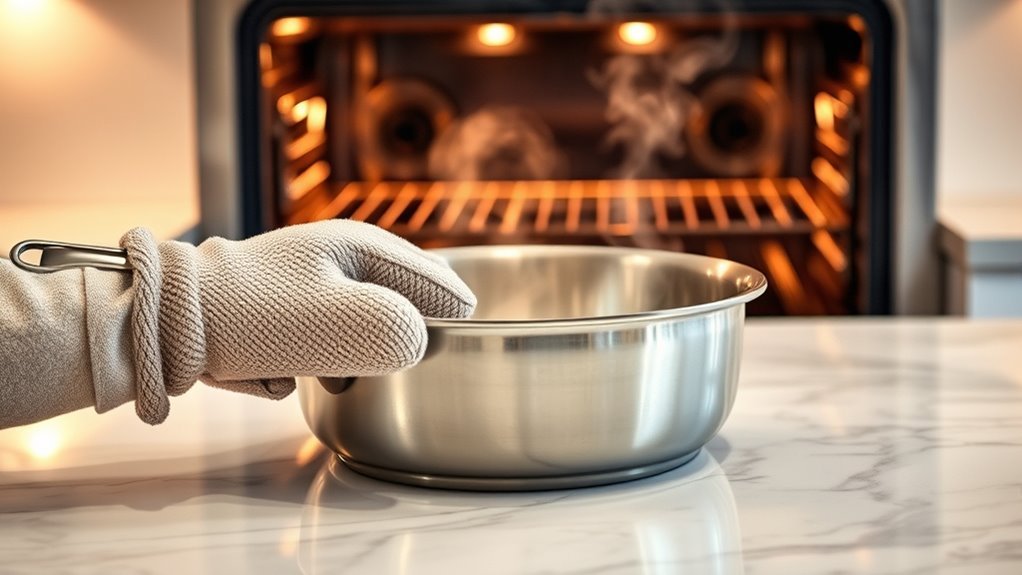
Use heat-resistant gloves to handle hot cookware safely and prevent burns during the handoff.
Preheat your oven gradually to minimize thermal shock, which can cause pans to crack or warp.
If your pan has a lid, ensure it’s also oven-safe or remove it when cooking at high temperatures.
These simple steps help you safely transfer your cookware from stove to oven without risking damage or injury.
Caring for Your Oven-Safe Cookware
After ensuring your cookware is safe for the oven and handling it carefully during cooking, you’ll want to maintain its condition for lasting use. Always verify that the entire piece, including the handle and lid, is labeled oven-safe.
When removing it from the oven, use oven mitts or heat-resistant gloves to avoid burns. Follow the manufacturer guidelines for temperature limits to prevent damage like melting or warping.
Avoid sudden temperature changes by heating and cooling your cookware gradually, protecting it from thermal shock that can cause cracks.
After use, clean your cookware gently without harsh abrasives, and never expose it to extreme temperature shifts while cleaning.
These steps help preserve your oven-safe cookware’s performance and extend its lifespan.
Frequently Asked Questions
Can You Put a Pan in the Oven Safe?
Yes, you can put a pan in the oven if it’s labeled oven-safe. Always check materials and temperature limits, avoid plastic handles, and use oven mitts to handle hot pans safely without causing damage or injury.
Can You Put a Skillet in the Oven at 400 Degrees?
Yes, you can put a skillet in the oven at 400°F if it’s made of cast iron or stainless steel. Just check your skillet’s manufacturer guidelines and make certain handles or lids are oven-safe to avoid damage.
This ensures that the skillet and its components won’t be harmed by the heat. Always verify the materials to prevent any accidents or warping.
How Can You Tell if a Pan Is Oven Safe?
You can tell if a pan’s oven safe by checking for oven-safe labels or symbols on it, reviewing manufacturer instructions, and ensuring all parts, including handles, are made of heat-resistant materials like metal or glass.
Look for any markings on the bottom or handles that indicate oven safety.
Consult the user manual or manufacturer’s website for specific guidance.
Avoid pans with plastic or wooden handles unless they are explicitly stated to be oven-safe.
What Pans Are Safe to Put in the Oven?
Wondering which pans you can safely pop in the oven? You’ll want cast iron, stainless steel, ceramic, or hard-anodized aluminum pans with heat-resistant handles—just double-check their max temperature to avoid any surprises or damage.
Conclusion
You might think any pan can go in the oven, but that’s not true—and using the wrong one can ruin your cookware or even cause hazards. By choosing pans made from oven-safe materials and checking handles and lids carefully, you’ll keep your cooking safe and efficient. Always follow temperature guidelines and handle hot pans with care.
With these simple steps, you’ll confidently master oven cooking without risking damage or injury. Remember, selecting the right pan and understanding how to safely put a pan in the oven are key to successful and safe baking experiences.