How to Tell If You Can Put Any Pan in the Oven
Imagine sliding a pan into a hot oven, expecting a perfectly cooked meal, only to see it warp or melt minutes later. Before you risk ruining your cookware or creating a kitchen disaster, it’s important to know whether your pan can handle the heat. Knowing the right signs and materials to look for can save you time, money, and frustration.
So, how can you tell if any pan is truly oven-safe? Understanding the materials your pans are made from and checking for oven-safe labels are key steps. Let’s explore the essential tips to help you determine if your cookware is oven-friendly.
Identifying Oven-Safe Labels and Symbols
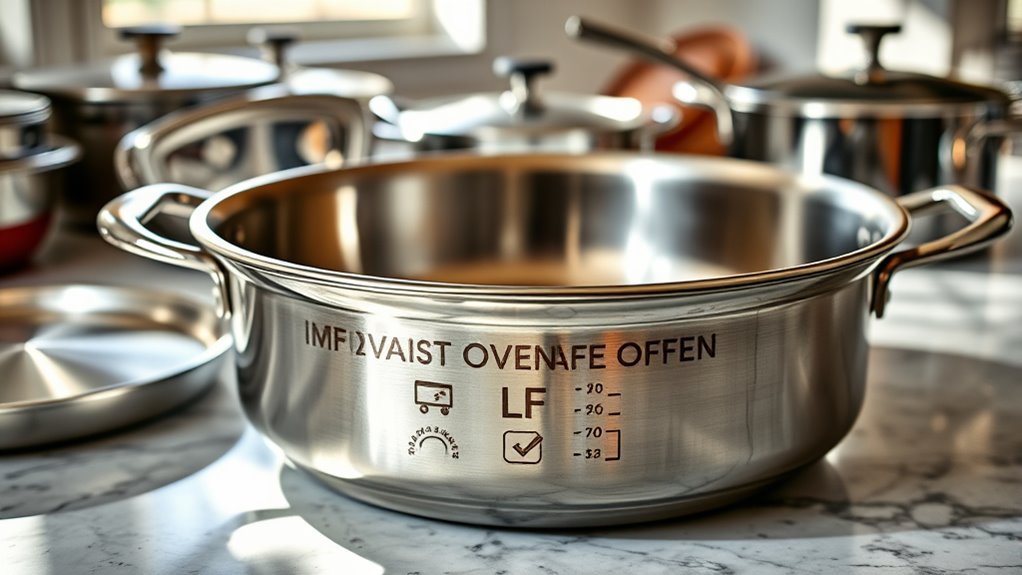
How can you quickly tell if a pan is safe to use in the oven? Start by checking for oven-safe symbols or cookware labels, like an oven icon or temperature indicators, usually found on the pan’s bottom or packaging.
Next, review the manufacturing instructions or product description for specific oven compatibility details and care instructions. Pay close attention to handle materials. Metal, tempered glass, or heat-rated silicone are usually safe, while plastic or wooden handles often aren’t unless clearly stated.
Also, verify if nonstick coatings are rated for oven use, typically up to 500°F, since not all coatings tolerate high heat. By combining these clues, you’ll confidently know whether your pan can handle oven cooking without damage or safety issues.
Evaluating Pan Materials for Oven Use
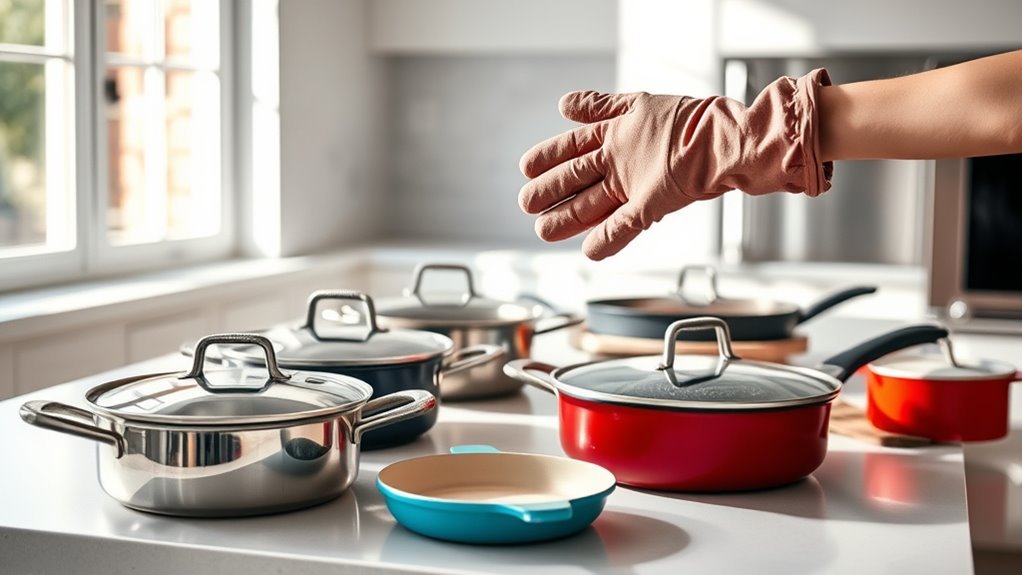
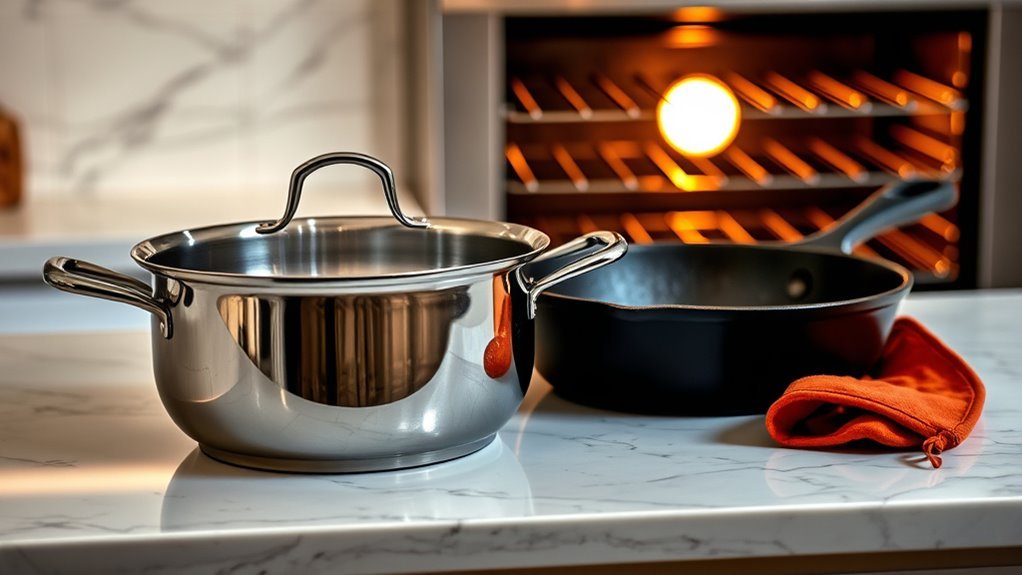
Although many pans look similar, their materials greatly affect whether they can safely withstand oven temperatures. When evaluating cookware materials for oven use, metals like cast iron, stainless steel pans, and carbon steel are usually oven-safe due to their high heat tolerance.
Nonstick cookware with professional-grade coatings can also be safe, typically up to 500°F, but always check manufacturer guidelines.
Ceramic pans may be oven-safe but often have specific temperature limits, so verify before use.
Glass lids or pans with tempered glass components generally handle temperatures between 350°F and 600°F, but confirming oven safety is essential.
Also, consider the handle material, as plastic, rubber, or wood usually aren’t oven-safe.
Understanding these factors helps ensure your pan withstands oven use without damage or safety risks.
The Role of Handles and Lids in Oven Safety
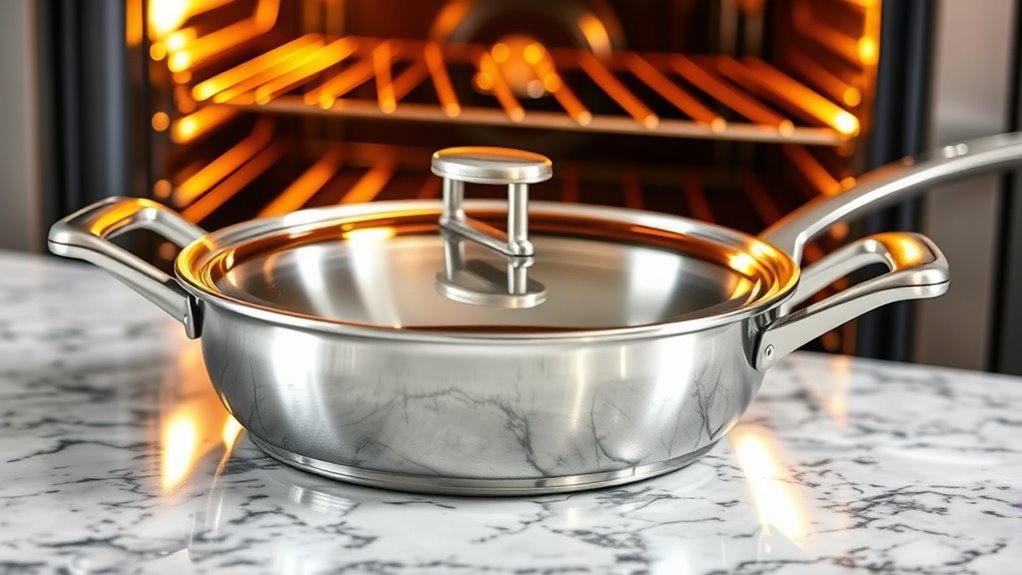
Knowing your pan’s material is only part of the equation when cooking in the oven. Handles and lids play a vital role in oven safety. You need to take into account the handle material. Metal handles like stainless steel or cast iron handle high heat well and are usually oven-safe.
Silicone handles often tolerate up to 400ºF, but check the manufacturer’s temperature limits. Avoid rubberized or plastic handles unless they’re explicitly oven-safe, as they can melt or warp.
Lid material also matters; glass lids without vents generally withstand up to 350ºF, while vented lids can handle higher temperatures, sometimes up to 500ºF.
Always verify your cookware design’s oven safety features and remove lids not rated for high heat to prevent cracking or warping. Understanding these factors guarantees safe, effective oven use.
Common Pans to Avoid Putting in the Oven
If your cookware has plastic handles or knobs, you shouldn’t put it in the oven because they can melt or warp under high heat. Also, avoid nonstick coatings not rated for oven use, as they risk coating degradation or harmful fumes.
Glass cookware without an oven-safe label or thin lids can shatter from thermal shock. Ceramic pans lacking explicit oven-safe labels, especially with decorative surfaces, aren’t safe either.
Lastly, steer clear of pans with low-temperature components or non-oven-safe handle material like certain copper or aluminum types.
| Pan Type | Reason to Avoid |
|---|---|
| Plastic Handles | Melt or warp at high heat |
| Nonstick Coatings | Coating degradation or fumes |
| Glass Cookware | Shatter from thermal shock |
Best Practices for Using and Caring for Oven-Safe Pans
When you use oven-safe pans, always check the manufacturer’s guidelines to confirm their temperature limits. This guarantees your cookware withstands the oven’s heat without damage.
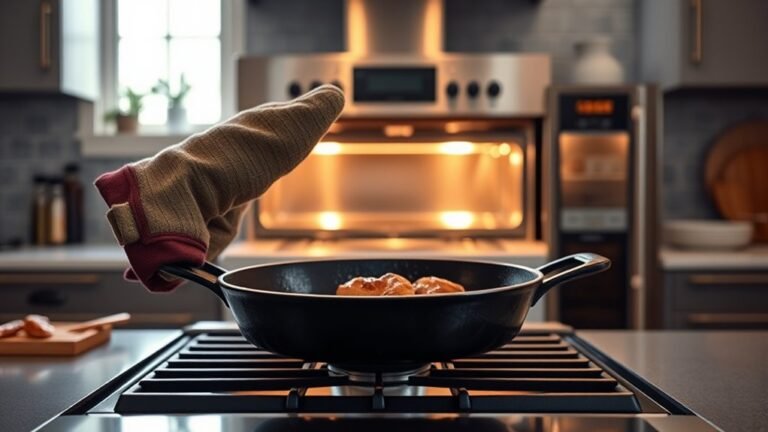
Protect your hands with oven mitts when handling hot pans, especially those with metal handles that get very hot.
Avoid pans with plastic or wooden handles, as they can melt or warp under high temperatures.
To maintain your pans’ cooking surface, preheat and cool them gradually to prevent thermal shock.
Proper cleaning also extends their lifespan; hand wash with gentle scrubbers instead of abrasive ones.
Verify the manufacturer’s guidelines for temperature limits
Use oven mitts to handle hot cookware safely
Avoid pans with non-oven-safe handles
Preheat and cool pans gradually
Follow recommended cleaning methods for your oven-safe pans
Frequently Asked Questions
How Can You Tell if a Pan Is Oven Safe?
You can tell if a pan is oven safe by checking the manufacturer’s label or packaging for oven-safe symbols. Confirm that all parts of the pan are metal or made from heat-resistant materials.
Also, verify the maximum temperature rating of the pan to ensure it matches your cooking needs. This will help prevent damage to the pan or your oven during use.
Can You Put Any Pan in the Oven?
No, you can’t put any pan in the oven. You should check if your pan and its handles are oven-safe, and avoid plastics or materials that can’t handle heat to prevent damage or safety hazards.
Can My Everything Pan Go in the Oven?
Of course, your everything pan isn’t just a kitchen hero—it’s an oven daredevil too!
Just check if its handles aren’t plastic, and the coating’s oven-safe.
Then, go ahead and roast like a pro!
How Do I Know if I Can Put Something in the Oven?
You check the label or packaging for oven-safe symbols and temperature limits. Make sure all parts, like handles and lids, are metal or tempered glass. Avoid plastic or wooden parts, and follow the manufacturer’s guidelines carefully.
Conclusion
Think of your pan like a loyal companion on a hiking trip—you wouldn’t send a friend unprepared into the wild, just like you shouldn’t put a pan in the oven without verifying its readiness.
By spotting oven-safe symbols, examining materials, and minding handles and lids, you guarantee your pan can handle the heat. Taking these steps protects your cookware and your meal, turning your kitchen adventure into a safe, successful journey every time.
In conclusion, knowing how to tell if you can put any pan in the oven ensures your cooking is both safe and effective. Always check for oven-safe indicators, consider the pan’s material, and be cautious with any components before placing your pan in the oven.