Can Ceramic Pans Go in the Dishwasher?
It’s funny how you might find yourself wondering about tossing your ceramic pan into the dishwasher just as the cycle starts. When it comes to ceramic cookware, many people ask, “Can ceramic pans go in the dishwasher?” While it seems convenient, not all ceramic cookware is made to handle those harsh dishwasher conditions.
Before you decide to place your pan alongside the plates and glasses, you should consider how the dishwasher might affect its surface and longevity. Understanding these factors could save you some costly replacements down the line.
Understanding Ceramic Cookware Materials
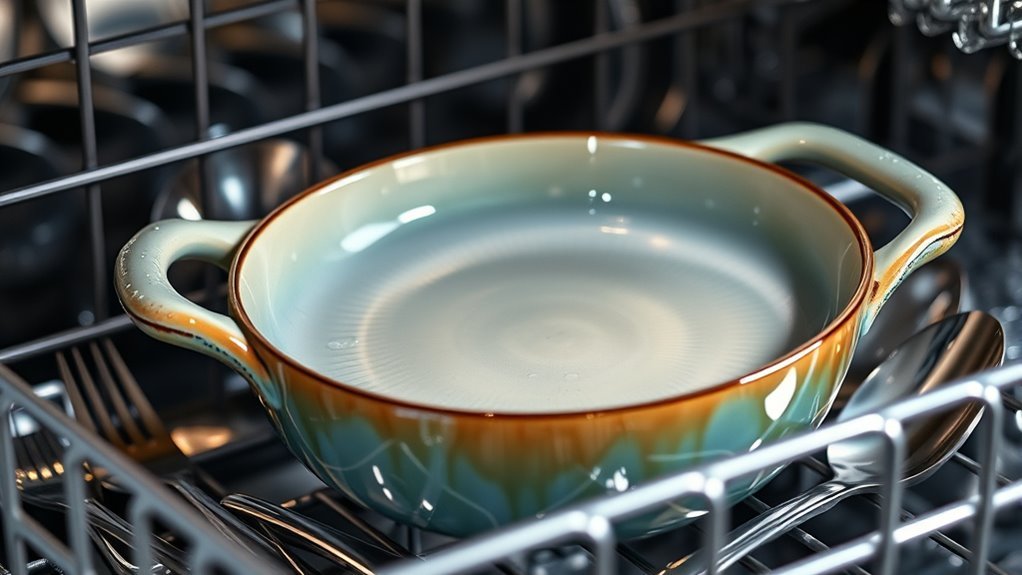
Although ceramic pans offer excellent heat conduction and durability, you should understand that their materials require careful handling.
Most ceramic pans are made from pure ceramic or ceramic-coated metals, often backed with aluminum to improve heat distribution.
While ceramic surfaces are sturdy, they’re vulnerable to damage from harsh chemicals, sudden temperature changes, and scratches.
Because ceramic is porous, it can absorb stains and residues, especially when exposed to aggressive cleaning methods.
The aluminum backing, though helpful for heat conduction, can oxidize and discolor if not treated gently.
Knowing these material characteristics helps you take better care of your ceramic cookware and avoid damage that shortens its lifespan.
Handling ceramic pans with care ensures they stay durable and safe to use for cooking.
How Dishwashers Affect Ceramic Pans
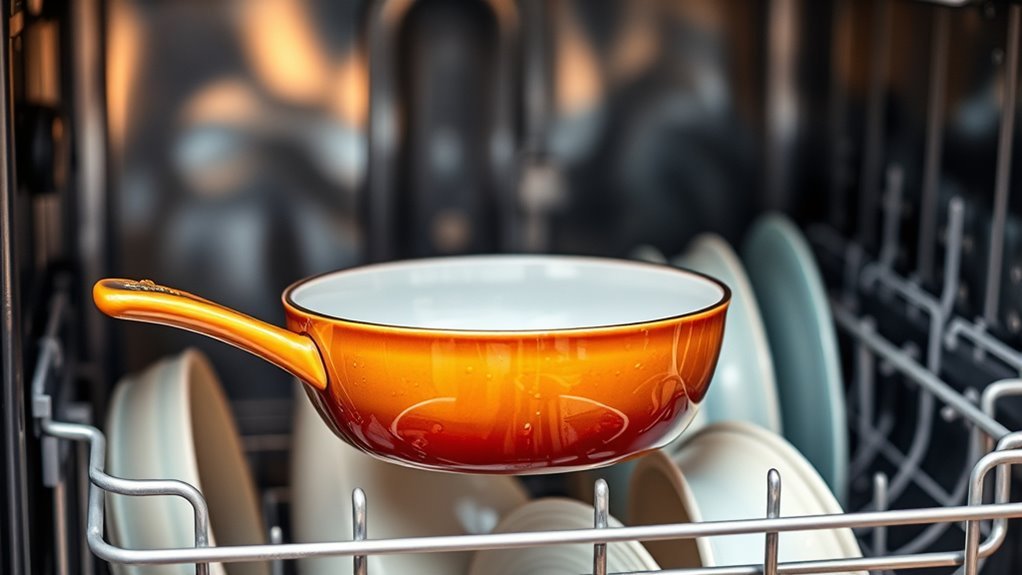
When you put ceramic pans in the dishwasher, the harsh detergents and intense water pressure can quickly wear down their surfaces. Even if your ceramic cookware is labeled dishwasher safe, repeated cycles harm the ceramic coating.
Here’s how dishwashers affect your nonstick pots and pans:
- Bleaching agents and citric acid in detergents cause discoloration and damage the ceramic coating.
- High heat and powerful jets can chip, peel, or scratch the nonstick surface.
- Mechanical agitation accelerates wear, reducing nonstick performance and lifespan.
- Aluminum-backed ceramic pans risk oxidation and staining from dishwasher exposure.
To keep your ceramic cookware in top shape, avoid dishwasher cleaning and opt for gentle hand washing instead.
Signs of Damage From Dishwasher Use
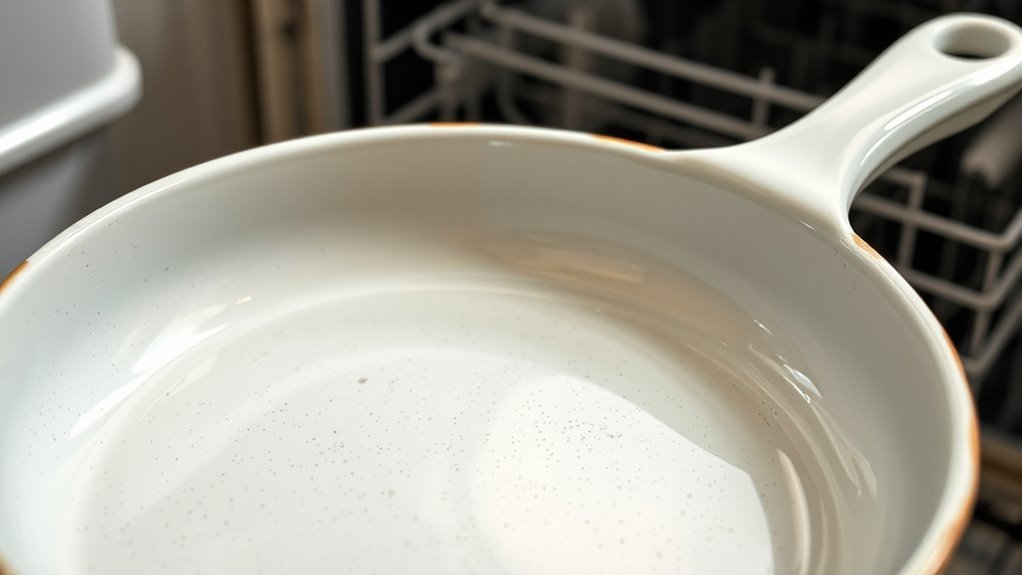
Repeated dishwasher cycles take a visible toll on your ceramic pans. You might notice scratches and surface chipping that weren’t there before, signs that the high-pressure jets and harsh detergents are wearing down the ceramic coating.
Discoloration, like dark spots or dull patches, can also develop as chemicals react with the pan’s surface. If you use nonstick cookware with ceramic coatings, the damage can be even more apparent. Peeling or flaking may occur, reducing effectiveness.
Beneath the ceramic layer, aluminum or other metals can oxidize, causing tarnished or stained appearances. Over time, you might spot warping or cracking, which compromises the pan’s structure and safety. These signs show that repeated dishwasher use isn’t ideal if you want to keep your ceramic pans in top shape.
Manufacturer Guidelines on Dishwasher Safety
Since ceramic cookware varies widely, you should always check the manufacturer’s guidelines before tossing your pans in the dishwasher.
Manufacturer guidelines help you avoid damage like chipping, peeling, or discoloration caused by harsh detergents and high heat.
Here are key points to contemplate from these guidelines:
- Most manufacturers recommend hand washing to preserve the ceramic surface.
- Some brands, like Xtrema, explicitly state their all-ceramic pans are dishwasher safe.
- Repeated dishwasher cycles may wear down even dishwasher-safe pans faster.
- Always follow specific care instructions to maintain your pan’s lifespan.
Best Cleaning Practices for Ceramic Pans
Understanding manufacturer guidelines sets the foundation for proper care, but knowing the best cleaning practices will keep your ceramic pans looking and performing their best.
Always let your ceramic pans cool completely before cleaning to avoid thermal shock, which can cause cracking.
Allow ceramic pans to fully cool before washing to prevent thermal shock and potential cracking.
Use a soft sponge or cloth with mild dish soap for gentle cleaning, steering clear of abrasive scrubbers that can damage the surface.
Rinse thoroughly to remove all soap residues, which could degrade the non-stick coating over time.
Avoid relying solely on the dishwasher for cleaning, as its harsh environment may affect your pan’s longevity.
After washing, dry your ceramic pans immediately with a soft towel to prevent water spots and mineral deposits.
Regular, mindful maintenance ensures your ceramic pans stay in top condition.
Common Mistakes When Cleaning Ceramic Cookware
When you clean ceramic cookware improperly, you risk damaging its delicate surface and shortening its lifespan. Avoid these common mistakes to keep your ceramic pans in top shape:
- Using harsh dishwasher detergents that weaken the ceramic coating and cause discoloration.
- Loading ceramic pans with metal utensils or abrasive items, increasing scratches and chips.
- Placing hot ceramic cookware directly into the dishwasher, causing thermal shock and cracks.
- Neglecting to rinse off food residues before washing, leading to baked-on stains that are tough to remove.
Benefits of Hand Washing Ceramic Pans
Although dishwashers offer convenience, hand washing your ceramic pans with gentle soap and a soft sponge preserves their non-stick coating and prevents scratches, helping your cookware last longer.
When you hand wash ceramic cookware, you avoid the harsh detergents and abrasive scrubbers often used in dishwashers that can degrade the ceramic surface over time.
Cooling your pan before cleaning also reduces thermal shock, protecting the coating from damage.
After washing, drying your pans immediately prevents water spots and corrosion, especially on aluminum-backed cookware.
Comparing Ceramic Cookware to Other Materials
While ceramic cookware offers a sleek, non-metallic design that many find appealing, it handles cleaning and durability differently than cast iron, copper, or stainless steel pans. Here’s how ceramic cookware compares:
- Dishwasher Safety: Ceramic pans are generally dishwasher safe, unlike many non-stick pans, but harsh detergents can degrade their surface.
- Durability: Metal-based cookware like cast iron and stainless steel typically withstand dishwasher cycles better than ceramic cookware.
- Stain Resistance: Ceramic resists staining and discoloration better than metals but can suffer surface damage over time from dishwasher chemicals.
- Construction: Fully ceramic pans, such as those from Xtrema, tolerate dishwasher cleaning well, unlike ceramic-coated non-stick pans.
Understanding these differences helps you care for your ceramic cookware properly while appreciating its unique benefits.
Extending the Lifespan of Ceramic Cookware
Understanding the cleaning differences between ceramic cookware and other materials highlights how you can keep your ceramic pans in top shape. To extend the lifespan of your ceramic cookware, avoid using the dishwasher.
Ceramic Cookware Dishwasher cleaning exposes pans to harsh detergents and high heat, which can cause discoloration, chipping, and damage to the non-stick surface. Instead, wash your pans by hand with gentle soap and a soft sponge, preventing surface scratches and preserving the coating.
Clean your pans immediately after use and avoid rapid temperature changes to maintain their structural integrity. Following manufacturer cleaning guidelines also helps prevent premature wear.
Choosing the Right Cleaning Products for Ceramic Pans
When you clean ceramic pans, choosing the right products plays a crucial role in preserving their non-stick surface and overall durability. Using inappropriate cleaners can damage your cookware, reducing its lifespan and performance.
To keep your ceramic pans in top shape, follow these guidelines:
- Use mild, non-abrasive dish soaps formulated specifically for ceramic cookware to avoid surface damage.
- Avoid harsh chemicals like bleach or citric acid-based cleaners that can degrade the ceramic coating and cause discoloration.
- Clean with non-abrasive sponges or soft cloths, steering clear of steel wool or abrasive scrubbers that scratch the surface.
- For tough stains, opt for a baking soda paste or specialized ceramic cookware cleaner instead of strong chemicals.
Always check your cookware’s manufacturer recommendations for the best cleaning approach.
Frequently Asked Questions
Why Can’t I Put Ceramic in the Dishwasher?
You can’t put ceramic pans in the dishwasher because harsh detergents and high pressure can damage their coating, cause discoloration, and reduce their non-stick effectiveness.
Hand washing helps keep them looking and working great longer.
How to Tell if Ceramic Is Dishwasher Safe?
Wondering how to tell if your ceramic pan’s dishwasher safe? Check the manufacturer’s label or care instructions. If it says “dishwasher safe,” you’re good.
Otherwise, hand wash to protect its coating and longevity.
What Is the Downside of Ceramic Pans?
You’ll find ceramic pans can chip, peel, and lose their non-stick coating over time. They’re prone to scratching, discoloration, and thermal damage, which can shorten their lifespan if you’re not careful with cleaning and heat.
Proper care is essential to maintain their durability and appearance. Avoid using abrasive cleaners or metal utensils to extend the pan’s life.
What Is the Best Way to Clean Ceramic Cookware?
You might think dishwashers do the trick, but the best way to clean ceramic cookware is with warm water, gentle soap, and a soft sponge.
Avoid harsh scrubbing to keep its surface smooth and lasting longer.
Conclusion
While some ceramic pans might handle the dishwasher’s hustle, you’d be gently steering clear of potential wear and tear by hand washing. Treating your cookware with a little extra kindness helps keep its surface looking fresh and vibrant longer.
So, even if the dishwasher seems like a tempting shortcut, giving your ceramic pan a soft, mindful wash will quietly extend its beauty and performance.
This careful care ensures your ceramic pans last longer and maintain their non-stick qualities, making every meal a bit more enjoyable in the long run.