What Does a Jelly Roll Pan Look Like?
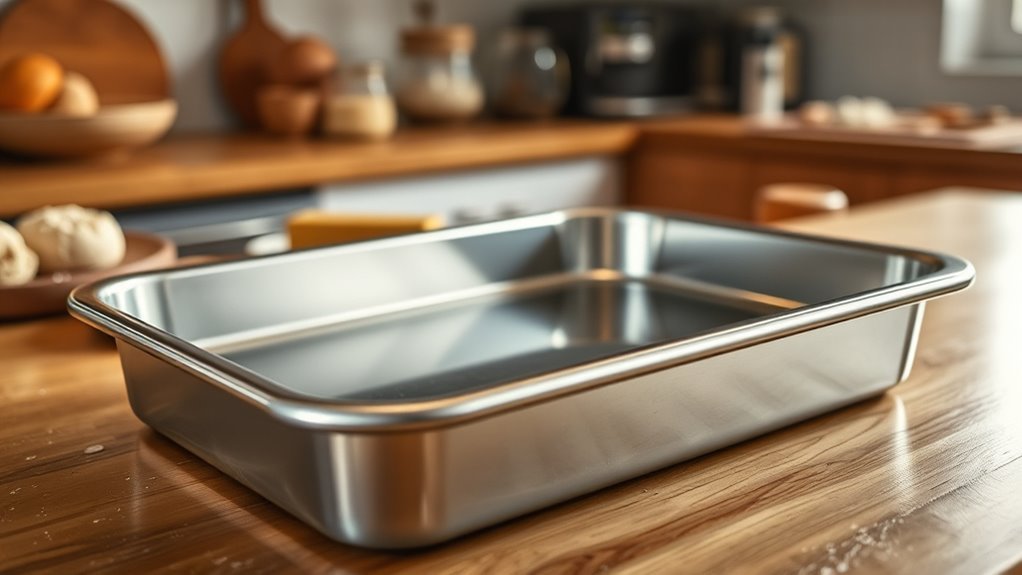
When you pick up a jelly roll pan, you’ll notice its rectangular shape and shallow sides, typically about an inch high. This type of baking pan is distinct with its raised, flanged edges and often features a non-stick surface. These design elements make it ideal for baking jelly rolls, sheet cakes, and other delicate pastries.
It’s not just any baking tray—its unique structure helps in even heat distribution and easy release of baked goods. You might wonder how these features impact your baking or why it’s preferred for certain recipes. Understanding its design can change how you approach your next batch of treats.
Defining Features of a Jelly Roll Pan
Although you mightn’t use it every day, a jelly roll pan is essential when you want to bake thin, even layers that roll up easily.
Jelly roll pans are rectangular, typically around 15 by 10 inches, with shallow sides about 1 inch high. These low edges help keep batter and liquids contained without interfering with the rolling process.
Rectangular and shallow-sided, jelly roll pans keep batter secure while allowing easy rolling.
The pan’s flat or slightly raised rim is perfect for creating consistent edges, ensuring your baked goods stay intact.
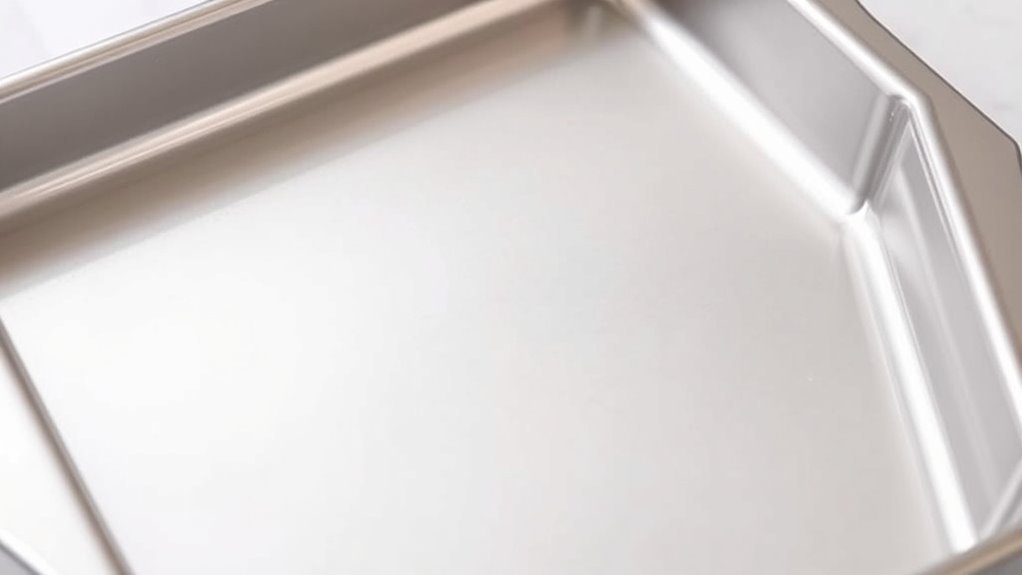
Most jelly roll pans feature a smooth, even surface made from aluminized steel, often coated with non-stick material. This design not only promotes even baking but also makes it easier to release delicate cakes.
Understanding these defining features helps you appreciate why jelly roll pans are a go-to for thin, rollable treats.
Typical Dimensions and Size Comparison
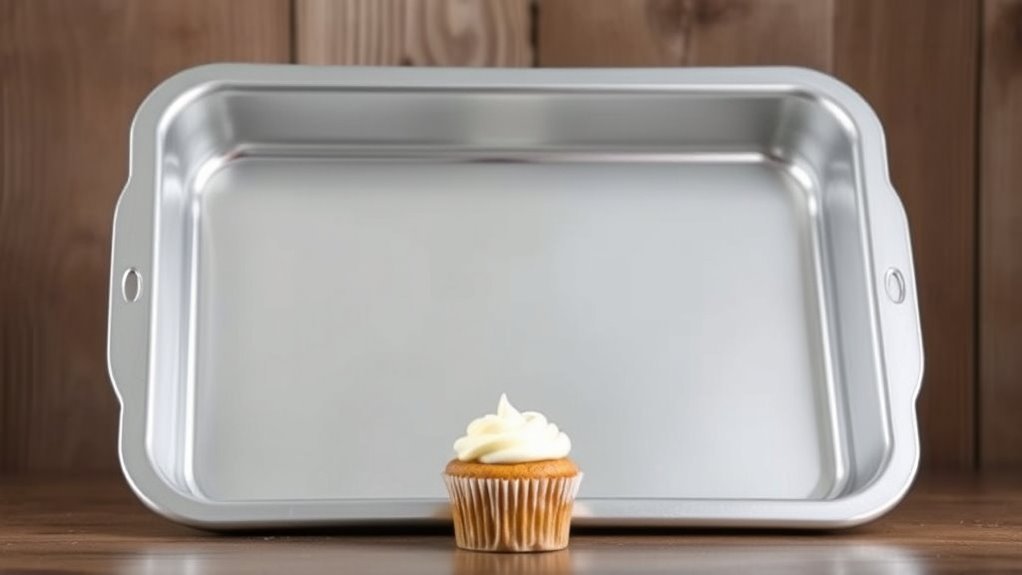
When you choose a jelly roll pan, you’re working with a size that’s roughly 15 by 10 inches. It’s smaller than a half-sheet pan but a bit larger than a quarter-sheet pan. Its shallow 1-inch sides make it perfect for baking rolled cakes like Swiss rolls without spills.
To help you visualize typical sizes, here’s a quick comparison:
| Pan Type | Dimensions (inches) |
|---|---|
| Jelly Roll Pan | 15 x 10 |
| Half-Sheet Pan | 18 x 13 |
| Quarter-Sheet Pan | 13 x 9 |
| Shallow Side Height | ~1 |
| Ideal For | Rolled Cakes |
This size balance guarantees your jelly roll pan fits well in most ovens while providing enough surface area for even baking.
Design Elements: Edges and Material
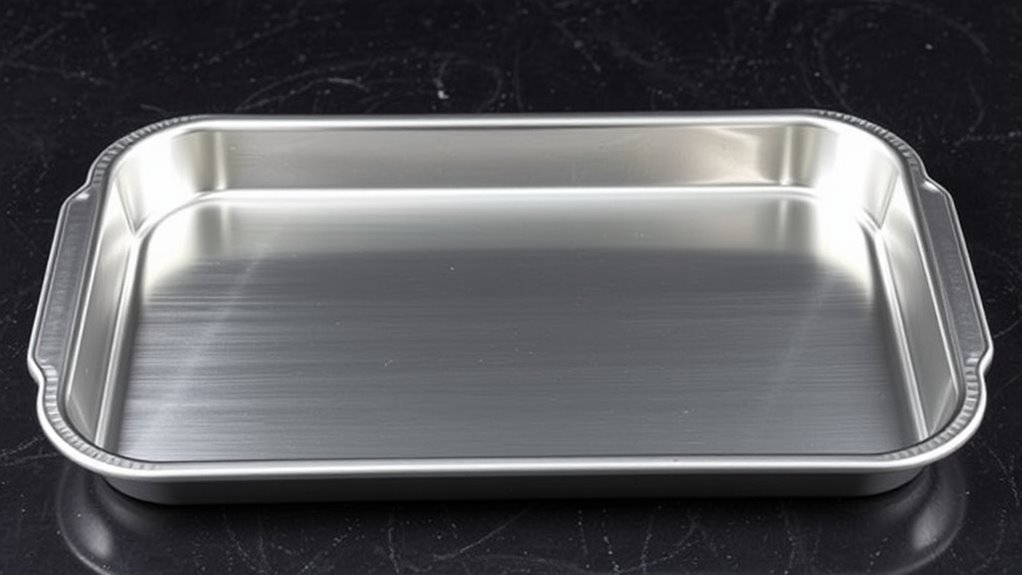
The size of a jelly roll pan sets the stage, but its design elements like edges and material make a big difference in your baking experience. Understanding these details helps you choose the right pan for your needs. Here’s what you should know:
- Edges: Typically about 1 inch high, the raised edges contain batter and prevent spills. They’re often flanged or rolled for added strength and easier handling.
- Material: Most jelly roll pans are made from aluminized steel, offering durability and efficient heat conduction for even baking.
- Coating: Many come with a non-stick silicone-based coating that makes releasing your baked goods simple and cleanup a breeze.
Paying attention to these design elements ensures your jelly roll pan performs well and lasts long.
Differences Between Jelly Roll Pans and Baking Sheets
Because jelly roll pans have raised edges and a smaller size, they serve different purposes than baking sheets, which are flat and larger. A jelly roll pan is typically about 15×10 inches with 1-inch high sides, perfect for baking rolled cakes where batter needs containment.
In contrast, a baking sheet, also called a cookie sheet, is rimless or has very low edges, allowing better air circulation for even baking of cookies or to roast vegetables.
While you can sometimes use a baking sheet for jelly roll recipes, its larger size may cause thinner cakes or uneven baking.
Common Uses and Baking Applications
How can a jelly roll pan elevate your baking experience? Its unique size and shallow sides make it perfect for more than just jelly roll cakes. You’ll find it incredibly versatile in your kitchen. Here are three common uses and baking applications:
- Baking jelly roll cakes: The pan’s 15×10-inch size lets you spread batter evenly to create thin layers that roll smoothly without cracking.
- Roasting vegetables: The raised edges keep juices contained, preventing spills and making cleanup easier.
- Baking cookies and bars: Its shallow depth ensures even heat distribution for perfectly baked treats.
With a jelly roll pan, you get a tool that handles delicate cakes and hearty roasted dishes alike, adding convenience and precision to your cooking.
How a Jelly Roll Pan Enhances Cake Baking
When you choose a jelly roll pan for cake baking, you benefit from its perfectly sized 15×10-inch surface and shallow 1-inch sides that keep batter contained and help spread it evenly. This design ensures your cake bakes uniformly with consistent thickness, which is vital for rolling cakes like Swiss rolls without cracking.
The jelly roll pan’s shape also lets you achieve an ideal cake-to-filling ratio, enhancing both taste and presentation.
Plus, many jelly roll pans feature non-stick coatings or easy-release surfaces, making it simpler to remove delicate cakes without damage.
Alternatives and Substitutes for Jelly Roll Pans
Using a jelly roll pan definitely simplifies baking rolled cakes, but you mightn’t always have one on hand. If you need alternatives, consider these options that match the size and depth to specify a jelly roll:
- Rimmed baking sheets or cookie sheets with similar dimensions (like half-sheet pans) work well, but ensure they allow good air circulation to avoid uneven baking.
- Glass baking dishes close to the jelly roll pan size can substitute, though they conduct heat differently, so watch baking times.
- Smaller pans like 9×13-inch dishes suit less batter but will affect thickness and require time adjustments.
Always choose pans with shallow sides and the correct size to maintain cake texture and ease in rolling.
Frequently Asked Questions
What Can You Use Instead of a Jelly Roll Pan?
You can use rimmed baking sheets, quarter-sheet pans, or a 13×9-inch baking dish instead of a jelly roll pan.
Just adjust baking time and batter thickness to prevent uneven cooking or spreading.
Do I Really Need a Jelly Roll Pan?
You don’t always need a jelly roll pan, but it helps you bake rolled cakes evenly and prevents spills.
If you lack one, a rimmed baking sheet can work, but results might not be as perfect or easy to roll.
What Is the Difference Between a Cookie Sheet and a Jellyroll Pan?
Imagine baking without a fence: a cookie sheet is flat and open, perfect for cookies needing airflow.
A jelly roll pan has raised edges, like a shallow box, keeping batter contained for cakes or roasts—you’ll appreciate that barrier!
What Is Special About a Jelly Roll Pan?
You’ll love a jelly roll pan because its shallow sides hold batter without spills, making it perfect for rolled cakes.
Its size and non-stick surface help you bake evenly and easily release delicate treats every time.
Conclusion
Now that you know what a jelly roll pan looks like, you can see why it’s perfect for baking thin cakes and delicate treats. Its shallow sides and sturdy edges aren’t just design choices—they make your baking easier and cleaner.
If you’ve ever struggled with sticky, misshapen cakes, this pan might just change your baking game. Don’t underestimate this simple tool; it could be the secret to your next baking success.
Give it a try—you won’t regret it! A jelly roll pan is an essential baking tool that helps you create perfect, evenly baked jelly rolls and other thin desserts every time.