10 Steps to Cook Salmon Perfectly in a Cast Iron Pan
Cooking salmon in a cast iron pan can be a bit of an art rather than a simple task, especially if you want that perfect balance of crispy skin and tender flesh. Mastering the technique of cooking salmon in a cast iron pan ensures delicious, evenly cooked fish every time.
You might think it’s straightforward, but there are key steps that make all the difference. If you’re aiming for salmon that’s cooked just right every time, there are a few techniques and tips you’ll want to master first.
Selecting Fresh Salmon Fillets
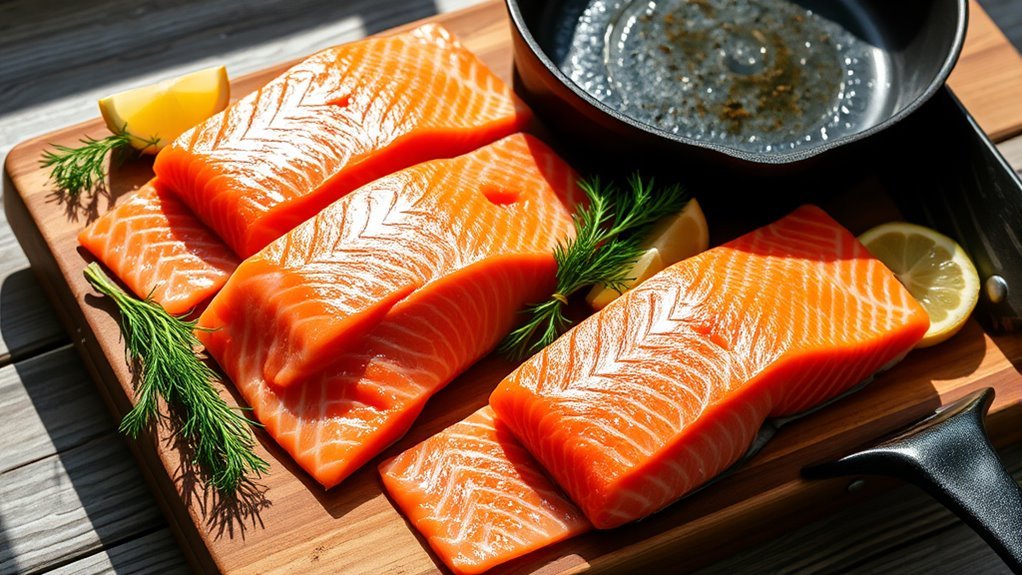
When selecting salmon fillets, look for bright pink or deep red flesh with visible marbling to guarantee freshness. Fresh salmon should have a mild oceanic smell, so avoid fillets with a strong fishy odor.
Check the texture by pressing the flesh; it should be firm and springy, bouncing back to indicate quality.
Steer clear of fillets that show brown spots, gaping edges, or excessive moisture, as these signs point to decline or damage.
For the best choice, select wild-caught salmon with certifications like the Oceanwise label to support sustainable and environmentally responsible sourcing.
Preparing the Salmon for Cooking
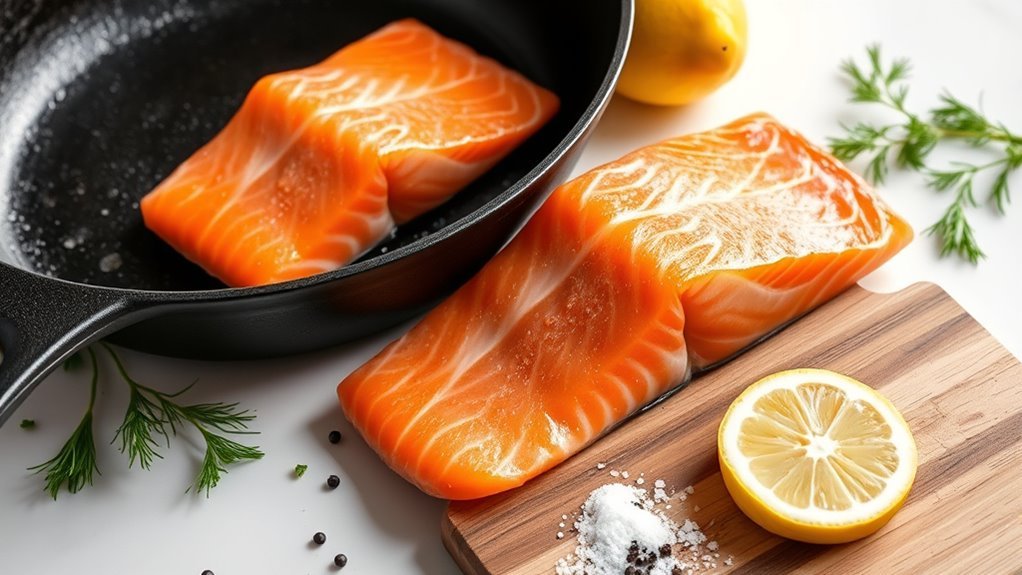
Before cooking, pat your salmon fillets dry with paper towels to remove excess moisture, which guarantees a crispy skin. Choose wild-caught salmon with the skin on, as the skin helps keep the flesh moist and crisps up beautifully.
Next, season the salmon evenly with salt, pepper, and any herbs or spices you prefer to enhance its natural flavor. Once seasoned, let the salmon sit at room temperature for about 15 minutes.
This step makes sure the fillets cook evenly and helps prevent sticking when you place them in the pan.
Bringing the salmon to room temperature also promotes a uniform sear, giving you that perfect texture and taste every time.
Preheating the Cast Iron Skillet
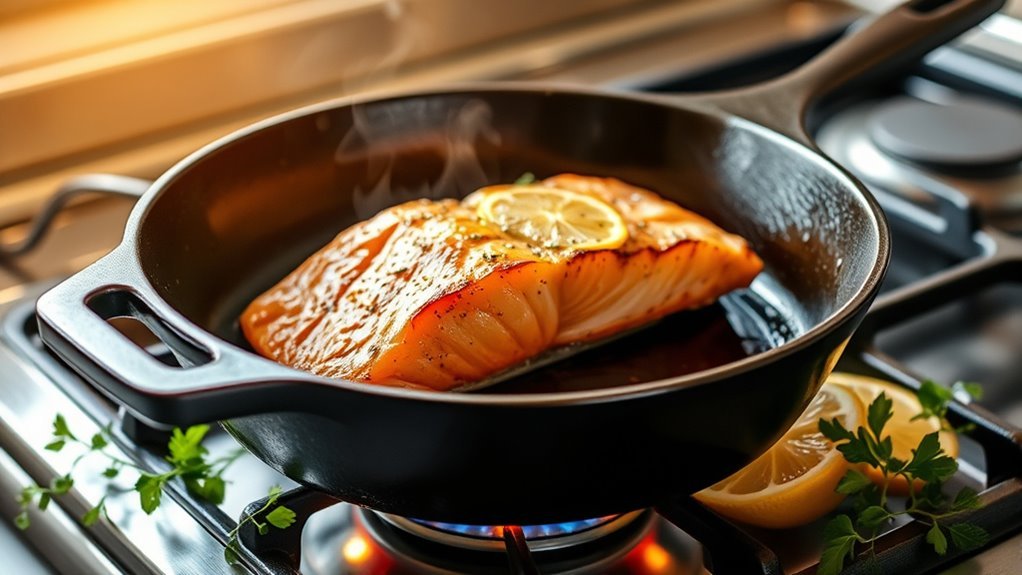
Once your salmon is seasoned and rested at room temperature, focus on getting your cast iron skillet properly heated. Preheat your cast iron over medium-high heat for at least 5 minutes until it reaches 400-450°F.
To test if it’s ready, sprinkle a few drops of water on the surface. They should sizzle and evaporate immediately. Add a small amount of oil before heating to create a non-stick surface and achieve even searing.
Proper preheating ensures a crispy crust and prevents your salmon from sticking or tearing.
| Step | Details |
|---|---|
| Heat Level | Medium-high |
| Duration | 5 minutes |
| Surface Temp | 400-450°F |
| Water Test | Drops should sizzle instantly |
| Oil | Small amount before heating |
Seasoning the Salmon Properly
Although seasoning might seem simple, properly preparing your salmon with the right spices and techniques makes all the difference in flavor and texture.
First, pat dry your salmon fillet thoroughly with paper towels; this step guarantees your spice blend adheres perfectly.
Next, lightly brush the fish with olive oil or melted butter to help the spices stick and form a delicious crust.
Then, season generously and evenly with a spice mix of smoked paprika, garlic powder, dried herbs, and a touch of brown sugar or salt to boost caramelization.
Season the fish just before cooking to keep the spices fresh and potent.
Adding Oil to the Skillet
To get a perfect sear on your salmon, heat a cast iron skillet and add a high smoke point oil like avocado or canola. Pour enough oil to lightly coat the bottom, about 1-2 tablespoons for a standard fillet, into the preheated skillet. This prevents sticking and helps develop a crispy crust without burning.
Wait until the oil shimmers and ripples; this indicates the pan is hot enough for searing.
Wait for the oil to shimmer and ripple to ensure the skillet is perfectly heated for searing.
Adding oil to a properly heated skillet guarantees even cooking and enhances the skin’s crispiness. Avoid adding salmon too soon, as oil that’s not hot enough will cause sticking and uneven searing.
Mastering this step sets the foundation for perfectly cooked salmon with a deliciously crisp exterior.
Searing the Salmon Skin-Side Down
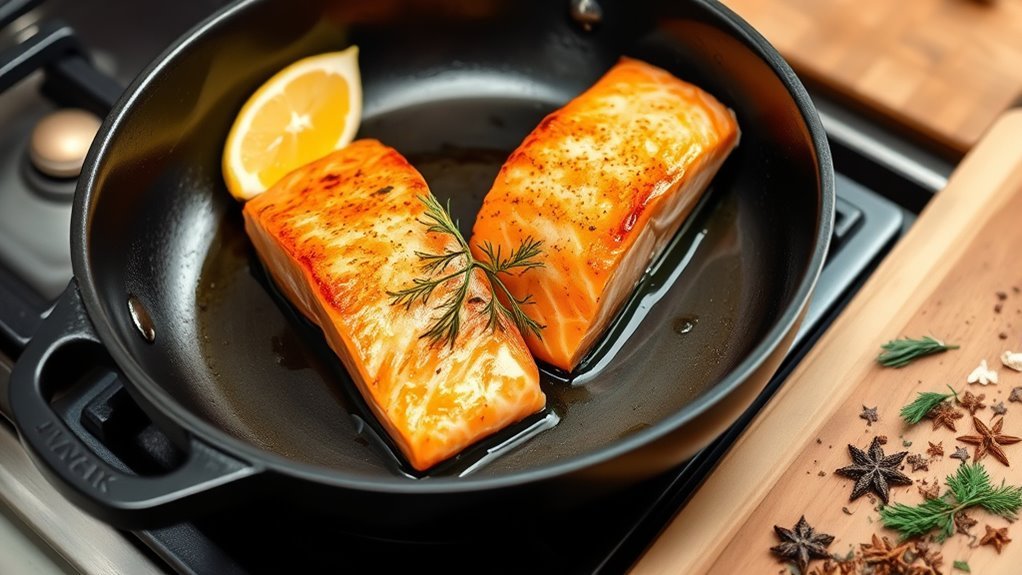
When your skillet is hot and the oil shimmers, pat the salmon skin dry and place it skin-side down in the pan. This step is vital for searing the salmon properly and getting that coveted crispy skin.
Press the fillet gently with tongs to keep it flat and prevent curling.
Cook it undisturbed for 3-5 minutes, allowing the skin to turn golden brown and release easily.
Keep in mind:
- Patting the salmon skin dry removes moisture for better crispiness.
- Pressing the fillet ensures full contact with the skillet for even searing.
- Avoid moving the salmon too soon to prevent tearing the skin.
These tips help you achieve perfectly seared salmon with irresistibly crispy skin every time.
Flipping the Salmon Fillets
Once the salmon skin releases easily from the pan, it’s time to flip the fillet. This indicates a proper sear has formed, giving you that crispy, caramelized crust you’re aiming for.
When the salmon skin lifts easily, you’ve achieved the perfect sear and it’s time to flip.
Use a fish spatula to gently lift and turn the fillet. This helps prevent the delicate flesh from breaking.
Make sure your cast iron pan is hot before flipping to maintain the sear.
After flipping, cook the salmon for about one minute; this short time ensures even doneness without overcooking.
Remember, avoid flipping multiple times. Just one flip is best for a perfectly crisp exterior and uniform cooking.
Mastering this step will elevate your salmon to restaurant quality every time.
Checking for Doneness
Although the salmon looks deliciously cooked on the outside, you’ll want to check its internal temperature to guarantee perfect doneness. Use a digital meat thermometer and insert it into the thickest part of the fillet, avoiding contact with the pan or bone.
Aim for an internal temperature between 125–130°F for medium-rare doneness. Keep in mind salmon continues cooking slightly after you remove it from heat, so pull it out a few degrees before reaching your target.
Here’s how to check doneness effectively:
Look for opaque flesh that flakes easily yet remains slightly translucent in the center.
Use the thermometer for precise internal temperature readings.
Notice a firm texture and moist, shiny surface as visual cues.
Finishing the Salmon in the Oven
After searing the salmon skin side down for about three minutes, flip the fillet and add butter to baste the top, enhancing both flavor and moisture before transferring the skillet to a 400°F oven to finish cooking.
Cooking the salmon in the oven guarantees even heat distribution, preventing overcooking on the stovetop.
Let it roast for 4 to 6 minutes, depending on thickness.
To get it just right, use an oven-safe thermometer to check the internal temperature.
Aim for 125-130°F for medium-rare.
Monitoring the internal temperature helps you avoid drying out the fish while ensuring it’s perfectly cooked inside.
Once the salmon reaches the ideal temperature, take it out promptly to maintain its tender texture and rich flavor.
Resting and Serving the Cooked Salmon
Taking the salmon out of the oven isn’t the final step—you’ll want to let it rest for 2 to 3 minutes. Resting allows the juices to redistribute evenly, keeping the salmon moist and preventing it from becoming flaky when you serve it.
Gently transfer the fillet to a plate or cutting board without pressing down to maintain its structure.
When you serve, add fresh lemon slices and herbs to enhance the flavor. Proper resting also stabilizes the internal temperature, ensuring a perfectly cooked, tender fillet.
To enjoy your salmon at its best:
- Rest the salmon for 2-3 minutes before serving
- Avoid pressing down to keep it flaky and intact
- Serve immediately with fresh lemon and herbs for ideal taste
Frequently Asked Questions
How Do You Cook Salmon in a Cast Iron Skillet?
You heat your cast iron skillet, add oil, then sear seasoned salmon skin-side down until crispy. Flip it, cook briefly, and check for 125-130°F inside.
This method keeps your salmon perfectly tender and flavorful.
What Is the Best Method to Cook Salmon Perfectly?
You sear salmon skin-side down in a hot, oiled pan until crispy, then cook to 125–130°F for medium-rare.
Let it rest briefly to keep it juicy and flavorful before serving.
How to Cook Fish in a Cast Iron Skillet?
Imagine your skillet like a hot dance floor—get it smoking hot, then let the fish glide skin-side down without interruptions.
This guarantees a crispy sear and juicy interior, just like a perfectly timed dance move.
How to Properly Cook Salmon in a Pan?
You’ll want to dry the salmon, heat your pan with oil until shimmering, then cook skin-side down without moving it until crispy.
Flip carefully, cook until just done, then let it rest before serving.
Conclusion
Now that you know how to cook salmon perfectly in a cast iron pan, you’re ready to impress at every meal.
Did you know wild-caught salmon contains about 40% more omega-3 fatty acids than farmed? That means you’re not just enjoying great flavor—you’re boosting your heart health too.
Follow these simple steps, and you’ll have tender, crispy salmon that’s as nutritious as it is delicious every time you cook.
Mastering how to cook salmon in a cast iron pan ensures a crispy skin and juicy interior. This technique highlights the rich flavor and health benefits of salmon perfectly.
With these tips, your cast iron pan salmon will be a standout dish that’s both easy and satisfying.