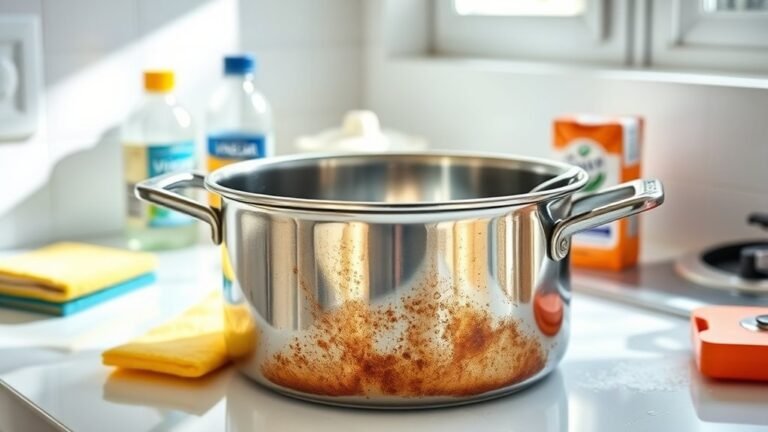
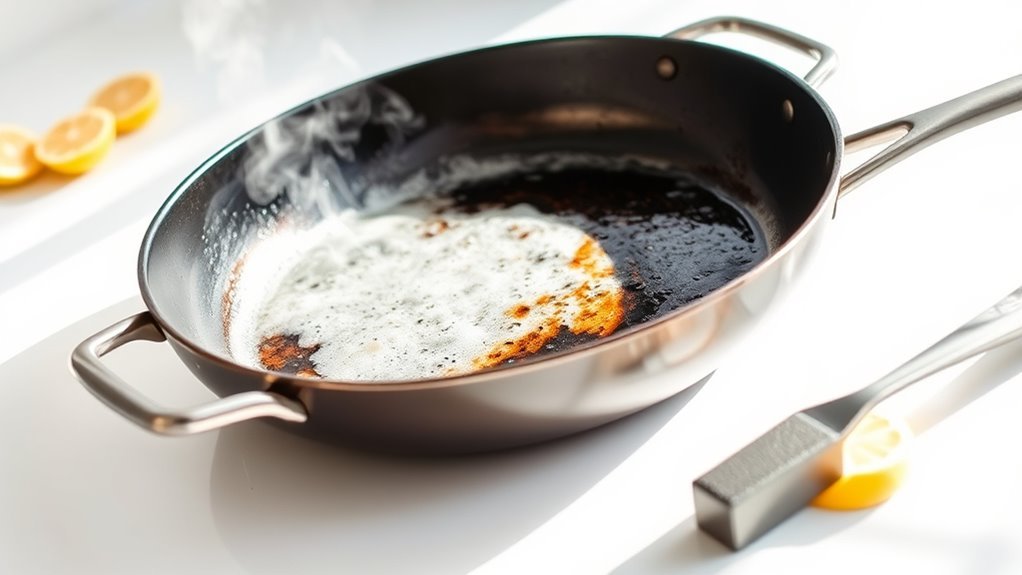
How to Clean a Burnt Non-Stick Pan Quickly
If you’ve ever dealt with a burnt non-stick pan, you know how frustrating it can be to restore it without causing damage. Cleaning a burnt non-stick pan quickly is essential, but you also want to protect that delicate coating. You need a method that’s both fast and gentle.
Luckily, there are straightforward techniques that can help you tackle those stubborn burnt spots efficiently. Before you reach for harsh scrubbers, consider these steps that balance speed with care. You might be surprised how easily your pan can bounce back.
Understanding Why Non-Stick Pans Burn
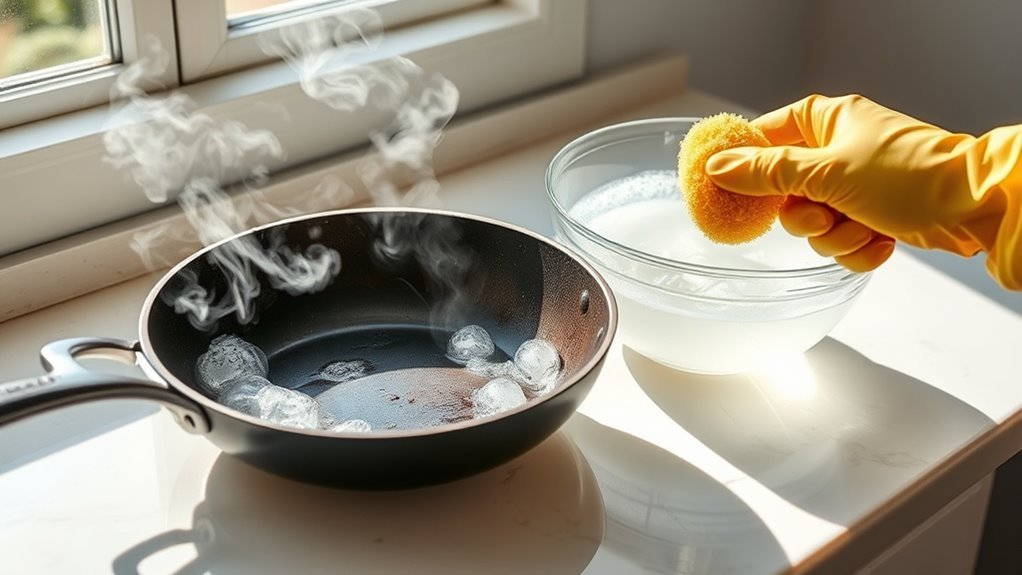
Although non-stick pans are designed to prevent food from sticking, they can still burn if you’re not careful. When you heat a non-stick pan without enough oil or food, the non-stick coating can overheat, causing food residue to stick and char.
High temperatures, especially above 500°F, damage the surface and make it prone to burnt-on food.
Using metal utensils or abrasive cleaning tools worsens the problem by scratching and damaging the surface, accelerating the breakdown of the coating.
Repeated overheating and misuse deteriorate the non-stick layer, increasing the risk of food sticking and burning.
To keep your pan effective, avoid high heat and harsh cleaning methods that compromise the non-stick coating’s integrity and lead to burnt-on food buildup.
Preparing Your Burnt Pan for Cleaning
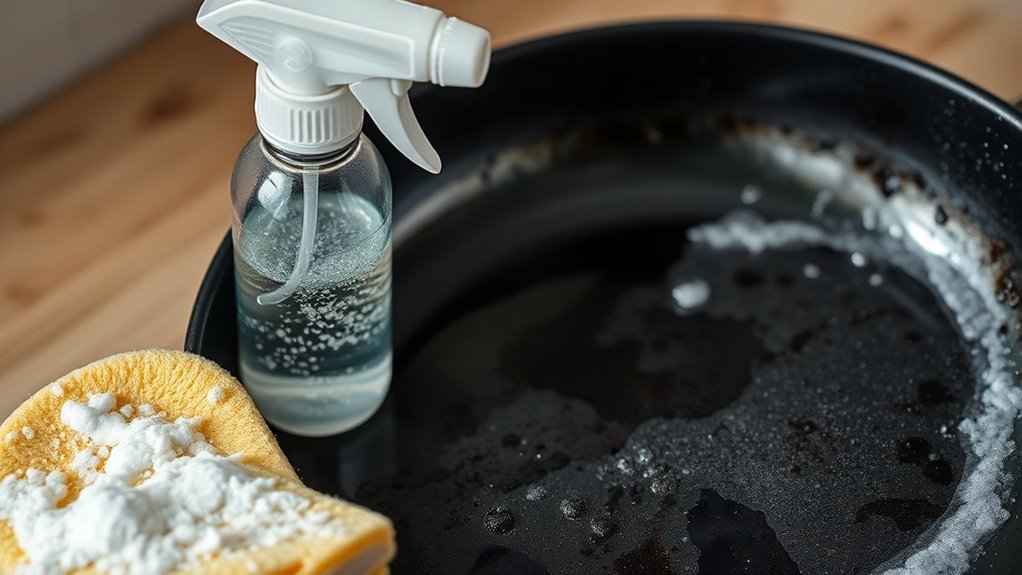
Before you start scrubbing your burnt non-stick pan, make sure it has cooled completely to prevent warping or damage. Next, remove any loose burnt food using a soft spatula or cloth to avoid scratching the pan.
Then, fill the pan with hot water and add a few drops of dish soap to soak for 15-30 minutes, which helps loosen stuck-on residue. For tougher burnt areas, mix equal parts vinegar and water, then gently bring it to a boil to assist in removing stubborn stains.
Handle your pan carefully during these steps to protect the non-stick coating.
| Step | Action | Purpose |
|---|---|---|
| Cool down | Let pan cool completely | Prevent warping or damage |
| Remove debris | Use soft spatula or cloth | Avoid scratching surface |
| Soak & boil mixture | Water, soap, vinegar mixture | Loosen burnt food for cleaning |
Method One: Cleaning With Soap and Warm Water
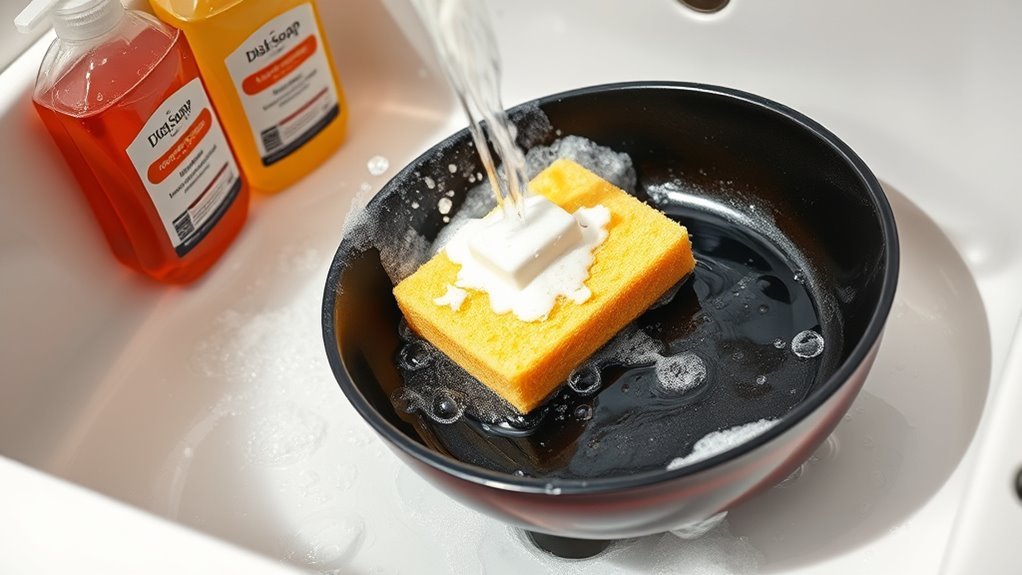
When you rinse your burnt non-stick pan with hot water, it loosens dried debris and prepares the surface for cleaning.
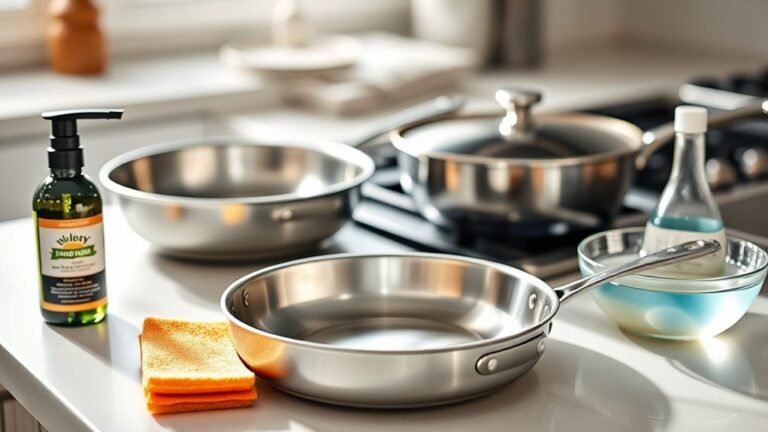
Next, add a few drops of soap to a soft sponge or cloth. Use gentle, circular motions to scrub the pan, focusing on burnt areas without being too harsh.
For stubborn spots, flip the sponge to its rough side, but avoid abrasive scrubbers like steel wool that can damage the non-stick coating.
After scrubbing, rinse the pan thoroughly with warm water to wash away soap residue and any remaining burnt particles.
This simple method efficiently cleans your burnt non-stick pan without causing harm, making it ready for your next cooking adventure.
Method Two: Using Vinegar and Baking Soda
If soap and warm water don’t fully remove the burnt residue, you can try a natural solution using vinegar and baking soda. Start by mixing equal parts vinegar and water in your non-stick pan, then bring the boiling solution to a boil. This helps loosen burnt food stuck on the surface.
For tough burnt residue, boil equal parts vinegar and water in your pan to loosen stuck-on food.
Next, add two tablespoons of baking soda to the boiling mixture; it will foam up, lifting stubborn stains. Turn off the heat and let the solution cool completely.
Once cool, scrub gently with a soft sponge or non-metal scrubber to avoid damaging the pan. If some burnt residue remains, repeat the boiling solution process.
Finally, rinse thoroughly with warm water and dish soap to remove any leftover residue and restore your non-stick pan’s cleanliness.
Tips for Removing Stubborn Burnt Residue
Though stubborn burnt residue can be tough to remove, you can loosen it effectively by soaking your pan in a boiling mixture of equal parts vinegar and water for about 10 minutes. This heat and acidity break down burnt fats, making cleaning non-stick pans easier.
After boiling, sprinkle baking soda over the surface and begin scrubbing gently with a soft sponge or other non-abrasive tools.
For burnt food removal, use a wooden or silicone spatula to carefully lift stuck bits without damaging the coating.
If residue remains, repeat the vinegar and water soak and scrubbing process as needed. Always avoid harsh scrubbing or abrasive tools to protect your pan’s non-stick surface while efficiently removing burnt residue.
Avoiding Damage: What Not to Use on Non-Stick Pans
Since non-stick pans rely on a delicate coating to prevent food from sticking, you shouldn’t use metal utensils or abrasive scrubbers that can easily scratch and damage the surface. Avoid harsh chemicals like oven cleaner or bleach, as they degrade the coating.
Protect your non-stick pan by avoiding metal utensils, abrasive scrubbers, and harsh chemicals that damage its coating.
Also, steer clear of high heat and boiling water when heating the pan empty, which can cause deterioration. Never clean your pan with abrasive sponges or dishwasher detergent; these can strip away or weaken the non-stick layer.
Watch out for:
- Scratches from metal utensils scraping the surface
- Damage from abrasive scrubbers and sponges
- Coating wear caused by harsh chemicals, dishwasher detergent, or excessive heat
Protect your pan by using gentle tools and mild cleaning methods to maintain its non-stick performance.
Alternative Cleaning Techniques for Tough Burns
When burnt residue refuses to budge, you can try soaking your non-stick pan in boiling water mixed with a few drops of dish soap for 10 to 15 minutes. This soaking method softens the burnt residue, making it easier to remove.
If that’s not enough, create a paste with vinegar and baking soda. Apply it to the affected areas and let it foam for a few minutes.
Avoid using abrasive tools like those meant for burnt stainless steel; instead, gently scrub with a non-metallic scrubber or a soft cloth to prevent damage.
For stubborn spots, heat the pan with soapy water or vinegar before scrubbing. These alternative cleaning techniques help you tackle tough burns effectively without harming your non-stick pan’s surface.
How to Maintain Your Non-Stick Pan After Cleaning
To keep your non-stick pan performing well after cleaning, you should always rinse it thoroughly with warm water to remove any leftover cleaning agents. Proper maintenance preserves the non-stick coating and extends your pan’s life.
After rinsing, lightly coat the surface with vegetable or olive oil to maintain its slickness.
When cleaning next time, use a gentle scrub with soft sponges and avoid metal tools that can scratch the surface.
For cookware care, store your pan carefully to prevent damage.
Use soft cloths or sponges during cleaning to protect the coating.
Avoid dishwashers to prevent degradation from harsh detergents.
Store pans with padding to prevent scratches from stacking.
Following these steps ensures your non-stick pan stays in great shape after each cleaning.
Preventative Measures to Keep Your Pan Burn-Free
Although non-stick pans are designed to resist burning, you can prevent damage by cooking on low to medium heat and avoiding overheating. Proper heating is key to keeping your non-stick cookware in top shape and preventing burnt food.
Always preheat your pan gradually and never heat it empty to avoid dry burning. Use oil with a high smoke point, like avocado or refined coconut oil, to reduce sticking and burning risks.
Avoid overcrowding the pan, as uneven heat distribution can cause food to burn. Regularly cleaning your pan and applying a light seasoning with oil maintains its non-stick properties and prevents residue buildup.
Following these cleaning tips and preventative measures will help you keep your pan burn-free and extend its lifespan.
Frequently Asked Questions
How Do You Clean a Badly Burnt Non-Stick Pan?
You should soak the pan in warm soapy water, then gently scrub with a soft sponge. For stubborn burns, try boiling vinegar and water inside it.
If damage remains, consider replacing the pan to protect its coating.
How Do I Get the Black Stuff off My Burnt Pan?
You can get the black stuff off your burnt pan by scrubbing with a baking soda and water paste or boiling vinegar and water inside it.
Use a soft sponge, avoiding harsh scrubbing to protect the coating.
Will Vinegar Remove Non-Stick Coating?
Fear not, like a knight’s trusty sword, vinegar won’t remove your non-stick coating. You can safely use diluted vinegar to clean burnt residue, but avoid soaking it too long or using it undiluted to protect the surface.
How to Remove Black Layer From Non-Stick Pan?
You can remove the black layer by boiling vinegar and water in the pan, then scrubbing gently with a soft sponge or baking soda paste.
Avoid harsh scrubbing to protect the non-stick coating.
Conclusion
You might think burnt non-stick pans are ruined, but with the right steps, they’re far from it. By soaking, using vinegar and baking soda, and scrubbing gently, you can restore your pan without damaging its surface.
Remember, harsh tools only make things worse. So, don’t give up on your pan just because it’s burnt—proper care proves that even tough stains can be cleaned quickly and safely.
Following these simple cleaning tips will keep your non-stick cookware lasting longer and looking great. Quick cleaning methods for burnt non-stick pans are effective and help maintain your kitchen essentials.