
How Much Water Should Be in Your AC Drip Pan
You might notice a small puddle forming in your AC drip pan after a humid day, which can be perfectly normal. But how much water should be in your AC drip pan? If you’re unsure whether that water level is safe or signals a problem, you’re not alone. Understanding the right amount of water in your AC drip pan can help you avoid costly damage and keep your system running smoothly.
Let’s explore what you should expect from your AC drip pan. Knowing the correct water level will help you identify potential issues before they become serious. This knowledge is key to maintaining your air conditioning system effectively.
Why Does Your Air Conditioner Drip Water?
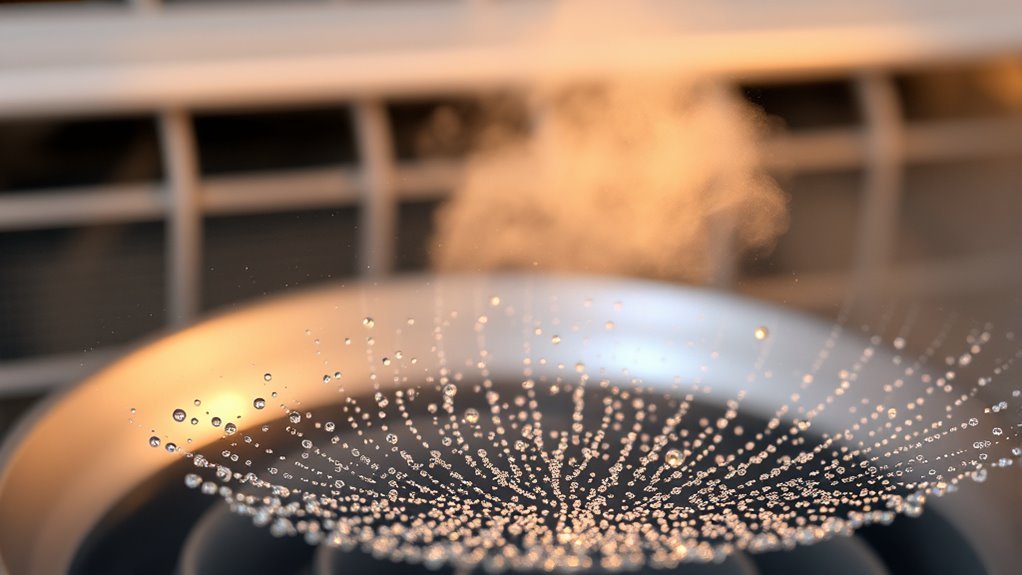
Have you ever wondered why your air conditioner drips water? When your AC pulls in warm, humid air, it cools that air by passing it over cold evaporator coils. This process causes condensation to form, basically water collecting on these cold surfaces.
That water then flows into the AC drip pan, which acts as a catch basin. From there, the drainage system moves the water out through the condensate line, keeping things dry inside your unit.
Proper drainage is essential because it prevents water buildup that could damage your system. If you notice water in your AC isn’t draining properly, it might be due to a clog or frozen coils.
Typical Water Levels in an AC Drip Pan
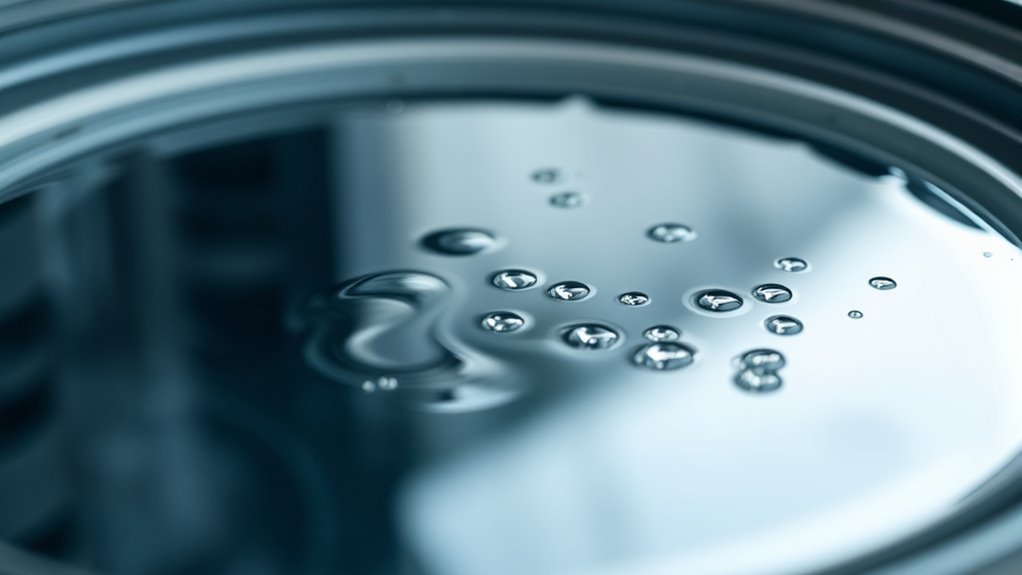
Although water collects in your AC drip pan during operation, the typical level stays between 1/4 inch and 1/2 inch. This range indicates your system is working correctly under normal operation. Here’s what you should know about water level in the drip pan:
Water usually drains out regularly through the drainage system. On high humidity days, water may rise slightly but shouldn’t exceed 1 inch.
Water drains regularly, though on humid days, levels may rise but stay below 1 inch.
Consistent moderate water levels show proper dehumidification.
Excess water above 1 inch suggests drainage problems or malfunctions. Standing water for long periods is a sign to check the system.
Factors That Affect Water Accumulation in the Drain Pan
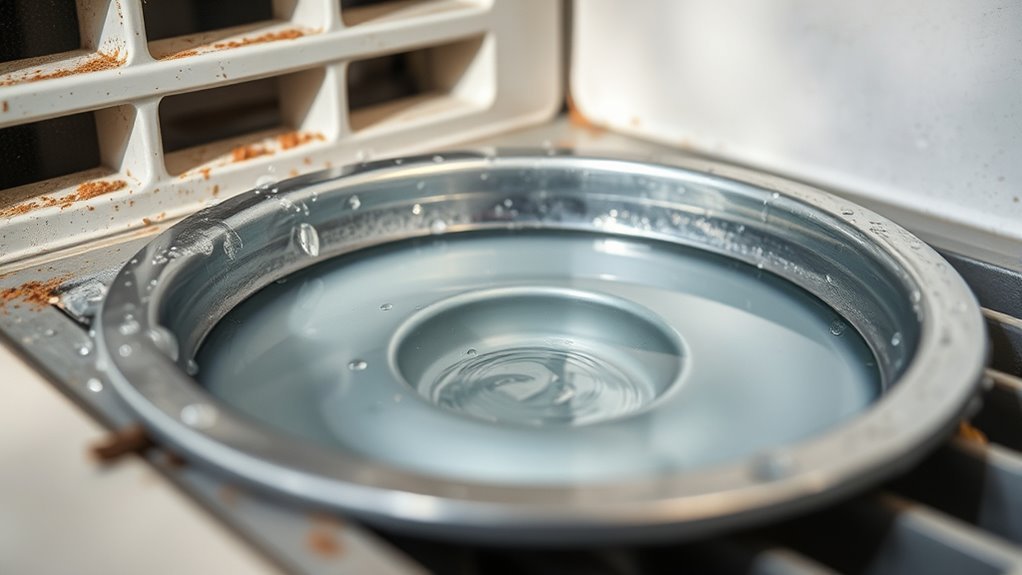
Since your AC drip pan collects condensation from the system, several factors influence how much water it holds at any given time. Higher indoor humidity boosts condensation, increasing water accumulation in the drain pan.
The size and efficiency of your AC system also play a key role. Larger or less efficient units typically produce more moisture.
Seasonal and climate changes affect water levels, with summer’s heat and humidity causing more condensation than winter.
Drainage problems, like clogged pipes or restricted airflow, can cause abnormal water buildup, leading to potential overflow or damage.
Understanding these factors helps you monitor your drain pan properly and guarantees your AC system runs smoothly without unexpected issues from excessive water accumulation.
When Is Water in the Drain Pan a Cause for Concern?
When water in your AC drain pan rises beyond about half an inch, it usually signals a clog or drainage problem that needs your attention. Excessive water in the drain pan can lead to serious issues if ignored.
Watch for these warning signs:
- Persistent standing water, indicating a clogged drain or blocked drain line
- Overflow of water causing potential water damage to surrounding areas
- Unusual water levels, like no water, suggesting frozen coils or drain line blockage
- Water accumulation continuing after the AC is off, hinting at a condensate pump malfunction
- Reduced cooling efficiency due to drainage problems
Common Causes of Excess Water in the AC Drip Pan
If you notice excess water in your AC drip pan, it often means something is blocking or disrupting the normal flow of condensation. A clogged condensate drain line is a common culprit, preventing water from draining properly and causing it to back up into the drip pan.
Debris, algae, or mold buildup can create these blockages, leading to water pooling and possible overflow. Additionally, a damaged or cracked drip pan may cause water to accumulate excessively or leak, worsening the issue.
Poor installation or an unlevel unit can also interfere with proper drainage, making water settle unevenly in the pan. Addressing these common causes early helps prevent water damage and guarantees your AC system runs smoothly.
How to Diagnose Drainage Problems in Your AC System
Excess water in your AC drip pan often signals drainage issues that need careful attention. To diagnose AC drainage problems, start by checking if water should drain smoothly from the evaporator coils into the drip pan and out through the drain line.
If you notice excess water in the drip pan, investigate these key signs:
- A clogged drain line causing water to back up
- Frozen evaporator coils leading to excess melting
- An unlevel AC unit causing improper water flow
- Damage or rust in the drain pan creating leaks
- Visible blockages or debris in the condensate drain
Effective Methods to Clear and Maintain the Drain Line
Maintaining a clear drain line is crucial to prevent water backup and ensure your AC system runs smoothly.
For effective AC maintenance, regularly pour a mixture of equal parts white vinegar and water per month into the drain line to dissolve algae and prevent clogs.
Use a wet/dry vacuum to suction out debris or standing water from the drip pan and drain line, ensuring proper water drainage.
Flushing the drain line monthly with diluted bleach or vinegar inhibits mold and bacterial growth.
Inspect the drain line with a flexible wire brush or pipe cleaner to clear buildup and obstructions.
Finally, check that the drain line is pitched downward correctly to facilitate smooth water flow and avoid standing water in the drip pan, keeping your system efficient and clog-free.
Potential Risks of Ignoring Drain Pan Water Issues
Clearing and maintaining your AC drain line helps prevent water buildup, but ignoring the water that collects in the drain pan can cause serious problems.
If you overlook issues in the drain pan, you risk:
- Water damage to ceilings, walls, or flooring from overflow
- Mold growth that can trigger allergies and respiratory issues
- Corrosion or rust damaging HVAC components, leading to costly repairs
- Electrical shorts causing system failure or fire hazards
- Reduced AC efficiency, resulting in higher energy bills and poor cooling
Tips to Prevent Water Overflow and Damage in Your AC System
Because water overflow can cause costly damage, you should regularly inspect and clean your AC’s drain line to keep it clear of clogs. Check the drip pan for cracks or holes and replace it if damaged to prevent leaks. Maintaining proper unit level ensures effective drainage and reduces water overflow risks.
Monthly maintenance like using a wet/dry vacuum or vinegar flush helps clear debris and algae buildup. For extra protection, consider installing secondary drain pan alarms or float switches to shut off the system automatically if water levels rise too high.
| Maintenance Tip | Purpose |
|---|---|
| Inspect drain line | Prevent clogs and overflow |
| Check drip pan condition | Avoid leaks from cracks/holes |
| Use vacuum/vinegar flush | Remove debris and algae |
| Ensure proper unit leveling | Promote effective drainage |
| Install alarms/float switches | Automatic shutoff on overflow |
Frequently Asked Questions
How Much Water Should Be in an AC Drain Pan?
You should have about 1/4 to 1/2 inch of water in your AC drain pan during normal operation.
If you see more than an inch or no water, check for clogs or system issues right away.
Should My AC Drip Pan Have Water in It?
Yes, your AC drip pan should have some water—it shows your unit’s removing moisture properly.
If you don’t see any, or it’s overflowing, you’ll want to check for clogs or drainage issues right away.
What Is the $5000 AC Rule?
When repairs start to cost you an arm and a leg, the $5000 AC rule says if fixing your air conditioner exceeds $5,000, you should consider replacing it with a newer, more efficient model to save money long-term.
This rule helps homeowners decide when it’s more economical to invest in a new unit rather than continue pouring money into repairs.
Newer models often come with better energy efficiency, which can lower your utility bills significantly over time.
Is It Normal for Water to Sit in a P-Trap?
Yes, it’s normal for water to sit in a P-trap. You’ll want that water there because it blocks odors from escaping into your home.
Just keep your AC running regularly to maintain that water seal.
Conclusion
Keeping an eye on your AC drip pan water level is key to avoiding costly headaches down the road. If you notice water creeping past the half-inch mark or lingering after shutdown, don’t let it slip through the cracks. Regularly clearing clogs and inspecting your system keeps things running smoothly.
This way, you won’t be left high and dry—or worse, flooded—when summer hits. Stay proactive, and your AC will thank you with cool, worry-free comfort. Proper maintenance of your AC drip pan and ensuring the right amount of water is crucial for efficient cooling and preventing damage.