Can You Put a Hot Pan Directly on Quartzite?
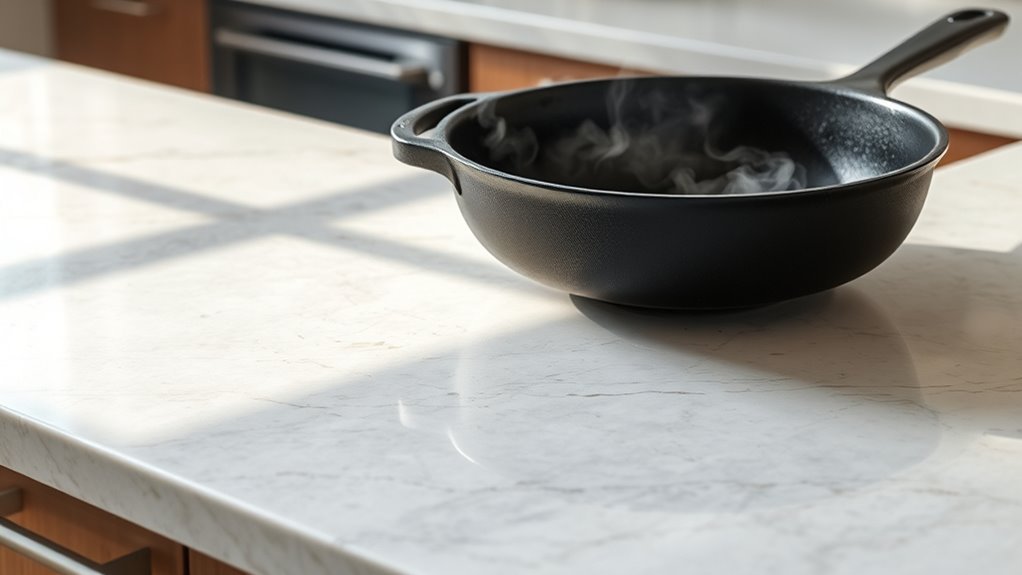
You might wonder if quartzite can handle the heat when you set a hot pan down right on its surface. Quartzite countertops are popular for their durability and natural stone beauty, making them a favored choice in many kitchens. But does that mean it’s safe to skip the trivet every time?
Understanding how quartzite reacts to heat can help you protect your investment and keep your countertop looking great for years to come. While quartzite is heat-resistant, sudden temperature changes might cause damage. Using a trivet or heat pad is always the safest option to preserve your quartzite surface.
Understanding Quartzite as a Countertop Material
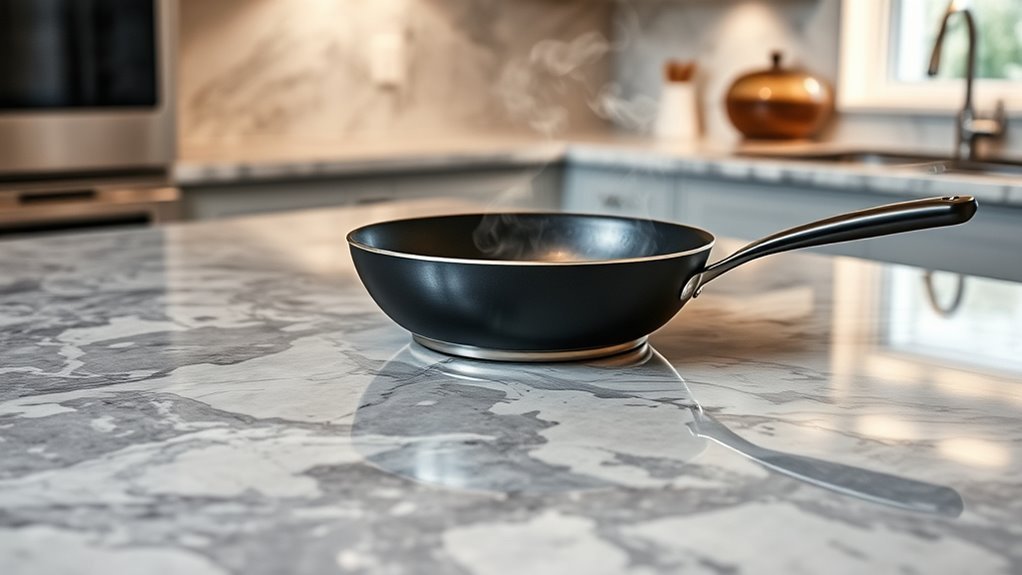
Although quartzite forms naturally over millions of years under intense heat and pressure, it offers you a countertop surface that’s remarkably hard and durable. Quartzite is a metamorphic rock, a natural stone mainly composed of quartz minerals, which gives it excellent heat resistance.
When you place hot pans on quartzite, its structure generally withstands high temperatures better than many other stones. However, despite its strength, quartzite isn’t immune to thermal shock. Rapid temperature changes can cause cracking.
You’ll want to avoid sudden exposure to extreme heat to protect your countertop’s integrity. Proper care and awareness of these properties ensure your quartzite surface remains beautiful and functional, resisting scratches, stains, and damage from heat without compromising its natural elegance.
Heat Resistance Properties of Quartzite
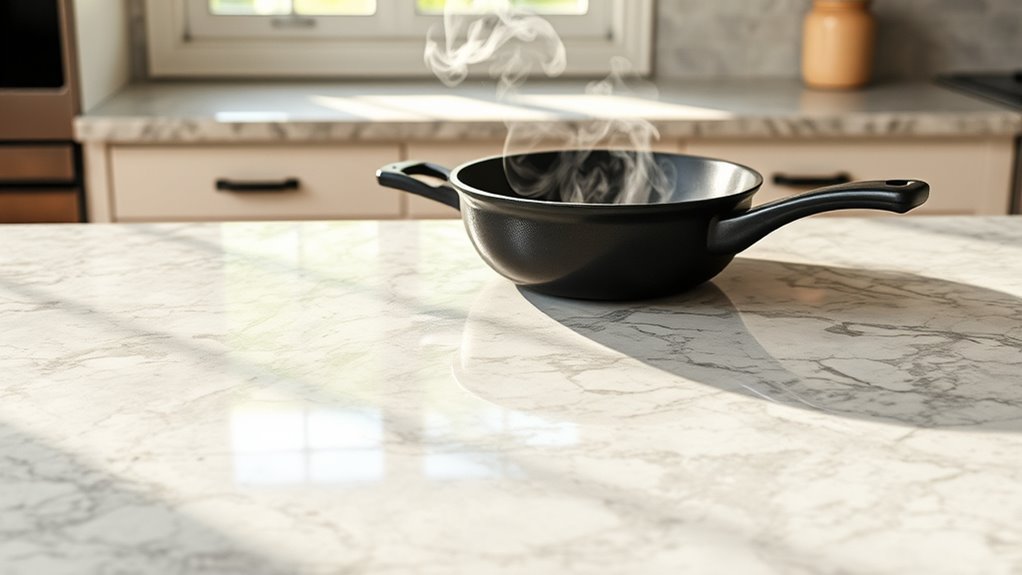
Quartzite’s natural strength comes from its formation under intense heat and pressure, which makes it highly heat resistant. This stone can withstand temperatures up to around 1000°F (538°C), giving quartzite countertops impressive heat resistance properties.
Its mineral composition helps it resist thermal stress better than many other natural stones. However, sudden temperature changes, like placing hot pans directly on the surface, can cause thermal shock. This rapid shift in temperature might lead to cracking despite quartzite’s toughness.
While quartzite handles heat well, understanding its limits is key to maintaining its beauty and durability. Using trivets or hot pads helps prevent thermal shock by avoiding sudden temperature changes, ensuring your quartzite countertops stay intact and crack-free over time.
Risks of Placing Hot Pans Directly on Quartzite
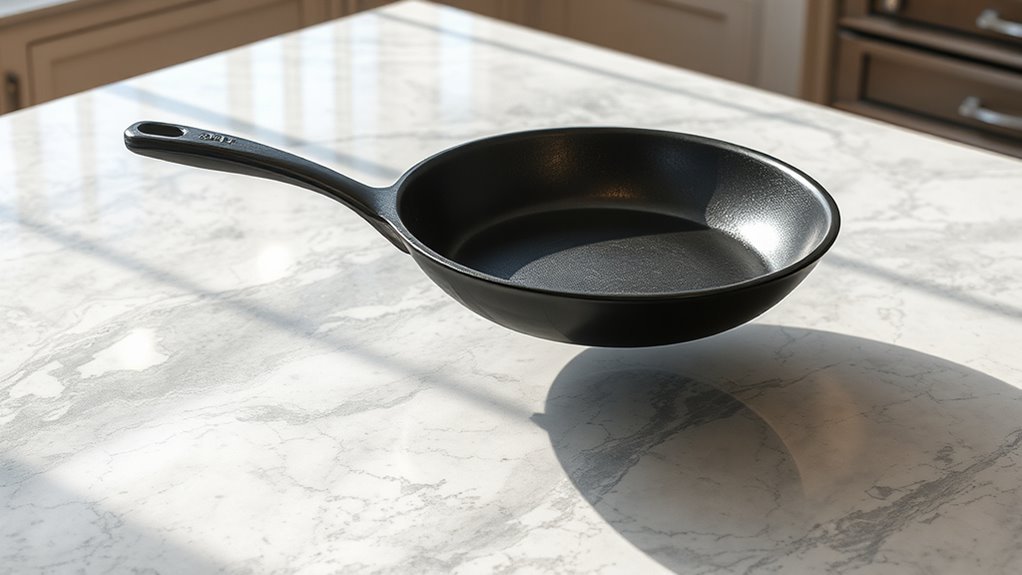
When you place hot pans directly on quartzite, you risk causing thermal shock that can lead to tiny cracks in the stone. Quartzite can handle high heat, but sudden temperature changes from hot pans create stress that may cause micro-cracks.
These fractures mightn’t be visible immediately but can worsen over time. Also, direct contact with hot cookware accelerates sealant deterioration, reducing its ability to protect the surface.
As the sealant breaks down, your quartzite becomes more vulnerable to stains and damage. To avoid these risks, always use hot pads or trivets. These simple tools help protect your quartzite countertop by preventing direct exposure to high heat, preserving both the stone and its sealant for years to come.
Comparing Quartzite With Other Countertop Surfaces
If you’re choosing a countertop, understanding how quartzite compares to other materials can help you make the best decision for your kitchen. Quartzite offers excellent heat resistance thanks to its natural formation under intense heat and pressure, allowing you to place hot pans directly on quartzite with minimal risk.
In contrast, engineered quartz contains resins that make it more vulnerable to heat damage, so you’ll need protective measures like trivets to avoid thermal stress.
Granite also resists heat well but generally isn’t as durable as quartzite under extreme temperature changes.
Ceramic and porcelain tiles match quartzite in heat resistance but differ in porosity and appearance. Knowing these differences helps you weigh durability and maintenance when deciding if quartzite suits your cooking style.
Recommended Practices for Protecting Quartzite From Heat
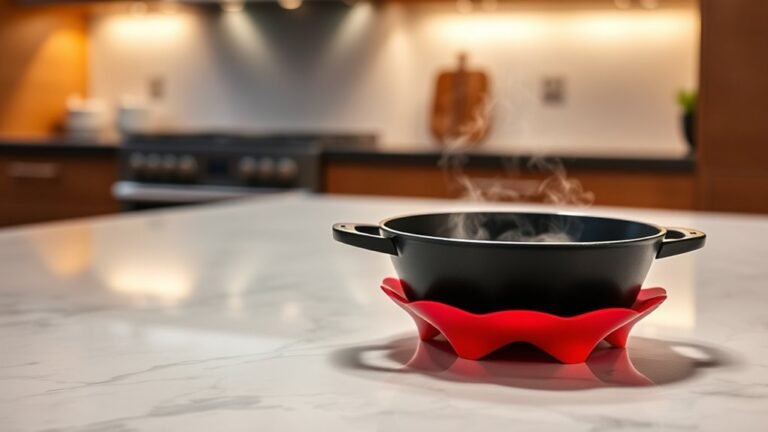
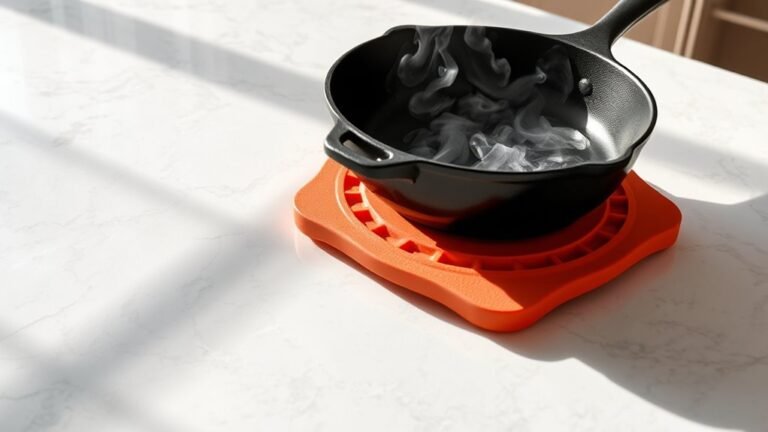
Although quartzite can handle high temperatures, you should always use trivets or hot pads under hot pans to protect your countertops. These simple tools provide essential heat protection by insulating the stone from direct contact, reducing thermal stress that can cause micro-cracks.
Placing a hot pan directly on quartzite may degrade the sealant over time, leading to potential countertop damage. To further protect your surface, allow pans to cool slightly before setting them down. This practice minimizes sudden temperature changes that strain the stone.
Regularly inspect your countertop’s sealant and reapply it as needed, especially if you frequently expose the surface to heat. By combining trivets, hot pads, and proper sealant care, you can maintain your quartzite’s beauty and structural integrity against heat-related issues.
Maintaining Quartzite Countertops for Longevity
To keep your quartzite countertops looking great and lasting longer, you need to commit to regular maintenance and proper care.
Since quartzite is porous, sealing it every 1-2 years is essential to prevent stains and moisture damage that can shorten its longevity.
Always clean with pH-neutral, non-abrasive products to protect the sealant.
Use hot pads or trivets under hot pans to avoid thermal shock, which can crack or damage the surface.
Proper installation with good insulation and support helps distribute weight evenly, reducing stress on your countertop.
If you notice any damage or heat exposure, reseal promptly to maintain durability.
Frequently Asked Questions
Can You Put a Hot Pan on Quartzite?
You can put a hot pan on quartzite, but it’s best not to. Doing so risks damaging the protective sealer and causing thermal shock.
Use a trivet or hot pad to keep your countertop safe and lasting longer.
Can Quartzite Tolerate Heat?
Yes, quartzite can tolerate high heat due to its natural formation, but you shouldn’t put hot pans directly on it.
You risk thermal shock and damaging the sealant, so always use trivets or hot pads to protect it.
What Kind of Countertop Can I Set a Hot Pan On?
Picture a sturdy granite or quartzite surface beneath your hot pan’s glowing bottom. You can safely set hot pans on these natural stones, but don’t forget to use trivets to keep your countertops looking flawless longer.
What Should You Not Use on Quartzite Countertops?
You shouldn’t use acidic cleaners, harsh abrasives, bleach, ammonia-based products, or oil-based substances on quartzite countertops. These can etch, scratch, stain, or damage the sealant, so always choose gentle, pH-neutral cleaners instead.
Conclusion
While quartzite stands strong against heat like a silent guardian, it’s wise not to test its limits with hot pans. Imagine your countertop as a calm lake—sudden heat is like a stone tossed in, creating cracks beneath the surface over time.
To keep your quartzite looking flawless and durable, always use trivets or hot pads. Protecting it now means preserving its natural beauty and strength for years to come.
When it comes to placing a hot pan directly on quartzite, it’s best to avoid it to prevent damage. Using proper heat protection helps maintain the countertop’s integrity and ensures your quartzite remains a stunning and resilient surface in your home.