5 Tips for How to Store Cast Iron Pots and Pans
If you want your cast iron pots and pans to last for years, how you store them matters just as much as how you use them. Proper cast iron storage is essential to prevent rust, sticky residue, or damaged seasoning. Neglecting this can shorten the life of your cookware and affect its performance.
With a few straightforward steps, you can protect your cookware’s surface and maintain its seasoning. Let’s explore some practical tips that will help you keep your cast iron in prime condition.
By following these storage tips, your cast iron pots and pans will remain durable and ready for cooking whenever you need them.
Clean and Dry Thoroughly Before Storing
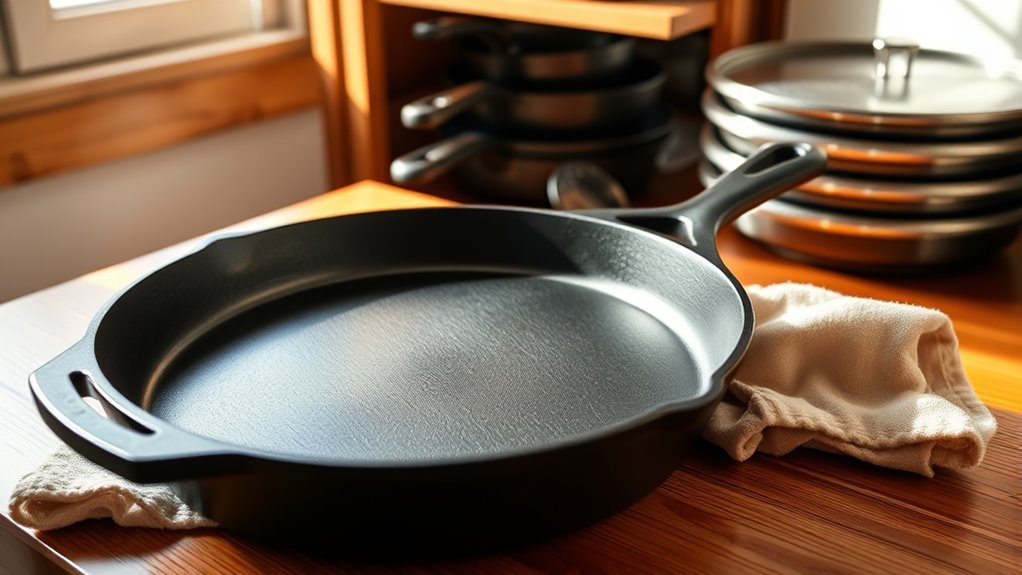
Before you store your cast iron cookware, make sure you clean it thoroughly using hot water and a stiff brush or sponge. Skip the soap to protect the seasoning. If stubborn food sticks, scrub with coarse kosher salt and a paper towel, then rinse well.
Once clean, dry your pan immediately to avoid rust. Use a towel or heat it over low heat for 5 to 10 minutes to evaporate any moisture.
Never store your cast iron when it’s damp or dirty, as leftover food and moisture cause rust and damage.
Finally, store your cookware in a dry, well-ventilated spot, leaving the lid off or slightly ajar to allow air circulation. This simple routine keeps your cast iron in great shape for years to come.
Separate Pots and Lids to Prevent Damage
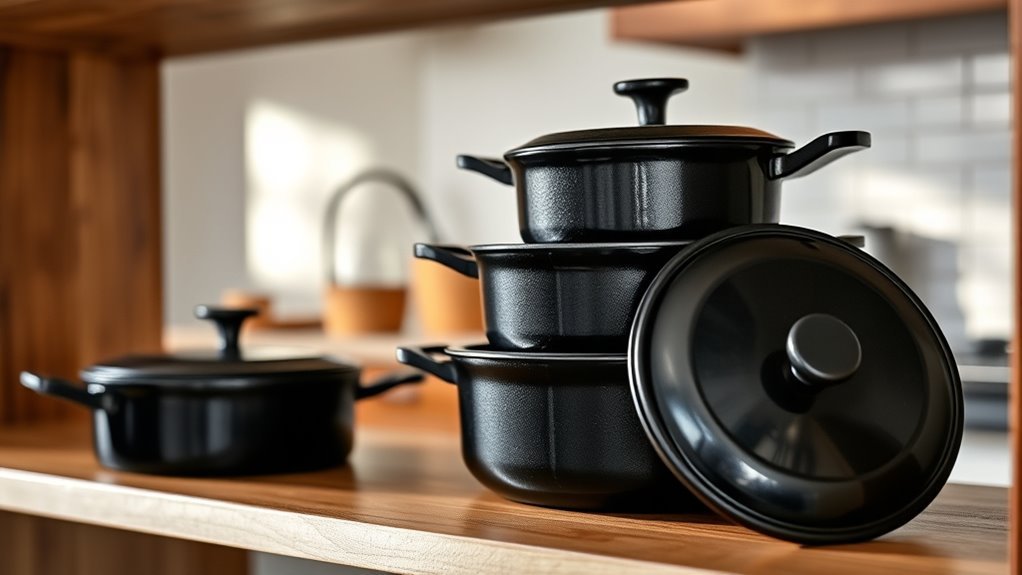
Although it might seem convenient to stack lids on pots, separating them prevents scratching and chipping of the seasoning surface. When storing your cast iron, keeping pots and lids apart also reduces trapped moisture, minimizing rust risk.
Using hooks or designated containers for lids helps maintain their shape and prevents warping. Plus, separating pots and lids promotes airflow, keeping your cookware dry and rust-free.
| Benefit | Explanation |
|---|---|
| Prevents surface damage | Avoids scratching and chipping |
| Reduces rust risk | Stops moisture buildup |
| Maintains lid shape | Prevents warping via proper storage |
| Enhances airflow | Keeps cookware dry |
| Extends lifespan | Minimizes contact-related damage |
Apply a Thin Layer of Oil Between Uses
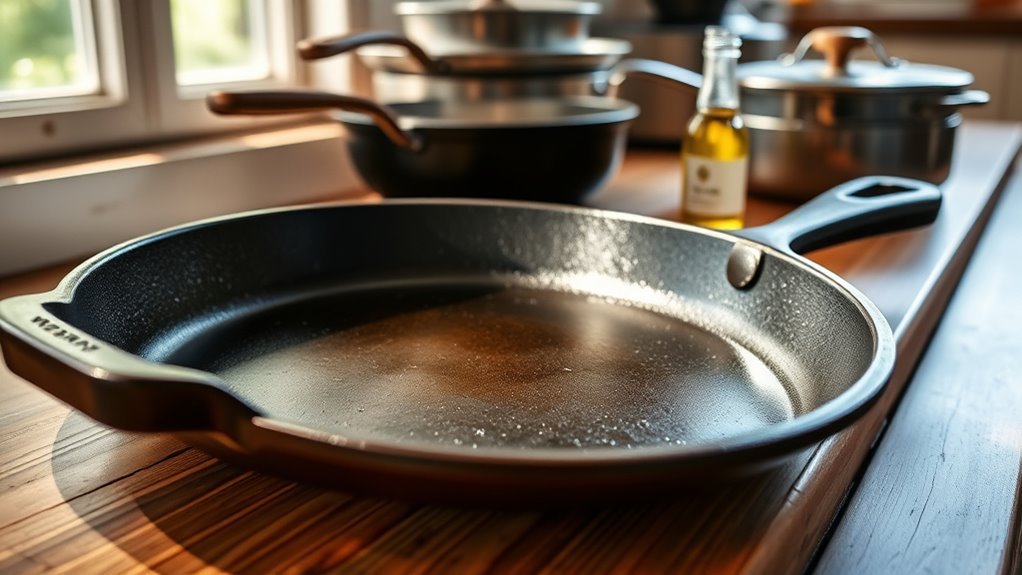
When you finish cleaning your cast iron cookware, applying a thin layer of oil helps protect its seasoning and prevents rust from forming. Use a cloth or paper towel to evenly spread a small amount of vegetable or grapeseed oil over all surfaces of the pan.
This simple step is essential for proper storage, as it maintains the cookware’s seasoning and keeps the surface nonstick. Be careful not to apply too much oil, since excess can become sticky or rancid, which damages the seasoning.
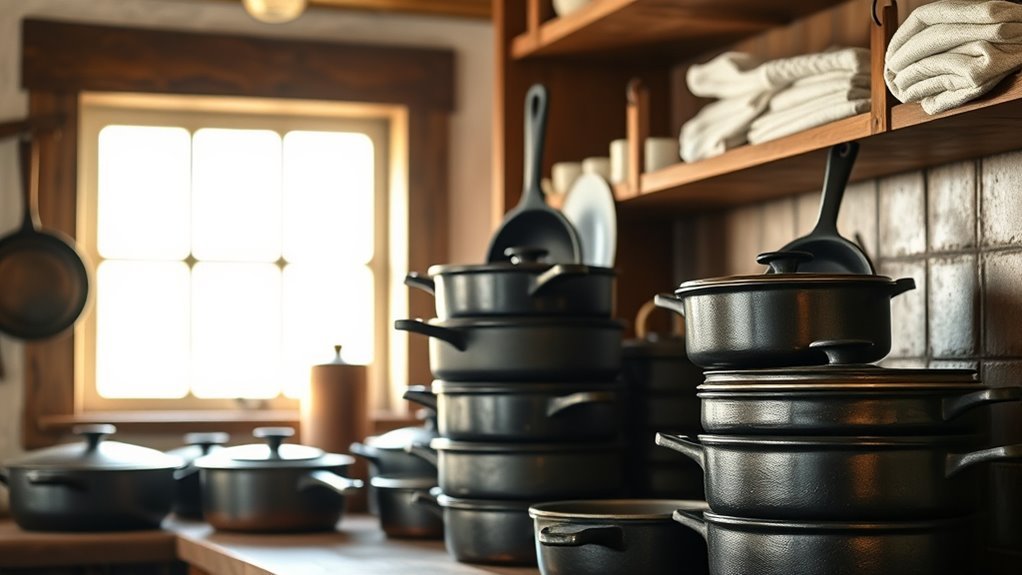
Use Protective Padding When Stacking
If you stack your cast iron pots and pans without protection, you risk scratching or chipping the seasoning. To prevent this, use protective padding like paper towels, newspaper, or cork trivets between each piece.
This padding cushions the cookware, reducing dents and impacts during stacking and storage. Wrapping pans individually with cloth or soft padding further minimizes friction, keeping the seasoning intact.
Always make sure your padding is clean and dry to avoid trapping moisture, which can cause rust over time. Proper padding also limits direct contact between pans, helping preserve both the seasoning and the cookware’s surface.
Store in a Cool, Dry, and Low-Humidity Environment
Because cast iron is prone to rust, you should store your cookware in a cool, dry place with low humidity. Moisture buildup encourages rust, so avoid damp areas like basements or sheds.
To improve air circulation, keep lids slightly ajar or off during storage. You can also place silica gel packets or moisture absorbers nearby to maintain low humidity.
Regularly inspect your cast iron cookware for any signs of moisture or rust, and re-season if needed to protect its surface.
Proper storage prevents damage and extends the life of your cast iron cookware, ensuring it stays ready for cooking whenever you need it.
Prioritizing a dry environment is key to preserving your cast iron’s quality over time.
Frequently Asked Questions
How Should You Store Cast Iron Pans?
You should store your cast iron pans in a dry, ventilated place. Always clean and dry them thoroughly, apply a thin oil layer, keep lids ajar, and separate stacked pans with cloths to avoid rust and scratches.
How Do You Keep Cast Iron From Rusting in Storage?
You keep cast iron from rusting by thoroughly drying and seasoning it, applying a light oil layer, storing it in a dry place with good airflow, and avoiding stacking without protection.
Check regularly and re-season if needed.
Should You Store Pans Upside Down or Right Side Up?
Think of your pans as treasure chests: store them upside down to shield the cooking surface from dust and rust, especially in damp spots.
In dry areas, right side up helps airflow and easy access—choose what suits your kitchen best.
Can You Store Cast Iron on Top of Each Other?
Yes, you can stack cast iron, but you should place a paper towel or cloth between pans to protect the seasoning.
Always clean, dry, and season them well before stacking to prevent rust and damage.
Conclusion
To keep your cast iron cookware in top shape, clean and dry it thoroughly before storing. Separate pots and lids to avoid damage, and apply a thin layer of oil between uses.
Use protective padding when stacking, and store everything in a cool, dry, low-humidity space.
By caring for your cast iron this way, you protect its seasoning, prevent rust, and extend its life—ensuring every meal tastes better, every time you cook, every day you use it. Proper cast iron storage is essential to maintain the quality and longevity of your cookware.