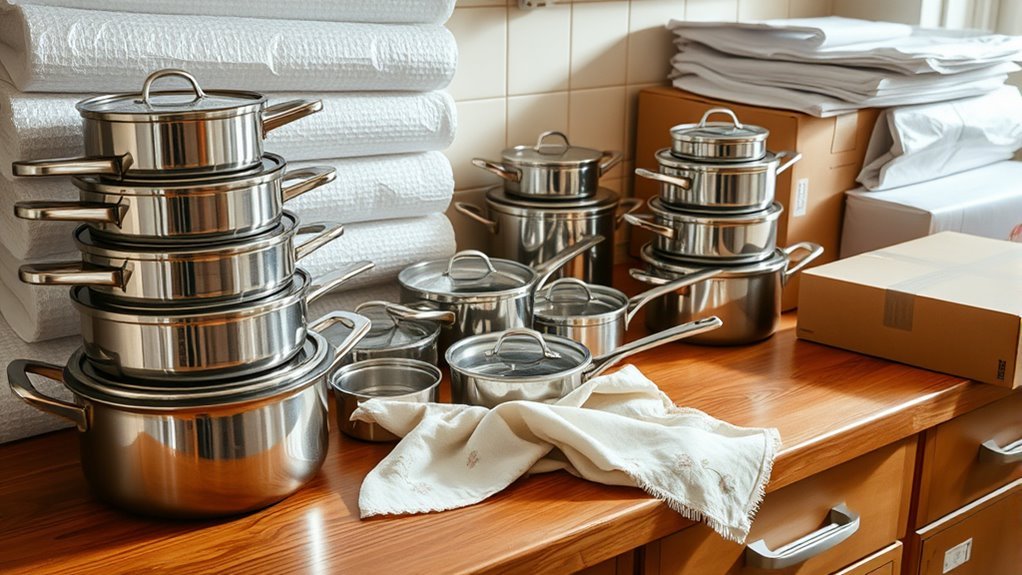
How Do You Pack Pots and Pans When Moving?
You might not realize that packing your pots and pans incorrectly can cause dents, scratches, or even broken lids during a move. Proper packing for moving cookware is essential to avoid damage. If you just toss them in a box without protection, you risk damaging your cookware and creating extra cleanup or replacement costs.
There’s a method to keep everything secure and organized that many people overlook. Using the right techniques and materials can make your move smoother and your unpacking much easier. Taking the time to pack your pots and pans carefully ensures they arrive in perfect condition.
Gathering Essential Packing Supplies for Pots and Pans
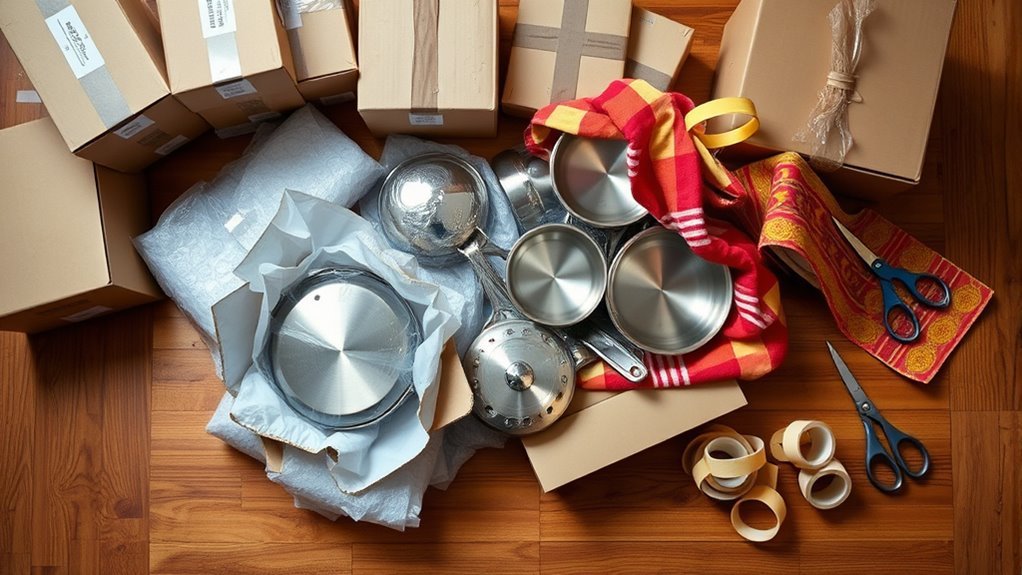
Before you start packing your pots and pans, gather medium 3.0 cubic foot or dish pack boxes, along with packing paper, bubble wrap, and tape to protect your cookware during the move. These boxes provide the right support to keep your pots secure.
Use packing paper to wrap each pot individually, cushioning them from scratches. For extra protection, especially for glass lids or delicate parts, wrap bubble wrap around them before placing them in the box.
Don’t forget tape to seal everything tightly and prevent shifting. Label each box clearly with “Fragile” and list the contents to make unpacking easier and guarantee careful handling.
Having markers and extra packing materials like packing peanuts ready will help fill any empty spaces, keeping your cookware safe throughout the move.
Cleaning and Preparing Cookware Before Packing
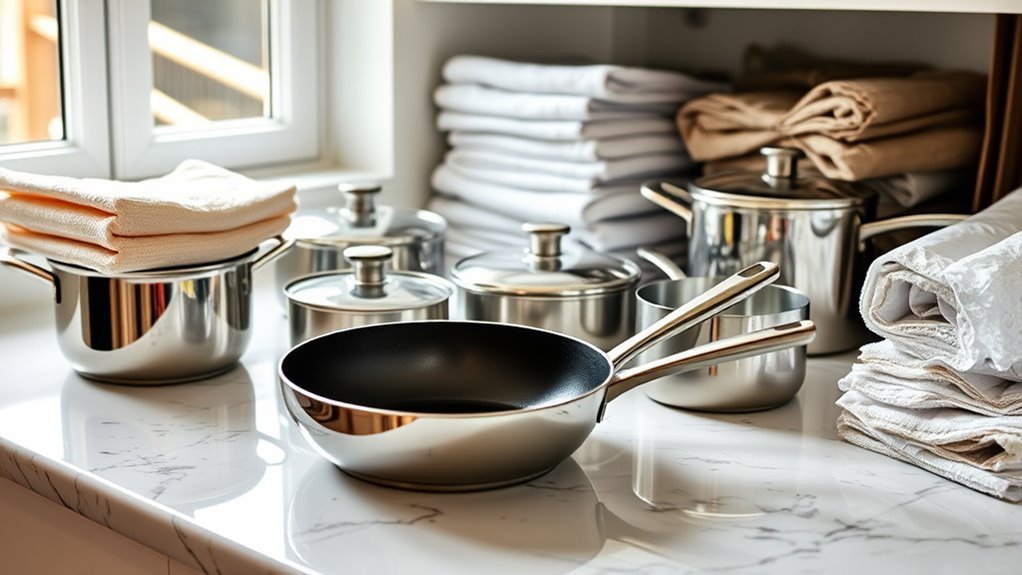
While packing your pots and pans, you’ll want to wash each piece thoroughly with soap and water to remove grease and residue.
After washing, make sure to dry your cookware completely to avoid mold, rust, or corrosion during the move.
Remove the lids from pots and pans, then either secure them tightly or wrap them separately for extra protection.
For glass lids or delicate pieces, use bubble wrap or soft cloths to prevent cracks or breakage.
Check for any loose handles or parts and tighten or secure them with tape to ensure nothing comes apart in transit.
Taking these steps will keep your cookware clean, safe, and ready for unpacking at your new home.
Choosing the Right Boxes for Heavy Kitchen Items
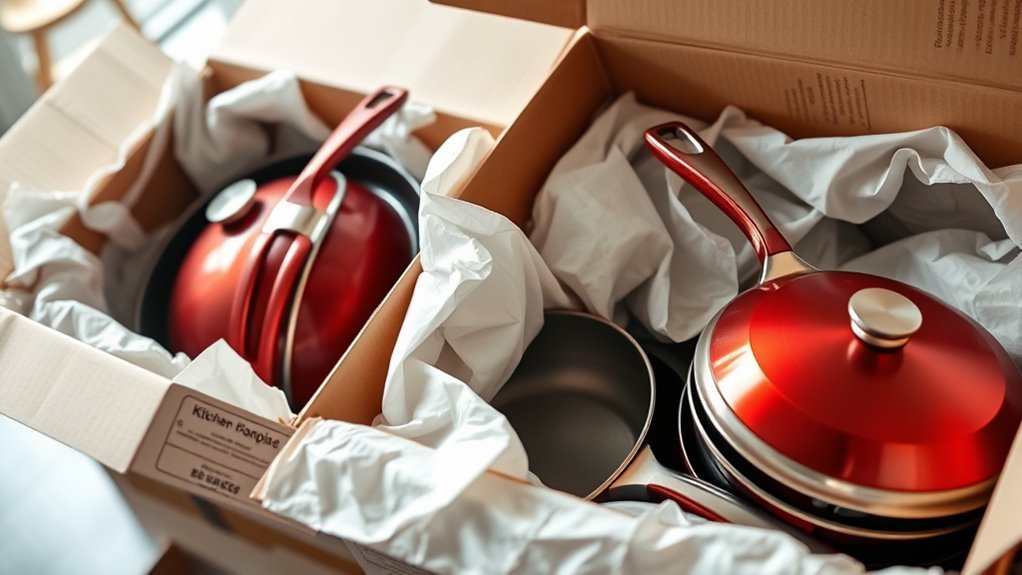
Since your pots and pans can get quite heavy, you’ll want to choose medium 3.0 cube or dish pack boxes designed to handle substantial weight. Look for sturdy boxes with reinforced bottoms and double-walled construction to support your heavy cookware without collapsing.
These features help prevent damage during the move. Make sure to reinforce the seams with extra tape for added strength. Avoid overpacking large boxes, as this can compromise their integrity and risk breaking.
Specialty boxes, like those from liquor stores, are also great options since they’re built for fragile and heavy items. Don’t forget to use proper packing materials inside, like bubble wrap or packing paper, to cushion your pots and pans while keeping the boxes secure and balanced throughout the move.
Techniques for Nesting and Organizing Pots and Pans
When packing your pots and pans, nesting smaller pieces inside larger ones saves space and keeps your boxes organized. Start by wrapping each pot and pan individually with packing paper to avoid scratches.
Place the heaviest pots at the bottom of the box to maintain balance and prevent damage. Use protective padding like towels or extra packing paper to fill gaps and stop items from shifting during the move.
Arrange lighter pans on top of the heavy pots to protect fragile parts. This nesting technique not only maximizes space but also ensures your cookware stays secure.
Wrapping and Protecting Fragile Lids and Glassware
Although lids and glassware are often overlooked, you’ll want to wrap each one carefully to prevent cracks and chips during your move. Start by wrapping fragile lids individually with bubble wrap or packing paper to cushion them against impacts.
Wrap each fragile lid carefully with bubble wrap or packing paper to prevent cracks and chips during your move
For extra padding, use soft textiles like dish towels or oven mitts around glassware and lids. Secure the wrapping with packing tape or rubber bands to keep everything in place and protect against shifting.
Pack lids separately from pots and pans, labeling their boxes as “Fragile” to alert movers. Place wrapped lids on top of or around your cookware to use space efficiently while ensuring they stay safe.
Taking these steps helps protect your fragile lids and glassware throughout the move.
Filling Gaps and Padding to Prevent Movement
To keep your pots and pans secure during the move, you’ll want to fill every empty space in the boxes with crumpled packing paper, towels, or sponges. Filling gaps tightly prevents your cookware from shifting and reduces the risk of damage.
Use soft kitchen cloths or dish towels as padding around fragile items like lids or delicate cookware. Nest smaller pots inside larger ones, and fill any remaining gaps with lightweight pantry items or packing materials to maximize space and stability.
Proper padding and filling gaps ensure everything stays snug and protected throughout transit. By carefully filling all spaces, you’ll keep your pots and pans safe, avoiding unnecessary movement that could lead to scratches, dents, or broken pieces when you unpack at your new home.
Sealing and Labeling Boxes for Safe Handling
Since your pots and pans are packed securely, you’ll want to seal each box tightly with strong packing tape to keep everything intact during the move. Proper sealing prevents accidental openings and protects your cookware.
Seal boxes tightly with strong tape to keep your pots and pans secure during the move.
Next, focus on labeling your packing boxes clearly on the top and at least one side. Use descriptive labels like “Kitchen,” “Fragile,” or “Handle with Care” to alert movers about the contents.
If you have glass lids or delicate items, mark the box as fragile for safe handling. Also, if any box weighs over 35 pounds, label it “Heavy” to ensure it’s handled properly and to avoid injury.
Clear sealing and labeling make unpacking easier and keep your pots and pans safe throughout the move.
Tips for Managing Box Weight and Stability
When packing your pots and pans, you’ll want to keep each box between 34 and 45 pounds to make lifting safer and easier. Managing box weight is essential to avoid injury and maintain stability during the move.
Place heavy cookware at the bottom of sturdy, reinforced boxes designed for dishware. Nest smaller pots inside larger ones to save space and reduce overall weight.
Fill any empty spaces with lightweight packing materials like towels or packing paper to prevent shifting and protect your items. This approach keeps the box stable and balanced, reducing the risk of damage.
When to Consider Professional Moving Assistance
If you own a large or delicate collection of pots and pans, you might want to hire professional movers to handle the packing and transportation. They use specialized packing supplies and techniques to protect fragile items like glass lids and nonstick surfaces.
If you’re pressed for time or unsure about disassembly and packing, professionals can simplify the process and reduce damage risks.
| Situation | Benefit of Professional Movers |
|---|---|
| Large collection | Efficient packing and handling |
| Fragile cookware | Use of quality packing supplies |
| Limited time | Faster, expert packing and disassembly |
| Valuable or sentimental | Extra security and peace of mind |
Hiring pros ensures your cookware arrives safely and saves you stress during the move.
Strategies for Unpacking and Organizing in Your New Kitchen
How do you guarantee your cookware is ready for use right away in your new kitchen? Start by unpacking heavier pots and pans first, placing them in lower cabinets for safety and stability.
Use these unpacking strategies to organize cookware efficiently:
Use these unpacking strategies to organize cookware efficiently and keep your kitchen tidy from the start.
- Sort items by size and type, stacking similar pots and pans to maximize space.
- Check each box for damage or missing lids, replacing or repairing as needed to keep things organized.
- Implement storage solutions like shelf organizers or vertical racks for lids and small utensils.
Store frequently used cookware in easy-to-reach spots to streamline your cooking routine. By following these steps, you’ll pack pots and pans smartly and have your kitchen perfectly organized from day one.
Frequently Asked Questions
How Do I Pack Pots and Pans for Moving?
You should clean and dry your pots and pans, nest smaller ones inside larger, wrap lids separately, cushion with bubble wrap, pack heavy items at the bottom of sturdy boxes, and label everything clearly for safe, organized moving.
Do You Need to Bubble Wrap Pots and Pans When Moving?
You definitely want to give your pots and pans a cozy embrace with bubble wrap when moving. It cushions them gently, preventing scratches and dents, so your beloved cookware arrives safe and sound, ready for your next culinary adventure.
How to Move With Pots and Pans?
You move pots and pans by wrapping each piece, nesting smaller ones inside larger, securing lids, and packing them in sturdy, labeled boxes. Use soft fillers to prevent shifting and double tape bottoms for extra support during transit.
How Far in Advance Should You Start Packing Before Moving?
You should start packing your pots and pans about 2 to 4 weeks before moving.
This gives you plenty of time to clean, wrap, and organize everything carefully, so you won’t feel rushed or stressed at the last minute.
Conclusion
Packing your pots and pans carefully can save you time and stress during your move. Did you know that 60% of kitchen-related damages happen because items weren’t properly packed?
By cleaning, wrapping, and organizing your cookware with sturdy boxes, you’ll protect your essentials and keep your new kitchen running smoothly. Take your time, label boxes clearly, and handle everything with care.
You’ll thank yourself when unpacking feels effortless and damage-free. Properly packing pots and pans is key to a successful move and a well-organized kitchen setup.