Can You Put an Aluminum Pan in the Oven?
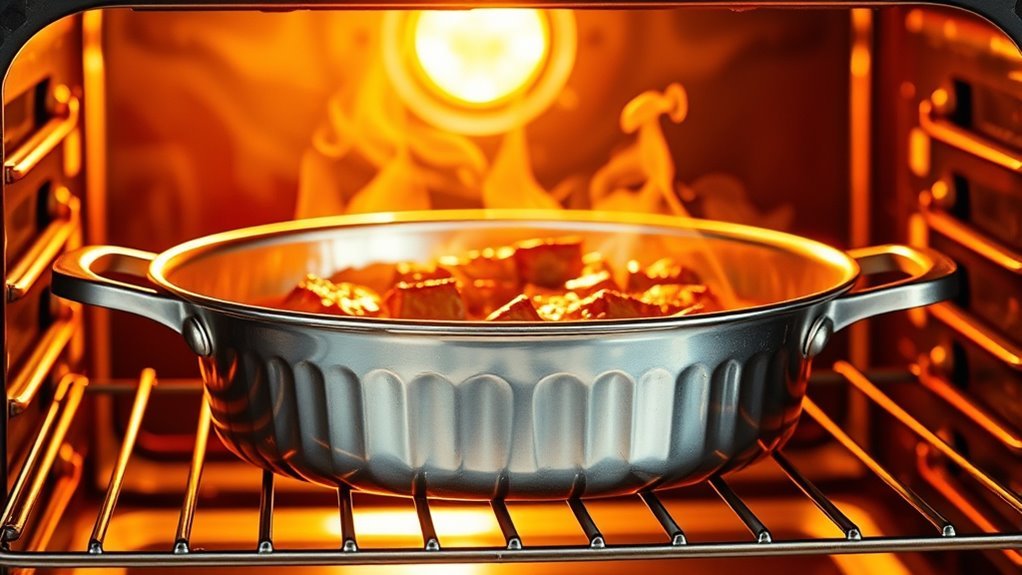
When it comes to choosing cookware, aluminum pans often get a mixed reputation, especially when it comes to using them in the oven. You might wonder if aluminum pans are truly up to the task when the oven heats up. While they’re popular for many cooking tasks, there are some important details about their heat tolerance and durability that you should know before sliding one in.
Understanding these aspects can help you avoid common pitfalls and cook with confidence. Knowing whether you can put an aluminum pan in the oven safely is essential for both the quality of your food and the longevity of your cookware. Keep reading to learn more about aluminum pans and oven use.
What Are Aluminum Pans Made Of?
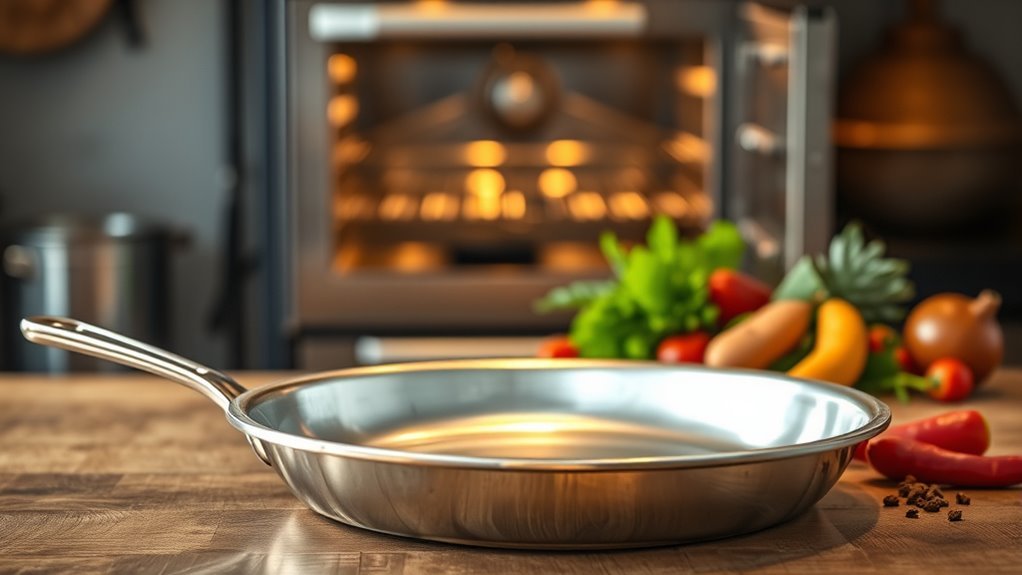
Although aluminum pans come in various forms, they’re primarily made from pure aluminum or aluminum alloys mixed with metals like magnesium or silicon. When you use an aluminum pan, you benefit from its excellent heat conduction and thermal properties, which help cook your food evenly.
Disposable pans, often made from thin sheets of aluminum foil, are perfect for one-time use and easy cleanup.
In contrast, reusable aluminum pans are thicker and sometimes anodized or coated to boost durability and non-stick performance.
Aluminum alloy enhances the pan’s strength without sacrificing its lightweight and malleable nature, allowing for different shapes and thicknesses.
Whether you’re handling a disposable aluminum foil pan or a sturdy aluminum alloy pan, understanding their composition helps you appreciate their cooking efficiency and versatility.
Types of Aluminum Pans and Their Uses

When you choose an aluminum pan, understanding the different types helps you pick the right one for your cooking needs. Disposable aluminum pans are lightweight and perfect for single-use baking or serving. They offer great thermal conductivity but limited durability.
Reusable aluminum pans are often thicker and oven-safe aluminum. They handle regular baking, roasting, and casseroles well.
Anodized aluminum pans feature a hardened anodized coating, making them scratch-resistant and non-reactive. They’re ideal if you cook acidic foods frequently.
Non-stick aluminum pans come with a Teflon or similar coating. They ensure easy food release and healthier cooking with less oil.
Knowing these options helps you select the right pan for your recipes, maximizing performance and convenience in your kitchen.
Oven Safety and Heat Resistance of Aluminum Pans
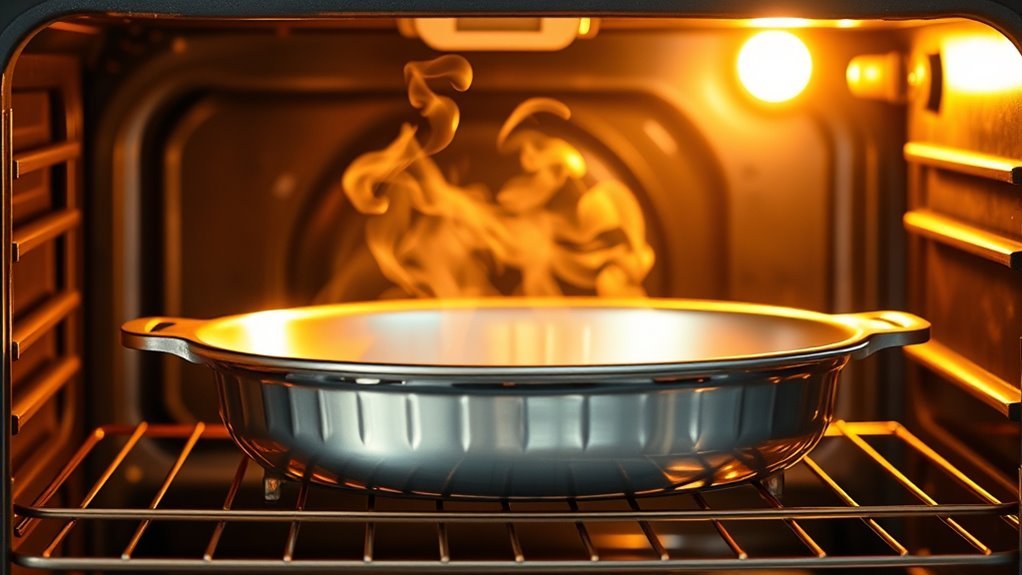
Since aluminum pans handle heat well, you can safely use most of them in the oven up to about 500°F (260°C). Their excellent thermal conductivity guarantees even heat distribution, making them ideal for baking.
However, when considering oven safety, keep in mind that disposable aluminum pans are thinner and more prone to warping at high oven temperatures or under heavy loads.
Heavy-duty or anodized aluminum pans offer better heat resistance and resist warping more effectively.
If your aluminum pan has a non-stick coating, check the manufacturer’s guidelines, as these coatings usually withstand lower temperatures around 400°F (204°C) to prevent damage.
Always follow specific temperature limits for your pan to maintain oven safety and avoid compromising its structure or cooking performance.
How to Prevent Warping and Structural Issues
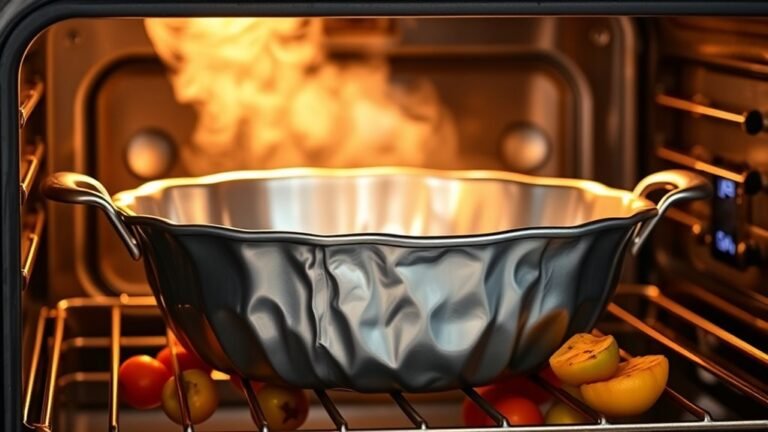
To prevent warping and structural damage, you should always support aluminum pans with a sturdy baking sheet that evenly distributes weight and reduces bending. Thin or disposable foil pans are especially prone to warping if placed directly on oven racks without support.
Keeping oven temperature below 450-500°F helps maintain the structural integrity of aluminum pans, as excessive heat increases warping risk. For lightweight pans, use lower oven temperatures to minimize deformation.
Also, handle hot pans carefully with oven mitts to avoid sudden impacts or temperature shocks that can cause warping.
Prioritizing oven safety and proper heat distribution ensures your aluminum pans stay durable and functional, letting you cook confidently without worrying about damage or uneven baking results.
Aluminum Pans and Food Safety Considerations
Although some people worry about aluminum leaching into food, health authorities like the WHO and FDA confirm that using aluminum pans in the oven up to 500°F is safe. You can confidently use anodized aluminum or heavy-duty pans, as they resist corrosion and warping, ensuring better oven safety at high temperatures.
Disposable aluminum pans also handle typical oven heat well but need support to prevent warping. Remember to avoid pans with non-oven-safe plastic or wooden handles for food contact safety.
| Pan Type | Oven Safety Temp | Food Contact Notes |
|---|---|---|
| Standard Aluminum | Up to 500°F | Minimal leaching, safe |
| Anodized Aluminum | Up to 500°F | Enhanced corrosion resistance |
| Disposable Aluminum | Up to 500°F | Use with support, safe |
| Pans with Handles | Varies | Avoid if non-oven-safe |
Tips for Using Disposable Aluminum Pans in the Oven
When you use disposable aluminum pans in the oven, supporting them with a sturdy baking sheet helps prevent warping and spills. These pans are oven-safe and offer good heat resistance up to around 450°F to 500°F, making them ideal for many baking tasks.
Always preheat the oven before placing your disposable aluminum pans inside; this ensures even cooking and reduces the risk of warping.
Remember to handle the pans with oven mitts, as they can get very hot quickly.
To protect your pans and food, avoid using disposable aluminum pans under the broiler or over direct flames, since excessive heat can cause melting or damage.
Following these tips helps you get the best results while safely using disposable aluminum pans in your oven.
Alternatives to Aluminum Pans for Baking
Disposable aluminum pans offer convenience and good heat resistance for many baking tasks, but you might want to explore other bakeware options depending on your needs. Non-aluminum alternatives bring varied thermal properties and oven safety benefits.
When selecting oven-safe bakeware, consider how different baking materials affect heat conduction and baking results. Here are some common options:
- Glass and ceramic: Provide even heat but may need longer preheating due to their thermal mass; safe up to about 450°F.
- Silicone: Flexible and non-stick, withstanding temperatures up to 500°F, suitable for both baking and freezing.
- Stainless steel: Durable but less efficient in heat conduction, often requiring a preheated baking sheet for best performance.
Choosing the right material depends on your recipe and how thermal properties influence cooking times and evenness.
Cleaning and Reusing Aluminum Pans
If you want to get the most out of your aluminum pans, proper cleaning and care are essential. Always wash them by hand using mild detergent and warm water, avoiding abrasive scrubbers that can cause damage to the surface.
Hand wash aluminum pans with mild detergent and warm water, avoiding abrasive scrubbers to protect the surface.
While disposable aluminum pans aren’t typically designed for reusing, you can clean and reuse them if they remain undamaged. After washing, dry your aluminum pans thoroughly to prevent oxidation and corrosion.
Store them in a dry place to maintain their condition. Before reusing any aluminum pan, inspect it for warping, dents, or other damage that could affect performance.
Following these steps helps extend the life of your pans and reduces waste, making your cooking both efficient and eco-friendly.
Frequently Asked Questions
Can You Put 100% Aluminum in the Oven?
Yes, you can put 100% aluminum in the oven. It handles high heat well, up to about 500°F typically.
Just make sure any handles are oven-safe to avoid melting or damage during cooking.
Can You Heat up Food in an Aluminum Tray in the Oven?
Yes, you can heat food in an aluminum tray in the oven. Just place it on a baking sheet to avoid warping, and don’t use trays with non-oven-safe handles or expose them to open flames.
How Do I Tell if My Pan Is Oven Safe?
You can tell if your pan’s oven safe by checking the manufacturer’s label or packaging for symbols and temperature limits. Avoid pans with plastic or wooden handles unless marked safe.
When unsure, consult instructions or contact the retailer.
Can Aluminum Foil Go in the Oven at 400 Degrees?
You can absolutely toss aluminum foil into a 400-degree oven like a trusty sidekick.
Just don’t let it dance too close to heating elements or flames, or it might spark trouble.
Keep it safe and sizzling!
Conclusion
You can confidently use aluminum pans in the oven, just like a trusty friend who handles heat without flinching. Whether you’re baking, roasting, or reheating, these pans stand up to high temperatures—especially reusable or anodized types.
Just be sure to support thinner disposable pans to avoid warping, and always check the manufacturer’s guidelines. With the right care, aluminum pans will serve you well, making your cooking experience smooth and worry-free.
In conclusion, aluminum pans are safe and reliable for oven use, offering durability and convenience for all your cooking needs. Always consider the type of aluminum pan and proper handling to ensure the best results.