How Do You Clean an Aluminum Pan Effectively
You might not realize that aluminum pans darken not just from heat but also from chemical reactions with certain foods and cleaners. This discoloration can make your cookware look worn and affect cooking performance. If you want to restore your pan’s shine without damaging it, there are specific steps and materials you should use.
Cleaning an aluminum pan effectively requires understanding these causes and using gentle methods. Harsh cleaners or abrasive tools can scratch or further discolor the surface. Keep in mind, using the wrong method could do more harm than good—so understanding the right approach is essential.
Reasons Aluminum Pans Become Blackened
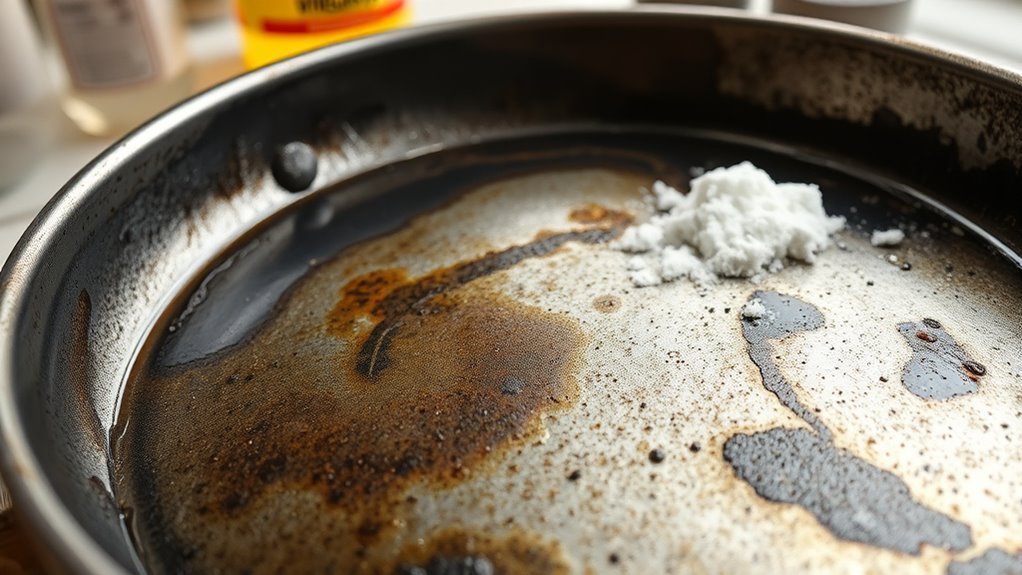
Although aluminum pans are prized for their heat conductivity, exposing them to high heat often causes oxidation that darkens their surface. When you cook at high temperatures, oxidation can blacken the pan, altering its appearance.
Aluminum pans darken due to oxidation when exposed to high heat during cooking.
Burnt-on residues from food and oils further contribute to stubborn blackened spots. You might also notice discoloration after cooking acidic or alkaline ingredients, which react with the aluminum.
Improper cleaning habits can worsen the issue. Using abrasive scrubbers damages the pan’s surface, accelerating blackening. Leaving your pan wet or washing frequently with harsh detergents promotes mineral deposits buildup, especially if you have hard water.
These mineral deposits not only discolor the pan but also make it harder to clean. Understanding these causes helps you prevent and tackle blackening effectively.
Essential Materials for Cleaning Aluminum Pans
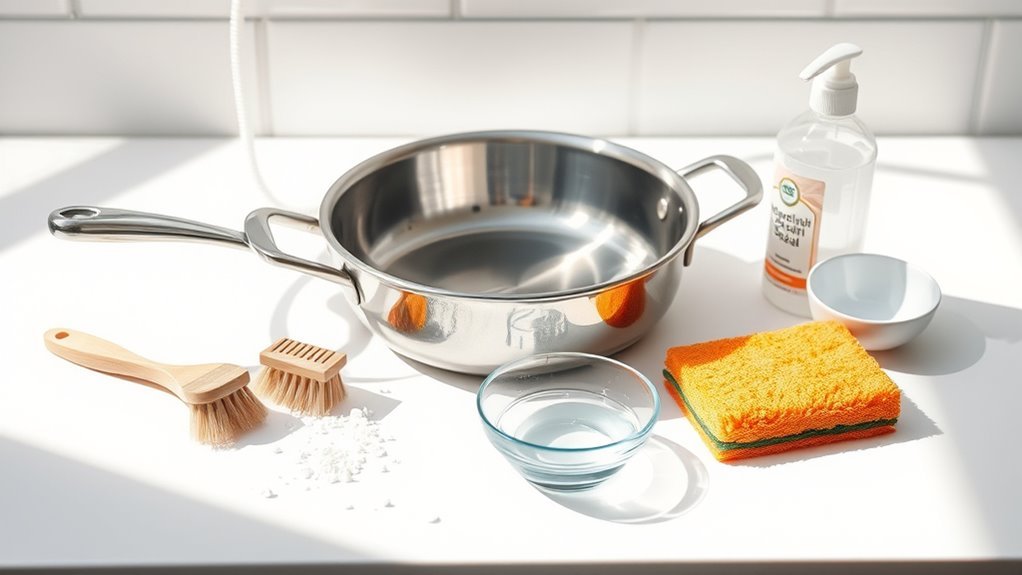
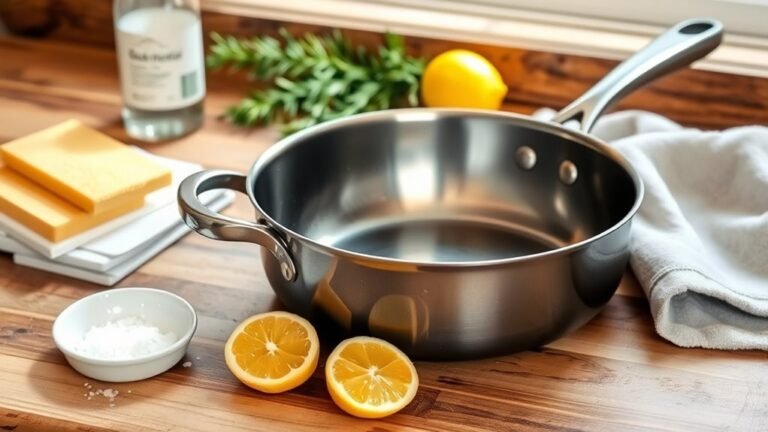
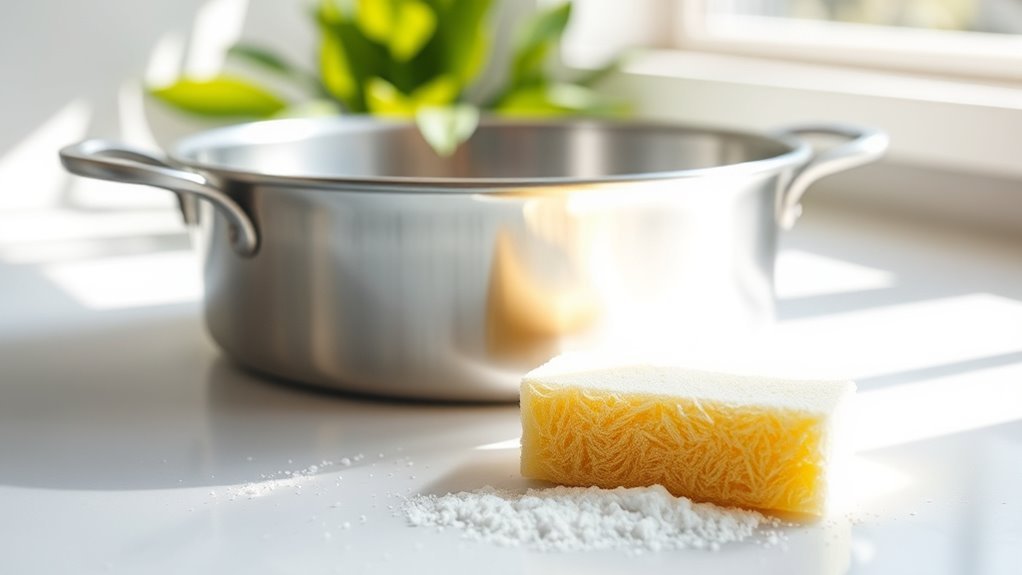
Blackened aluminum pans need the right cleaning tools to restore their appearance without causing damage. Start with essential cleaning materials like a non-abrasive sponge and soft-bristle brushes; these prevent scratching the delicate surface.
Warm or hot water combined with natural dish soap helps break down grease gently. For tougher stains, mix baking soda with water to form a mild paste that lifts discoloration effectively.
White vinegar is another powerful material; boiling it in the pan can remove oxidation and bring back shine. Avoid harsh scrubbing tools, and use microfiber cloths for final wiping.
Using these materials properly ensures you clean your aluminum pans thoroughly while preserving their finish and extending their lifespan.
Step-by-Step Guide to Cleaning Aluminum Pans
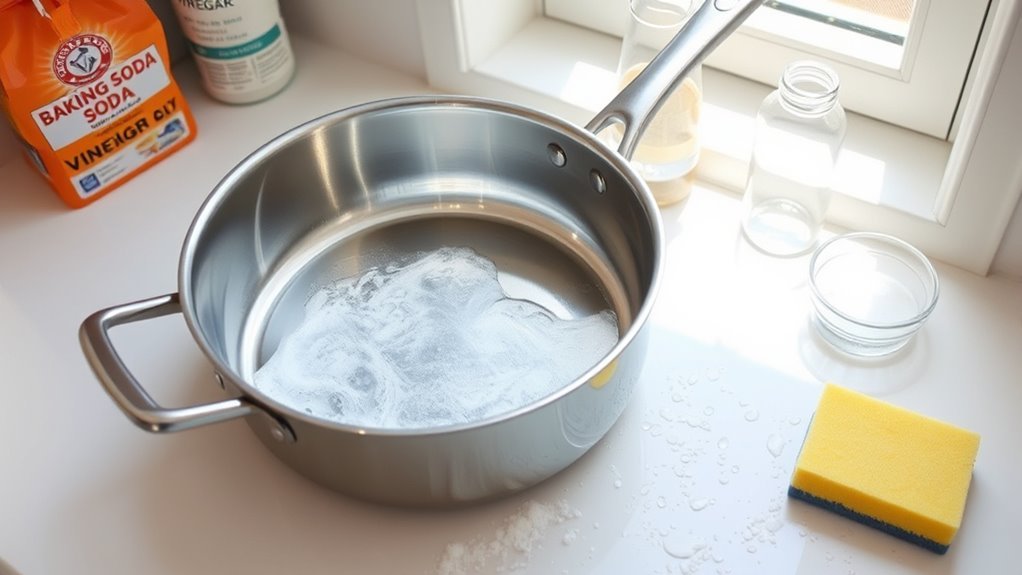
Before you start cleaning, make sure the aluminum pan has cooled completely to avoid warping and make the process easier.
Begin by rinsing the pan with warm water to remove loose debris.
Start by rinsing your aluminum pan with warm water to clear away any loose debris.
Apply a few drops of mild dish soap to a non-abrasive sponge and gently scrub the surface.
For discoloration, fill the pan with water, add equal parts vinegar, and bring it to a boil; this helps lift oxidation.
After boiling, rinse the pan thoroughly to remove any vinegar residue.
If you notice stains, avoid abrasive materials that can scratch aluminum; instead, use a baking soda paste for gentle scrubbing.
Finally, dry the pan completely with a soft cloth to prevent mineral buildup and keep your aluminum pan looking its best.
Techniques for Removing Stubborn Stains
Once you’ve handled the basic cleaning steps, you might still find stubborn stains lingering on your aluminum pan. To remove these, create a paste of baking soda and water, apply it to the stains, and let it sit for 15-20 minutes before scrubbing gently with a non-abrasive sponge.
For burn marks and tough residues, boil a mixture of water and vinegar in the pan for 5-10 minutes, then scrub with a soft cloth.
You can also use a cream of tartar paste to lift stubborn stains effectively.
If discoloration persists, simmer water with vinegar for 10 minutes, rinse, and dry thoroughly.
These techniques for cleaning aluminum help you safely remove stains without scratching, keeping your pans looking their best.
Best Practices for Maintaining Aluminum Pans
Although aluminum pans are durable, you should handle them with care to maintain their appearance and performance. Use non-abrasive sponges and gentle dish soap as your primary cleaning methods to avoid scratches, stains, and discoloration.
Avoid dishwashers and harsh cleaners to prevent oxidation. Always dry your pans properly after washing to stop mineral deposits and oxidation.
| Cleaning Method | Purpose | Tip |
|---|---|---|
| Non-abrasive sponge | Daily cleaning | Use gentle dish soap |
| Baking soda paste | Remove stains | Apply gently |
| Proper drying | Prevent oxidation | Wipe immediately |
Safe Methods for Dealing With Burnt-On Residue
When burnt-on residue sticks to your aluminum pan, soaking it in hot water mixed with baking soda loosens the grime effectively. You should soak the pan for at least 30 minutes to soften the stubborn residue.
For tougher spots, create a paste from baking soda and water, apply it directly, and let it sit for 15-20 minutes before scrubbing.
Always use a non-abrasive sponge or soft-bristle brush during cleaning to avoid scratching the aluminum surface. Avoid steel wool or abrasive pads as they damage the pan.
If burnt-on oil or sugar residue remains, try boiling a water and vinegar mixture in the pan for 10 minutes to help loosen it. These safe methods guarantee effective cleaning without harming your aluminum cookware.
Using Natural and Commercial Cleaners on Aluminum
Since aluminum pans require gentle care, using natural and commercial cleaners can help you remove stains and restore their shine without causing damage.
For natural cleaners, mix baking soda and water into a paste to gently scrub away stains and oxidation without scratching your aluminum pan.
You can also boil vinegar with water in the pan to loosen mineral deposits and discoloration, making cleaning easier.
When you prefer commercial options, Bar Keepers Friend is an excellent choice; it contains mild abrasive agents that safely lift burnt-on residues while restoring the pan’s luster.
Always avoid harsh scrubbing tools, as they can damage the surface.
After cleaning with either method, rinse your aluminum pan thoroughly to prevent residue buildup and maintain its appearance.
Tips for Prolonging the Life of Aluminum Cookware
To keep your aluminum cookware in top shape, you’ll want to hand wash it with mild dish soap and a non-abrasive sponge to avoid scratches and preserve its shine. Avoid abrasive scrubbers like steel wool, which can damage the surface.
Regular maintenance is key: gently remove stains and prevent discoloration using natural agents like baking soda or vinegar.
After cleaning, dry your pans thoroughly with a soft cloth to stop mineral deposits and oxidation.
When storing, place your clean aluminum cookware in a dry, ventilated space and avoid stacking them directly to prevent scratches.
Using non-abrasive cleaning methods and handling your aluminum with care will ensure it lasts longer and stays looking great alongside your stainless steel and other kitchen tools.
Frequently Asked Questions
How to Clean Burnt Food off an Aluminum Pan?
Soak your burnt aluminum pan in hot water with baking soda or dish soap for 15-30 minutes. Then, scrub gently with a soft brush.
For tough spots, boil vinegar and water in it before rinsing thoroughly.
How to Make Aluminum Pans Look New Again?
Want your aluminum pan to dazzle like new? Just scrub with baking soda paste, boil vinegar for stains, or try Bar Keepers Friend.
Don’t wreck it with steel wool—you’re not auditioning for a demolition job!
What Is the Best Cleaner for Aluminum Pans?
You’ll find Bar Keepers Friend is the best cleaner for aluminum pans. It removes stains and restores shine effectively without harsh abrasives.
Just scrub gently, rinse well, and your pan will look almost new again.
What Should You Not Clean Aluminum With?
You shouldn’t clean aluminum with steel wool, harsh abrasives, strong alkaline or oven cleaners, bleach, chlorine-based products, abrasive powders, or dishwashers.
These can scratch, corrode, discolor, or dull your aluminum pan’s surface.
Conclusion
Cleaning your aluminum pan effectively doesn’t have to feel like a chore—especially when you realize the solution is often right in your kitchen. You might find that the vinegar you use for salads doubles as a powerful stain remover.
By treating your pan gently with natural ingredients and avoiding harsh scrubbing, you’ll keep it looking great longer. So next time, you’ll not only cook delicious meals but also clean with surprising ease.
Using simple household items like vinegar and baking soda can make cleaning your aluminum pan both effective and safe. This approach helps maintain the pan’s finish while removing stains and buildup. Remember, gentle cleaning is key to preserving your cookware’s quality and extending its lifespan.