How You Can Put Aluminum Pans in the Oven Safely
When you want to use aluminum pans in the oven, it’s important to understand how to do it safely to avoid warping or food contamination. Not all aluminum pans handle heat the same way, so knowing the right temperature limits is essential. Proper use can protect both your cookware and your meal.
Supporting your pans correctly and being mindful of what foods to avoid can make all the difference. Let’s explore what you should keep in mind to ensure safe and effective oven use with aluminum pans.
Understanding Aluminum Pans and Their Types
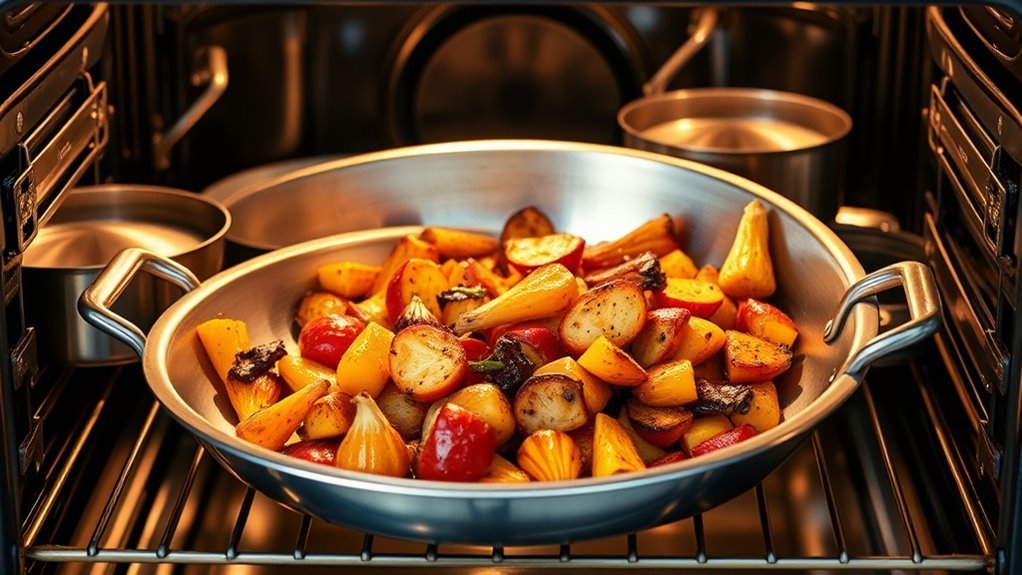
Although aluminum pans come in various forms, they all share the benefit of being lightweight and highly conductive, which helps you achieve even heat distribution while cooking.
Aluminum pans are lightweight and conduct heat evenly for perfect cooking results.
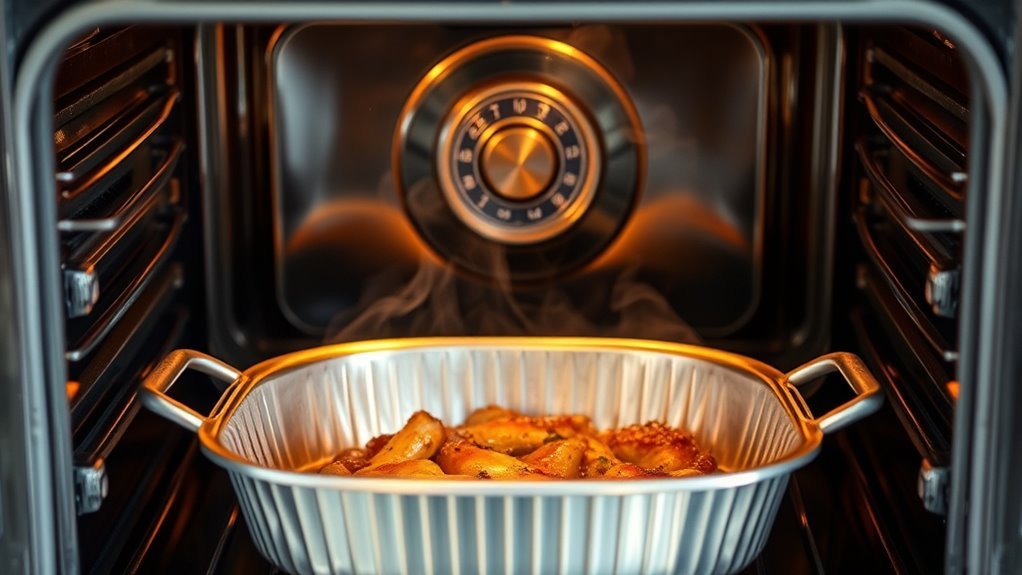
You’ll find different types of aluminum pans, such as disposable foil pans that are thin and flexible, perfect for single-use baking or reheating.
Reusable baking trays tend to be thicker and more durable, often featuring a non-stick coated surface for easy food release.
Anodized aluminum pans stand out because they’re electrochemically hardened, reducing the risk of leaching and improving scratch resistance. This enhances safety and durability.
Thanks to aluminum’s excellent thermal conductivity, these pans distribute heat evenly, making them oven safe when used properly.
Understanding these types helps you choose the right pan for your cooking needs.
Heat Resistance and Oven Safety Limits
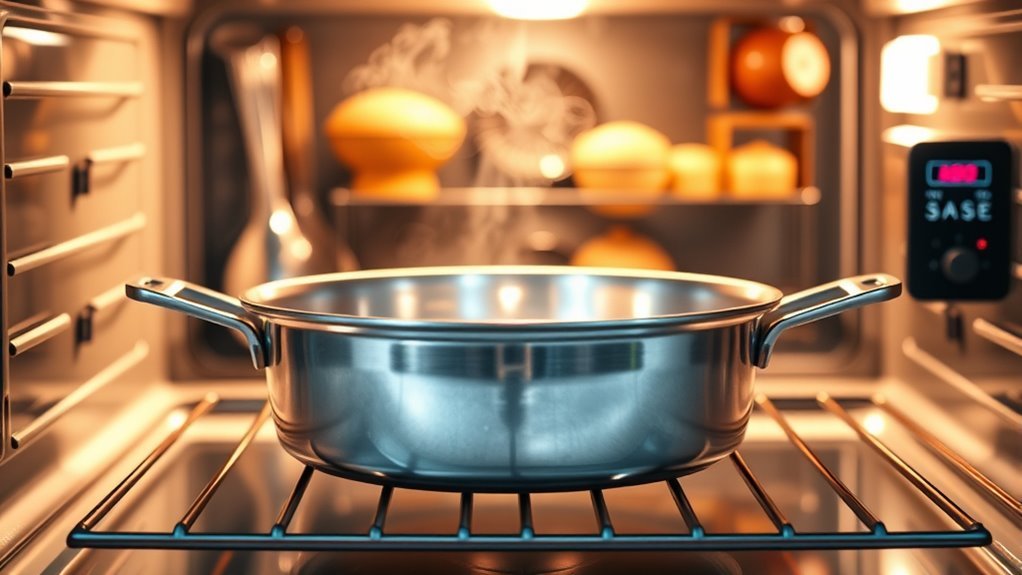
When you use aluminum pans in the oven, it’s important to know their heat resistance limits to avoid warping or damage. Most aluminum pans can handle temperatures up to 500°F safely.
Heavy-duty or anodized aluminum pans offer better heat resistance, making them ideal for high oven temperatures.
Thin disposable foil pans are safe too, but only if you stay within temperature limits and place them on baking sheets for support.
Avoid pans with plastic or wooden handles unless labeled oven-safe to ensure proper oven safety.
Don’t use aluminum pans for broiling or direct flame, as this can cause warping or aluminum leaching.
Proper Placement and Support in the Oven
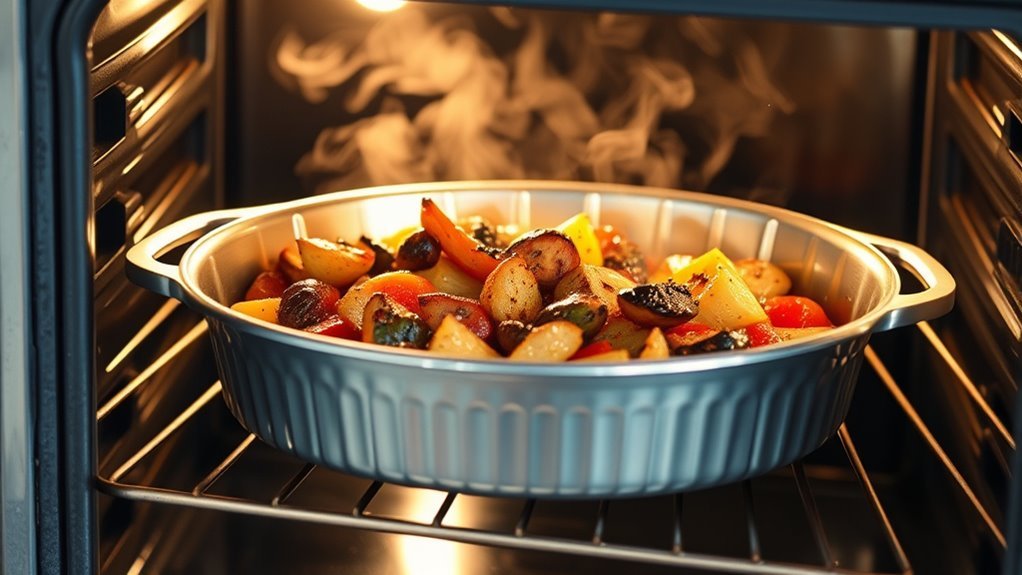
Since aluminum pans can warp or bend under heat, you should always place them on a sturdy baking sheet for proper support. This prevents warping, especially with disposable foil pans exposed to high temperatures. While placing pans directly on the oven rack is generally safe, using a baking sheet helps distribute heat evenly and provides a stable, oven-safe surface.
Heavy pans or those filled with food require extra support to avoid bending or collapsing.
| Pan Type | Support Needed | Reason |
|---|---|---|
| Heavy pans | Baking sheet | Prevent bending under weight |
| Disposable foil pans | Baking sheet | Avoid warping at high temperatures |
| Light pans | Oven rack or sheet | Distribute heat evenly |
Proper placement guarantees even heat and reduces accidents in your oven.
Avoiding Common Mistakes With Aluminum Pans
If you want to keep your aluminum pans in good shape and avoid kitchen mishaps, you need to steer clear of some common mistakes. Many people overlook oven safety rules, leading to warped or damaged pans. Remember these key tips:
Don’t use thin foil pans or disposable aluminum pans for high heat or broiling to avoid warping or melting. Always support with a baking sheet to prevent bending or spills.
Follow manufacturer guidelines on baking temperature limits, usually max 400-500°F. Avoid placing pans with plastic handles in the oven unless they’re oven-safe.
Use oven mitts to handle hot pans safely and prevent burns.
Handling Food Interaction and Preventing Leaching
Beyond avoiding physical damage to your aluminum pans, you also need to contemplate how they interact with the food you cook. To maintain food safety and minimize leaching, avoid cooking highly acidic foods like tomato sauce in aluminum pans for long periods.
Using anodized aluminum or lining pans with non-reactive liners creates a protective barrier. Here’s a quick guide:
| Aspect | Recommendation | Benefit |
|---|---|---|
| Acidic Foods | Avoid cooking for extended time | Reduces leaching risk |
| Non-reactive Liners | Use parchment or silicone liners | Prevents direct contact |
| Anodized Aluminum | Prefer anodized pans | Minimal leaching |
Cleaning and Reusing Aluminum Pans Safely
While aluminum pans offer great convenience, you’ll want to clean them carefully to keep them in good shape. Proper cleaning and reuse are essential for oven safety and corrosion prevention.
Careful cleaning of aluminum pans ensures safety, prevents corrosion, and keeps them performing well.
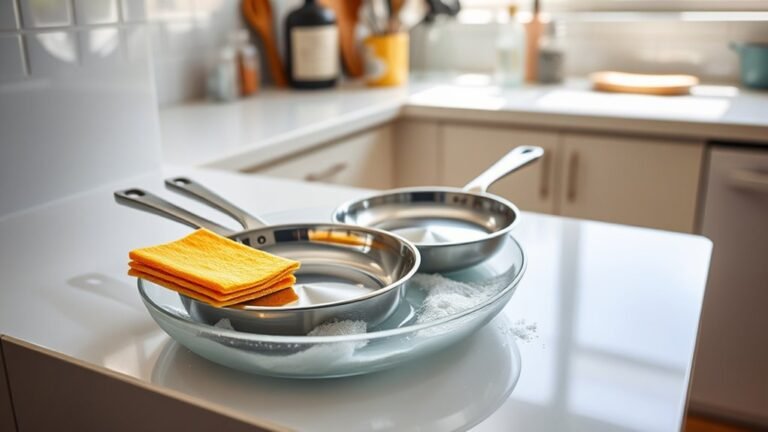
Always handwash aluminum pans with mild detergent and warm water to avoid surface damage. Avoid abrasive scrubbers that can scratch and weaken your pans.
Dry them thoroughly to prevent oxidation, which dulls the finish. Reuse your pans multiple times but check for warping or damage before each use.
When your pans are no longer usable, make sure to recycle them responsibly to reduce environmental impact.
- Handwash with mild detergent and warm water
- Avoid abrasive scrubbers to prevent scratches
- Dry thoroughly to prevent oxidation
- Inspect for warping or damage before reuse
- Recycle aluminum pans when unusable
Tips for Maximizing the Lifespan of Aluminum Bakeware
To maximize the lifespan of your aluminum bakeware, you should handle and maintain it with care. Always handwash aluminum pans using mild detergent, avoiding dishwashers to prevent corrosion and extend bakeware lifespan.
After cleaning aluminum, dry it thoroughly to stop oxidation.
For damage prevention, steer clear of abrasive scrubbers like steel wool that can scratch surfaces.
When using aluminum foil trays or pans in the oven, practice oven safety by limiting exposure to high heat to avoid warping.
Follow proper handling by not stacking heavy items on your bakeware.
For corrosion prevention, store aluminum bakeware in a cool, dry place.
These storage tips help avoid moisture buildup.
Frequently Asked Questions
Is It Safe to Put Aluminum Pans in the Oven?
Yes, you can safely put aluminum pans in the oven if they’re labeled oven-safe and don’t have plastic parts. Just avoid broiling or direct flames, and support thin pans to prevent warping or spills.
Can You Put 100% Aluminum in the Oven?
Wondering if you can put 100% aluminum in the oven? You absolutely can! Just make certain your pan has no plastic parts and support it well.
That way, you’ll enjoy even cooking without any worries.
What Is the Maximum Temperature for Aluminum Pans?
You can safely use most aluminum pans up to about 450°F to 500°F, depending on the type.
Always check your pan’s manufacturer guidelines, though, to avoid warping or damage from excessive heat.
Can Aluminum Foil Go in the Oven at 400 Degrees?
Yes, you can put aluminum foil in the oven at 400 degrees. Just avoid direct contact with heating elements, and don’t use foil with plastic parts to prevent melting or harmful fumes.
Always check product guidelines.
Conclusion
When you slide your aluminum pan into the oven, imagine it resting securely on a sturdy baking sheet, ready to cradle your delicious creation without warping or spilling. By keeping temperatures below 500°F and choosing the right pan for acidic dishes, you protect both your food and cookware.
With these simple steps, you’ll bake confidently, knowing your pan—and your meal—will come out perfectly every time. Ensuring your aluminum pans are oven-safe lets you enjoy warm, safe meals just as you planned.