10 Tips on How Piano Should Be Panned in a Mix
You want the piano to sound clear, balanced, and natural in your mix. Proper piano panning is essential to achieve this. You want it to sit well without overpowering or disappearing.
Creating a stereo image that complements the other instruments is key. Achieving this takes more than just placing the piano dead center or hard left and right. There are subtle techniques and considerations that can make all the difference—techniques you might not have tried yet.
Understand the Role of the Piano in the Arrangement

Although the piano can serve many roles in a mix, understanding its specific function is key to deciding how to pan it. Your panning choices depend largely on the piano role, whether it leads, supports harmony, or sits in the background.
For lead piano parts, you’ll want to center them to keep clarity and prominence. When the piano supports other elements, you can pan it slightly off-center or spread it across the stereo image to create space and avoid clutter.
Your mix placement should reflect the instrument function: narrow or centered panning works well in jazz or classical to maintain naturalness, while pop or cinematic tracks might call for wider stereo image to add artistic flair.
Always tailor panning to the piano’s role for the best mix balance.
Consider the Type of Piano and Its Recording Style
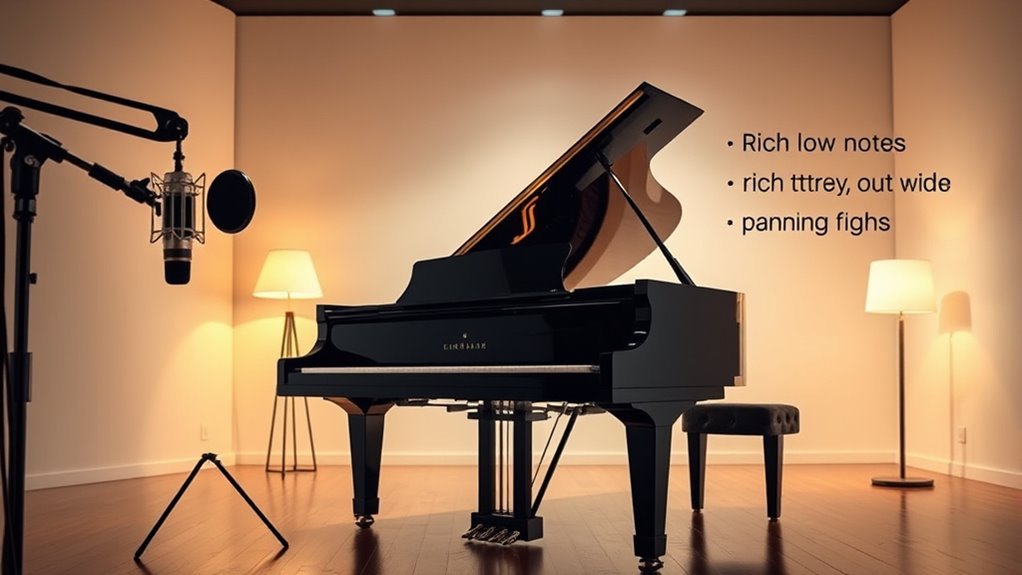
Once you’ve determined the piano’s role in your mix, the next step is to contemplate the type of piano and how it was recorded.
Whether you’re working with a real or sampled piano, the microphone setup and recording style heavily influence your panning choices.
Sampled pianos often come with built-in stereo imaging, while real pianos depend on how mics were placed, such as close, mid, or room mics, to capture their tone and stereo width.
The recording environment also shapes the stereo image, affecting how natural the piano sits in your mix.
Bright or dark tones interact differently with other instruments, so consider these factors to decide the ideal stereo width and positioning that complement the overall arrangement without cluttering it.
Start With Narrow Stereo Placement
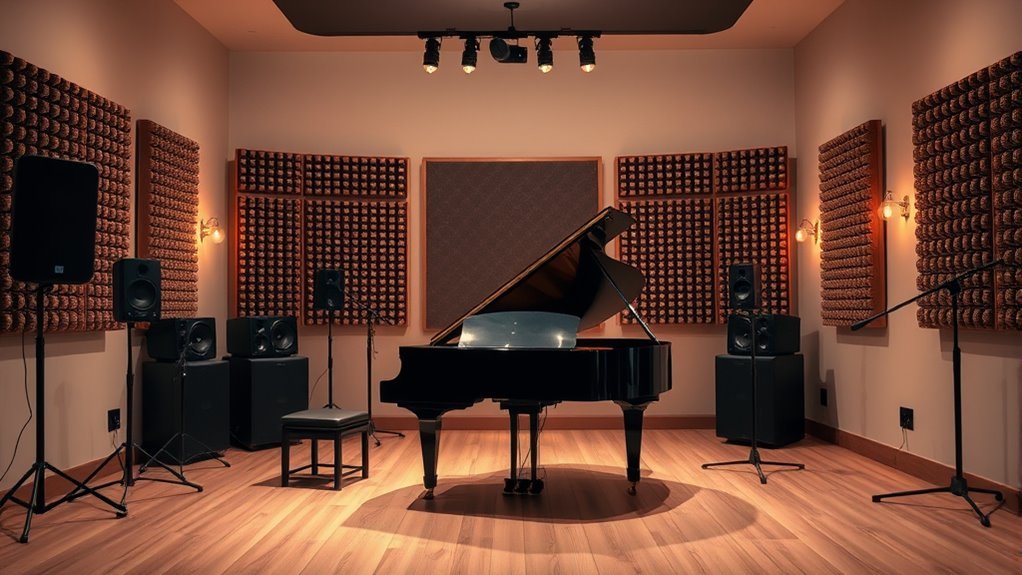
When you begin panning the piano, start with a narrow stereo placement, typically around ±10 to ±15 degrees off-center. This initial approach helps maintain a natural sound and keeps the piano balanced within the mix.
Using a narrow stereo placement guarantees the piano remains focused and doesn’t clash with other instruments, especially in dense arrangements.
Make your panning decisions by starting with the dry piano signal close to the center and gradually widening the stereo field while listening carefully in context. This method preserves mix clarity and prevents the piano from overpowering other elements.
Pan Left and Right Hands Differently When Appropriate
If your piano parts feature distinct melodies or harmonies in each hand, pan the left and right hands differently to enhance stereo separation and clarity. This technique helps create a natural spatial feel, reflecting how a pianist’s hands appear on stage and improving your mix’s overall stereo image.
When panning, keep these points in mind:
- Slightly pan the left hand to one side (5-15%) and the right hand to the opposite to avoid muddiness.
- Use stereo mic placement cues if available, guiding your panning choices for each hand.
- In MIDI or sampled instruments, deliberate panning distinguishes parts and adds dimension, making the piano sound more lifelike.
Use Reverb to Enhance Spatial Placement
Although panning sets your piano’s position in the stereo field, adding reverb enhances its spatial depth and realism. Reverb creates a natural sense of space around the piano, helping it blend smoothly within the mix.
By adjusting the reverb’s pre-delay, you can simulate different room sizes, positioning the piano closer or further from the listener. Use short, room-like reverbs with decay times between 0.5 and 1.5 seconds to maintain a realistic acoustic environment.
Tailoring the high-frequency decay also matches the piano’s brightness, improving spatial placement. Sending the piano to a dedicated reverb bus gives you precise control over these settings without affecting other instruments, ensuring your piano sits perfectly in the mix with convincing depth and presence.
Avoid Extreme Hard Panning Unless Artistically Justified
Adding reverb helps place your piano naturally within the mix, but panning choices also play a big role in how realistic it sounds. Avoid extreme hard panning unless you have a clear artistic reason. Hard panning near 0 or 100% can harm the natural sound, disrupt mix balance, and cause phase issues.
Instead, keep your piano’s pan within a moderate range to maintain a believable stereo image and consistent volume levels. Here’s what to consider:
- Place the piano slightly off-center (±15°) for a natural feel.
- Avoid positioning it fully left or right to prevent distracting the listener.
- Use hard panning only to create specific stereo effects or experimental sounds.
This approach ensures your piano complements the mix without overwhelming it.
Monitor the Mix in Both Mono and Stereo
When mixing your piano, you should always monitor the sound in both mono and stereo to catch any phase issues or clarity loss caused by panning. Listening in mono helps you identify phase cancellation that might make your piano sound thin or hollow when the stereo image collapses.
Stereo monitoring reveals how your panning choices shape the piano’s presence and width in the mix. Regularly switching between mono and stereo ensures your piano maintains fullness and clarity across different playback systems.
This practice also helps you spot unnatural gaps created by overly wide panning. By checking both mono and stereo, you achieve a balanced mix where the piano sits cohesively without losing its impact or causing mix imbalance.
Adjust Panning Based on the Genre and Mix Context
Since each genre has its own sonic goals, you should tailor your piano panning to fit the style and mix context. When panning the piano, consider how genre-specific mixes influence your approach.
For instance:
- In classical or jazz, keep panning minimal or centered to preserve natural stereo imaging.
- For pop, rock, or EDM, use wider stereo spread or automated panning to add excitement and energy.
- In cinematic or intimate settings, slightly off-center panning or center focus enhances depth and clarity.
Always adjust panning dynamically based on mix context. Narrow the piano in dense arrangements to avoid clutter, or widen it in sparse mixes to create immersion.
Use Bussing to Manage Multiple Piano Microphones
Although handling multiple piano microphones can get complicated, bussing them to a single stereo bus makes your workflow much smoother. By routing all piano mics to one bus, you simplify mic routing and gain better control over the overall panning and level.
This approach lets you apply EQ, compression, and reverb collectively, ensuring a cohesive stereo image without constantly adjusting each track. Bussing also helps in piecing together the sound by enabling phase corrections across mics, reducing comb filtering and tonal cancellation.
Plus, using a dedicated stereo bus for your piano reduces CPU load by sharing effects, making your mix session more efficient. Overall, bussing streamlines managing multiple piano mics while maintaining clear, balanced stereo placement within the mix.
Reference Professional Mixes for Stereo Imaging Guidance
Managing multiple piano microphones through bussing gives you solid control over your stereo image, but knowing where to place the piano within that image comes from studying professional mixes. By referencing well-mixed tracks, you’ll better understand how to use stereo imaging effectively.
Here’s what to look for:
- Notice how many pros pan the piano slightly off-center (10-20%) to keep balance in the stereo field.
- Observe subtle panning automation that shifts the piano’s position during key song moments for dynamic spatial depth.
- Compare genres: classical often uses wider piano placement, while pop keeps it narrower and closer to center for focus.
Using these insights, you can craft a natural, engaging piano placement that fits your mix perfectly.
Frequently Asked Questions
Where to Pan Piano in a Mix?
You should pan the piano centrally or slightly off-center to keep clarity and focus.
For stereo recordings, try narrow panning around ±10 to ±20 to maintain its natural sound without overpowering other instruments.
How Should a Piano Be Panned?
Picture the piano as the heart of your mix; you should pan it near the center or slightly off-center, avoiding extreme angles.
This approach helps it stay balanced, clear, and naturally blends with other instruments without stealing the spotlight.
What Is the 80 20 Rule in Piano?
The 80/20 rule means you focus 80% of the piano’s sound centered or slightly off-center, while the remaining 20% is spread wider with supporting parts.
This keeps the piano balanced and natural in your mix.
Where Should the Piano Be in a Mix?
You should place the piano near the center of your mix to keep its harmonic role clear.
Extreme panning usually muddies the sound, so keep it slightly off-center for natural, balanced spatial presence.
Conclusion
By balancing your piano’s placement with purpose, you’ll bring brilliance and breadth to your mix. Start small with subtle shifts, sprinkle in some spacious reverb, and stay sharp by monitoring in mono and stereo.
Remember, respecting the role and recording style of your piano ensures a polished, professional presentation. Keep comparing with classic cuts, and confidently craft an enthralling, cohesive soundscape.
This approach perfectly pitches your piano’s presence in the panorama, making piano panning in a mix both effective and inspiring.