
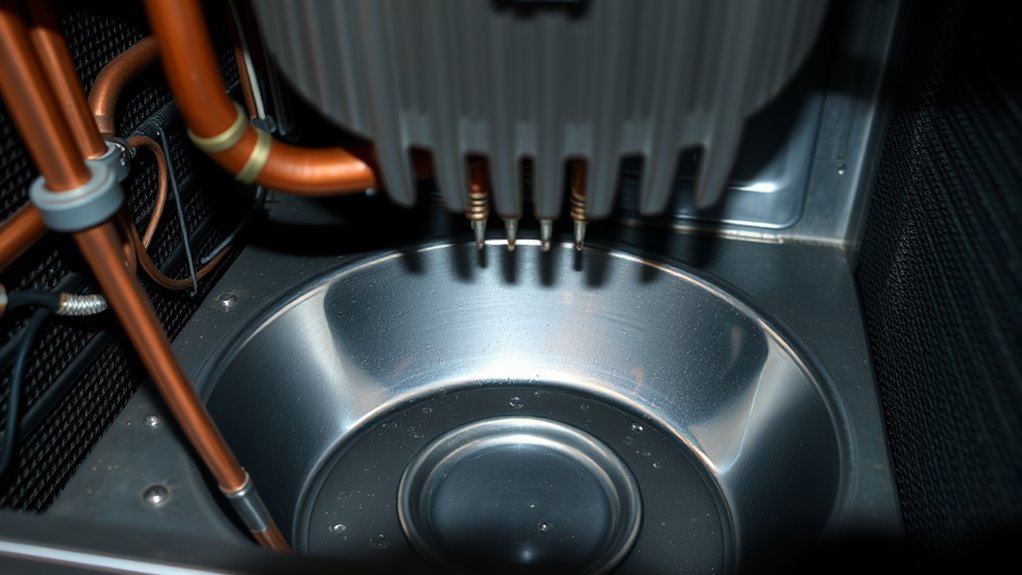
Where Is the Drain Pan in an Air Conditioner Located?
When you look into your air conditioner’s setup, knowing where the drain pan is located can help you spot potential issues before they become costly. The drain pan plays an essential role in catching condensation and preventing water damage. However, its location varies depending on your AC system type.
If you’re unsure where to find the drain pan or how it functions, understanding its placement is key to ensuring your air conditioner runs smoothly. This knowledge helps you maintain your system and avoid leaks or other problems.
Let’s explore where the drain pan might be hiding in your air conditioning setup.
What Is the Function of the AC Drain Pan?
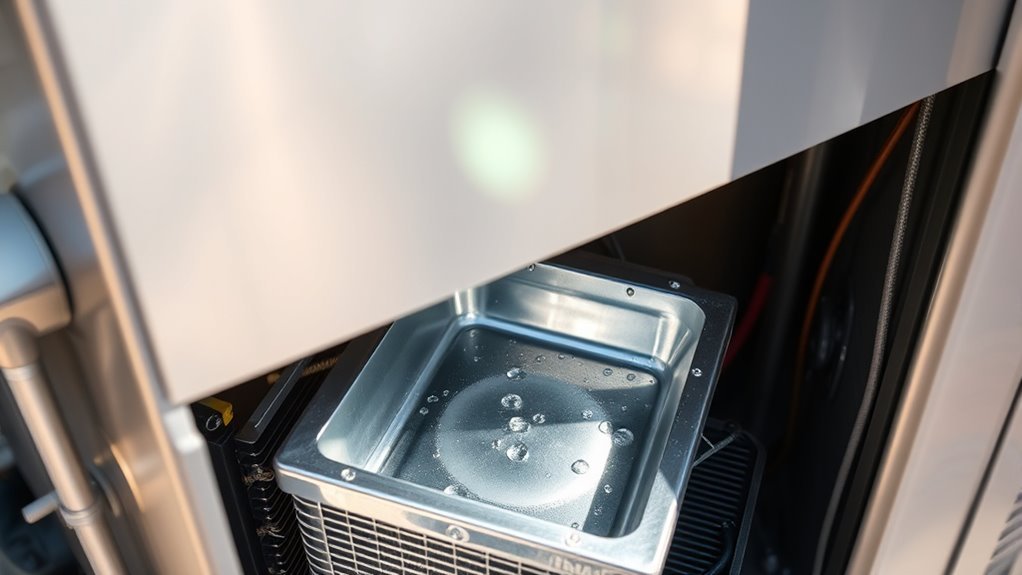
Although you mightn’t see it, the AC drain pan plays a crucial role by collecting condensation from the evaporator coils during cooling. As your air conditioner runs, moisture forms on the coils and drips into the drain pan.
This pan catches the condensate, preventing water from leaking into your home’s interior. The drain pan then channels the water safely to the condensate drain line, which directs it outside.
Without a properly functioning drain pan, water could accumulate, leading to damage or mold growth. Made of plastic or metal, the drain pan sits directly beneath the evaporator coil inside the air handler or furnace.
Common Locations of Drain Pans in Different AC Systems
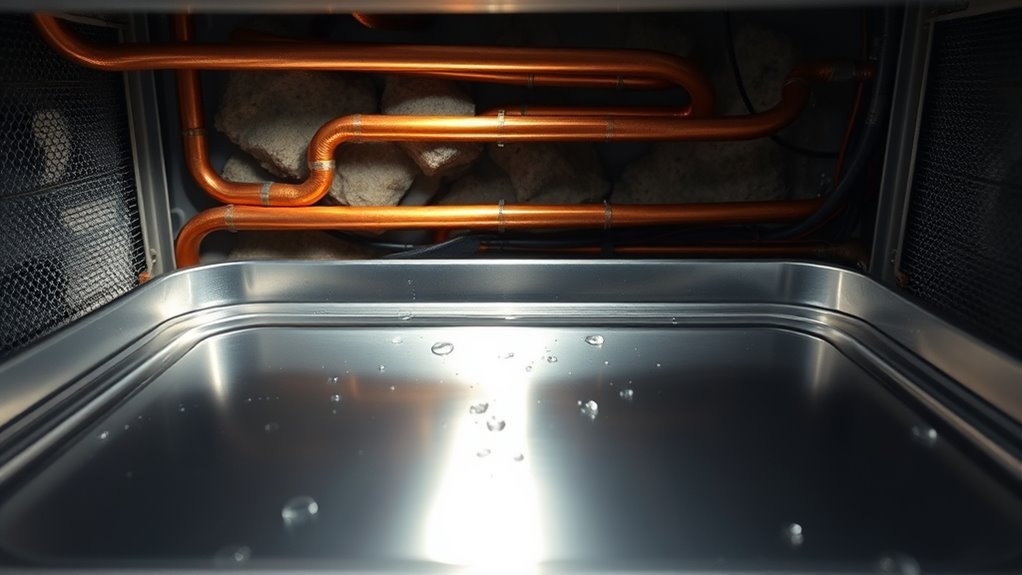
When you inspect different air conditioning systems, you’ll find their drain pans in various spots depending on the design.
In central split-system AC units, the drain pan sits beneath the evaporator coil inside the air handler or furnace.
Packaged AC units also place the drain pan under the evaporator coil but inside an outdoor cabinet, which can make accessing it trickier.
For ductless mini-split systems, the drain pan is integrated into the wall-mounted indoor unit, often hidden behind covers.
Window and portable AC units have a built-in drip pan at the bottom to catch condensation.
In some installations, especially in attics or humid areas, you might find a secondary safety drain pan below the primary one to prevent water damage.
Identifying the Drain Pan in Central Air Conditioner Systems
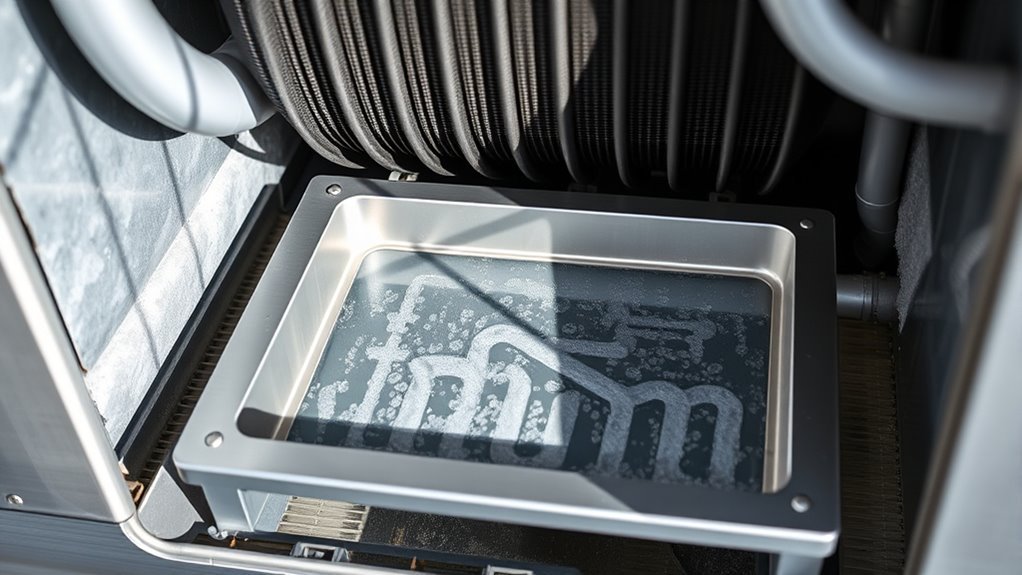
Since the drain pan collects condensation from the evaporator coil, you’ll find it directly beneath this coil inside your air handler or furnace.
To identify the drain pan, remove the front or side access panels on the air handler, usually located in closets, attics, or utility rooms.
The drain pan sits horizontally and catches water dripping from the evaporator coil during cooling. It’s typically made of metal or plastic and connects to a condensate drain line that channels water away.
Many systems also have a secondary drain pan beneath the main unit to catch overflow and prevent leaks.
Drain Pan Placement in Packaged and Mini Split Units
You’ve seen how the drain pan sits beneath the evaporator coil inside central air handlers, but packaged and mini split units arrange their drain pans differently.
In packaged units, the drain pan is located beneath the evaporator coil inside the outdoor cabinet. You’ll usually need to remove panels to access it.
This drain pan sits on a frame designed to catch condensation and direct water to the drain line.
Mini split systems take a different approach: their drain pan is built right into the wall-mounted indoor unit, hidden behind covers.
For ductless mini splits, the drain pan sits directly beneath the indoor fan coil to capture condensation as it forms during cooling.
Both systems keep the drain pan concealed to maintain a sleek appearance.
Signs of Drain Pan Issues and Potential Water Damage
If water starts pooling around your indoor unit or on the floor, it’s a clear sign that the drain pan might be clogged or damaged. A clogged drain can cause water to overflow, leading to potential water damage to nearby walls, floors, or ceilings.
You might also notice water stains on ceilings, especially if your AC is located in an attic.
A musty odor or visible mold near the air handler signals standing water in the drain pan has encouraged mold growth.
Rust, cracks, or corrosion on the drain pan are warning signs of deterioration, increasing the risk of leaks.
Ultimately, if your system unexpectedly shuts down or float switches activate, it often means the drain pan is full or overflowing, indicating immediate attention is needed.
How to Access and Inspect Your AC Drain Pan
Noticing signs like water pooling or mold near your AC means it’s time to check the drain pan for damage or clogs. The drain pan sits beneath the evaporator coil inside the air handler or furnace unit.
To access it, first turn off your system, then remove the access panel secured by screws or clips. In split systems, you’ll usually find the drain pan on the same side as the air intake—in places like closets or attics.
For packaged units, it’s beneath the indoor coil inside the outdoor cabinet, which can be harder to reach. Use a flashlight to inspect the drain pan thoroughly for cracks, rust, or mold.
Catching these issues early helps prevent water damage and keeps your AC running smoothly.
Maintenance Tips for Prolonging Drain Pan Life
Although drain pans are designed to handle moisture, regular maintenance is essential to keep them functioning properly and prevent costly water damage. Proper cleaning and upkeep will prolong your drain pan’s life and keep your AC running smoothly.
Here are four key maintenance tips:
- Inspect and clean the drain pan every 6 to 12 months to remove mold, algae, and debris buildup.
- Disinfect the drain pan using a vinegar-water mixture or commercial coil cleaner to inhibit microbial growth.
- Check that the condensate drain line is clear and draining properly to avoid overflow.
- Replace the drain pan if you spot cracks, rust, or damage to prevent leaks.
Following these steps guarantees your drain pan stays in good condition and protects your home from water damage.
Frequently Asked Questions
How Do I Find My AC Drain Pan?
You’ll find your AC drain pan by removing the access panel on your indoor unit, usually in a closet or attic.
Look beneath the evaporator coil inside the air handler or furnace to spot the pan collecting condensation.
What Does an AC Drain Pan Look Like?
Picture a shallow basin catching raindrops—that’s your AC drain pan.
It’s usually a small, rectangular or circular tray made of plastic or metal, designed to hold condensation water temporarily and keep your system dry and safe.
How to Clean a Drain Pan in AC?
You’ll first turn off the power, then remove the access panel. Use a wet/dry vacuum to clear water, scrub the pan with warm soapy water, disinfect with vinegar, rinse, dry, and reassemble the unit carefully.
How Do I Know if My AC Drain Pan Is Full?
Did you know 60% of AC leaks come from a full drain pan? You’ll notice musty smells, water stains, or your system shutting off.
Check for gurgling sounds or visible water pooling to catch it early.
Conclusion
Now that you know where the drain pan hides in your air conditioner, you’re one step closer to preventing water damage disasters that could flood your home like a tsunami. Regularly checking this hidden hero beneath your evaporator coil can save you from costly repairs and keep your AC running smoothly.
Don’t overlook it—your drain pan works tirelessly to keep things dry, so give it some love and keep your cool all year long! Maintaining the air conditioner drain pan is essential for preventing leaks and ensuring efficient moisture drainage. By keeping the drain pan clean and free of blockages, you protect your home from water damage and extend the lifespan of your HVAC system.