How You Can Put Hot Pans on Quartzite Safely
When you’re working in the kitchen, it’s tempting to set a hot pan directly on your quartzite countertop. Quartzite countertops are popular for their strength and heat resistance, but placing hot cookware without protection can still cause damage over time. Understanding how to put hot pans on quartzite safely is essential to maintaining your surface.
You’ll want to understand the risks involved and the best ways to protect your surface before you proceed. Using trivets or heat pads can prevent thermal shock and discoloration. Taking these precautions ensures your countertop stays both beautiful and functional.
Understanding Quartzite as a Countertop Material
Although quartzite forms under intense heat and pressure, it creates a dense, durable surface ideal for countertops. As a natural stone and metamorphic rock, quartzite offers impressive heat resistance, making it a smart choice among countertop materials.
Unlike engineered quartz, quartzite contains no resin, so it won’t melt or warp when you place hot pans directly on it. Its mineral composition helps it endure thermal shock better than many alternatives.
However, you should still maintain and seal quartzite properly to protect against stains and surface damage.
When you choose quartzite for your kitchen, you get a surface that’s not only beautiful but also practical and tough enough to handle the heat from hot cookware safely.
Heat Resistance Properties of Quartzite
Quartzite’s natural ability to withstand high temperatures makes it an excellent choice for kitchen countertops. With impressive heat resistance, quartzite can tolerate heat up to around 1000°F (538°C) without suffering damage.
Unlike engineered quartz, it contains no resin, so it’s less prone to heat-related discoloration or cracking. However, you should be mindful of thermal shock. Sudden, extreme temperature changes can stress quartzite, potentially causing cracks.
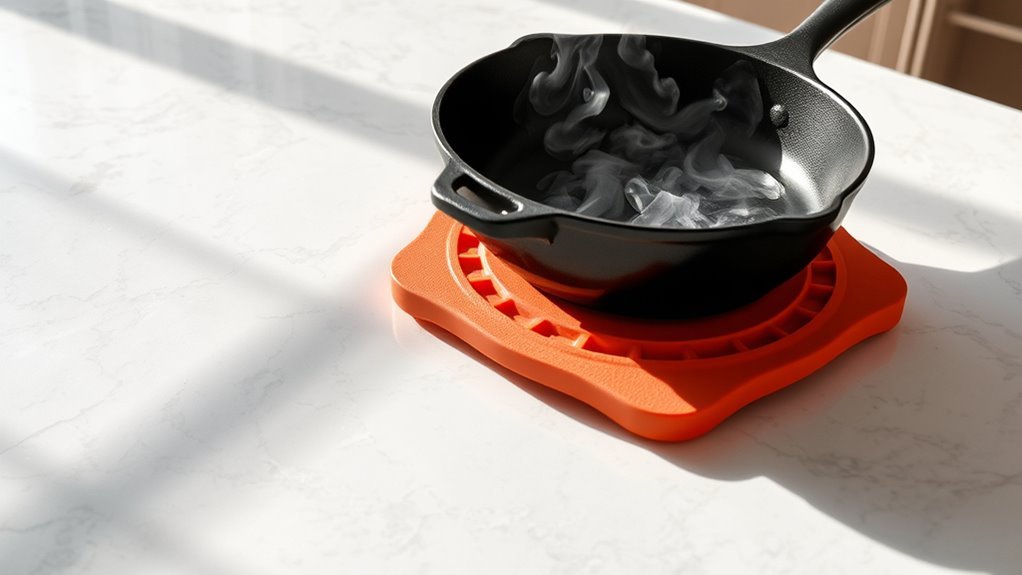
To protect your countertop’s heat tolerance and longevity, always use hot pads or trivets under hot cookware. These simple precautions help prevent heat stress and maintain quartzite’s beautiful finish.
Risks of Placing Hot Pans Directly on Quartzite
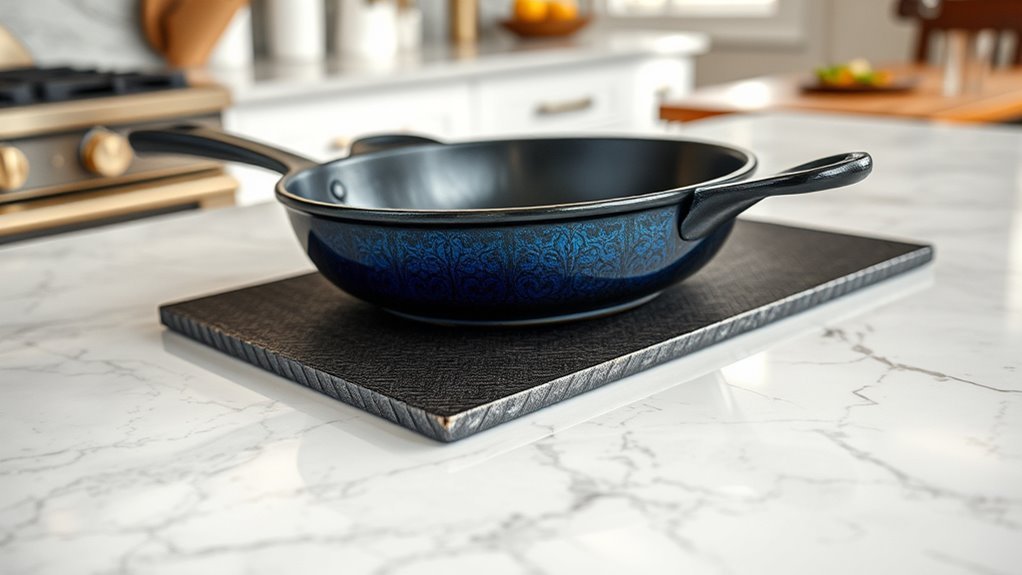
When you place hot pans directly on quartzite, you risk damaging the sealant that protects the surface, which can lead to staining or deterioration over time. Although quartzite has excellent heat resistance, sudden temperature changes can cause thermal shock, resulting in cracking or surface deterioration.
Repeated exposure to intense heat accelerates sealant wear, increasing the chance of quartzite damage. To avoid these issues, you should always use protective measures.
Here’s what you need to watch out for:
- Sealant wear from frequent contact with hot pans
- Thermal shock causing micro-cracks or visible cracking
- Surface deterioration that reduces quartzite’s natural durability
Taking precautions helps maintain your quartzite’s beauty and longevity.
Comparing Quartzite With Other Countertop Materials
Understanding how quartzite compares to other countertop materials can help you make smarter choices about heat exposure and care. Quartzite, a natural stone formed under intense heat and pressure, offers superior heat resistance compared to engineered quartz.
Unlike engineered quartz, which contains resin that can degrade when exposed to high temperatures, quartzite withstands heat from hot pans more effectively.
Quartzite resists heat from hot pans better than engineered quartz, which can degrade due to resin content.
Granite shares similar heat resistance, but quartzite generally holds up slightly better due to its sandstone origin.
While quartzite is durable, you should still use trivets to maintain safety and protect its surface. Proper sealing enhances its natural heat resistance, making quartzite a reliable choice if you want a countertop that handles heat better than many alternatives, especially engineered quartz.
Essential Precautions for Protecting Quartzite From Heat
Although quartzite handles heat better than many materials, you should always take precautions to protect your countertop from damage. Direct contact with high heat can cause thermal shock, leading to cracks. To protect your surface, never place hot pans directly on it without a barrier.
Also, avoid sliding hot cookware, as this can damage the sealing and scratch the stone. Proper sealing is essential, but keep in mind that exposure to high heat can degrade it over time.
To safeguard your quartzite, always use:
- Trivets, hot pads, or heat-resistant mats under hot pans
- A cooling period for hot pans before setting them down
- Regular checks to ensure the sealant remains intact
These steps will help preserve your quartzite’s durability and beauty.
Maintenance Practices to Preserve Quartzite Durability
Protecting your quartzite from heat is just one part of keeping it looking great. To preserve its durability, you should use hot pads or trivets to prevent thermal shock, which can damage both the stone and sealing.
Regular resealing every 12 to 24 months is essential to maintain quartzite’s temperature resistance and fend off spills and stains.
When cleaning, choose pH-neutral stone cleaners to protect the sealant and avoid harsh chemicals or abrasive scrubbers that can degrade it.
Promptly addressing spills and stains helps with effective sealant maintenance and prevents long-term damage.
Enhancing Longevity Through Proper Sealant Care
When you regularly reseal your quartzite countertops every 12 to 24 months, you maintain a strong barrier that resists heat and moisture. This sealant layer enhances your countertop’s heat resistance and protects against thermal damage from hot pans.
Proper sealant care guarantees your quartzite stays durable and visually appealing, extending its longevity with consistent maintenance.
To keep your countertop in top shape, focus on:
- Using high-quality, penetrating sealants designed for natural stone
- Checking the sealant integrity before placing hot items to prevent heat damage
- Scheduling resealing every 1 to 2 years to maintain continuous protection
Frequently Asked Questions
Can You Put a Hot Pan on Quartzite?
Yes, you can put a hot pan on quartzite since it’s heat resistant, but you shouldn’t do it often.
Use trivets or hot pads to protect the sealant and avoid sudden temperature changes that might cause damage.
Will Quartzite Crack From Heat?
Quartzite can resist heat up to 1200°F, so it won’t crack easily. But if you expose it to sudden temperature changes, it might develop cracks over time.
Therefore, you shouldn’t place hot pans directly on it.
How Do You Protect Countertops From Hot Pans?
You protect countertops from hot pans by always using trivets, hot pads, or silicone mats. Don’t place hot cookware directly on the surface, and regularly reseal quartzite to maintain its heat resistance and prevent damage.
What Should You Not Use on Quartzite Countertops?
You shouldn’t use abrasive cleaners, harsh chemicals like bleach or ammonia, or acidic substances directly on quartzite.
Avoid scrub brushes and cutting directly on it to prevent scratches and damage to the sealant and surface.
Conclusion
Think of your quartzite countertop as a sturdy ship maneuvering fiery seas. You wouldn’t let scorching waves crash directly on its deck without protection. By using trivets and hot pads, you’re steering your vessel safely through heat’s storm, preventing cracks and scratches from stormy waves.
With regular care and sealing, you keep your ship strong and resilient, ready to weather many culinary adventures. Treat your quartzite well, and it’ll serve you faithfully, shining bright like a beacon in your kitchen. Remember, putting hot pans on quartzite safely is all about protection and maintenance to preserve its natural beauty and durability.