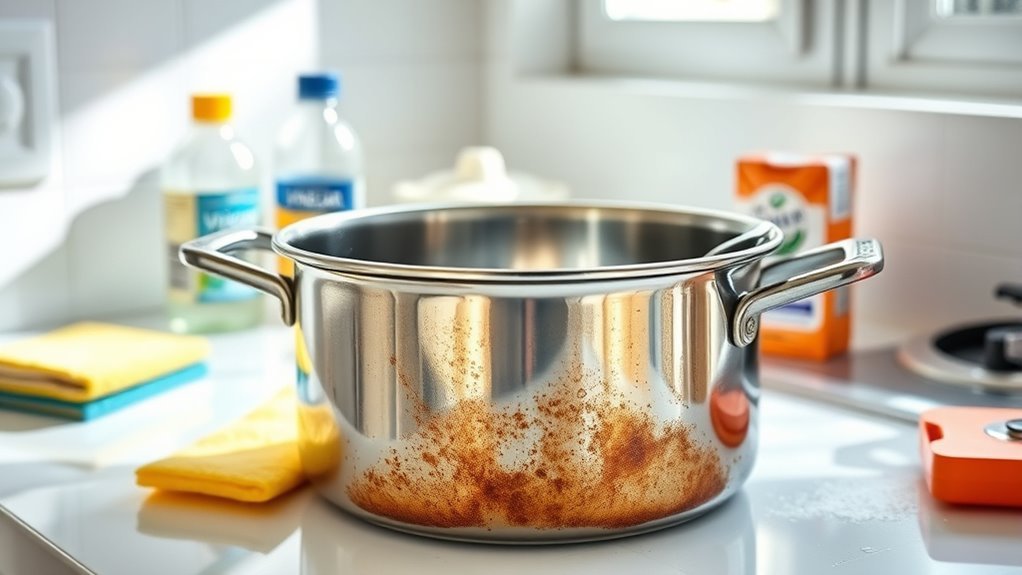
7 Easy Steps to Clean the Bottom of Pots and Pans
You might not realize it, but the bottom of your pots and pans can tell a story of countless meals cooked and enjoyed. Keeping the bottoms of pots and pans clean isn’t just about looks—it helps your cookware last longer and perform better. If you’ve ever struggled with stubborn stains or burnt residue, there’s a straightforward way to tackle these issues.
Let’s explore some practical steps that can make this chore much easier and more effective. With the right approach, cleaning the bottom of pots and pans can become a quick and satisfying task. Follow these tips to restore your cookware’s shine and efficiency.
Soak Pans in Warm, Soapy Water
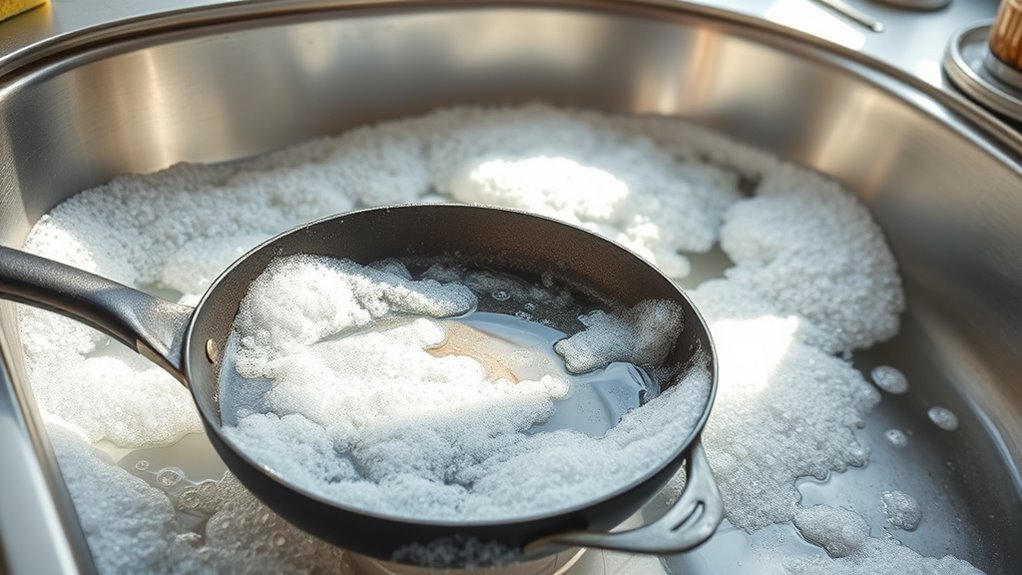
Before you start scrubbing, fill your pan with warm water and add a few drops of dish soap to create a soapy solution. This simple step helps loosen grease and burnt-on food.
Make sure to fully submerge the pan, especially the stained or scorched areas, so the warm water and soap can work effectively.
Let your pans soak for at least 15 to 30 minutes to break down grime.
If the stains are stubborn, extend the soak time to several hours or even overnight.
This extra soaking time softens the residue, making it easier to clean later.
Once the soaking is done, drain the soapy water, and you’ll find that scrubbing requires much less effort.
Soak pans properly to save time and frustration.
Use a Non-Abrasive Scrubber to Remove Loose Grime
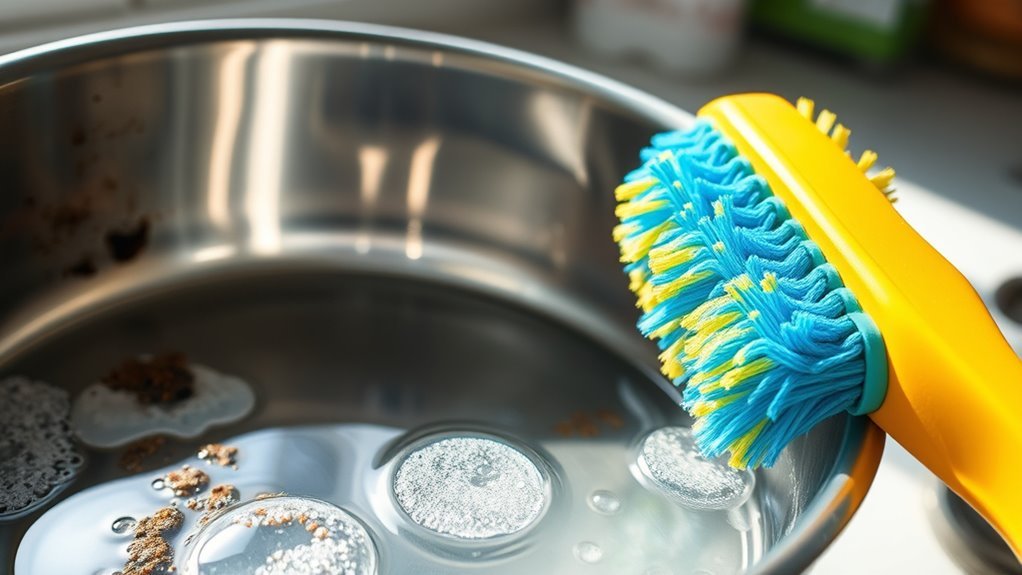
When you’ve soaked your pots and pans, grab a soft, non-abrasive scrubber like a microfiber or nylon sponge to gently lift away loose grime without scratching the surface.
Using a non-abrasive scrubber guarantees you remove dirt and grease effectively while protecting your cookware’s finish.
Apply light pressure as you scrub to avoid damaging delicate stainless steel or coated surfaces. Focus on areas with loosened grime, working in gentle circular motions to clean thoroughly.
Remember to rinse your scrubber regularly during cleaning to avoid spreading residue.
After each use, clean or replace your non-abrasive scrubber to prevent bacteria buildup and maintain its effectiveness.
This simple step helps keep your pots and pans looking great without risking scratches or damage.
Apply a Baking Soda Paste for Stubborn Stains
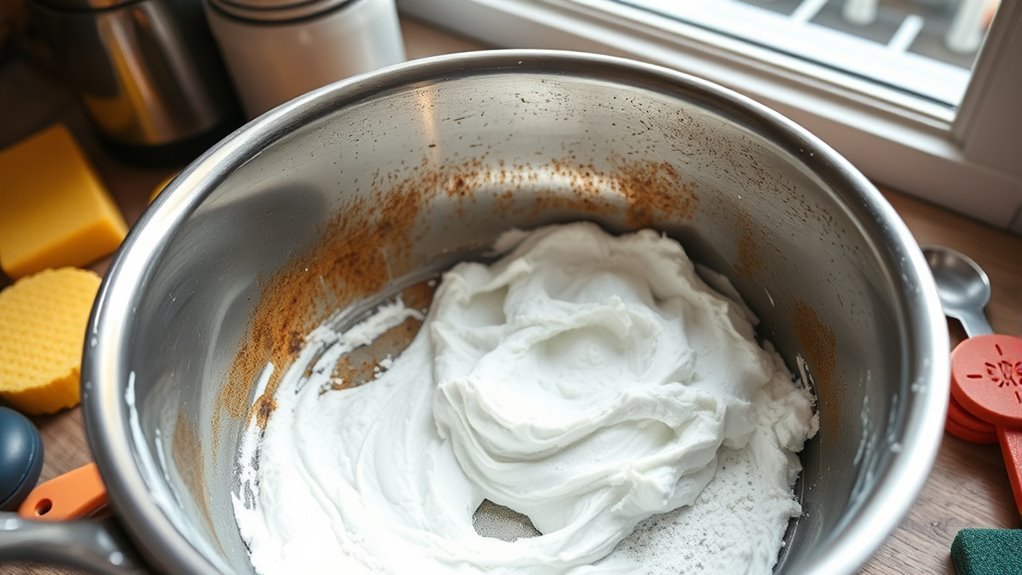
If stubborn stains won’t budge with gentle scrubbing, you can tackle them by applying a baking soda paste. Mix three parts baking soda with one part water until you get a thick, spreadable paste.
Apply this directly onto the scorched or stained areas of your stainless steel pan, making sure to cover them completely. Let the paste sit for 10 to 15 minutes so the baking soda can loosen the grime and discoloration.
Afterward, use a non-abrasive scrubber or sponge to gently scrub the affected spots, lifting away the residue.
Finally, rinse your pan thoroughly with warm water to remove all baking soda and reveal a cleaner, brighter bottom.
This simple method works wonders on stubborn stains without damaging your stainless steel pan.
Try Ketchup or Cream of Tartar for Brightening
Although it might sound unusual, applying ketchup or a cream of tartar paste to the bottom of your pan can brighten stainless steel surfaces and reduce discoloration effectively. The acidity in ketchup helps dissolve tarnish and restore shine, making it a quick and natural cleaning option.
Simply spread ketchup on the stained area, leave it for about 10 minutes, then rinse and wipe clean.
Similarly, cream of tartar acts as a gentle abrasive and natural cleaner. Mix it with a little water to form a paste, apply it to your pan, and let it sit for 10 minutes before scrubbing lightly.
Both ketchup and cream of tartar are affordable, readily available remedies that can improve the look of your cookware without harsh chemicals.
Utilize Bar Keepers Friend for Tough Marks
Since tough stains and scorch marks can be stubborn, you’ll want to reach for Bar Keepers Friend (BKF) to tackle them effectively. Start by mixing BKF with water to form a paste, then gently scrub the bottom of your steel pans using a non-abrasive sponge.
For really stuck-on bits, apply BKF directly, let it sit a few minutes, then scrub and rinse thoroughly. This method is especially great for steel pans and cast iron, helping you remove burnt residue without damaging the surface.
Just be cautious using BKF on non-stick cookware to avoid scratches. Regular cleaning with BKF prevents buildup and keeps your pans’ bottoms looking shiny and clean, making future scrubbing much easier.
Consider Oven Cleaner for Deep Burnt Residue
When baked-on residue refuses to budge, you can turn to oven cleaner like Easy-Off to break down the tough layers. Spray a generous amount of oven cleaner on the burnt residue at the bottom of your pots or pans.
Then, seal the pan in plastic or a bag to trap the fumes and let it sit for 24 to 72 hours.
Make sure you do this in a well-ventilated area since the fumes can be strong.
After soaking, the burnt residue softens, allowing you to scrub it off easily with steel wool or a brush.
You might need to repeat the process for stubborn stains.
Rinse Thoroughly and Dry Properly
After scrubbing away burnt residue, you’ll want to rinse your pot or pan thoroughly with warm water to remove any leftover cleaning agents or debris. Use a soft sponge or cloth during rinsing to avoid scratching the cookware’s surface. Pay close attention to crevices and edges where soap or residue can hide.
Once rinsing is complete, dry your pot or pan immediately with a clean towel or microfiber cloth. Proper drying prevents water spots and rust from forming, preserving your cookware’s condition.
Make sure the pan is completely dry before storing it to avoid mold or corrosion. By rinsing thoroughly and drying properly, you’ll keep your pots and pans looking great and lasting longer.
Frequently Asked Questions
How Do You Get Gunk off the Bottom of Pots and Pans?
You soak your pan in hot water with baking soda, then scrub using a paste of Bar Keepers Friend and a non-scratch sponge.
For stubborn grime, let a dishwasher tablet sit overnight before scrubbing it clean.
How to Clean the Base of Pots and Pans?
You want that grimy base spotless, right? Start by applying a baking soda paste, then let it sit.
Next, scrub gently or use Bar Keepers Friend for tough stains. Watch the grime disappear before your eyes!
How to Clean Black Stuff on the Bottom of a Pan?
You’ll want to make a baking soda paste, apply it on the blackened spots, and let it sit.
Then, gently scrub with a soft pad. For tough grime, add vinegar or lemon juice and scrub again.
How to Make Pots and Pans Look New Again?
You won’t believe how easily you can make pots and pans look brand new! Just scrub with baking soda paste, soak burnt spots in vinegar, and avoid harsh abrasives.
Regular care keeps them shining bright forever!
Conclusion
Now that you’ve tackled those stubborn stains, your pots and pans will shine like hidden treasures rediscovered. With just a bit of elbow grease and the right tricks, grime doesn’t stand a chance against you.
Keep these simple steps in your cleaning arsenal, and your cookware will sparkle like new, ready to whip up your next delicious masterpiece.
Remember, a little care goes a long way in turning kitchen battles into shining victories! Regular cleaning and maintenance of your pots and pans ensure they stay in top condition, making every cooking experience enjoyable and efficient.