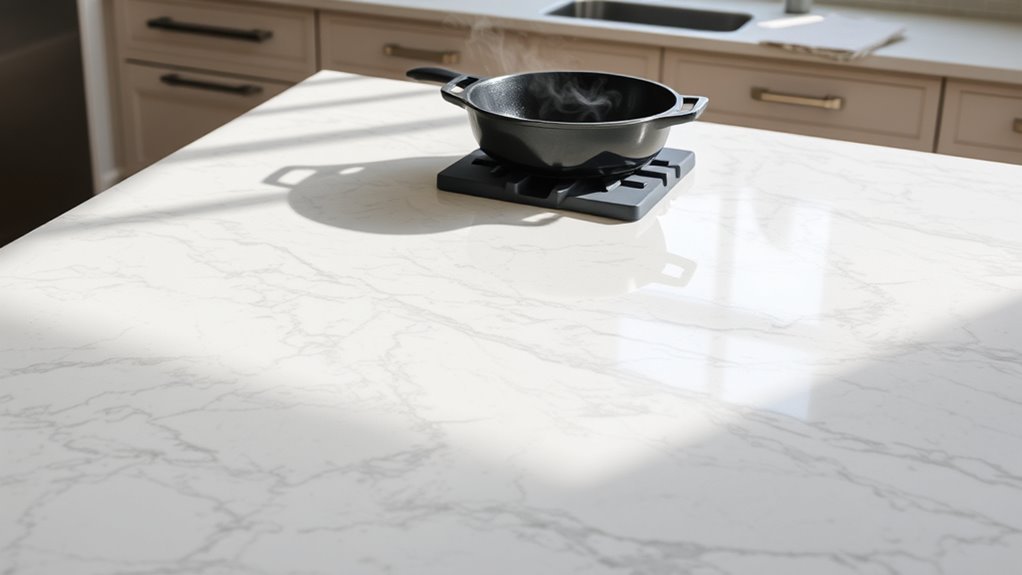
How You Can Put Hot Pans on Quartz Countertops Safely
If you have quartz countertops, you already know they’re beautiful and durable, but you might wonder how to handle hot pans without causing damage. Quartz countertops require special care when it comes to heat because placing a sizzling pan directly on quartz can lead to costly problems. Fortunately, there are simple steps you can take to protect your investment.
Understanding the right precautions and tools can make all the difference. So before you set down that hot skillet, consider what you need to know to keep your surfaces pristine. Using heat-resistant pads or trivets is one of the easiest ways to prevent heat damage.
By following these tips, you can enjoy your quartz countertops for years without worrying about burns or cracks. Remember, protecting your quartz from extreme heat preserves its beauty and longevity.
Understanding Quartz Countertop Heat Sensitivity
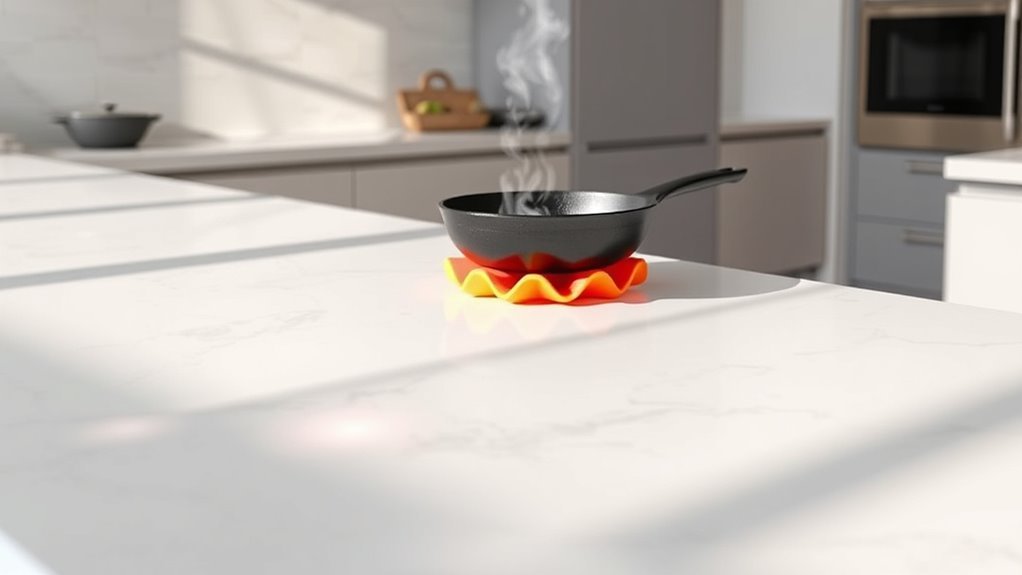
Although quartz countertops offer durability and beauty, you need to be careful with heat exposure. Quartz is made with a resin binder that lacks high heat resistance, softening or discoloring at temperatures above 150°F (65°C).
When you place hot pans directly on quartz, the resin can scorch, leaving unsightly scorch marks or even causing cracks. This resin component makes quartz more vulnerable compared to natural stone surfaces.
Sudden temperature changes or prolonged heat exposure can warp or damage your countertop permanently. Understanding this sensitivity is key to protecting your quartz.
Safe Practices for Handling Hot Pans on Quartz
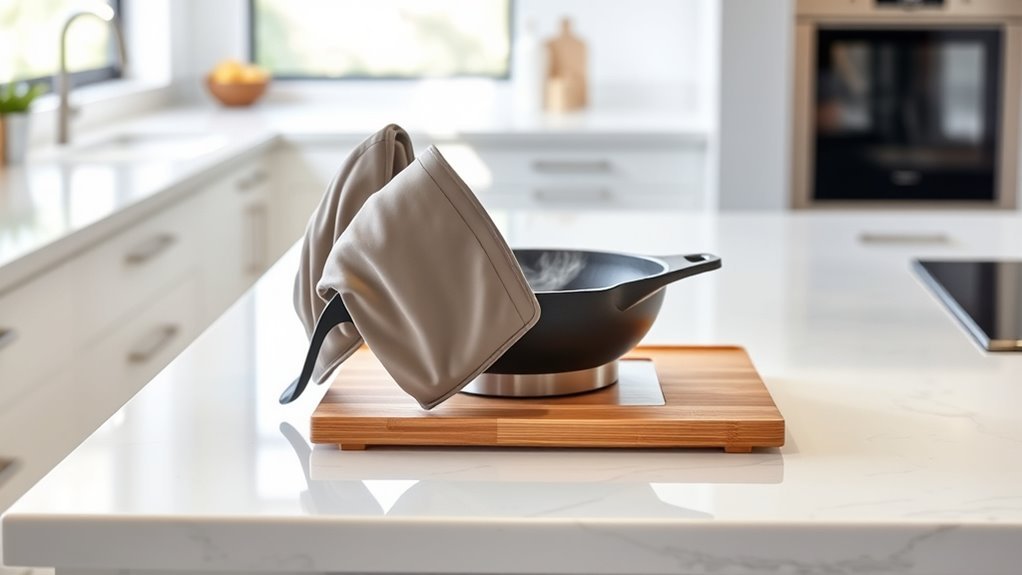
When you handle hot pans around quartz countertops, taking simple precautions can prevent damage and keep your surfaces looking new. Always use a trivet, hot pad, or silicone mat to protect your quartz from direct heat. Avoid placing cookware exceeding 150°F directly on the surface to prevent discoloration.
Let pans cool slightly before setting them down, reducing thermal stress. If you lack a trivet, use a cloth or heat-resistant pad as a temporary barrier. Regularly check these protective tools for wear and replace them to ensure ongoing protection.
| Practice | Reason |
|---|---|
| Use trivet or hot pad | Protects quartz from heat damage |
| Avoid direct contact | Prevents scorch marks |
| Let pans cool slightly | Reduces thermal stress |
| Inspect and replace pads | Maintains effective protection |
Recommended Protective Tools for Heat Management
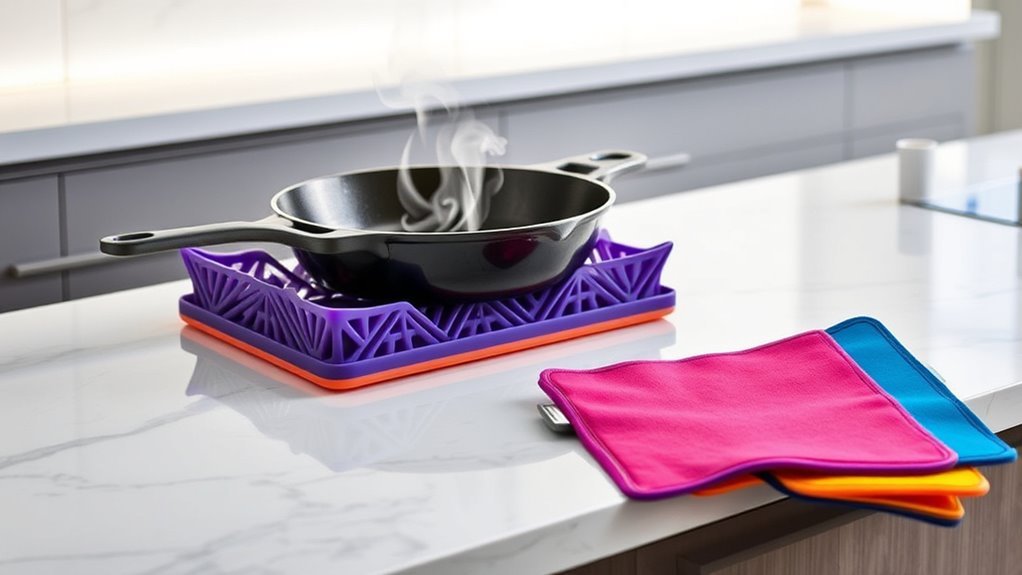
Since quartz countertops can be sensitive to heat, you should always use protective tools like silicone trivets or hot pads that withstand temperatures up to 464°F (240°C). Silicone trivets and heat-resistant mats create a strong, insulative barrier between your hot pans and the quartz surface, preventing scorch marks and discoloration.
Always place hot cookware on these protective tools instead of directly on the countertop to avoid damaging the resin. You can also use ceramic or stone trivets, as they’re non-porous and tolerate high heat without transferring it to your quartz.
Don’t forget to regularly inspect your protective tools for wear or damage and replace them when needed to maintain effective heat management and keep your quartz countertops looking pristine.
Common Mistakes to Avoid With Hot Cookware
If you skip using trivets or heat pads, you risk causing permanent damage like scorch marks or cracks on your quartz countertops. One common mistake is placing hot pans directly on the surface, ignoring the quartz resin’s heat sensitivity.
Skipping trivets risks scorch marks and cracks from heat-sensitive quartz resin damage.
This lack of heat protection can lead to subtle heat damage that worsens over time and may void your countertop’s warranty.
Another error is relying on personal experience or assumptions instead of following manufacturer guidelines, which always emphasize using protective barriers.
Ignoring these precautions not only risks immediate damage but also costly repairs or replacements later.
To keep your quartz looking flawless, always use proper heat protection and avoid setting hot cookware directly on your countertops.
Maintaining and Caring for Quartz After Heat Exposure
Although quartz is durable, heat exposure can cause subtle damage that you mightn’t notice right away. After placing hot pans or hot items on quartz, inspect your countertops carefully for discoloration, scorch marks, or cracks. These signs can be faint but indicate harm.
Clean any affected area gently with a soft, damp cloth and mild soap to remove residue or stains. Avoid abrasive cleaners or scrubbing pads, as they can worsen damage or create scratches.
If you spot discoloration or scorch marks, it’s best to consult a professional for repair advice.
To protect your quartz countertops in the future, always use trivets, heat pads, or silicone mats under hot cookware and follow manufacturer care guidelines. This helps prevent damage from placing hot pans directly on quartz surfaces.
Frequently Asked Questions
What to Use on Quartz Countertops for Hot Pans?
You should use silicone trivets, cork pads, or heat-resistant mats on your quartz countertops to protect them from hot pans. Always avoid direct contact, and replace worn protectors regularly to keep your surfaces safe and undamaged.
Is It Safe to Put Hot Pans on Quartz Countertops?
It’s not safe to put hot pans directly on quartz countertops because heat can damage the resin. Always use trivets or hot pads to protect your surface and keep your quartz looking beautiful and intact.
Can I Put a Hot Cup of Coffee on Quartz?
Yes, you can put a hot cup of coffee on quartz briefly, but it’s best to use a coaster or soft cloth to prevent heat transfer or discoloration.
This helps protect your countertop’s appearance and warranty.
What Does Heat Damage on Quartz Look Like?
You’ll spot heat damage on quartz as dark scorch marks or dull discoloration, like shadows scarring your countertop.
These spots can look subtle but may signal cracks or warping beneath the surface, weakening your quartz over time.
Conclusion
You might think placing hot pans directly on your quartz countertop won’t cause damage, but even short exposure to high heat can soften the resin and leave lasting marks.
To keep your surface looking flawless, always use a heat-resistant trivet or hot pad. It’s a small step that protects your investment and prevents costly repairs.
Trust me—taking a moment to use proper protection will save you frustration and maintain your quartz’s beauty for years. Using heat-resistant pads or trivets is essential for safely placing hot pans on quartz countertops.